

Politics
SCO Driving Regional Prosperity Through Cooperation

When the Shanghai Cooperation Organization (SCO) was established in 2001, its primary mission was to enhance regional security and stability. Over the years, however, its scope has expanded significantly to encompass economic cooperation reflecting the reality that sustainable prosperity and enduring stability are inseparable.
Today, the SCO is the world’s largest regional organization in terms of geography and population. With a vast market, abundant resources, and immense growth potential, the bloc has become an important driver of regional and global development. One of its central objectives now is to facilitate trade and investment among member states. To this end, mechanisms such as the SCO Business Council and the Interbank Consortium have been set up to boost cross border commerce and financial cooperation.
The results are tangible. In 2024, trade volume between China and other SCO member states, observer states, and dialogue partners hit a record $890 billion, accounting for 14.4 percent of China’s total exports and imports. This surge underscores both the vitality and the prospects of intra regional trade.
SCO cooperation has also paved the way for greater infrastructure connectivity across Eurasia. Landmark projects like the China Central Asia West Asia Economic Corridor and the China-Kyrgyzstan-Uzbekistan Railway have significantly reduced trade barriers and shortened transport times. Energy security remains another pillar of cooperation. The China Central Asia Gas Pipeline and the Eastern Russia China Natural Gas Pipeline not only safeguard the region’s energy needs but also contribute to stabilizing global energy markets. Recently, SCO member states signed an MoU to jointly construct “Silk Road Stations” aimed at addressing critical infrastructure gaps along expanding trade routes.
Beyond physical connectivity, the SCO has played a pivotal role in aligning development strategies. China’s Belt and Road Initiative complements national strategies such as Kazakhstan’s Bright Road Initiative, Kyrgyzstan’s National Development Program, and Tajikistan’s National Development Strategy. This synergy highlights the SCO’s strength in fostering shared development models.
Sustainable development has become a new priority for the SCO, with green growth and digital transformation at its core. According to a report released at the SCO Energy Ministers’ Meeting in June, the bloc’s total renewable energy installed capacity reached 2.31 billion kW by the end of 2024 nearly half of the global total. The SCO Green Development Forum provides a dedicated platform for advancing these goals under the organization’s Green Development Agenda.
The digital sphere is another frontier. The SCO Digital Economy Forum and the Digital Silk Road initiative have accelerated Eurasia’s digital integration. In 2024, cross-border e-commerce between China and other SCO states surged 34 percent year-on-year. Moreover, the Action Plan for Digital Transformation of SCO Member States, adopted in June, is set to deepen collaboration in e-commerce, artificial intelligence, and smart infrastructure.
Despite remarkable achievements, the SCO faces hurdles in deepening integration. Externally, it remains under scrutiny and sustained pressure from the West, which often seeks to divide rather than unite. Internally, differences in development stages, economic models, cultural traditions, and lingering geopolitical disputes sometimes slow down cooperation. To address these challenges, the SCO must continue strengthening institutional mechanisms in five priority areas: policy, infrastructure, trade, finance, and people-to-people ties. By doing so, member states can align their competitive advantages, foster mutual trust, and create a more resilient framework for cooperation.
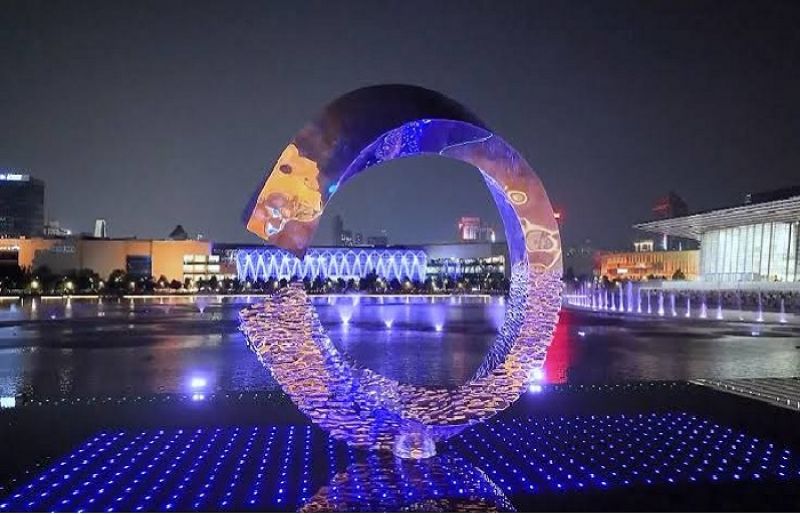
The upcoming SCO Summit in Tianjin, hosted by China as the organization’s rotating president, is expected to further unlock the group’s vast potential. At a time when protectionist tariffs, unilateral sanctions, and technological barriers threaten global growth, the SCO offers a counter-narrative championing openness, inclusivity, and shared prosperity.
As one of the pioneering regional organizations of the Global South, the SCO provides an alternative to exclusive Western clubs. Its model demonstrates that multilateralism, when inclusive and pragmatic, can deliver concrete benefits to all members. In doing so, the SCO continues to build not only a platform for cooperation but also a common home of stability, prosperity, and development for the Eurasian region and beyond.
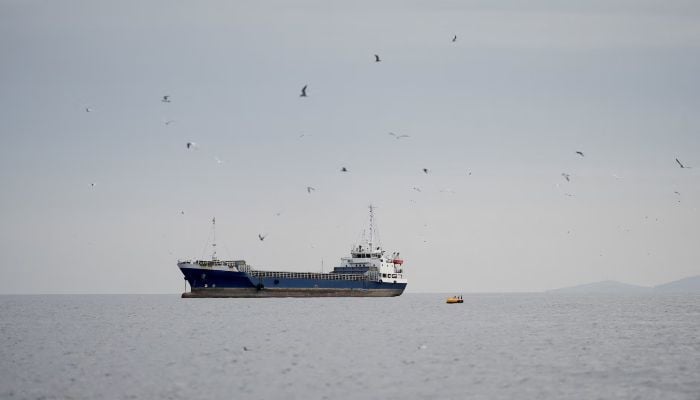
ATHENS: Fraudulent messages promising safe passage through the Strait of Hormuz in exchange for cryptocurrency have been sent to some shipping companies whose vessels are stranded west of the waterway, Greek maritime risk management firm MARISKS has warned.
The US has maintained its blockade of Iranian ports, while Iran has lifted and then re-imposed its blockade of the Strait of Hormuz, through which roughly a fifth of the world’s oil and liquefied natural gas passed before war broke out in the Middle East.
Amid ceasefire talks, Tehran, which controls the chokepoint, has proposed tolls on vessels to safely transit.
MARISKS on Monday issued an alert warning shipowners that unknown actors, claiming to represent Iranian authorities, had sent some shipping companies a message demanding transit fees in cryptocurrencies, Bitcoin or Tether, for “clearance”.
“These specific messages are a scam,” the firm said, adding the message was not sent by Iranian authorities.
There was no immediate comment from Tehran.
Hundreds of ships and about 20,000 seafarers remain stranded in the Gulf.
On April 18, when Iran briefly opened the strait subject to checks, ships tried to pass but at least two of them, including a tanker, reported that Iranian boats had fired shots at them, forcing the vessels to turn around.
MARISKS said that it believed that at least one of the vessels, which tried to exit the strait on Saturday and was hit by gunfire, was a victim of the fraud.
Reuters was not able to verify the information or track companies that had received the message.
“After providing the documents and assessing your eligibility by the Iranian Security Services, we will be able to determine the fee to be paid in cryptocurrency (BTC or USDT). Only then will your vessel be able to transit the strait unimpeded at the pre-agreed time,” said the message cited by MARISKS.
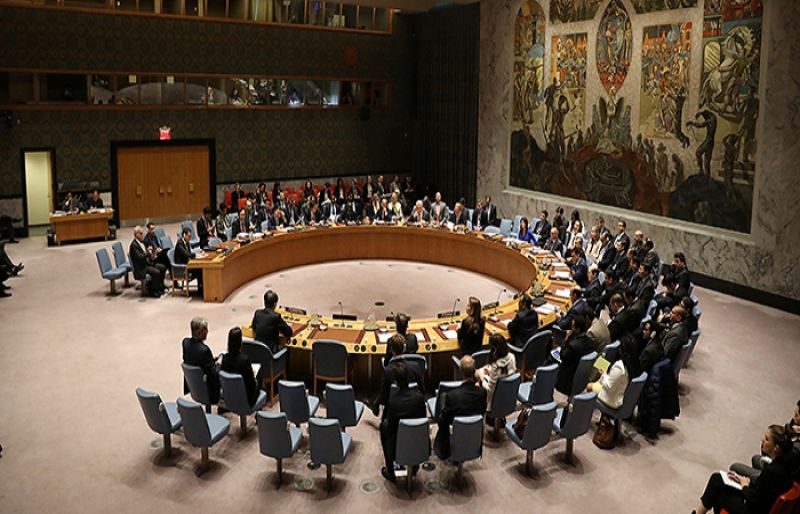
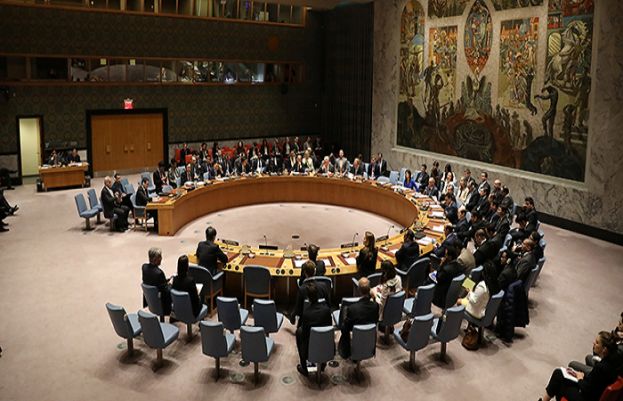
The UN Security Council on Monday condemned the recent killing of a French peacekeeper in Lebanon, whose death France has blamed on Hezbollah.
The Frenchman was killed and three others wounded when their unit was ambushed on Saturday as it headed to a UN Interim Force in Lebanon (UNIFIL) outpost cut off from the fighting between Hezbollah and Israel.
“The members of the Security Council condemned in the strongest terms the attack…(and) reaffirmed their full support for UNIFIL” a statement from the UN body said.
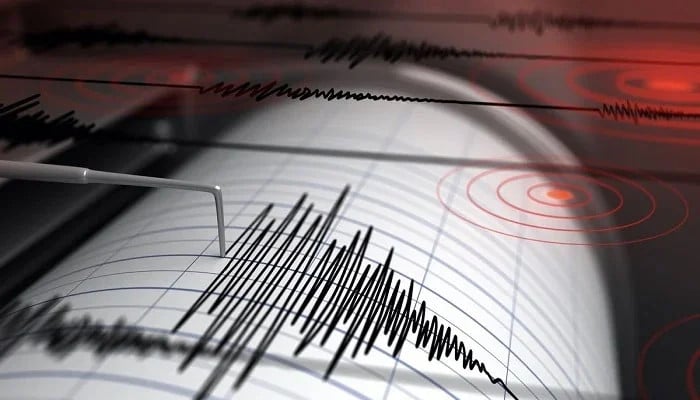
TOKYO: At least six people were reported injured on Tuesday, a day after a powerful quake rattled northern Japan, but there appeared to be no major damage from the tremor that also triggered tsunami waves up to 80 centimetres (31 inches).
However, the Japan Meteorological Agency (JMA) also warned of an increased risk of a megaquake — a tremor with a magnitude of 8.0 or stronger — hours after Monday’s 7.7 magnitude quake in Pacific waters off northern Iwate prefecture.
The jolt was so intense that it shook large buildings in the capital Tokyo, hundreds of kilometres from the epicentre.
Six people were reported injured by 8am (2300 GMT Monday), two seriously, the Fire and Disaster Management Agency (FDMA) said in a statement.
There were no reported fire outbreaks or damage to important facilities, it said.
Japan issued a warning for tsunami waves of up to three metres (10 feet) but it was lifted hours after an 80-centimetre (31-inch) wave hit a port in Kuji in Iwate, one among a series of small waves that hit elsewhere in northern Japan.
The JMA said that “the likelihood of a new, huge earthquake occurring is relatively higher than during normal times”.
Municipalities in the affected region issued non-compulsory evacuation directives to more than 182,000 residents, the FDMA said.
Japan is one of the world’s most seismically active countries, sitting on top of four major tectonic plates along the western edge of the Pacific “Ring of Fire”.
The archipelago, home to around 125 million people, typically experiences around 1,500 jolts every year and accounts for about 18 percent of the world´s earthquakes.
The vast majority are mild, although the damage they cause varies according to their location and the depth below the Earth´s surface at which they strike.
Japan is haunted by the memory of a massive 9.0 magnitude undersea quake in 2011, which triggered a tsunami that killed or left missing around 18,500 people and caused a devastating meltdown at the Fukushima nuclear plant.


Scam messages offering ships safe transit through Hormuz, warns security firm

UN Security Council denounces killing of French peacekeeper in Lebanon

Apple names new boss to replace Tim Cook after 15 years

-

 Fashion5 days ago
France’s LVMH Q1 revenue falls 6%, shows resilience amid Iran war
-

 Sports1 week ago
The case for Man United’s Fernandes as Premier League’s best
-

 Entertainment1 week ago
Palace left in shock as Prince William cancels grand ceremony
-
 Business1 week ago
UK could adopt EU single market rules under new legislation
-

 Entertainment6 days ago
Is Claude down? Here’s why users are seeing errors
-

 Fashion1 week ago
Energy emerges as biggest cost driver in textile margins
-
 Business1 week ago
Delta Air Lines unveils first new Delta One suite in premium cabin arms race
-

 Tech1 week ago
A Lot of Shops Won’t Fix Electric Bikes. Here’s Why