

Politics
SCO Driving Regional Prosperity Through Cooperation

When the Shanghai Cooperation Organization (SCO) was established in 2001, its primary mission was to enhance regional security and stability. Over the years, however, its scope has expanded significantly to encompass economic cooperation reflecting the reality that sustainable prosperity and enduring stability are inseparable.
Today, the SCO is the world’s largest regional organization in terms of geography and population. With a vast market, abundant resources, and immense growth potential, the bloc has become an important driver of regional and global development. One of its central objectives now is to facilitate trade and investment among member states. To this end, mechanisms such as the SCO Business Council and the Interbank Consortium have been set up to boost cross border commerce and financial cooperation.
The results are tangible. In 2024, trade volume between China and other SCO member states, observer states, and dialogue partners hit a record $890 billion, accounting for 14.4 percent of China’s total exports and imports. This surge underscores both the vitality and the prospects of intra regional trade.
SCO cooperation has also paved the way for greater infrastructure connectivity across Eurasia. Landmark projects like the China Central Asia West Asia Economic Corridor and the China-Kyrgyzstan-Uzbekistan Railway have significantly reduced trade barriers and shortened transport times. Energy security remains another pillar of cooperation. The China Central Asia Gas Pipeline and the Eastern Russia China Natural Gas Pipeline not only safeguard the region’s energy needs but also contribute to stabilizing global energy markets. Recently, SCO member states signed an MoU to jointly construct “Silk Road Stations” aimed at addressing critical infrastructure gaps along expanding trade routes.
Beyond physical connectivity, the SCO has played a pivotal role in aligning development strategies. China’s Belt and Road Initiative complements national strategies such as Kazakhstan’s Bright Road Initiative, Kyrgyzstan’s National Development Program, and Tajikistan’s National Development Strategy. This synergy highlights the SCO’s strength in fostering shared development models.
Sustainable development has become a new priority for the SCO, with green growth and digital transformation at its core. According to a report released at the SCO Energy Ministers’ Meeting in June, the bloc’s total renewable energy installed capacity reached 2.31 billion kW by the end of 2024 nearly half of the global total. The SCO Green Development Forum provides a dedicated platform for advancing these goals under the organization’s Green Development Agenda.
The digital sphere is another frontier. The SCO Digital Economy Forum and the Digital Silk Road initiative have accelerated Eurasia’s digital integration. In 2024, cross-border e-commerce between China and other SCO states surged 34 percent year-on-year. Moreover, the Action Plan for Digital Transformation of SCO Member States, adopted in June, is set to deepen collaboration in e-commerce, artificial intelligence, and smart infrastructure.
Despite remarkable achievements, the SCO faces hurdles in deepening integration. Externally, it remains under scrutiny and sustained pressure from the West, which often seeks to divide rather than unite. Internally, differences in development stages, economic models, cultural traditions, and lingering geopolitical disputes sometimes slow down cooperation. To address these challenges, the SCO must continue strengthening institutional mechanisms in five priority areas: policy, infrastructure, trade, finance, and people-to-people ties. By doing so, member states can align their competitive advantages, foster mutual trust, and create a more resilient framework for cooperation.
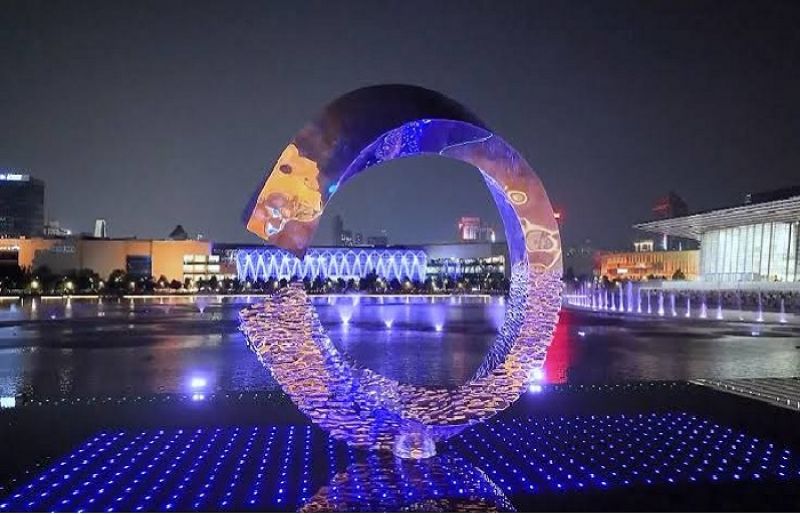
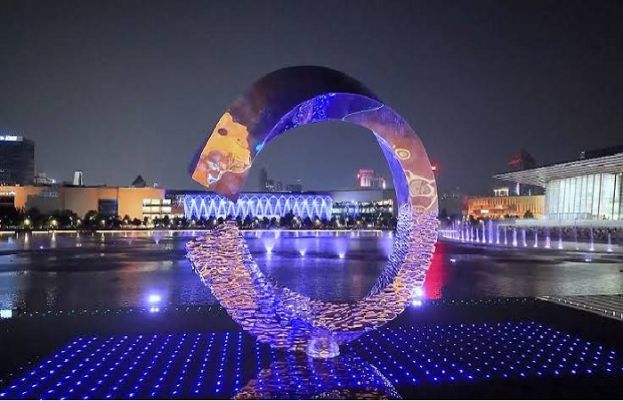
The upcoming SCO Summit in Tianjin, hosted by China as the organization’s rotating president, is expected to further unlock the group’s vast potential. At a time when protectionist tariffs, unilateral sanctions, and technological barriers threaten global growth, the SCO offers a counter-narrative championing openness, inclusivity, and shared prosperity.
As one of the pioneering regional organizations of the Global South, the SCO provides an alternative to exclusive Western clubs. Its model demonstrates that multilateralism, when inclusive and pragmatic, can deliver concrete benefits to all members. In doing so, the SCO continues to build not only a platform for cooperation but also a common home of stability, prosperity, and development for the Eurasian region and beyond.
- Cause of fire being ascertained: police chief.
- Fire broke out during Hindu festival preparations.
- Indian PM offers condolences to victims’ families.
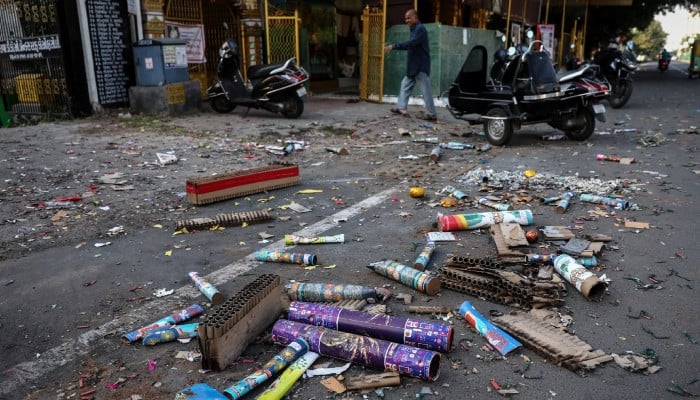
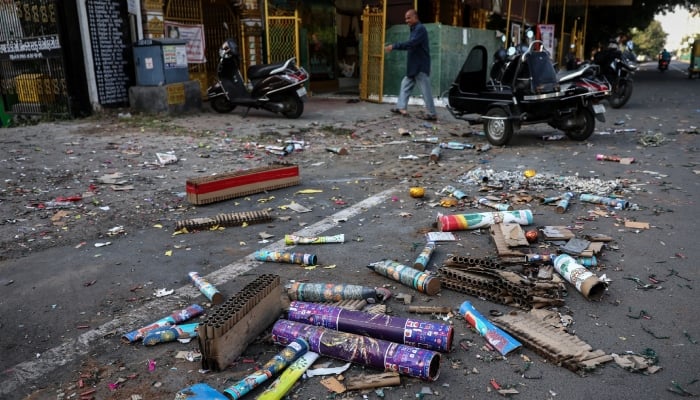
A firecracker storage facility in southern India caught fire on Tuesday, killing at least eight people, police said, the second such incident in three days.
Nakul Rajendra Deshmukh, police chief in Kerala state’s Thrissur district, told AFP that rescue operations were “over” after the deadly fire, which also left 15 people injured including two in critical condition.
The cause of the fire was being ascertained, he added.
Local media said it broke out during preparations for a Hindu festival.
Prime Minister Narendra Modi said in a social media post that he was “saddened” by the loss of lives and offered his “deepest condolences” to the families of the victims.
On Sunday, 20 people died in a similar blaze at a firecracker factory in the neighbouring state of Tamil Nadu.
Industrial accidents are common in India, often due to poor adherence to safety regulations and weak enforcement.
Last month, another fire at a fireworks factory in western India killed 17 people.

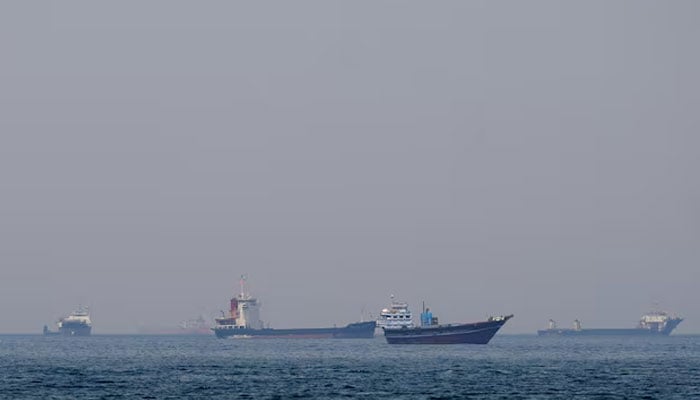
Shipping traffic through the Strait of Hormuz remained broadly halted on Tuesday, with only three ships passing the waterway in the past 24 hours, shipping data showed.
A US blockade of Iranian ports has infuriated Tehran, prompting it to maintain its own restrictions on the strait, which had been typically handling roughly one-fifth of the world’s oil and liquefied natural gas supply.
The Ean Spir products tanker, which had no known flag or known ownership, sailed through Hormuz on Tuesday after previously calling at an Iraqi port, ship tracking data on the MarineTraffic platform showed.
The Lian Star cargo ship, which had no known flag or known ownership, also sailed through the strait from an Iranian port, the data showed.
Separately, the Meda liquefied petroleum gas tanker, which had called at a United Arab Emirates port in the Gulf and also had no known flag or ownership, crossed the strait on Monday in its second attempt to leave the Gulf after turning back previously, according to satellite analysis from data analytics specialists SynMax.
Those are a fraction of the 140 ships that sailed through daily before the US and Israel’s war on Iran began on February 28.
More than a dozen tankers passed through the strait after Iran briefly declared it open on Friday, before Tehran announced it was closed on Saturday, firing shots at vessels.
“Even vessels that seemingly check the publicly known boxes for successful transit through both blockades can find themselves in danger and unable to pass,” shipbroker BRS said in a note this week.
A ceasefire between the US and Iran appeared in jeopardy on Tuesday with Tehran not committing to join new peace talks and the US military saying it had seized a tanker linked to Iran in international waters.
Seafarers’ lives at risk
Hundreds of ships and 20,000 seafarers remain stuck inside the Gulf unable to sail.
“We cannot put at risk the lives of the seafarers,” Arsenio Dominguez, secretary-general of the UN’s shipping agency, told reporters on the sidelines of Singapore’s maritime week on Tuesday.
“We saw what happened last weekend, that on Friday, when some ships started to sail. Then there was an announcement that the strait was closed, and then some ships were actually targeted. Thankfully, we didn’t have any casualties and there was no damage to the vessels.”
Iran’s army said an Iranian tanker had entered its territorial waters from the Arabian Sea on Monday with help from the Iranian Navy, despite what it described as repeated warnings and threats from the US naval task force.
Shipbroker BRS estimated that 61 non-Iran-related supertankers were trapped inside the Gulf at present, 50 of which were laden with cargoes of up to 2 million barrels each.
“At a time when the world is desperate for crude oil, an additional 2 million barrels slipping out of the Middle East Gulf would be gratefully received,” BRS said.
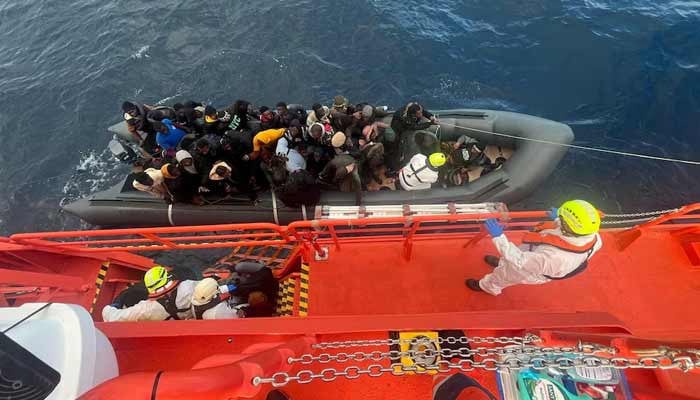
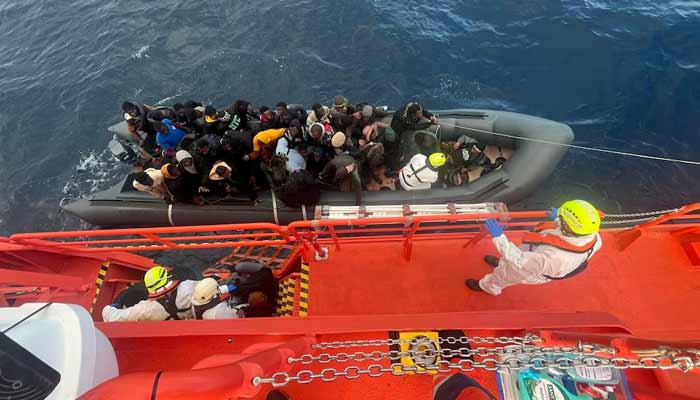
Nearly 8,000 people died or disappeared on migration routes last year, with sea routes to Europe the deadliest and many victims lost in “invisible shipwrecks”, a UN agency said on Tuesday.
“These figures bear witness to our collective failure to prevent these tragedies,” Maria Moita, who directs the International Organisation for Migration’s humanitarian and response department, told a Geneva press briefing.
Though the 7,904 people dead or missing was down from an all-time high of 9,197 in 2024, the IOM said that was partly due to 1,500 suspected cases that went unverified due to aid cuts.
More than four in every 10 fatalities and disappearances came on sea routes to Europe. Many cases were so-called “invisible shipwrecks” where entire boats are lost at sea and never found, the IOM said in a chilling new report.
The West African route northwards accounted for 1,200 deaths, while Asia reported a record number of fatalities, including hundreds of Rohingya refugees fleeing violence in Myanmar or misery in crowded refugee camps in Bangladesh.
“Routes are shifting in response to conflict, climate pressures and policy changes, but the risks are still very real,” said IOM Director General Amy Pope in a statement. “Behind these numbers are people taking dangerous journeys and families left waiting for news that may never come.”


Florida top scorer Thomas Haugh to return, pass on NBA draft

King Charles adorns Windsor in surprise move after Andrew’s exit
Air fares soar by nearly a quarter, research shows

-

 Fashion5 days ago
France’s LVMH Q1 revenue falls 6%, shows resilience amid Iran war
-

 Sports1 week ago
The case for Man United’s Fernandes as Premier League’s best
-

 Entertainment1 week ago
Palace left in shock as Prince William cancels grand ceremony
-
 Business1 week ago
UK could adopt EU single market rules under new legislation
-

 Entertainment6 days ago
Is Claude down? Here’s why users are seeing errors
-

 Fashion1 week ago
Energy emerges as biggest cost driver in textile margins
-
 Business1 week ago
Delta Air Lines unveils first new Delta One suite in premium cabin arms race
-
 Fashion1 week ago
Asia claims largest share of markets on Kearney FDI Confidence Index