

Business
Oil prices soar over 25% as Iran war rattles global markets | The Express Tribune

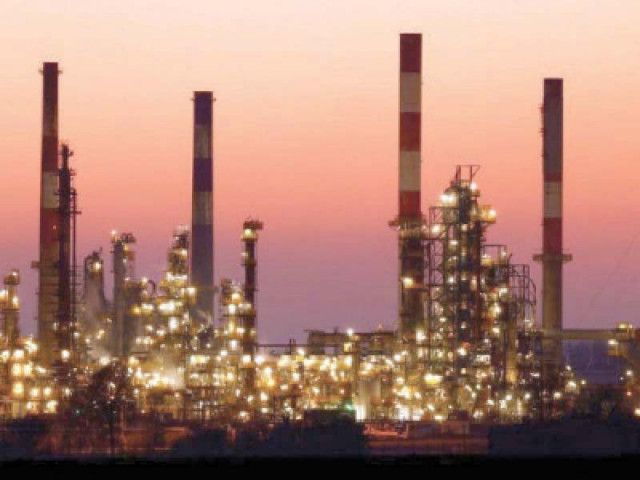
Supply cuts and Strait of Hormuz disruptions push crude to highest levels since 2022
Oil prices rise, stocks drop as Middle East war stirs supply concerns. PHOTO: FILE
Oil prices surged more than 25% on Monday to their highest levels since mid-2022 as some major producers cut supplies, and fears of prolonged shipping disruptions gripped the market due to the expanding US-Israeli war with Iran.
Energy markets are particularly nervous because the crisis is unfolding around the Strait of Hormuz, through which roughly one-fifth of the world’s oil supply normally passes.
Disruptions in tanker movements and rising security risks have already slowed shipping activity, leaving Asian buyers especially vulnerable given their heavy reliance on Middle Eastern crude.
Read: Iran launches fresh missile barrage after Mojtaba Khamenei takes charge
Brent crude futures LCOc1 were up $24.96 or 27% at $117.65 per barrel at 0451 GMT – on track for the biggest-ever jump in a single day, while US West Texas Intermediate (WTI) crude CLc1 futures were up $25.72, or 28.3%, to $116.62.
WTI surged 31.4% to a session high of $119.48 a barrel earlier on Monday, while Brent rose as much as 29% to $119.50 a barrel. Before the surge on Monday, Brent had already climbed 27% and WTI by 35.6% last week.
“Unless oil flows through the Strait of Hormuz resumes soon and regional tensions ease, upward pressure on prices is likely to persist,” said Vasu Menon, managing director for investment strategy at OCBC in Singapore.
Iraq and Kuwait have begun cutting oil output, adding to earlier liquefied natural gas reductions from Qatar, as the war blocked shipments from the Middle East. Analysts expect the United Arab Emirates and Saudi Arabia will have to also cut output soon as they run out of oil storage.
Also boosting prices is the appointment of Mojtaba Khamenei to succeed his father, Ali Khamenei, as Iran’s supreme leader, signalling that hardliners remain firmly in charge in Tehran, a week into its conflict with the United States and Israel.
“With the appointment of the late leader’s son as Iran’s new leader, US President Donald Trump’s goal of regime change in Iran has become more difficult,” said Satoru Yoshida, a commodity analyst with Rakuten Securities.
“That view accelerated buying, as Iran is expected to continue its closure of the Strait of Hormuz and attacks on other oil-producing nations’ facilities, as seen last week,” he said, predicting WTI could rise to $120 and then $130 a barrel in a relatively short period.
Weeks or months of high fuel prices
The war could leave consumers and businesses worldwide facing weeks or months of higher fuel prices even if the week-old conflict ends quickly, as suppliers grapple with damaged facilities, disrupted logistics and elevated risks to shipping.
“The next flag will be whether it eventually gets to a point where they have to start shutting in oil wells, which not only impacts output even further, but it also delays a response once the conflict eases as well. That would potentially sustain those prices for much longer,” said Daniel Hynes, senior commodity strategist at ANZ.
Iraqi oil production from its main southern oilfields has fallen by 70% to just 1.3 million barrels per day as the country is unable to export oil via the Strait of Hormuz due to the Iran war, three industry sources said on Sunday. Crude storage has reached maximum capacity, said an official with the state-run Basra Oil Company.
Read more: Fuel price hike hits fishermen hard
Kuwait Petroleum Corporation began cutting oil output on Saturday and declared force majeure on shipments, though it did not say how much production it would shut.
Iran’s attacks on oil infrastructure across the region have continued. Fujairah Media Office said fire broke out in the UAE’s Fujairah oil industry zone, resulting from debris falling, with no injuries reported. Saudi Arabia’s Defence Ministry said on X that it intercepted a drone heading to the Shaybah oilfield.
Israel’s military has threatened to kill any replacement for the deceased Ali Khamenei, while Trump said the war might only end once Iran’s military and rulers had been wiped out.
Meanwhile, as oil prices surged, US Senate Democratic Leader Chuck Schumer called on Trump to release oil from the Strategic Petroleum Reserve.
“President Trump should release oil from the SPR now to stabilise markets, bring prices down, and stop the price shock that American families are already feeling thanks to his reckless war,” Schumer said in a statement.






SYDNEY: Global airlines have begun increasing ticket prices as jet fuel costs surge following the escalating conflict in the Middle East, with carriers warning that further fare hikes may follow if oil prices remain high.
Air New Zealand confirmed it has raised fares across its network, becoming one of the first airlines to introduce broad price increases since the war between the United States, Israel and Iran began.
Fuel Prices Driving Fare Hikes
Airlines say jet fuel prices, previously around $85–$90 per barrel, have surged to between $150 and $200 per barrel in recent days.
Due to rising costs, Air New Zealand announced the following increases:
NZ$10 increase on domestic flights
NZ$20 increase on short-haul international routes
NZ$90 increase on long-haul flights
The airline also said it has suspended its financial outlook for 2026 because of uncertainty surrounding the ongoing conflict.
Airlines Warn of Further Increases
The carrier warned that if the conflict continues and fuel prices remain elevated, additional pricing adjustments and schedule changes may become necessary.
Other airlines are also feeling the pressure. Vietnam Airlines has requested the government remove environmental taxes on jet fuel as operating costs have reportedly risen by 60% to 70%.
Airline Shares Stabilise
Airline stocks, which initially fell sharply due to the crisis, showed signs of stabilising after Donald Trump suggested the conflict could end soon.
Following the comments:
Air New Zealand shares rose 2%
Korean Air gained 8%
Qantas increased 1.5%
Cathay Pacific climbed more than 4%
Travel Industry Faces Pressure
Fuel typically represents 20% to 25% of airline operating costs, making it the second-largest expense after labour.
Higher oil prices and airspace closures in the Middle East are already forcing airlines to reroute flights, increasing travel times and ticket prices on some routes.
Tourism industries are also feeling the impact. Thailand’s tourism ministry warned that if the conflict lasts more than eight weeks, the country could lose nearly 600,000 tourists and $1.29 billion in tourism revenue.
Experts say prolonged instability in the region could significantly affect global travel demand and airline profitability.
Business
Sensex, Nifty 50 Stock Market Today Live Updates: Sensex Up 360 Points, Nifty Above 24,100; India VIX Falls Over 15%
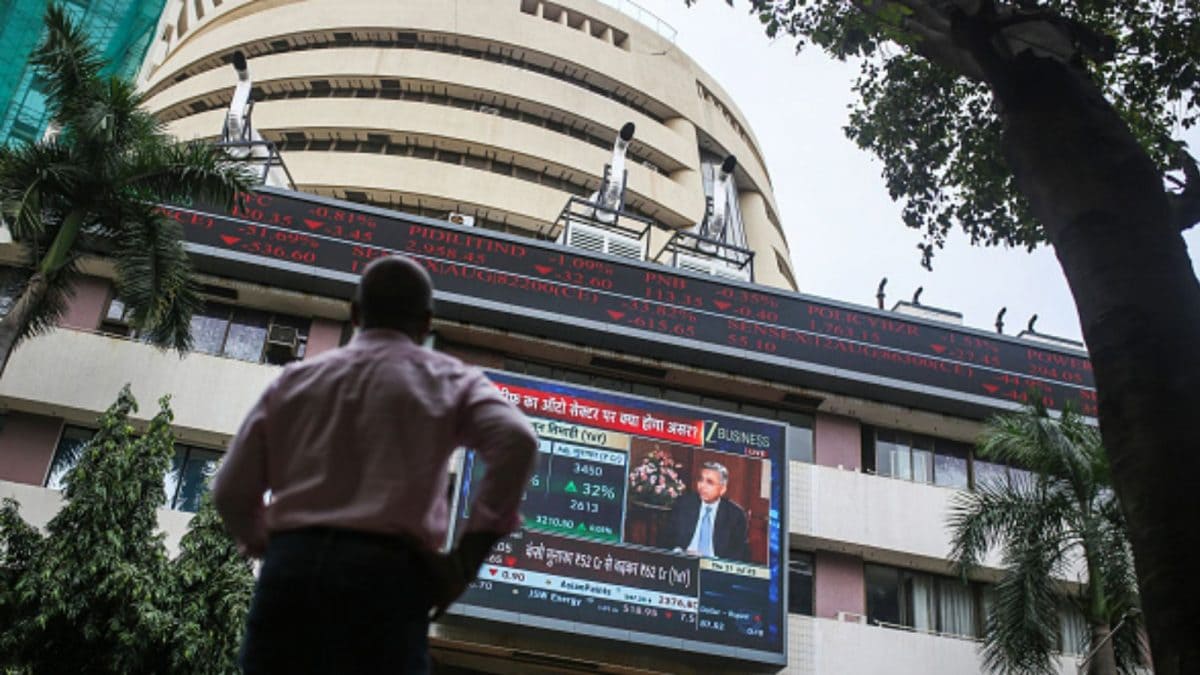
The Nifty50 and the Sensex rebounded from a two-day slump, tracking gains in global equities as Brent crude price eased after US President Donald Trump signaled an end to war. As of 9:17 AM, the Nifty50 was trading 0.58 per cent or 143.35 points higher at 24,167.40, and the Sensex was trading 0.62 per cent or 491.68 points higher at 78,030.20.
Global Cues
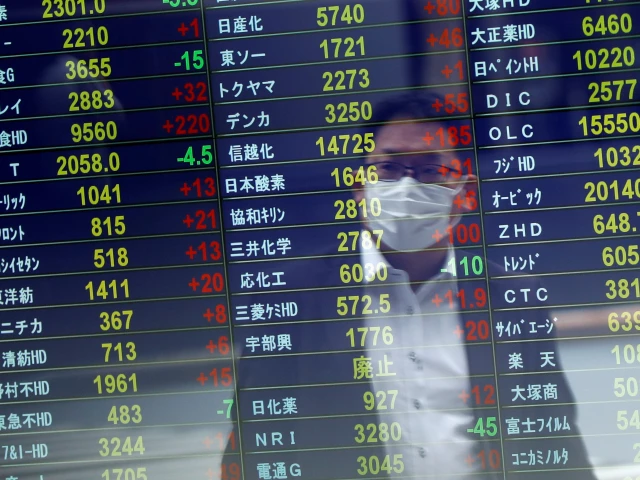
South Korea’s Kospi jumped over 6 per cent to lead the recovery rally in the region, and Japan’s Nikkei 225 rose over 5 per cent.
Meanwhile, US stock futures declined after the US President Donald Trump signalled that the war with Iran may come to an end soon. He also warned that Iran would be hit 20 times harder if the country blocks oil supply from the Strait of Hormuz.
The Dow Jones Industrial Average and S&P 500 futures were trading 0.22 per cent and 0.25 per cent down, respectively.
Overnight, the Dow Jones Industrial Average and S&P 500 indices ended 0.5 per cent and 0.83 per cent higher, respectively.
Brent crude prices declined 11 per cent to $88.05 per barrel on Tuesday so far following Trump’s remarks. It was trading 10.37 per cent down at $88.70 per barrel as of 7:20 AM, according to data on Bloomberg.
Gold and silver futures rose on Tuesday as the dollar index declined on hopes for easing US-Iran tensions in the near future. Gold and Silver futures were trading 1.55 per cent and 6.06 per cent higher, respectively.

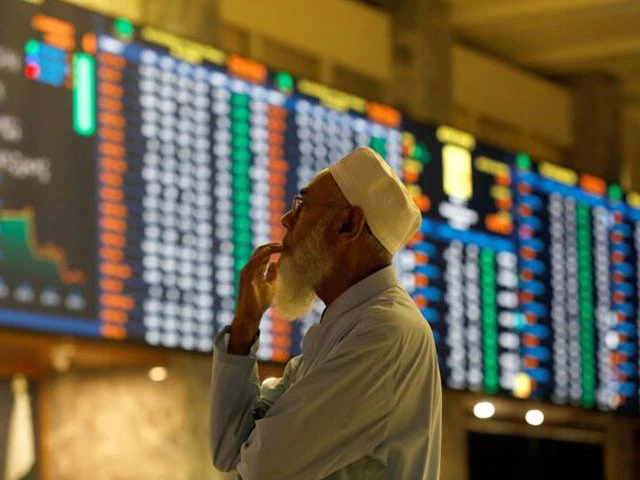
The Pakistan Stock Exchange (PSX) rebounded sharply on Tuesday, with the benchmark index jumping more than 6% after sentiment in global markets improved following US President Donald Trump’s prediction that the ongoing war in the Middle East could soon de-escalate.
During the session, the benchmark KSE-100 Index traded between a high of 157,648.77 (up 11,168.63 points, or 7.62%) and a low of 155,294.65 (up 8,814.51 points, or 6.02%) versus the previous close of 146,480.14.
During the previous session on Monday, the index shed 11,015.96 points, marking the second-largest single-day drop in the index’s history.
The index indicated at 155,783.89 (up 9,303.75 points, or 6.35%) when trading was temporarily suspended.
“Market is rebounding due to lower oil prices and improving sentiment in regional markets,” Samiullah Tariq, Head of Research at Pak-Kuwait Investment Company, told Geo.tv.
Topline CEO Mohammad Sohail told Thenews.pk that a sharp decline in global oil prices has prompted investors to aggressively buy local stocks.
Trading at the PSX was temporarily suspended after the benchmark KSE-30 Index declined by more than 5% from the previous day’s close, triggering a market-wide circuit breaker.
The exchange’s notice noted that outstanding orders were cancelled automatically and set out the re-opening schedule (Market Halt Time 09:22am; Pre-Open 10:22am; Open 10:27am).
Oil prices fell on Tuesday after hitting an over three-year high in the prior session, after Trump’s prediction eased concerns about prolonged disruptions to global oil supplies.
Brent futures LCOc1 fell $4.17, or 4.2%, to $94.79 a barrel at 0345 GMT, while US West Texas Intermediate (WTI) crude CLc1 was down $3.81, or 4%, to $90.96 a barrel. Both the contracts fell as much as 11% earlier before paring some losses.
Oil surged past $100 a barrel on Monday to hit their highest since mid-2022, as supply cuts by Saudi Arabia and other producers during the expanding US-Israeli war with Iran stoked fears of major disruptions to global supplies.
Prices later retreated after Russian President Vladimir Putin held a call with Trump and shared proposals aimed at a quick settlement to the Iran war, according to a Kremlin aide, easing concerns about a prolonged supply disruption.
Trump said on Monday in a CBS News interview that he thinks the war against Iran “is very complete” and that Washington was “very far ahead” of his initial four- to five-week estimated timeframe.
Asian stock markets also rose sharply in early trade, including in South Korea and Japan.
South Korea’s benchmark Kospi rebounded more than 5%, and the Nikkei 225 in Tokyo jumped more than 3% before falling back slightly.


Bangladesh Brand Forum, BGMEA sign MoU to transform RMG sector

Chris Hemsworth’s ‘Extraction 3’ finally gets production update

US’ Steven Madden’s 2025 revenue rises 11% on Kurt Geiger boost

-
 Politics3 days ago
India let Iran warship dock the day US sank another off Sri Lanka, say officials
-

 Sports3 days ago
Pakistan set for FIH Pro League debut | The Express Tribune
-

 Entertainment3 days ago
Harry Styles kicks off new era with ‘One Night Only’ comeback show
-
 Business1 week ago
Labour parliamentarians urge UK Government to oppose Rosebank oil field
-
 Business3 days ago
Restaurant group changes name after bid to buys pubs across the UK
-
 Business3 days ago
Home heating oil: ‘Most of my pension has gone on home heating oil’
-
 Tech1 week ago
The 5 Big ‘Known Unknowns’ of Donald Trump’s New War With Iran
-

 Sports1 week ago
USA vs. Argentina (Mar 1, 2026) Live Score – ESPN