

Business
Ulta Beauty raises full-year forecast after reporting growth in all major categories


Ulta Beauty on Thursday raised its full-year forecast, after reporting growth in all major categories and topping Wall Street’s quarterly sales expectations.
The beauty retailer said it expects net sales of between $12 billion and $12.1 billion, up from its previous range of $11.5 billion and $11.7 billion, representing an increase from last fiscal year’s net sales of $11.3 billion. It expects earnings per share of $23.85 to $24.30, up from its previous range of $22.65 to $23.20.
It expects comparable sales, a metric that takes out one-time factors like store openings and closures, to grow between 2.5% to 3.5%, up from projections of as much as 1.5%. The company had raised its annual profit forecast and the upper end of its full year sales range in May.
In the company’s news release, CEO Kecia Steelman said its outlook for the year “reflects both the strength of our year-to-date performance and our caution around how consumer demand may evolve in the second half of the year.”
Shares of Ulta gained about 3% in extended trading, after earlier hitting a 52-week during the regular session.
Here’s what the company reported for the fiscal second quarter compared with what Wall Street expected, according to LSEG:
- Earnings per share: $5.78. It was not immediately clear if that was comparable to the $5.08 expected by analysts.
- Revenue: $2.79 billion vs. $2.67 billion expected
In the three-month period that ended August 2, Ulta’s net income rose to $260.88 million, or $5.78 per share, from $252.6 million, or $5.30 per share, in the year-ago period. Revenue increased from $2.55 billion in the year-ago quarter.
Beauty has remained a hot category for consumers, even as they pull back or watch their spending in other discretionary categories. Yet that’s fueled tougher competition for Ulta Beauty as specialty players like LVMH-owned Sephora, big-box retailers like Walmart and department stores like Kohl’s have all bulked up their beauty businesses.
For investors, tariffs have been a closely watched challenge for retailers, too. Compared to other retailers, Ulta is not as directly exposed. Only about 1% of the company’s merchandise last fiscal year was direct imports, then-CFO Paula Oyibo said in May on the company’s earnings call. She said at the time most of Ulta’s exposure to the higher duties was minor, such as store fixtures and supplies.
Even in tumultous economic times, Steelman said beauty and wellness tend to fare better because they “offer a unique sense of comfort and escape.”
“Our insight suggests consumers continue to prudently manage their day-to-day spending and are watchful of pricing trends in response to tariffs,” she said on the earnings call. “At the same time, beauty enthusiasts tell us that they’re prioritizing their beauty regimens and remain strongly engaged within the category.”
In the second quarter, Ulta’s comparable sales grew 6.7% year over year, more than double analysts’ expectations, according to StreetAccount.
Customers visited more and spent more when they shopped on Ulta’s website and in its stores compared to the year-ago quarter. Transactions rose by 3.7% and average ticket increased by 2.9%.
Ulta added new brands and products that drove purchases in the quarter, including more products from Sol de Janeiro, exclusive Korean beauty brand Peach & Lily and Shakira’s hair care brand, Isima, Steelman said on the company’s earnings call.
Plus, she said, it’s trying to reach more of its existing and prospective customers in new ways. It had an activation at the Coachella and Lollapalooza music festivals and was the official beauty retail partner of Beyonce’s Cowboy Carter Tour.
In a growing number of Ulta stores, it is dedicating space to wellness-related products, such as supplements. It has opened a wellness shop in about 370 stores and plans to expand them to more stores this quarter, Steelman said.
Along with attracting more customers in the U.S., Ulta has looked internationally for growth. It announced in July that had acquired Space NK, a British beauty retailer, from Manzanita Capital. The deal allows Ulta to enter a new international market, since Space NK has 83 stores in the United Kingdom and Ireland.
Ulta did not disclose the price of the acquisition, saying it funded the transaction with cash on hand and Ulta’s existing credit facility and that it would not be material to financial results for the fiscal year.
For Ulta, Space NK offered a less expensive way to enter a new market, Steelman said. Its business, which will continue to operate independently, could offer learnings that could shape Ulta’s strategy, she said. Compared to Ulta, its shops tend to be smaller, located on main streets in cities and sell primarily prestige beauty merchandise.
The company is expanding in other international markets, too. Ulta recently marked the soft opening of its first Ulta store in Mexico and it plans to open its first store in the Middle East later this year, Steelman said Thursday on the company’s earnings call.
Ulta is also introducing a third-party marketplace, which Steelman said will launch in the third quarter. A growing number of retailers, including Best Buy, are launching the marketplaces a way to expand the mix of merchandise they carry without needing more store shelf space or buying more of their own inventory.
At the same time, Ulta recently announced the end of one of its efforts to expand reach. It cut ties with Target, which had opened mini Ulta shops in more than 600 big-box stores. The licensing deal, which will end in August 2026, allowed Target to sell a smaller and rotating assortment of makeup, skincare, hair care products and more that are carried by the full Ulta stores. Target carried those items on its website, and it staffed the shops.
For Ulta, however, the Target deal contributed little to its finances, Steelman said. Royalty revenue from the deal last fiscal year “was well below 1% of net sales,” she said on the company’s earnings call.
Ulta is looking for a new CFO as well. The company’s former CFO, Oyibo, left Ulta in late June after about a year in the role. Ulta has not yet announced her permanent successor.




Illuminated logo for Pepsi on a soda fountain in Walnut Creek, California, March 4, 2026.
Smith Collection | Gado | Archive Photos | Getty Images
PepsiCo on Thursday reported quarterly earnings and revenue that topped analysts’ expectations as its struggling North American food business reported a return to volume growth.
Here’s what the company reported compared with what Wall Street was expecting, based on a survey of analysts by LSEG:
- Earnings per share: $1.61 adjusted vs. $1.55 expected
- Revenue: $19.44 billion vs. $18.94 billion expected
Pepsi reported first-quarter net income attributable to the company of $2.32 billion, or $1.70 per share, up from $1.83 billion, or $1.33 per share, a year earlier.
Excluding items, the company earned $1.61 per share.
Net sales rose 8.5% to $19.44 billion.
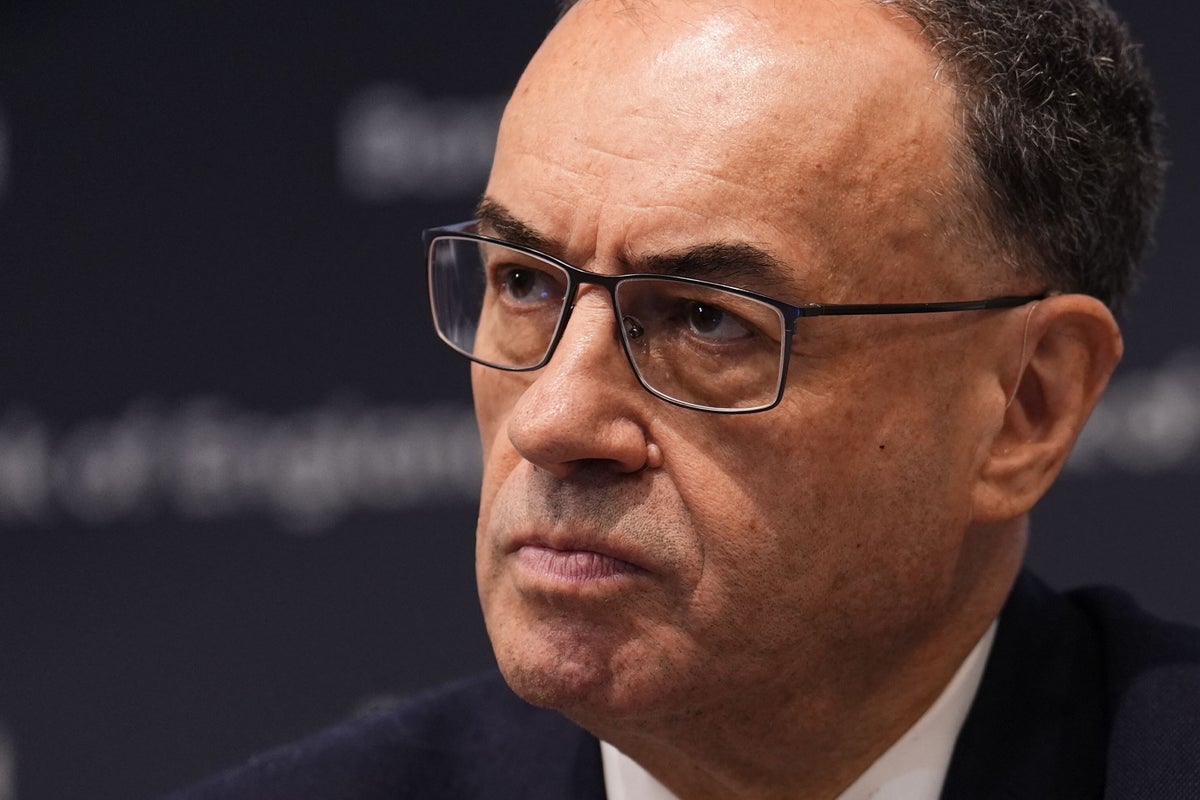
Bank of England governor Andrew Bailey has warned the global economy is set for a “very big energy shock” that will lead to surging inflation, but said policymakers would not rush to hike interest rates.
Speaking at the International Monetary Fund (IMF) spring meeting in Washington DC, Mr Bailey told the BBC the Bank is facing a “very, very difficult” decision on rates at its meeting on April 30.
The Middle East conflict has sent oil prices surging by around 60% since the start of the year, at one stage hitting nearly 120 US dollars a barrel, which is pushing up fuel and energy costs.
This is expected to feed through to wider prices, with forecasts for UK inflation to jump higher in the coming months and Britain’s growth outlook sharply downgraded.
But official figures on Thursday, which were released after Mr Bailey’s comments, showed the UK economy was far stronger than expected at the start of the year, with growth of 0.5% in February following upwardly revised expansion of 0.1% in January.
Experts said while welcome, UK activity is still set to slow sharply as higher energy prices weigh on spending and hamper growth.
Mr Bailey told the BBC: “There’s really difficult judgments to be made.
“We’re not going to rush to judgments on those things, because there are a lot of uncertainties around this, not just how it’s going to play out, but also how it’s going to pass through into the UK economy.”
The IMF’s economic outlook report earlier this week showed the UK facing the biggest downgrade to growth among the G7 group of countries, with 0.8% forecast for 2026, down sharply from the 1.3% predicted in January.
The influential financial body said the spike in energy prices caused by the war will help push UK inflation towards 4% – double the Bank of England’s target.
But the IMF cautioned central banks about making hasty decisions on interest rates.
The Bank of England had previously been expected to cut rates further this year, down from 3.75% currently, but the predicted inflation surge caused by the Iran war has led to forecasts that hikes could be on the way.
Mr Bailey said the Bank is taking the IMF’s “serious advice” into account.
On fears over supply shortages caused by the Iran war disruption and blockage of the crucial Strait of Hormuz shipping route, Mr Bailey said there is “a certain amount of resilience in the system” but that will only last so long.
He added: “The faster there is a resolution to this situation – I particularly mean in terms of the supply of energy coming out of the Gulf – the easier and better the outcome will be.
“That’s really critical at this moment.”
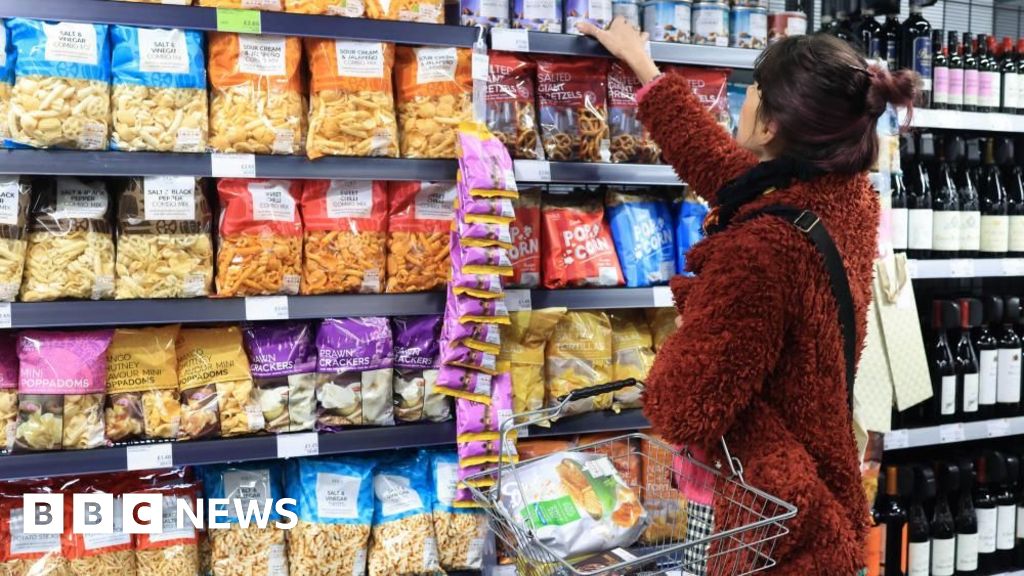
The economy saw its biggest monthly rise in more than two years just before the outbreak of the US-Israeli war with Iran.
Source link


Australian consumer confidence drops in April on rising living costs

LG’s High-End Soundbar System Makes My Living Room Feel Like a Home Theater

‘Miss Congeniality’ Benjamin Bratt opens up on working with Sandra Bullock

-

 Entertainment1 week ago
Queen Elizabeth II emotional message for Archie, Lilibet sparks speculation
-

 Tech1 week ago
Azure customers up in arms over ‘full’ UK South region | Computer Weekly
-

 Tech1 week ago
As the Strait of Hormuz Reopens, Global Shipping Will Take Months to Recover
-

 Fashion1 week ago
CII submits 20-pt agenda to Indian govt to back firms hit by Iran war
-

 Tech1 week ago
This AI Button Wearable From Ex-Apple Engineers Looks Like an iPod Shuffle
-

 Politics6 days ago
Indian airlines hit hardest after Dubai limits foreign flights until May 31
-

 Fashion1 week ago
ICE cotton hits 11-month high on drought concerns, demand boost
-

 Politics6 days ago
Chinese, Taiwanese will unite, Xi tells Taiwan opposition leader