

Business
Russian oil inflows to India rise 50% as Middle East conflict stalls Hormuz shipments – The Times of India

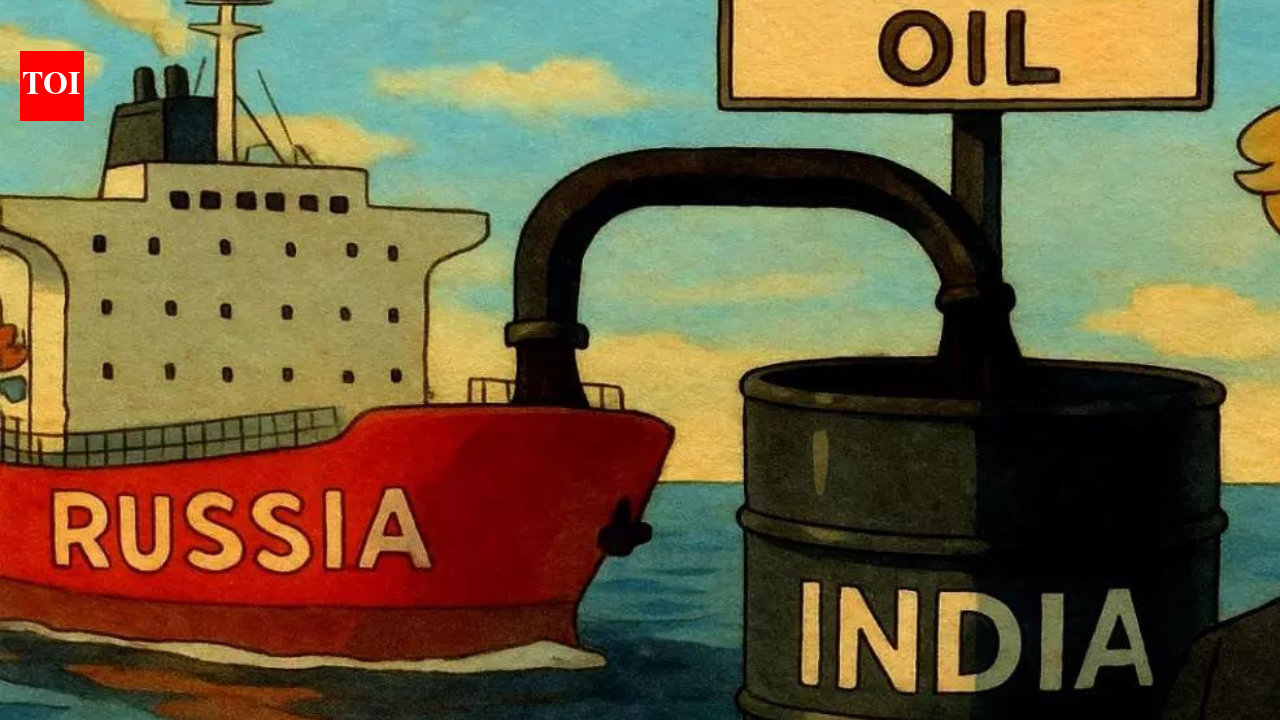
India’s purchases of Russian crude have surged about 50% in March as refiners move to secure alternative supplies amid disruptions to shipments from the Middle East due to the widening military conflict. Ship-tracking data showed imports rising to around 1.5 million barrels per day this month from 1.04 million bpd in February.India–the world’s third-largest crude importer — meets about 88% of its oil needs through imports. The country consumes nearly 5.8 million barrels per day, with 2.5-2.7 million barrels traditionally sourced from Middle East producers such as Saudi Arabia, Iraq and the UAE through the Strait of Hormuz, PTI reported.
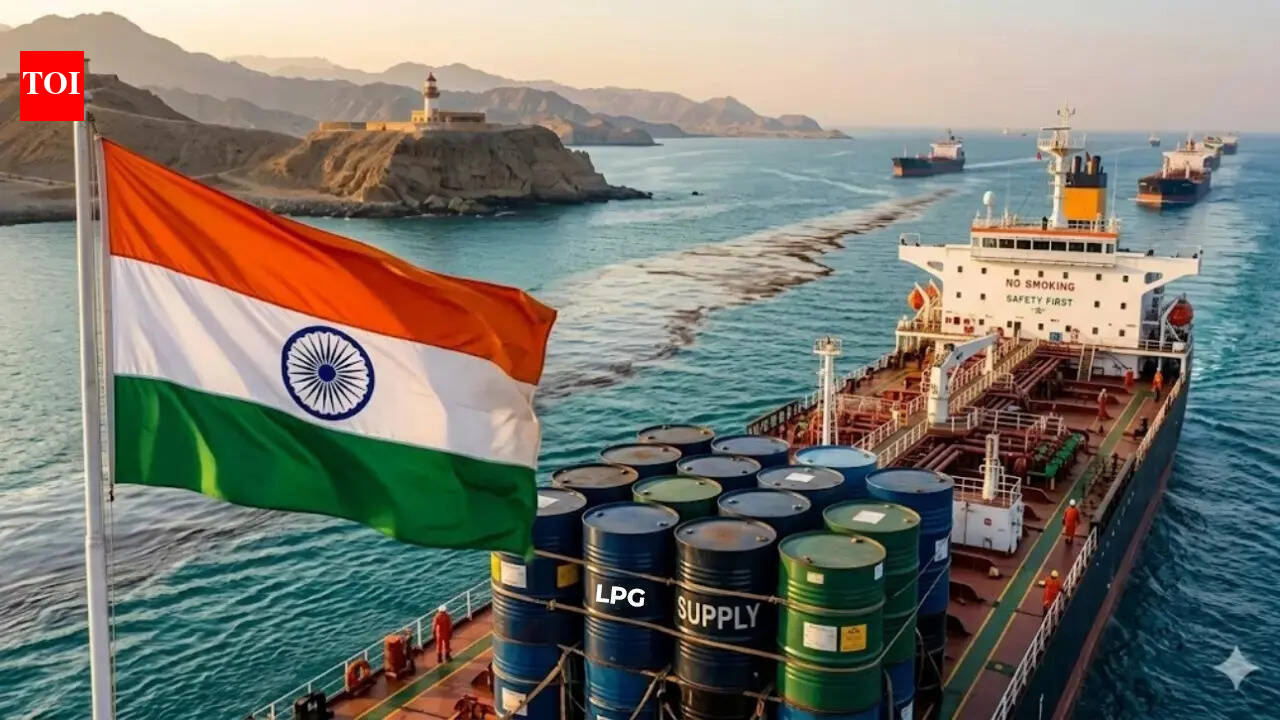
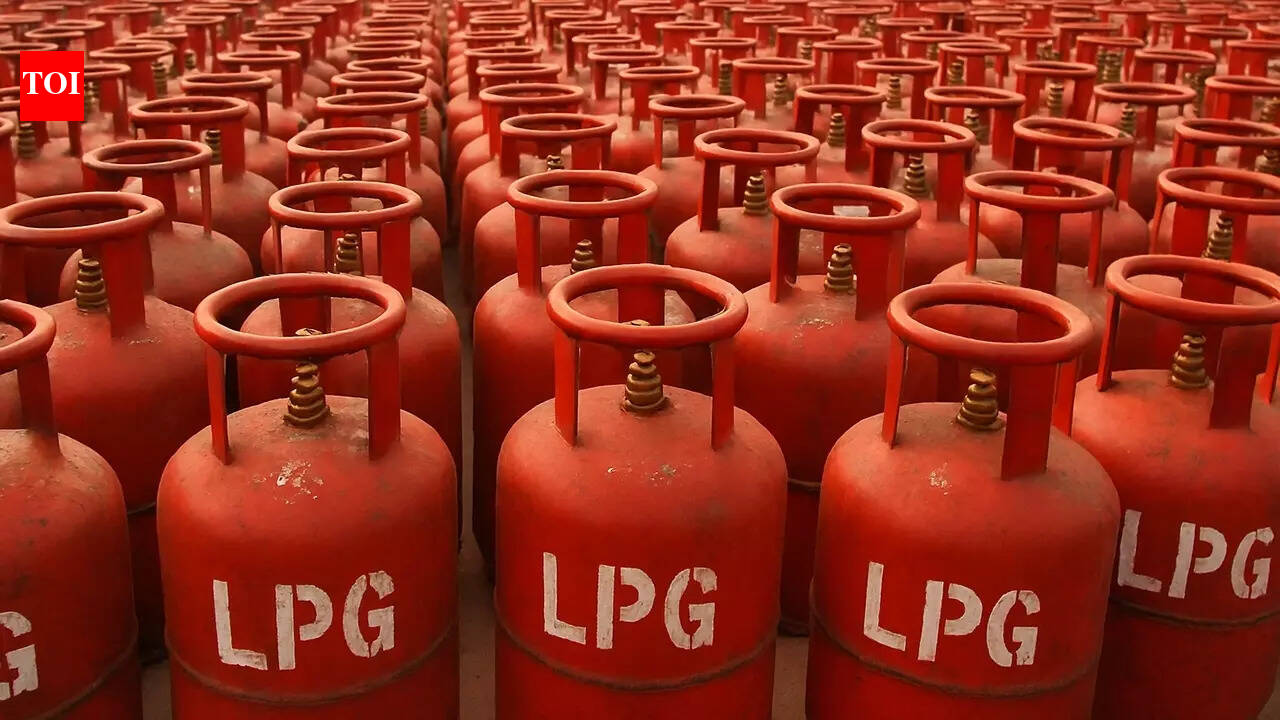
The chokepoint also handles roughly 55% of India’s cooking gas (LPG) imports and 30% of liquefied natural gas supplies used for power generation, fertilisers, CNG and household consumption. With shipments through the strait largely disrupted, refiners have increasingly turned to Russian barrels to plug supply gaps.“India was expected to import around 2.6 million barrels per day of crude via the Strait of Hormuz in March. At the same time, we are seeing a notable pickup in Russian barrels.“Based on vessel tracking and credible market sources, incremental Russian crude imports in March could reach 1-1.2 million bpd (over and above the February volumes), which means the effective shortfall from Hormuz exposure narrows to around 1.6 million bpd,” said Sumit Ritolia, analyst at Kpler, quoted PTI.India’s refining sector has also helped cushion supply concerns. Net refined product exports averaged about 1.1 million bpd in 2025, and companies have intensified efforts to diversify crude sourcing from alternative suppliers.“Crude supply risk can be partially mitigated through diversification, and Russia flows. Refined product supply remains relatively comfortable,” Ritolia said, adding that LPG availability remains the key variable to watch in the coming weeks.India consumes nearly 1 million bpd of LPG, of which only 40-45% is produced domestically while the remaining 55-60% is imported. Around 80-90% of these imports typically transit through the Strait of Hormuz, making the supply chain particularly vulnerable to disruptions in the region.“Refineries can optimise LPG output by shifting feedstocks away from petrochemical production toward LPG recovery and by adjusting unit operations to maximise LPG yields,” he said. “That said, such optimisation can only provide marginal incremental supply and cannot materially reduce India’s reliance on LPG imports.”Even if domestic output rises by 10-20% through such optimisation, supply would still meet only about 47-50% of total demand, leaving a sizeable gap that must be bridged through imports. Ritolia noted that sourcing LPG from suppliers outside the Middle East is possible but involves longer voyage times, slowing replacement of disrupted cargoes.“The Strait of Hormuz is also a critical route for global LPG trade, and any disruption in the area immediately raises risks for LPG supply and shipping flows.“A large share of LPG exports from the Middle East — particularly from Qatar, Saudi Arabia and the UAE — passes through Hormuz, making the chokepoint vital for Asian importers,” he said. “India is one of the world’s largest LPG importers and relies heavily on Middle Eastern supply, meaning any disruption in the region could tighten availability for the country.”India’s LPG consumption is estimated at about 900-1000 kilo bpd, of which roughly 600 kbd is imported. Of these imports, nearly 80-90% originate from the Middle East, underscoring the strategic sensitivity of energy flows through the Hormuz corridor.

Now one of the biggest sportswear firms, Anta’s rise follows a playbook adopted by many Chinese giants.
Source link
Business
Gold price prediction today: Will gold prices continue to be volatile? Key levels to watch out for April 27, 2026 week – The Times of India

Gold price prediction today: Gold prices will closely track movements on the rate decisions by several central banks, including the US Federal Reserve, this week, says Manav Modi, Senior Analyst, Commodity Research at Motilal Oswal Financial Services Ltd.Gold is currently consolidating after sharp swings in a broad range, indicating a pause rather than a reversal. Price action shows a higher-high structure intact, but the recent sideways movement suggests indecision near the upper supply zone around 158,000–160,000. The formation resembles a short-term flag/triangle continuation pattern, where a breakout on either side will define the next directional move. Volume has tapered slightly, reinforcing the consolidation narrative.Gold prices recently moved from the upper band toward the mid-band (20 DMA), and are now attempting to stabilize. The bands have started to contract, signaling a potential volatility expansion ahead. Sustaining above the mid-band (~150,500–151,000 zone) keeps bullish bias intact, while a breakdown below this could trigger a deeper mean reversion toward the lower band.For the week, immediate support for gold prices is placed at around Rs 150,500, which is followed by stronger support near Rs 148,500. On the upside, the resistance stands at around Rs 155,500, and after that the key supply zone is at Rs 158,000. A decisive close for gold above Rs 158,000 levels can then resume the broader uptrend. However, a break in gold prices below levels of Rs 148,500 may shift the momentum to bearish in the near term.The economic docket is filled with data points and events this week as the focus will be on FED, BOJ, ECB and ECB policy meetings. US consumer confidence, GDP, inflation and durable goods orders data will also be in radar.(Disclaimer: Recommendations and views on the stock market, other asset classes or personal finance management tips given by experts are their own. These opinions do not represent the views of The Times of India)

British families tell BBC Panorama how the Iran war is affecting their monthly budgets.
Source link


SBP raises policy rate by 100bps to 11.5% as inflation risks mount

Finalise Bangladesh’s textile-RMG circular economy strategy: Experts

Prince Harry faces unseen threat to Archie, Lilibet: Can’t escape

-

 Sports1 week ago
WWE WrestleMania 42 Night 2: Live match results and analysis
-

 Sports1 week ago
NCAA men’s gymnastics championship: All-time winners list
-

 Fashion1 week ago
UK’s Sosandar returns to profitability amid robust FY26 performance
-

 Politics6 days ago
UK’s Starmer seeks to deflect blame over Mandelson appointment
-

 Entertainment7 days ago
Lee Anderson, Zarah Sultana kicked out of UK Parliament for calling PM ‘liar’
-
 Business1 week ago
No fuel shortage: Govt assures 100% domestic LPG, PNG, CNG supply amid Hormuz energy crunch – The Times of India
-
 Business7 days ago
How Trump’s psychedelics executive order could unlock stalled cannabis reform
-
 Business1 week ago
Exercise to test response to offshore energy threat involving vessels and drones