

Politics
Netanyahu posts video in response to rumours that he is dead



Israeli Prime Minister Benjamin Netanyahu posted a video of himself getting a cup of coffee and chatting with his aide on Sunday, after rumours that he was dead or injured were aired by Iranian state media and spread online in Iran.
In the video, taken at a cafe in occupied Jerusalem’s outskirts and posted on Netanyahu’s Telegram account, his aide asks him about the rumours.
Netanyahu responds with a pun on the word dead — which in Hebrew slang can be used to describe “being crazy about” someone or something — as he reaches for a cup of coffee.
“I’m crazy about coffee. You know what? I’m crazy about my people,” Netanyahu tells the aide.
He then raised his hands to the camera, asking, “Do you want to count the number of fingers?” — a reference to speculation on social media that his latest televised address was generated by AI as he appeared to have six fingers on one hand.
Reuters verified the video’s location from file imagery of the cafe, which matched the interiors seen in the video. The date was verified from multiple videos and photos of Netanyahu’s visit posted by the cafe on Sunday.
Iran’s Revolutionary Guards Corps (IRGC) threatened on Sunday to kill Netanyahu, as the war against the Islamic republic led by Israel and the US entered its third week.
“IRGC vows to pursue and kill ‘child-killer’ Netanyahu if he is still alive,” Iran’s IRNA news agency said in a post on X.
Since the US and Israel launched attacks on Iran on February 28, Netanyahu has visited at least two towns hit by Iranian missiles, a hospital, port and military bases, but there was little to no media access, and videos were distributed by his office.
Netanyahu, who rarely gives interviews to Israeli press or holds news conferences, convened his first press conference since the start of the war via a video link on Thursday, a similar format to the one he used in June during Israel’s 12-day war with Iran.
Emergency safety restrictions in Israel since the start of the war ban public gatherings and have kept most people at home or close to shelters and safe rooms, with schools shut across most of the country.
— With additional input from AFP
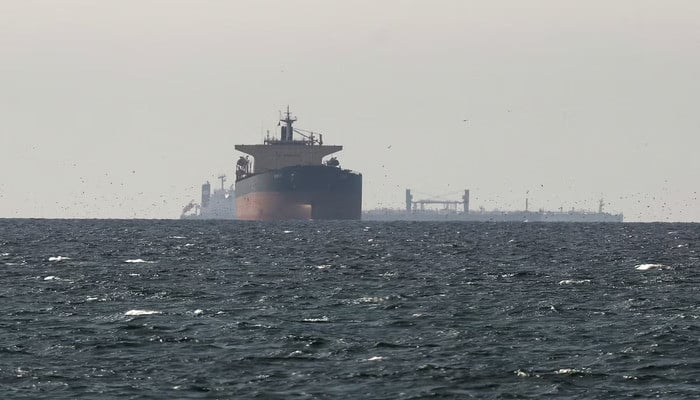
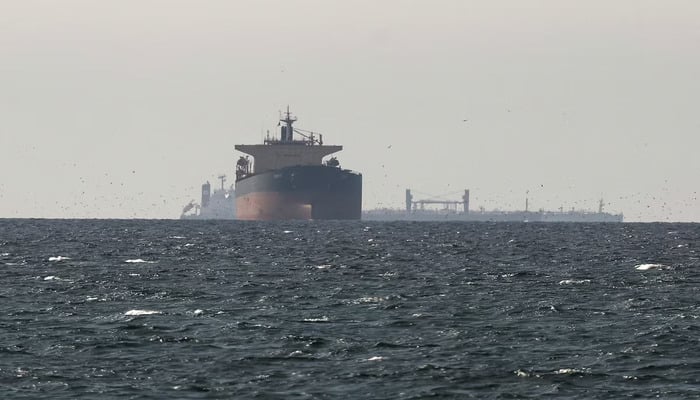
In a supermarket in Bahrain, Mahmoud Ali fills his cart as usual. The shelves remain stocked despite the war in the Middle East, but the blockade of the main shipping routes into the Gulf is now being felt at checkout.
“There’s no shortage”, but over the past few days “there has been a noticeable increase in the price of certain food products”, the father of four said.
The price of meat in particular has almost doubled, he added.
Like most of its neighbours in this arid region, the small Gulf monarchy depends heavily on imports, especially for its food supply.
But the war, triggered on February 28 by Israeli-US strikes against Iran, has severely disrupted the transport of goods through the strategic Strait of Hormuz, which is effectively closed.
“Most major ports in the UAE, Qatar, Kuwait and Bahrain have suspended or heavily reduced cargo processing,” said economist Frederic Schneider, from the Middle East Council on Global Affairs.
Air transport, another logistical pillar of the region, is also running below capacity because of daily Iranian drone and missile attacks, he added.
With the main gateways to the Gulf — the ports of Abu Dhabi, Jebel Ali in Dubai and Dammam in eastern Saudi Arabia — almost inaccessible, ships are turning to others located south of the strait in Oman and the Emirates.
Saudi Arabia has also positioned itself as a key supply hub at the heart of the Gulf region, as its airspace remains open and maritime traffic to its Red Sea ports continues.
To address the disruption of traffic in the ports along the Gulf coast, the kingdom has launched a new initiative to strengthen its transport networks by adding logistics routes and operational corridors to handle containers and cargo diverted from the country’s eastern ports, according to officials in the transport sector.
AFP journalists recently saw a stream of heavy trucks crossing the border with Qatar.
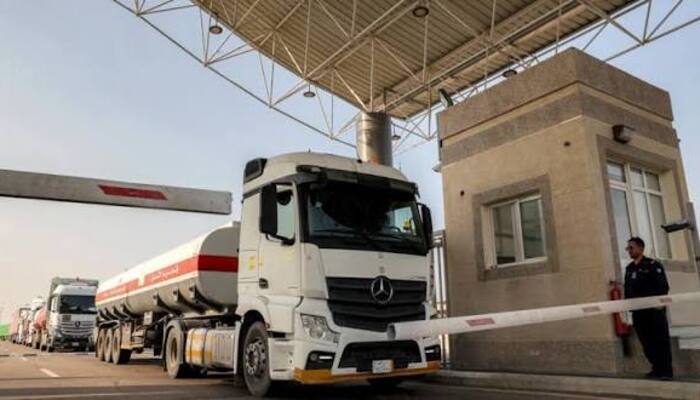
Other land-based alternatives exist, including road corridors linking to the Mediterranean through Syria or Jordan.
But these overland routes are too congested, expensive and insufficient to make up for the paralysis of traditional routes, Schneider said.
Fresh products, most of which are imported from Asia and cannot be stored for long, are the first to be affected.
‘Tangible risk’
Faced with this situation, the Gulf states are not on equal footing.
Saudi Arabia has direct access to the Red Sea. The United Arab Emirates claims to have four to six months of stock. And Qatar has invested heavily in its strategic reserves, following the three-year blockade imposed by its neighbours in 2017.
Bahrain and Kuwait, on the other hand, are already seeing consumers paying the price for the conflict.
After a rush on supermarkets in the first days of the war, Kuwaiti authorities froze the prices of certain basic products and subsidised meat imports.
“Overall, prices have remained stable,” an official from the Kuwaiti commerce ministry told AFP, speaking on condition of anonymity.
“But an increase of more than 30% was recorded for meat and fish,” which were affected by the suspension of fishing in the Gulf and the halt of imports from Iran, India and Pakistan, he said.
The private sector is also trying to contain the impact of the blockade.
The Lulu retail chain, which has 280 supermarkets in the region, said it maintains four to six months of reserve stock of non-perishables and has chartered special flights to fly in fruit, vegetables, meat, seafood and poultry.
So far, “37 special chartered flights have brought in more than 6,000 tons of fresh produce”, its communications director V Nandakumar told AFP, adding that the additional cost was “not going to be passed on to the consumer as of now”.
According to Schneider, “there is a certain level of preparedness and prices are elevated but under control for the moment”.
However, “as the war does not seem to end soon, there is a tangible risk of a price spiral on imported goods, in particular food”, he added.


US officials detected unidentified drones above an army base in Washington where Secretary of State Marco Rubio and Pentagon chief Pete Hegseth live, the Washington Post reported on Wednesday, citing three people briefed on the situation.
The officials have not determined where the drones came from, the report said, citing two of the people.
The drones over Fort McNair prompted officials to weigh relocating Rubio and Hegseth, the report said.
However, the secretaries have not moved, the report added, citing a senior administration official.
The newspaper said the US military was monitoring potential threats more closely because of the heightened alert level over the US and Israeli war against Iran.
Reuters could not independently verify the report immediately.
The Pentagon and the US State Department did not respond to requests for comment.
Chief Pentagon spokesperson Sean Parnell declined to discuss the drones with the Washington Post.
“The department cannot comment on the secretary’s (Hegseth’s) movements for security reasons, and reporting on such movements is grossly irresponsible,” he told the Post.
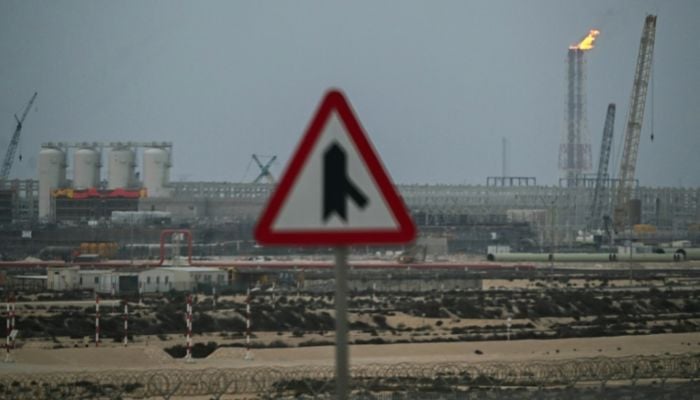
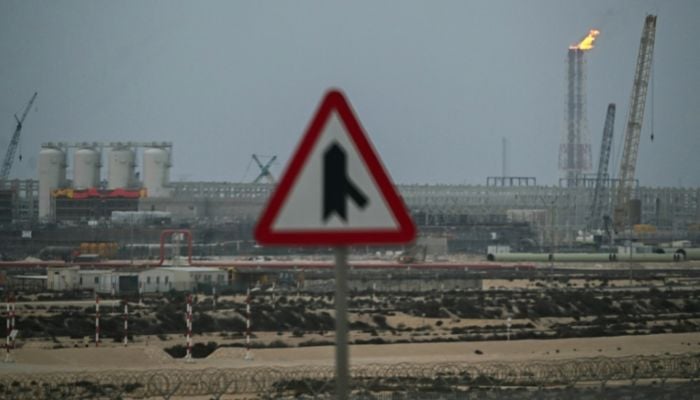
Qatar’s main gas facility has suffered extensive damage after several rounds of Iranian strikes, causing new energy supply fears as the Middle East war grinds on.
Here is a look at some of the key energy facilities that have been targeted in the US-Israel war with Iran.
Ras Laffan
Ras Laffan in Qatar is the world’s largest liquefied natural gas (LNG) hub.
It has been repeatedly targeted by Iranian strikes since the war began, and has now suffered “extensive damage” after back-to-back waves of hits, state-run QatarEnergy said.
Early Thursday, QatarEnergy reported “sizeable fires” and significant damage at several LNG facilities at the hub.
That came after an earlier attack on the Ras Laffan Industrial City on Wednesday had already caused extensive damage to a gas-to-liquids facility.
Qatar shares the world’s largest natural gas reservoir with Iran.
QatarEnergy estimates the Gulf state’s portion of the reservoir, the North Field, holds about 10% of the world’s known natural gas reserves.
In recent years, Qatar has inked a series of long-term LNG deals with France’s Total, Britain’s Shell, India’s Petronet, China’s Sinopec and Italy’s Eni, among others.
Earlier in March, Iranian attacks forced QatarEnergy to halt LNG production and declare force majeure.
South Pars
Iran’s strikes on Ras Laffan come after its South Pars/North Dome field was hit on Wednesday.
The South Pars mega-field is the largest known gas reserve in the world, and supplies around 70% of Iran’s domestic natural gas.
The strikes on the field, which it shares with Qatar, caused a fire, Iranian state television said.
The strike was condemned by some of Iran’s Gulf neighbours, including Qatar and the United Arab Emirates, who have seen energy facilities in their countries come under repeated Iranian attack.
US President Donald Trump said Thursday that Israel had carried out the attack and Washington “knew nothing” about it.
But he warned that if Iran continued attacks against Qatar, US forces would “massively blow up the entirety” of the South Pars field.
Kharg
Kharg island, around 30 kilometres off Iran’s mainland, is a hub for roughly 90% of the country’s crude oil exports.
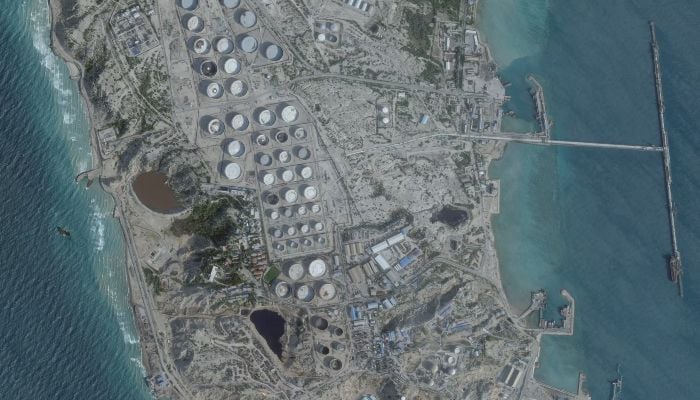
It was hit in US strikes on Saturday, but Iranian officials said afterwards that exports were continuing normally and there had been no casualties.
Trump had threatened to target the island’s oil infrastructure if Iran continues to block the Strait of Hormuz, a crucial passage for energy and other exports from the region.
Iran has pledged to block export of all oil through the strait, and has targeted vessels attempting to transit the narrow chokepoint, wreaking havoc on exports reliant on the passage.
Ruwais refinery
The Ruwais oil refinery, in the emirate of Abu Dhabi, is the world’s fourth largest single-site refinery, according to state-owned operator Adnoc.
Operations there were halted earlier this month as a “precaution” after a drone attack on the industrial complex housing the facility, a source told AFP.
The source did not say whether the refinery had been hit. Adnoc did not make an official announcement.
Ras Tanura
The Ras Tanura facility along Saudi Arabia’s eastern Gulf coast is home to one of the largest refineries in the entire Middle East and a cornerstone of the kingdom’s energy sector.
The complex has a capacity of 550,000 barrels per day.
It has been repeatedly targeted in Iranian strikes, including a drone attack early in the conflict that caused a fire and forced a partial shutdown of the refinery.
Bloomberg reported Wednesday, citing an unnamed source, that operations had now resumed at the facility.
Gulf countries’ output of oil and oil products has plunged from 30 million barrels per day last year, excluding Oman, to 20 million currently, according to the International Energy Agency.
The president of Aramco, which operates the refinery, has warned the war could have “catastrophic consequences” on oil markets.
On Thursday, oil surged more than 5%, with Brent spiking to a peak of over $112 a barrel.


The hidden $1.62 war tax now embedded in every garment you source

Get Ready for a Year of Chaotic Weather in the US

LeBron James’ 6 dunks vs. Rockets key Lakers’ 7th straight win

Stock market crash today (March 12, 2026): Nifty50 opens below 23,600; BSE Sensex down over 900 points on continuing US-Iran war – The Times of India

UK’s Topshop unveils Tolu Coker capsule collection

What time will NASA’s 600 kg satellite crash to Earth today— 14 years after launch?

-
Business1 week ago
Stock market crash today (March 12, 2026): Nifty50 opens below 23,600; BSE Sensex down over 900 points on continuing US-Iran war – The Times of India
-
 Fashion1 week ago
UK’s Topshop unveils Tolu Coker capsule collection
-

 Fashion1 week ago
India’s textile recycling market may reach $3.5 bn by 2030: Report
-
 Entertainment1 week ago
What time will NASA’s 600 kg satellite crash to Earth today— 14 years after launch?
-

 Tech1 week ago
Meta Developed 4 New Chips to Power Its AI and Recommendation Systems
-
 Business1 week ago
US ignites Iran war, but Gulf Arab states pay the price | The Express Tribune
-

 Sports1 week ago
Bangladesh crush Pakistan in ODI series opener | The Express Tribune
-
 Business1 week ago
8th Pay Commission: How Much Will Central Govt Employees’ Salaries Rise? What We Know So Far