

Politics
Key Middle East energy sites under fire

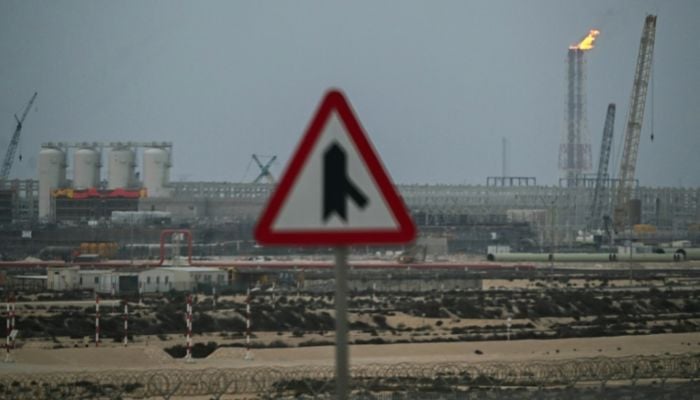
Qatar’s main gas facility has suffered extensive damage after several rounds of Iranian strikes, causing new energy supply fears as the Middle East war grinds on.
Here is a look at some of the key energy facilities that have been targeted in the US-Israel war with Iran.
Ras Laffan
Ras Laffan in Qatar is the world’s largest liquefied natural gas (LNG) hub.
It has been repeatedly targeted by Iranian strikes since the war began, and has now suffered “extensive damage” after back-to-back waves of hits, state-run QatarEnergy said.
Early Thursday, QatarEnergy reported “sizeable fires” and significant damage at several LNG facilities at the hub.
That came after an earlier attack on the Ras Laffan Industrial City on Wednesday had already caused extensive damage to a gas-to-liquids facility.
Qatar shares the world’s largest natural gas reservoir with Iran.
QatarEnergy estimates the Gulf state’s portion of the reservoir, the North Field, holds about 10% of the world’s known natural gas reserves.
In recent years, Qatar has inked a series of long-term LNG deals with France’s Total, Britain’s Shell, India’s Petronet, China’s Sinopec and Italy’s Eni, among others.
Earlier in March, Iranian attacks forced QatarEnergy to halt LNG production and declare force majeure.
South Pars
Iran’s strikes on Ras Laffan come after its South Pars/North Dome field was hit on Wednesday.
The South Pars mega-field is the largest known gas reserve in the world, and supplies around 70% of Iran’s domestic natural gas.
The strikes on the field, which it shares with Qatar, caused a fire, Iranian state television said.
The strike was condemned by some of Iran’s Gulf neighbours, including Qatar and the United Arab Emirates, who have seen energy facilities in their countries come under repeated Iranian attack.
US President Donald Trump said Thursday that Israel had carried out the attack and Washington “knew nothing” about it.
But he warned that if Iran continued attacks against Qatar, US forces would “massively blow up the entirety” of the South Pars field.
Kharg
Kharg island, around 30 kilometres off Iran’s mainland, is a hub for roughly 90% of the country’s crude oil exports.
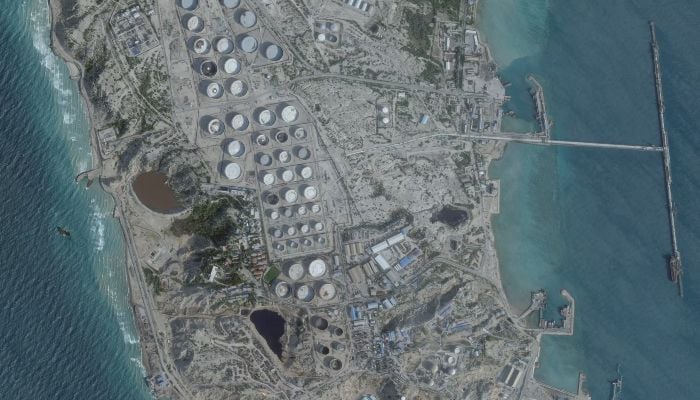
It was hit in US strikes on Saturday, but Iranian officials said afterwards that exports were continuing normally and there had been no casualties.
Trump had threatened to target the island’s oil infrastructure if Iran continues to block the Strait of Hormuz, a crucial passage for energy and other exports from the region.
Iran has pledged to block export of all oil through the strait, and has targeted vessels attempting to transit the narrow chokepoint, wreaking havoc on exports reliant on the passage.
Ruwais refinery
The Ruwais oil refinery, in the emirate of Abu Dhabi, is the world’s fourth largest single-site refinery, according to state-owned operator Adnoc.
Operations there were halted earlier this month as a “precaution” after a drone attack on the industrial complex housing the facility, a source told AFP.
The source did not say whether the refinery had been hit. Adnoc did not make an official announcement.
Ras Tanura
The Ras Tanura facility along Saudi Arabia’s eastern Gulf coast is home to one of the largest refineries in the entire Middle East and a cornerstone of the kingdom’s energy sector.
The complex has a capacity of 550,000 barrels per day.
It has been repeatedly targeted in Iranian strikes, including a drone attack early in the conflict that caused a fire and forced a partial shutdown of the refinery.
Bloomberg reported Wednesday, citing an unnamed source, that operations had now resumed at the facility.
Gulf countries’ output of oil and oil products has plunged from 30 million barrels per day last year, excluding Oman, to 20 million currently, according to the International Energy Agency.
The president of Aramco, which operates the refinery, has warned the war could have “catastrophic consequences” on oil markets.
On Thursday, oil surged more than 5%, with Brent spiking to a peak of over $112 a barrel.
- Iran still weighing its response to the US proposal.
- UAE says its air defences engaged Iranian missiles, drones.
- US imposes sanctions for aiding Iran’s weapons sector.
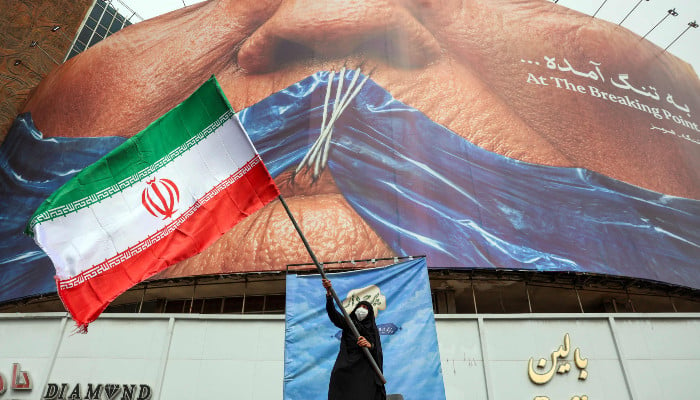
Efforts to end the war between the United States and Iran appeared to stall as the two sides traded fire in the Gulf on Friday, while a US intelligence analysis concluded Tehran could withstand a naval blockade for months.
A CIA assessment indicated that Iran would not suffer severe economic pressure from a US blockade of Iranian ports for about another four months, according to a US official familiar with the matter, suggesting that US leverage over Tehran remains limited as the two sides seek to end a conflict that has been unpopular with US voters.
The Washington Post first reported the assessment.
A senior intelligence official called the “claims” about the CIA analysis “false,” saying the blockade “is inflicting real, compounding damage – severing trade, crushing revenue, and accelerating systemic economic collapse.”
Recent days have seen the biggest flare-ups in fighting in and around the Strait of Hormuz since a ceasefire began a month ago, and the United Arab Emirates came under renewed attack on Friday.
Washington is awaiting Tehran’s response to a US proposal that would formally end the war before talks on more contentious issues, including Iran’s nuclear program.
“We should know something today,” US Secretary of State Marco Rubio told reporters in Rome earlier in the day. “We’re expecting a response from them.”
Iran’s foreign ministry spokesperson said Tehran was still weighing its response, and none was reported by mid-afternoon in Washington, just before midnight in Tehran.
Sporadic clashes in Strait of Hormuz
Meanwhile, more sporadic clashes between Iranian forces and US vessels took place in the Strait of Hormuz, Iran’s semi-official Fars news agency reported.
The Tasnim news agency later cited an Iranian military source saying the situation had calmed, but warned more clashes were possible.
The US military said it struck two Iran-linked vessels attempting to enter an Iranian port, with a US fighter jet hitting their smokestacks and forcing them to turn back.
Iran has largely blocked non-Iranian shipping through the strait since the war began with joint US-Israeli airstrikes across Iran on February 28. The US imposed a blockade on Iranian vessels last month.
Oil prices rose, with Brent crude futures above $101 a barrel, though still down more than 6% for the week.
Trump said on Thursday the ceasefire was still holding despite the flare-ups in the strait, which before the war handled one-fifth of the world’s oil supply.
The confrontation extended beyond the waterway. The United Arab Emirates said its air defences engaged with two ballistic missiles and three drones from Iran on Friday, with three people sustaining moderate injuries.
During the war, Iran has repeatedly targeted the UAE and other Gulf states that host US military bases. In what the UAE called a “major escalation”, Iran stepped up attacks this week in response to Trump’s announcement of “Project Freedom” to escort ships in the strait, which he paused after 48 hours.
Iran accuses US of breaching truce
Iran accused the US of breaching the ceasefire, which had largely held since it was announced on April 7 but has come under strain this week.
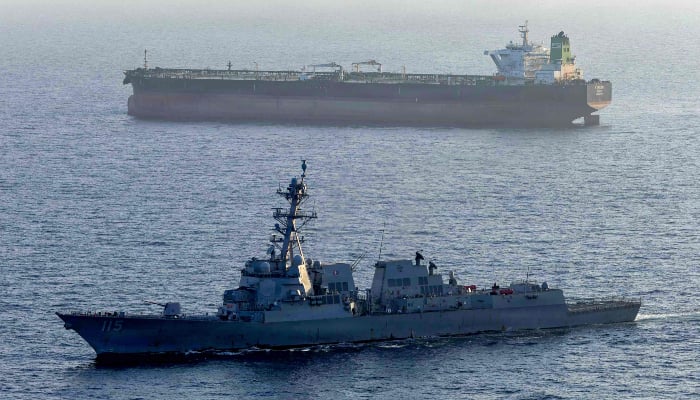
“Every time a diplomatic solution is on the table, the US opts for a reckless military adventure,” Foreign Minister Abbas Araqchi said on Friday. Iran’s Mehr news agency reported that one crew member was killed, 10 wounded and four missing after a US Navy attack on an Iranian commercial ship late on Thursday.
Rubio, after meeting with Italian Prime Minister Giorgia Meloni, questioned why Italy and other allies were not backing Washington’s efforts to reopen the strait.
“Are you going to normalise a country claiming to control an international waterway? Because if you normalise that, you’ve set a precedent that’s going to get repeated in a dozen other places,” he said.
US imposes sanctions
While pursuing diplomacy, the US also ratcheted up sanctions to pressure Iran.
The US Treasury on Friday announced sanctions against 10 individuals and companies, including several in China and Hong Kong, for aiding efforts by Iran’s military to secure weapons and raw materials used to build Tehran’s Shahed drones.
Treasury said in a statement it remains ready to take economic action against Iran’s military industrial base so Tehran cannot reconstitute its production capacity and project power abroad.
It also said it was prepared to act against any foreign company supporting illicit Iranian commerce and could impose secondary sanctions on foreign financial institutions, including those connected to China’s independent “teapot” oil refineries.
The announcement came days before Trump plans to travel to China for a meeting with President Xi Jinping.


Sri Lankan authorities arrested a senior Buddhist monk on Saturday for the alleged sexual abuse of an underage girl, police said, marking the highest-profile case involving clergy in the country.
Pallegama Hemarathana, 71, was arrested at a private hospital in the capital Colombo, where he had sought treatment over the weekend amid an investigation into the alleged abuse of the 11-year-old girl in 2022.
The crime is alleged to have taken place at a highly venerated temple in Anuradhapura, around 200 kilometres (125 miles) north of Colombo, where Hemarathana is the chief priest.
“We will be guided by the magistrate on further action,” a police statement said Saturday.
The monk will soon be presented before a judge.
Authorities added that the victim´s mother has also been arrested for aiding and abetting the monk.
The development comes a day after a local court in Anuradhapura imposed a foreign travel ban on the monk.
There have been several cases of clergy abusing children in Sri Lanka, but the latest arrest involves the most senior monk to be accused of such a crime.
The 71-year-old is the chief custodian of a tree believed to have been grown from a sapling of the Bodhi tree in India that sheltered the Buddha when he attained enlightenment more than 2,500 years ago.
He is also the chief of eight highly venerated temples that are on a key Buddhist pilgrimage route.
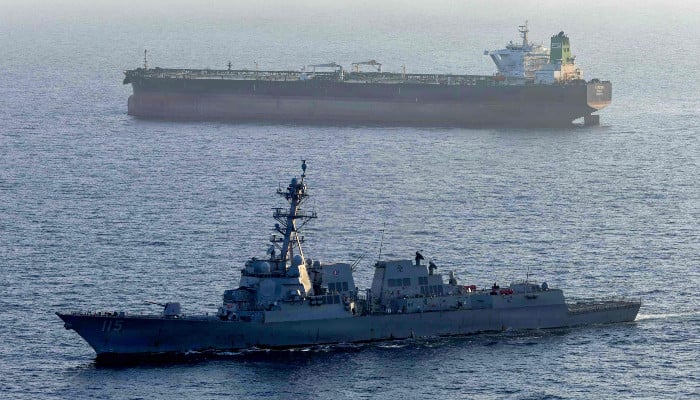
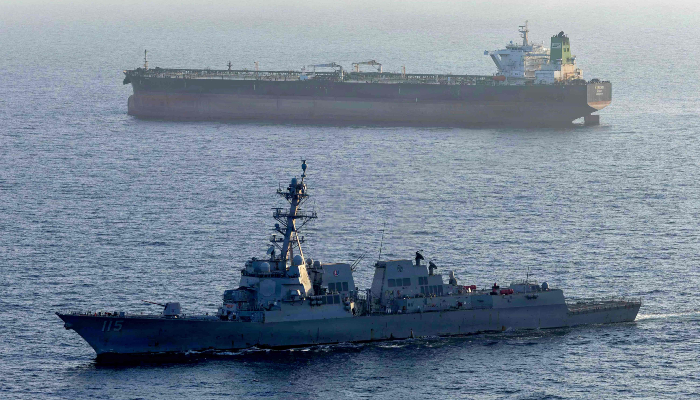
LONDON: Isolated and traumatised by drones and missiles, seafarers in the Gulf face grave mental suffering after more than two months stuck on board in the Middle East war, maritime charities warn.
From captains to cooks, engineers and other officers, the workers who keep global freight flowing have found themselves not just stranded but in some cases right in the firing line of the US-Israeli war with Iran.
“We hear stories of how frightened they are. It’s pretty scary,” said Gavin Lim, head of the Crisis Response Network for the Sailors’ Society, a UK-based seafarers’ charity, who spoke with one crew whose vessel was hit. “They thought: ‘We were going to die’.”
Trade vessels have been struck by projectiles and fired on by Iranian Revolutionary Guards in dozens of incidents, according to the British maritime security monitor UKMTO.
At least 11 seafarers have been killed, according to the International Maritime Organisation.
“They see drones flying, they see missiles flying, and then we see instances where the ships get hit,” said Lim. “You can imagine that anxiety and fear building up. ‘Are we just bait? Are we going to be a victim so that someone can make a point?'”
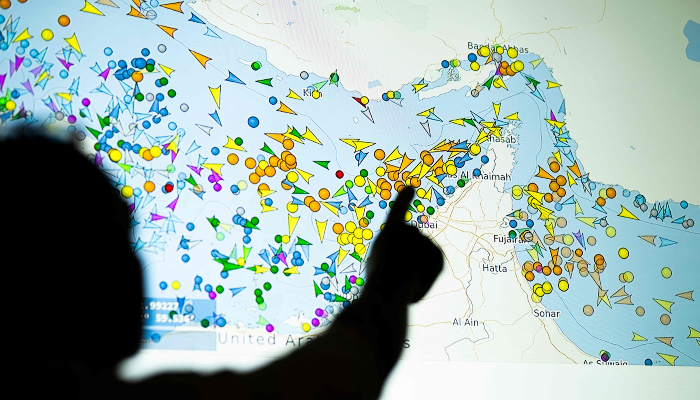
The Seafarers’ Charity cites hypervigilance, burnout, fatigue, loneliness, depression and anxiety as some of the mental strains facing the 20,000 seafarers stranded by Iran’s blockade of the Strait of Hormuz since February 28.
At least two commercial vessels have been seized by Iranian forces under their blockade of the vital trade route. A video showed masked guards with guns boarding a ship.
“We heard that one of the seafarers, an officer, suffered a panic attack while the vessel was being boarded,” said John Canias, maritime operations coordinator for the International Transport Workers’ Federation (ITF).
“Fortunately, the news is they have been taken care of… they have been allowed to speak to their family through the internet.”
Bereaved families
The strain extends to the seafarers’ families at home, worried about their stranded loved ones — or in the worst cases, bereaved.
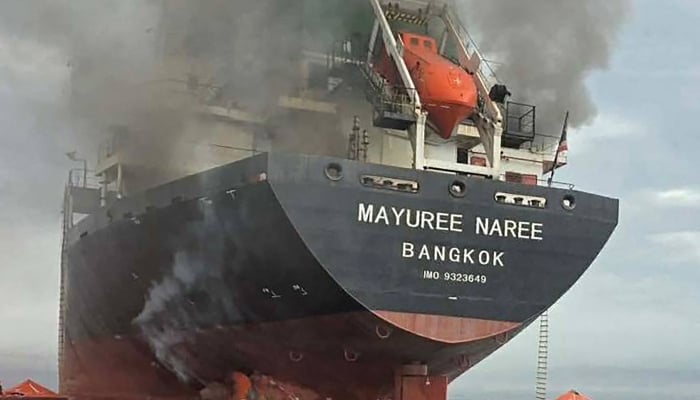
On March 1, the second day of the conflict, a projectile hit a tanker in the Gulf, killing a 25-year-old Indian seafarer as he started his shift in the engine room, said Melanie Warman, communications director for the Sailors’ Society, who spoke to his family.
“The mother has been in and out of hospital, not eating. It’s obviously a really desperate situation,” she told AFP.
“For the families, this is really, really difficult. We hear from families who can’t reach their loved ones on board ships and they’re really frantic with worry.”
Like the Sailors’ Society, another sailors’ helpline charity, the International Seafarers’ Welfare and Assistance Network (ISWAN), fields calls from trapped workers and offers them practical and psychological support.
“Most of the calls are around repatriation — what are their rights, how to go about it — and also obviously the sort of the stress and the worry about being in a conflict zone and not being trained or prepared for it,” said ISWAN’s chief executive, Simon Grainge.
Training to cope
Some charities are working with shipping companies to strengthen support for seafarers under unprecedented strain.
“The most up-to-date guidance we have on mental health and attacks is really based around Somali piracy, which is more under control” since attacks in the Indian Ocean surged in the early 2000s, said Deborah Layde, chief executive of the Seafarers’ Charity.
“One of the things that quite a few organisations are now calling for is really up-to-date guidance on how to deal with wartime issues,” she added. “This isn’t something that a lot of shipping companies are ready for.”
To that end, the charity has turned to mental health professionals to help provide guidelines and a webinar to guide seafarers to cope with the stress of the situation.
“There’s this constant higher level of stress and hypervigilance without that ability to reset as they might normally do. There’s exhaustion,” said Rachel Glynn-Williams, a psychologist working with seafarers who is involved in developing the webinar.
“At the point I pick up crew conversations, they will have been on hyper-alert for a sustained amount of time, so their nervous system will be heightened and it’s going to take a little time, depending on the individual, for that nervous system to reset,” she told AFP.
“For some people, it might be fairly soon afterwards, within a matter of days, if not hours. For others, it might take a little longer.”


CDF Munir to address Marka-e-Haq victory ceremony at GHQ tomorrow

I Tried the Best Captioning Smart Glasses, and Only One Leads the Pack

Rory McIlroy slams LIV golfers who don’t want to come back to PGA Tour—but why now?

-
 Politics6 days ago
Iran weighs US reply delivered via Pakistan as Trump signals opposition to deal terms
-

 Tech1 week ago
This Indigenous Language Survived Russian Occupation. Can It Survive YouTube?
-

 Fashion1 week ago
Canada’s Lululemon appoints Esi Eggleston Bracey to board of directors
-

 Fashion1 week ago
US’ J.Jill, Inc. appoints Kimberly Wallengren as CMO
-
 Business1 week ago
Government hikes jet fuel prices by 5% for international airlines – The Times of India
-
 Business1 week ago
Apollo Sports Capital and Tom Dundon make landmark $225 million investment in pickleball
-

 Fashion1 week ago
US’ Gap partners with Victoria Beckham on timeless wardrobe essentials
-

 Fashion1 week ago
AAFA pushes for swift US House passage of key anti-counterfeiting law