

Business
EV maker Lucid reveals plans for robotaxi, positive free cash flow late this decade


The Lucid display is seen at the New York International Auto Show on April 16, 2025.
Danielle DeVries | CNBC
NEW YORK — Lucid Group expects to be cash flow positive late this decade as it plans to grow its vehicle lineup and significantly increase its software and technology offerings, the all-electric vehicle maker announced Thursday during its first investor day in nearly five years as a public company.
The EV company aims to accomplish positive cash flow generation through market expansion into midsize vehicles and robotaxis, as well as international expansion in markets such as Europe and Saudi Arabia. It also expects to achieve efficiency gains and software revenue growth with the introduction of improved advanced driver assistance systems and a new Lucid artificial intelligence assistant, executives told dozens of investors and Wall Street analysts on Thursday.
Lucid stock closed Thursday at $9.84, down 7.9%. Shares were off roughly 6% to 8% during much of the event despite the company giving its most detailed product and expansion plans to date, highlighting the tough market conditions for EV companies.
“We view the midterm and late decade targets as an important benchmark against which investors can measure LCID’s progress which will improve transparency,” Baird analyst Ben Kallo said in a Thursday investor note. “The near-term backdrop for EVs remains challenging with headwinds such as tariffs and policy muting investor sentiment.”
Lucid’s cash flow target is challenging given the automaker’s current performance and waning demand for EVs in the U.S. While Lucid has been able to increase sales and narrow losses, the company lost $2.7 billion on revenue of $1.35 billion in 2025. It had negative free cash flow of $3.8 billion in 2025, a loss that was roughly 31% larger than a year earlier.
Lucid interim CEO Marc Winterhoff — who unexpectedly took over for company founder Peter Rawlinson last year — said the company’s “north star” is “accelerating to profitability,” reiterating the investor event’s theme. He and other executives declined to disclose an exact year the company aims to be cash flow positive.
The automaker has been trying to increase investor interest in the company as it prepares to launch a new midsize vehicle at the end of this year. Its largest shareholder, Saudi Arabia’s Public Investment Fund, has also changed its investment strategy in the company from capital investment to revolving credit.
Robotaxi, autonomy plans
Lucid on March 12, 2026, previewed plans for a new two-seat robotaxi that the company is developing off its upcoming midsize electric vehicle platform.
Michael Wayland / CNBC
Lucid on Thursday said it expects to achieve roughly $1 billion in annual incremental, non-vehicle revenue through services such as recurring software subscriptions by later this decade. It also previewed plans for a two-seat robotaxi, including a design concept car, but it did not specify a timeframe for the vehicle.
Winterhoff told CNBC after the event that the dedicated robotaxi is a “mid-term” target for the company in the coming years.
Company executives spent a significant amount of the event discussing Lucid’s upcoming driving technologies, including robotaxis, and plans to launch a subscription service by early 2027 that will range from $69 to $199 a month, based on capabilities.
“Autonomy plays an outsized role in the future of Lucid,” said Kay Stepper, Lucid vice president of advanced driving systems, adding that the company plans to offer vehicles capable of driving themselves under certain circumstances by 2029.
Winterhoff and Uber President and Chief Operating Officer Andrew Macdonald on Thursday announced they are planning to expand a previously announced tie-up for robotaxis to include upcoming midsize vehicles.
Expansion into midsize and autonomy is expected to significantly increase Lucid’s total addressable market, or TAM, from $40 billion for its current Air sedan and Gravity SUV to $700 billion, executives said Thursday.
Winterhoff said he sees the company’s autonomy technologies essentially growing to match Tesla’s current FSD by next year.
Midsize vehicles
Lucid on Thursday said it plans to produce three midsize vehicles, starting with a vehicle called Cosmos this year, followed by a model called Earth roughly a year later and an unnamed vehicle during an unspecified time frame after that.
“We think these three unique products will give us maximum opportunity to hit the widest audience possible. And that audience is where we are today, but it’s a different audience than our current market,” said Derek Jenkins, Lucid senior vice president of design and brand.
A Lucid-supplied teaser image of its upcoming midsize vehicle behind its current Gravity SUV.
Lucid
A preview of the Cosmos shown to event attendees Thursday featured a more muscular look with thinner headlights and a silhouette reminiscent of the automaker’s current Gravity SUV but in smaller packaging. The interior of the vehicle continues Lucid’s focus on a spacious cabin with significant storage and a large one-piece screen traversing most of the car’s front dash.
The three midsize vehicles are targeted at upscale buyers, younger “trendsetting achievers” and outdoor enthusiasts, Jenkins said. The last would be a direct competitor to fellow EV competitor Rivian Automotive, which is expected to release a new R2 midsize vehicle this spring, beginning with a roughly $58,000 version of the vehicle.
Lucid has said its midsize vehicle is expected to begin at roughly $50,000. That would position it in line with the average transaction prices of new vehicles in the U.S. as well as entry-level models of Rivian’s R2.
Both Rivian and Lucid are attempting to reassure investors that they can not only compete in a troubled EV market but thrive through the expansion of new vehicles and technologies to better compete against U.S. EV leader Tesla. Lucid said its new midsize EV platform will be class-leading in efficiency, something the company has strived to do with all its vehicles.
Both have touted having enough capital to get them through near-term initiatives but their long-term viability is still a major question for investors.
Lucid has said its total liquidity of $5.5 billion, including a roughly $2 billion delayed draw term loan credit facility from Saudi’s PIF, is enough to get through the first half of 2027.
Rivian ended the fourth quarter with $6.59 billion in total liquidity, including nearly $6.1 billion in cash, cash equivalents and short-term investments, as the company attempts to ramp up production this year of its midsize vehicle and new autonomy technologies.
— CNBC’s Michael Bloom contributed to this report.


Spirit Airlines check-in Kiosks sit idle at Oakland International Airport on August 13, 2025 in Oakland, California.
Justin Sullivan | Getty Images
Spirit Airlines could shut down as early as 3 a.m. ET Saturday, according to people familiar with the matter. The carrier has failed to secure a financial lifeline to continue operating, though it hasn’t commented on the potential shutdown or its plans.
About 290 Spirit flights are scheduled for Saturday, according to aviation site Flightradar24. Another 381 are scheduled for Sunday.
Travelers with Spirit tickets could be understandably rattled. While there have been some U.S. airlines to shut down in recent years, the budget carrier is larger than most recent airline failures and links major cities like New York, Miami, Detroit and Los Angles — and many others in between — with its Airbus jets.
Here’s what travelers need to know:
You have a Spirit ticket. What should you do?
Immediately? Nothing.
Travelers who are booked on a Spirit flight, like this CNBC reporter is for later this month, are likely to receive a refund if they purchased tickets with a credit card.
If the ticket was bought with a debit card or with loyalty points, however, the chances of recovering funds are slim to none, said Henry Harteveldt, founder of Atmosphere Research Group, a travel consulting firm.
“If you’re holding a reservation for a flight on Spirit don’t proactively cancel it. Wait for the airline to announce it is shutting down,” he said.
Would Spirit be able to help you at the airport?
Don’t count on it.
Spirit has declined to comment on a potential shutdown. If it confirms an end to operations, the carrier will most likely have information on its website about travelers’ next steps.
Harteveldt said travelers shouldn’t go to the airport expecting to find Spirit staff in the event the airline ceases operations. Call centers are likely to be overwhelmed if they are still staffed.
That could leave passengers with fewer answers than they’d like, but other airlines are likely to help assist affected customers.
Airlines that offer last-minute fares, likely with some discounts, will be available to travelers at airport ticket counters.
How can another airline help?
United Airlines, JetBlue Airways, Frontier Airlines and American Airlines are among the carriers that have said they are ready to assist Spirit customers and crews if the carrier shuts down.
That could mean scheduling additional flights to carry the stranded passengers, similar to what they do during a hurricane or other natural disaster.
Why could Spirit shut down?
Spirit, known for bright yellow planes, low fares and fees for everything else, had been successful for years, but this week it’s been on the brink of liquidation after failing to reach a deal with bondholders for a $500 million government bailout from the Trump administration.
Last year Spirit filed for its second bankruptcy in less than a year, though it’s had a host of problems even before then.
A plan to be acquired by JetBlue was blocked. Rising costs upended its business model. An engine defect grounded dozens of its planes. And, more broadly, upscale travel became more popular with consumers, driving airline profits.
At the same time, big, legacy airlines were selling their own basic economy fares that were similar to what Spirit was offering, but with bigger networks.
What does this mean for travel going forward?
Airlines have been adding flights since Spirit’s bankruptcy filing last year on some of its routes and at major airports. They’re likely to keep doing so.
Experts have said they expect fares to rise, at least in some markets, if the discounter goes away, even though the carrier has shrunk substantially.
Business
Middle East crisis: Air India to make food optional, help cut price of tickets – The Times of India
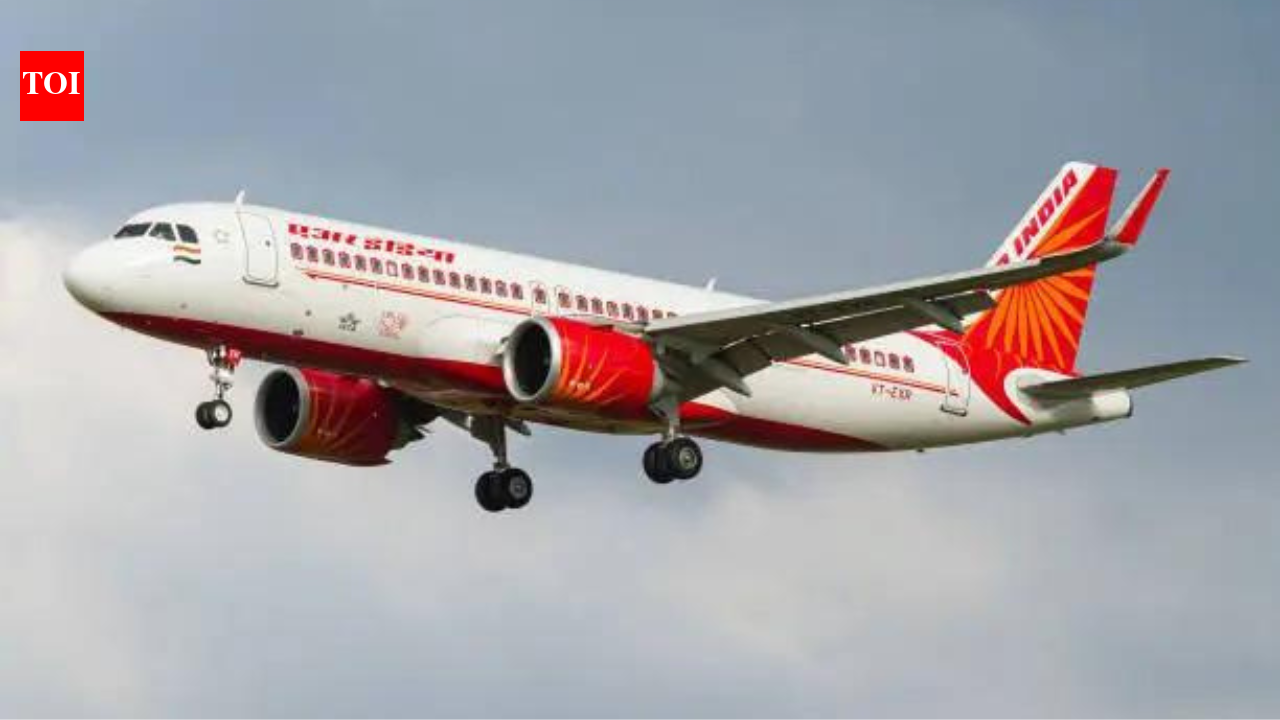
NEW DELHI: Desperate times call for desperate measures. Full service Air India is planning to make meals optional on its domestic and short international (under two hour) flights. Once this “unbundling” rolls out in the next month or two, passengers opting out of meals could have upwards of Rs 250 shaved off their ticket price. While this move, say people in the know, is “on the anvil,” the airline is looking at several other unprecedented measures to fly through the severe cost-revenue turbulence caused by the unending West Asia war.While not opting for meals could lead to slightly cheaper economy tickets, AI is looking at unbundling lounge access for business class passengers because those opting out of this, could get their tickets cheaper. On an average, lounge operators charge Rs 1,100-1,400 per user at metro airports and Rs 600-700 at non metros.The average spend is about Rs 1,000 per lounge. Many business class flyers are frequent travellers who just make it to airports in time for their flight and do not head to the lounge. If unbundled, this could be a saving in their ticket cost. Banks have been reducing lounge access for credit card users for the same reason to cut their costs.“From Day One, Air India has had meals bundled in its ticket price. Now the way aviation turbine fuel (ATF) price is rising and the rupee crashing since Feb 28, ticket prices are going up. India is a price-sensitive market and raising fares beyond a point leads to a fall in traffic with many opting to travel by train or road. This has led to the rethinking to unbundle meals on some flights. Other steps are also being considered,” said people in the know.Several airlines globally have over the past few years unbundled their onboard offerings. Many international full service airlines offer a basic meal in economy while giving the option of buying gourmet meals at an additional cost. Ditto for alcoholic beverages, with cheaper beer and wines being given at no extra cost while the others being charged for. “For passengers, the distinction between full service and low cost airlines is blurring very fast,” said an industry old-timer.
A tree surgeon said he thought he “was going to die” when he suffered a powerful electric shock from an overhead line while clearing hedges in Wiltshire.
Joshua Pocknell was working just after midnight on the A3102 near Royal Wootton Bassett when the mobile lighting tower he was pushing touched an 11,000 volt overhead powerline.
The 26-year-old was seriously injured and taken to hospital, where he spent the next five weeks, workplace watchdog the Health and Safety Executive (HSE) said.
“My whole body locked and I felt hot and cramping,” Mr Pocknell said of the shock.
“I could hear the electricity in my head and thought I was going to die.
“I hit the floor and passed out, still cramping.
“I later discovered a hole had burnt through my arm and hip all the way to the bone.”
More than two years after the incident on January 19 2024, the tree surgeon said he still experiences “considerable pain”.
“My injuries were complex and challenging and there were five or six different surgeons involved in my treatment,” he said.
“I still experience considerable pain and strange bodily sensations, including nerve pain and itching.
“This incident has torn the life from beneath me and I don’t think I will be able to return to the job that I used to love.”
The regulator said it investigated the incident and found Mr Pocknell’s employer, Upton Specialised Tree Services, did not properly plan for or risk assess the dangers posed by overhead power lines.
The firm did not put up barriers or provide training in operating the mobile lighting tower.
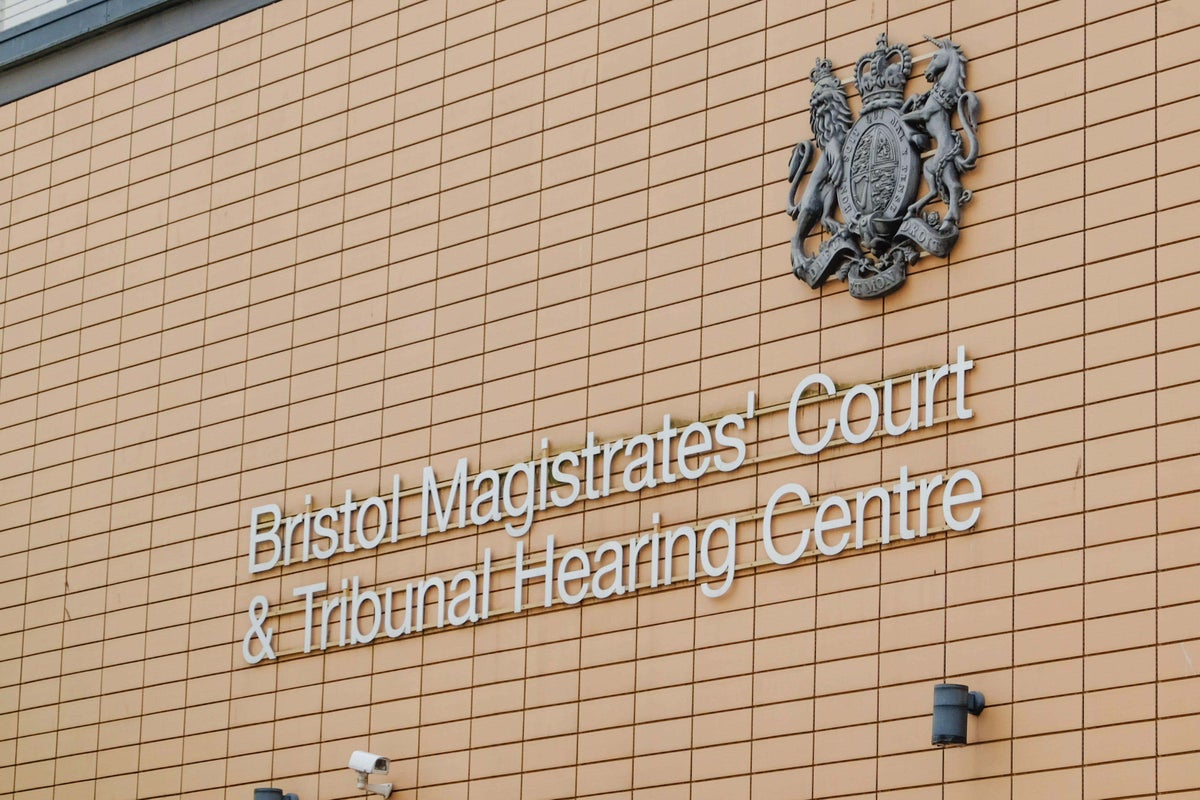
Upton Specialised Tree Services pleaded guilty to the charge of breaching Regulation 14 of the Electricity at Work Regulations 1989 by virtue of Regulation 3, the HSE said, and was fined £60,000 and ordered to pay £6,237 in costs at Bristol Magistrates’ Court on Friday.
HSE inspector Tom Preston said: “Joshua is lucky to be alive.
“Overhead electrical power lines present extreme risks to workers, but the risks can and must be controlled.
“Work near overhead power lines should only be carried out where it can be done safely, following a suitable risk assessment, the use of barriers or safety zones, and proper training on the equipment being used.
“In this case, a worker sustained severe injuries in a traumatic incident for all concerned that was entirely preventable.
“HSE will take action against those who fail to take the steps necessary to protect people at work.”


US awards $488m F-16 radar support contract for Pakistan, other countries

Germany urges stronger European defence after US reduces troops

ICE cotton witnesses sharp rise on weaker dollar, strong exports

-

 Tech1 week ago
They Wanted to Join Raya. They’ve Been on the Waiting List for Years
-

 Tech5 days ago
A Brain Implant for Depression Is About to Be Tested in Humans
-

 Tech5 days ago
Almost 90% of women leave tech industry within 10 years | Computer Weekly
-

 Fashion1 week ago
North India cotton yarn steady despite continued push by spinners
-

 Tech1 week ago
Why Do I Like Dyson’s PencilVac So Much?
-

 Entertainment1 week ago
Anne Hathaway makes shocking confession about Taylor Swift’s music
-

 Tech1 week ago
US Special Forces Soldier Arrested for Polymarket Bets on Maduro Raid
-

 Entertainment5 days ago
Norway joins Type 26 Frigate Programme to boost NATO naval power