

Politics
historic Moon mission set for lift-off

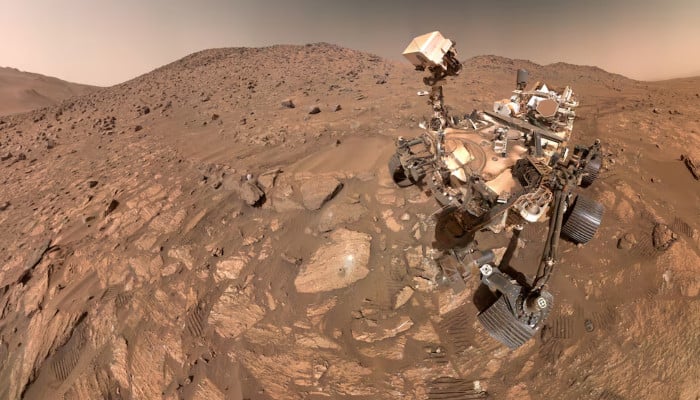
- Crew includes three Americans, one Canadian member.
- First woman, non-American, person of colour onboard.
- Mission mirrors Apollo 8’s historic 1968 lunar flyby.
WASHINGTOM: More than half a century after the groundbreaking Apollo programme’s last crewed flight to the Moon, three men and one woman are preparing for a lunar journey set to turn a new page in American space exploration.
The long-delayed Nasa mission dubbed Artemis II is slated to lift off from Florida and venture to Earth’s natural satellite as early as April 1.
They won’t land but are instead on a mission to fly by, much as Apollo 8 did in 1968.
Americans Reid Wiseman, Victor Glober, and Christina Koch — along with Canadian Jeremy Hansen — will carry out the approximately 10-day trip.
The odyssey will mark a series of firsts: the first time a woman, a person of colour, and a non-American will venture on a Moon mission.
It’s also the inaugural crewed flight of Nasa’s new lunar rocket, dubbed SLS.
The mammoth orange-and-white rocket is designed to allow the United States to repeatedly return to the Moon in years to come, with the goal of establishing a permanent base that will offer a stepping stone for further exploration.
“We’re going back to the Moon because it’s the next step in our journey to Mars,” said Wiseman, the Artemis II commander, on a Nasa podcast.
Space Race 2.0?
The Artemis program — named in honour of Apollo’s goddess twin — aims to test technologies needed to one day send humans to Mars, a far more distant journey.
That ambition presents an immense challenge, which is compounded by pressure to achieve it before China does.
China is currently aiming to land humans on the Moon by 2030.
Beijing is also targeting the lunar South Pole, not least for its rich natural resource potential.
The competition recalls the 1960s-era Space Race between the US and the Soviet Union — but Harvard professor Matthew Hersch said that rivalry was “unique” and “will not be repeated anytime soon.”
He told AFP the Chinese are “not really competing with anyone but themselves.”
Washington’s lunar program investment is significantly lower now than during the Cold War era — but the technology has changed dramatically.
“The computer technology that supports the Artemis 2 crew would be almost unimaginable to the Apollo 8 crew, which went to the Moon in a spacecraft with the electronics of a modern high-end toaster oven,” Hersch said.
And yet the Artemis 2 mission will not be without risks, even by Nasa’s own admission.
The crew will board a spacecraft that has never once carried humans or travelled to the Moon, which is more than 384,000 kilometres (238,855 miles) from Earth — or roughly 1,000 times further away than the International Space Station.
“We don’t accept anything less than perfect, otherwise we’re accepting greater risk,” Nasa’s former chief astronaut Peggy Whitson told AFP.
“That is an important process that everyone has to embrace in order for us to be really successful, because we have to live with that knowledge, because of our space flight history, that when accidents happen, people will die,” she said.
Minimising risks and preventing disaster will involve the crew performing a series of checks and manoeuvres while still in Earth’s vicinity.
If all goes well, they’ll set forth for the Moon.
Ambitious timeline
The crew’s objective will be to verify that both the rocket and the spacecraft are in working order, in the hopes of paving the way for a return and Moon landing in 2028 — the final year of President Donald Trump’s term.
That deadline has raised eyebrows among experts, in part because Washington is relying on the private sector’s technological headway.
The astronauts will require a second vehicle to descend to the moon’s surface, a lunar lander that remains under development by rival space companies owned by billionaires Elon Musk and Jeff Bezos.
The Artemis program has also been plagued by delays and massive cost overruns.
Still, Nasa hopes that Artemis 2 can succeed in recreating the rare moment of unity and hope that Apollo 8, when a crew flew by the Moon on Christmas Eve 1968, allowed for.
In the shadow of a tumultuous year, approximately one billion people worldwide tuned in to their flickering television sets to follow the monumental journey of Frank Borman, Jim Lovell, and Bill Anders.
The astronauts — who immortalised the famous “Earthrise” photograph taken from lunar orbit — were credited with having “saved 1968.”
Nearly 60 years later, the country is once again mired in deep division and uncertainty, and the crew of Artemis 2 will soon have their chance to inspire.
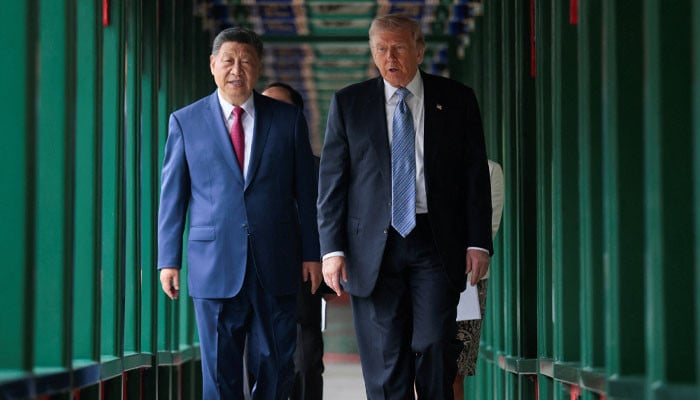
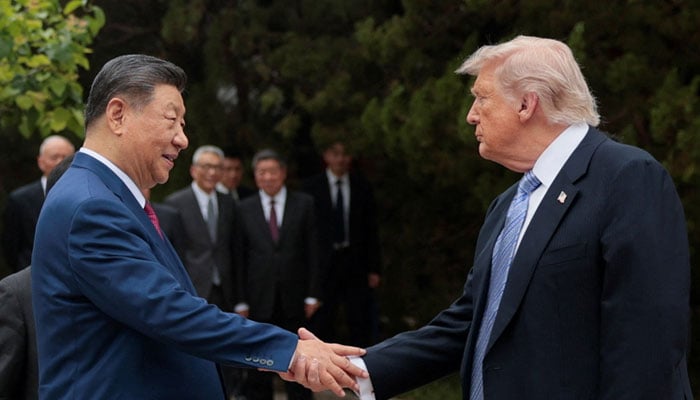
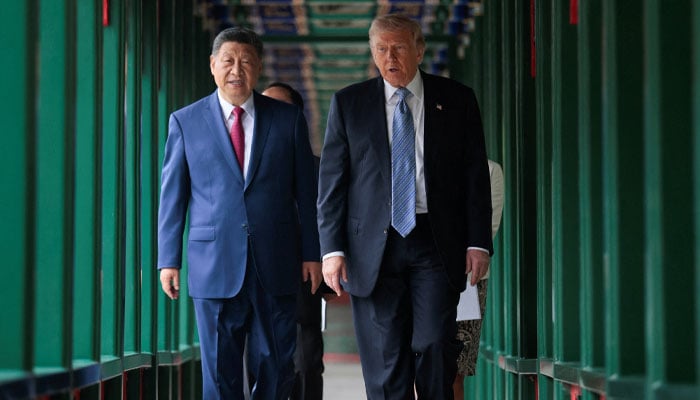
US President Donald Trump left Beijing on Friday after talks, a temple tour and tea with his Chinese counterpart Xi Jinping, with their discussions ranging from trade to the Middle East.
Here are five takeaways from the two-day superpower summit:
Deals struck?
Trump said he made “fantastic trade deals” with Xi, who referenced reaching a “consensus”.
But there have been no official announcements or details from either side.
Trump was after big purchases by China of American planes and farm goods — a key issue for his domestic base.
After leaving Beijing, the US president told reporters on Air Force One that China would be “buying billions of dollars of soybeans”.
He added China had agreed to buy “over 200 planes from Boeing with a promise of 750 planes… if they do a good job with the 200, which I´m sure they will.”
Trump told Fox News after day one of the summit that Xi had also agreed to buy more American oil.
China’s foreign ministry did not confirm or deny any purchase agreements when asked at a news briefing shortly after the US leader’s departure.
Meanwhile, a surprise omission from the agenda was tariffs — the leaders had been expected to discuss extending a trade truce reached last October.
Trump said the matter hadn’t come up.
Opening Hormuz
China has described the United States’ ongoing war in Iran as “illegal” and has repeatedly called for its end.
It has quietly acted as mediator, with Beijing hosting Iran’s foreign minister a week before Trump’s visit and taking calls from several Gulf nations.
Trump said that during Thursday’s talks, Xi agreed to help re-open the vital Strait of Hormuz, which has been largely blocked by Iran since the US and Israel began striking the country on February 28.
“The two sides agreed that the Strait of Hormuz must remain open to support the free flow of energy,” the White House said.
China is directly affected by the strait’s blockade and has long advocated for safe transit through it.
More than half of the crude imported by sea to China comes from the Middle East, according to maritime analytics firm Kpler.
However, China’s foreign ministry did not comment when asked if Xi had told Trump he would help re-open the waterway.
Taiwan? No comment
In unusually blunt remarks, Xi warned Trump in their first bilateral meeting that mishandling Taiwan could push their two countries into “conflict”, framing it as the most important issue imperilling the US-China relationship.
Analysts had suggested before the summit that Beijing saw an opportunity to angle for a change to the established US position on the island.
Trump said Xi asked if Washington would defend Taiwan in case of a conflict and that he responded: “I don’t talk about that.”
US Secretary of State Marco Rubio told NBC on Thursday that “US policy on the issue of Taiwan is unchanged”.
‘Milestone’
Trump heaped praise on Xi throughout the trip, addressing the Chinese leader as “friend” and a “great leader”, and inviting him to the United States in September.
Xi refrained from matching Trump’s public affection, though in a sign of goodwill said he would send some Chinese rose seeds to the White House as Trump admired the flora in the exclusive Zhongnanhai leadership compound.
The Chinese president did call the visit a “milestone”, hailing a new official line of “constructive strategic stability” to define the US-China relationship for the next three years.
“This is not merely a procedural consensus but a major strategic repositioning. It defines how the two great powers should coexist… setting clear guardrails for managing frictions while expanding shared interests,” said Dong Wang, a professor at Peking University.
“Even as differences over advanced technology and geopolitics remain, both sides now operate under this new strategic consensus to avoid misjudgement and miscalculation,” he said.
The term “can be seen as progress compared with ‘strategic competition’ for (Trump predecessor Joe) Biden’s era”, noted The Asia Group´s George Chen.
After Trump’s departure from China, state news agency Xinhua reported that Beijing’s top diplomat said Xi is expected to visit the United States in the autumn.
- Araghchi says Iran ready to resume fighting if diplomacy fails.
- Iran’s FM welcomes Chinese mediation, calls China strategic partner.
- Iran aims to normalise Hormuz traffic if negotiations progress: FM.
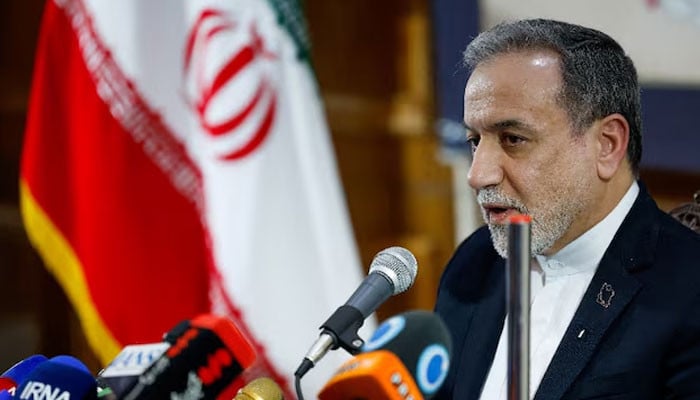
Tehran has “no trust” in the US and is interested in negotiating with Washington only if it is serious, Iran’s Foreign Minister Abbas Araghchi said on Friday, as talks on ending the war remained on hold.
All vessels can pass through the Strait of Hormuz except those at war with Tehran, Araqchi told reporters in New Delhi during a visit to attend the Brics foreign ministers’ meeting, adding that vessels wanting to transit should coordinate with its navy.
The situation around the key conduit was “very complicated”, he said.
Iran effectively shut the strait, which earlier handled about one-fifth of the world’s oil and gas supply, to most shipping traffic after its war with the US and Israel erupted in February.
Washington and Tehran announced a ceasefire last month but have been struggling to thrash out a permanent peace pact. Talks, mediated by Pakistan, have been suspended since Iran and the US each rejected the other’s most recent proposals last week.
“Contradictory messages” have made us reluctant about the real intention of the Americans on negotiations, Araghchi said, adding that the mediation process by Pakistan has not failed but is in “difficulty”.
Araghchi also said that Tehran is open to any support, including from China, to help resolve the conflict in the Middle East
Iran is trying to keep the ceasefire to give diplomacy a chance but is also prepared to go back to fighting, he said.
The issues holding up negotiations between the two sides include Iran’s nuclear ambitions and its control of the Hormuz.
Araqchi’s statement on Friday came hours after US President Donald Trump said his patience with Iran was running out and agreed in talks with Chinese President Xi Jinping that Tehran must reopen the strait.
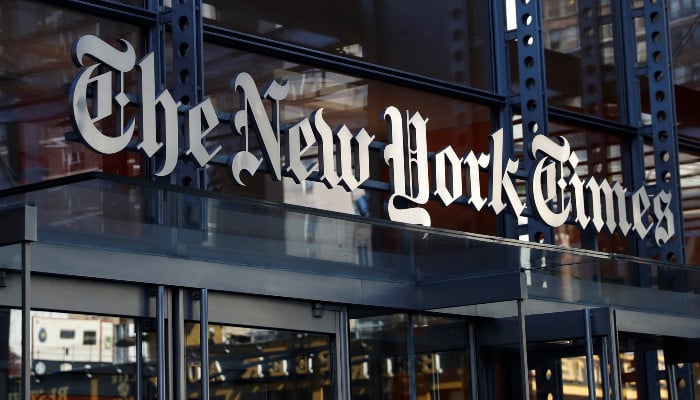
JERUSALEM: Israel on Thursday threatened to take The New York Times to court over a piece it published denouncing allegedly widespread sexual abuse against Palestinian detainees.
Prime Minister Benjamin Netanyahu and Foreign Minister Gideon Saar have ordered the “initiation of a defamation lawsuit against The New York Times”, according to a joint statement issued by their offices.
The offices said that the piece by Nicholas Kristof, a prominent opinion columnist, was “one of the most hideous and distorted lies ever published against the State of Israel in the modern press, which also received the backing of the newspaper”.
Kristof’s investigation is based on testimonies gathered in the Israeli-occupied West Bank from 14 men and women who said that they had been sexually assaulted by Israeli settlers or members of the security forces.
The report described “a pattern of widespread Israeli sexual violence against men, women and even children — by soldiers, settlers, interrogators in the Shin Bet internal security agency and, above all, prison guards”.
The New York Times responded that any legal claim over the “deeply reported opinion column” lacked merit.
“This threat, similar to one made last year, is part of a well-worn political playbook that aims to undermine independent reporting and stifle journalism that does not fit a specific narrative,” Danielle Rhoades Ha, a spokesperson for the newspaper, said in a statement.
Kristof’s piece said there was no evidence that Israeli leaders ordered rapes.
The Israeli foreign ministry alleged that Kristof had based his piece “on unverified sources tied to Hamas-linked networks”.
It also accused the paper of deliberately timing the publication to “undermine” an independent Israeli report on Hamas sexual violence perpetrated during its October 7, 2023, attack on Israel, which was published on the same day.
Israeli forces have detained thousands of Palestinians in the West Bank since Hamas’s 2023 attack.
The United States has high protections for journalistic expression, with libel suits needing to prove that information was purposefully untrue and with harmful intent.
President Donald Trump and his allies have nonetheless filed a number of lawsuits against media outlets, some of which have reached settlements rather than risk repercussions from his administration.


Justin Thomas, Keegan Bradley get heated with official over pace of play at PGA Championship

Petrol, diesel prices up by Rs 3, CNG by Rs 2, further hike likely; no change in piped gas yet

John Travolta gets emotional receiving surprise honour at Cannes Film Festival

-

 Tech1 week ago
A new frontier: Identity stack evolves for agentic systems | Computer Weekly
-

 Tech1 week ago
‘Orbs,’ ‘Saucers,’ and ‘Flashes’ on the Moon: Pentagon Drops New UFO Files
-

 Fashion1 week ago
New orders in German manufacturing up 5% MoM in Mar 2026: Destatis
-

 Tech1 week ago
Nick Bostrom Has a Plan for Humanity’s ‘Big Retirement’
-

 Tech1 week ago
What Microsoft Executives Really Thought About OpenAI in 2018
-

 Sports1 week ago
Shaheen Afridi achieves landmark feat during opening Test against Bangladesh
-

 Fashion1 week ago
US’ Carter’s taps retail veteran Sharon Price John as new CEO
-

 Entertainment1 week ago
Rihanna embraces new tattoo given by children