

Fashion
JD Sports Europe brand marketing director exits for role in food sector


Published
August 31, 2025
Sportswear and fashion creative Chris Waters has been lost to fashion for the food industry. The brand marketing director of JD Sports UK/Europe has just left to join German Doner Kebab as its chief marketing officer.
Waters had worked at JD for three years forming the link between the brand and agency-of-choice Uncommon Creative Studio which was responsible for the launch of its “bold new global brand identity” ‘Forever Forward’ while he is also cited for “delivering award-winning campaigns that deeply resonated with Gen Z audiences”.
Waters joined as UK retail marketing director in 2022 becoming brand marketing director in 2023.
Before JD Sports, he was head of in-store marketing at supermarket Morrisons. He also previously worked in various marketing roles at another supermarket, Asda, bringing over 20 years of combined experience across the FMCG and fashion retail sectors.
Waters has now joined the fast-expanding high-street food retailer, which has plans to open 300 UK restaurants and achieve £400 million in sales by 2028.
Just last week, JD Sports Fashion issued a trading update for Q2 and HI showing like-for-like sales dipped in both periods, ‘organic’ (currency-neutral sales factoring out acquisitions) rose however. Importantly too, it said its just-opened new giant Manchester store is performing strongly.
Copyright © 2025 FashionNetwork.com All rights reserved.











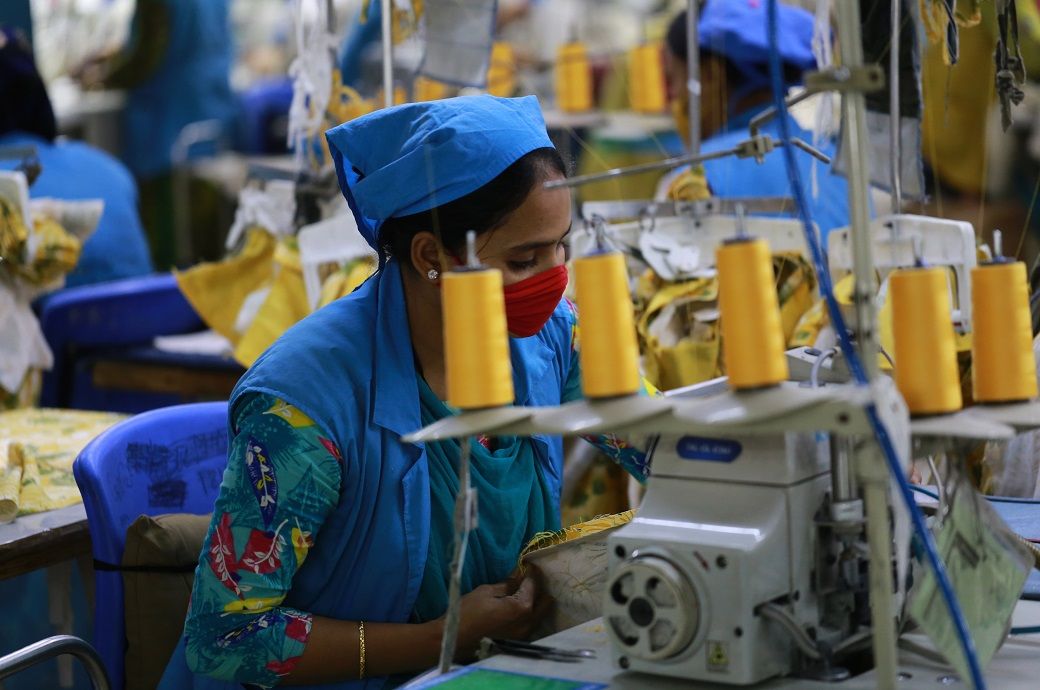
The partnership will implement a strategic road map titled ‘From Factory Nation to Innovation Nation – Reimagining Bangladesh Apparel 2030’.
The Bangladesh Brand Forum (BBF) and trade body BGMEA recently signed an MoU to reposition the apparel industry as a modern, sustainable and innovation-driven one in the global market by 2030.
BBF will provide strategic branding consultancy, knowledge support and enhance BGMEA’s visibility across platforms.
BGMEA will offer industry data, expert inputs and active participation from its member factories.
Both sides will work to reshape the global narrative of Bangladesh’s apparel industry and promote it as a responsible and green manufacturing hub.
The major components of the MoU include formulating and executing a global branding and communication strategy for the repositioning; establishing a dedicated Innovation Lab at BGMEA to engage young innovators in solving key industry challenges; and launching a Leadership Academy to enhance the skills of mid- and senior-level industry professionals, with a special focus on nurturing women leadership.
These also include organising youth festivals, campus ambassador programmes and national competitions to encourage talented students and young innovators to pursue careers in the apparel sector; producing knowledge reports and case studies highlighting the success of environmentally friendly factories and supporting the achievement of US Sustainable Development Goals (SDGs); and facilitating direct linkages between green factories and Japanese brands, and jointly developing a global sustainable fashion brand with designers from both countries.
BGMEA members will be offered insights into modern branding, retail and digital marketing practices through participation in BBF’s summits and regular knowledge-sharing platforms, according to domestic media reports.
BBF will provide strategic branding consultancy, knowledge support and enhance BGMEA’s visibility across national and global platforms.
BGMEA will contribute industry data, expert inputs and active participation from its member factories.
Fibre2Fashion News Desk (DS)
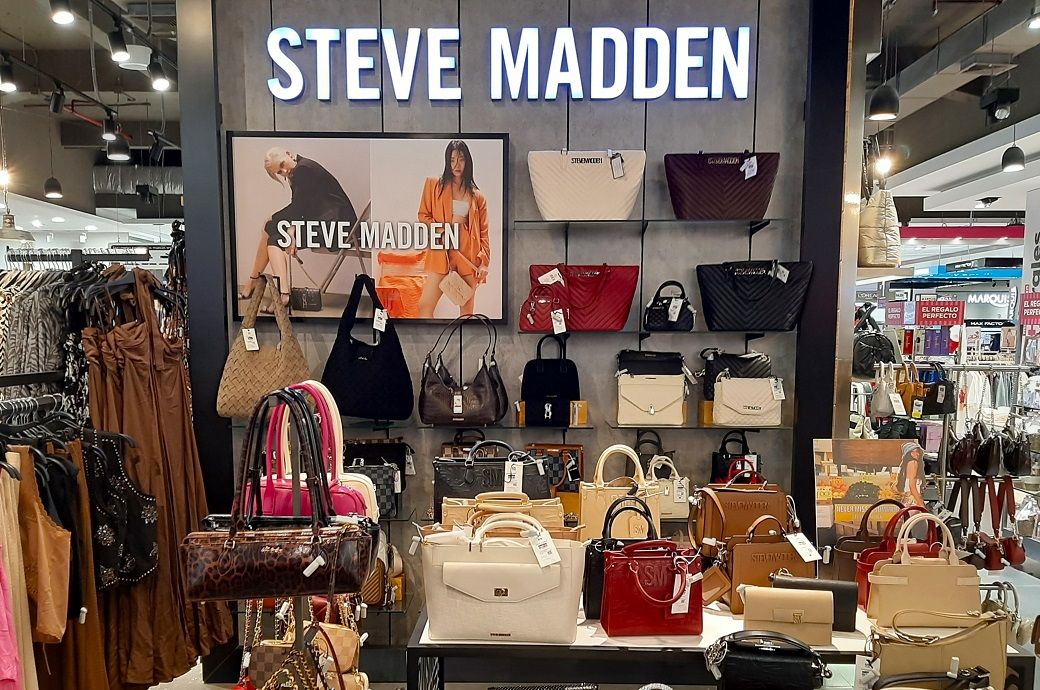
The growth was driven largely by the newly acquired Kurt Geiger business, but earnings declined as operating costs increased and tariff-related headwinds pressured profitability. The company issued a 2026 revenue outlook while withholding earnings guidance amid continued uncertainty over US tariff policy.
Steven Madden has reported revenue growth of 11 per cent to $2,534.1 million in 2025, but profitability declined due to higher operating costs and tariff pressures.
Q4 sales surged 29.4 per cent, while earnings softened YoY.
The company expects 2026 revenue growth of 9-11 per cent, citing brand momentum and Kurt Geiger expansion, though rising SG&A and tariff uncertainty remain concerns.
Profitability, however, was materially lower YoY as operating expenses stepped up. Operating expenses rose to 38.2 per cent of revenue versus 30.6 per cent in 2024; on an adjusted basis, operating expenses were 35.7 per cent compared with 30 per cent a year earlier, Steven Madden said in a press release.
The income from operations fell to $80.8 million (3.2 per cent margin) from $224.9 million (9.9 per cent margin) in 2024. On an adjusted basis, operating income was $175.9 million (6.9 per cent margin) versus $253.5 million (11.1 per cent margin) in the prior year.
Net income attributable to the company declined to $44.7 million, or $0.63 per diluted share, from $169.4 million, or $2.35 per diluted share, in 2024. Adjusted net income attributable to Steven Madden was $120.9 million, or $1.70 per diluted share, compared with $192.4 million, or $2.67 per diluted share, a year earlier.
The company ended 2025 with total debt of $234.2 million and cash and cash equivalents of $112.4 million, resulting in net debt of $121.7 million. Cash flow from operations was $162.2 million in 2025 versus $198.1 million in 2024, while investing outflows rose sharply due to acquisitions, with $371.6 million spent on purchasing businesses during the year.
In the fourth quarter (Q4) of 2025, revenue increased 29.4 per cent to $753.7 million from $582.3 million in the same period of 2024. Gross margin expanded to 42.4 per cent from 40.4 per cent; adjusted gross margin improved further to 43.8 per cent, compared with 40.4 per cent a year earlier.
Operating costs rose faster than sales. Operating expenses were 37.3 per cent of revenue versus 32.9 per cent in the prior-year quarter; on an adjusted basis, operating expenses were 37 per cent versus 31.4 per cent.
The operating income declined to $36.2 million (4.8 per cent margin) from $46.7 million (8.0 per cent margin) in Q4 2024. Adjusted operating income was $50.9 million (6.8 per cent margin) compared with $52.6 million (9 per cent margin) a year earlier.
Net income attributable to Steven Madden fell to $23.2 million, or $0.32 per diluted share, versus $34.8 million, or $0.49 per diluted share, in Q4 2024. Adjusted net income was $34.3 million, or $0.48 per diluted share, compared with $39.3 million, or $0.55 per diluted share, in the prior-year quarter.
Steve Madden’s wholesale revenue in Q4 2025 was $433.3 million, up 7.5 per cent YoY. Excluding Kurt Geiger, wholesale revenue declined 2.6 per cent. Within wholesale, footwear revenue rose 11.0 per cent (or 5.5 per cent excluding Kurt Geiger), while accessories/apparel increased 3.1 per cent but fell 13 per cent excluding Kurt Geiger.
Wholesale gross margin was 30.7 per cent versus 30.5 per cent in Q4 2024; adjusted wholesale gross margin improved to 31.5 per cent, with the company noting the addition of Kurt Geiger was partly offset by the impact of new tariffs on goods imported into the United States.
Direct-to-consumer (DTC) revenue climbed 79.9 per cent to $316.6 million. Excluding Kurt Geiger, DTC revenue increased 1.6 per cent. DTC gross margin declined to 57.7 per cent from 62 per cent, while adjusted DTC gross margin was 59.8 per cent versus 62 per cent, reflecting the addition of the Kurt Geiger concessions business and tariff impacts.
At quarter-end, the company operated 399 company-run stores (including 98 outlets), seven e-commerce websites, and 133 company-operated concessions in international markets.
Edward Rosenfeld, chairman and CEO of the company, commented: “We are pleased to have delivered above-guidance earnings results for the fourth quarter, driven by improved performance in our core Steve Madden footwear business as well as a strong contribution from the newly acquired Kurt Geiger. Looking to 2026, we are encouraged by the momentum building in our flagship Steve Madden brand and the opportunity for growth in Kurt Geiger London. That said, we expect pressure on our private label business as well as higher SG&A driven by the normalisation of incentive compensation and the restoration of senior executive salaries. While we continue to face uncertainty related to tariffs, the fundamentals of our business are strong. Our product assortments and marketing campaigns are resonating with consumers, our brands are powerful and gaining relevance, and we have a sound strategy for long-term value creation with multiple levers for growth.”
For 2026, Steven Madden expects revenue to increase 9-11 per cent YoY. The company is not providing earnings guidance at this time due to uncertainty linked to recent developments in US tariff policy.
Fibre2Fashion News Desk (SG)

There is a fragmented global apparel demand landscape shaped by inflation and geopolitical disruption.
Bangladesh faces the sharpest stress with high inflation.
Markets like India, the US, the UK and Germany show resilient but price-sensitive demand, pressuring margins.
China signals weak pricing momentum, while Vietnam and Japan remain exposed to supply-chain risks despite moderate inflation.
Source link


Bangladesh Brand Forum, BGMEA sign MoU to transform RMG sector

Chris Hemsworth’s ‘Extraction 3’ finally gets production update

US’ Steven Madden’s 2025 revenue rises 11% on Kurt Geiger boost

-

 Politics3 days ago
India let Iran warship dock the day US sank another off Sri Lanka, say officials
-

 Sports3 days ago
Pakistan set for FIH Pro League debut | The Express Tribune
-

 Entertainment3 days ago
Harry Styles kicks off new era with ‘One Night Only’ comeback show
-
 Business1 week ago
Labour parliamentarians urge UK Government to oppose Rosebank oil field
-
 Business3 days ago
Home heating oil: ‘Most of my pension has gone on home heating oil’
-
 Business3 days ago
Restaurant group changes name after bid to buys pubs across the UK
-

 Tech1 week ago
The 5 Big ‘Known Unknowns’ of Donald Trump’s New War With Iran
-

 Sports1 week ago
USA vs. Argentina (Mar 1, 2026) Live Score – ESPN