

Tech
Inside the fight over the recycling label on milk cartons

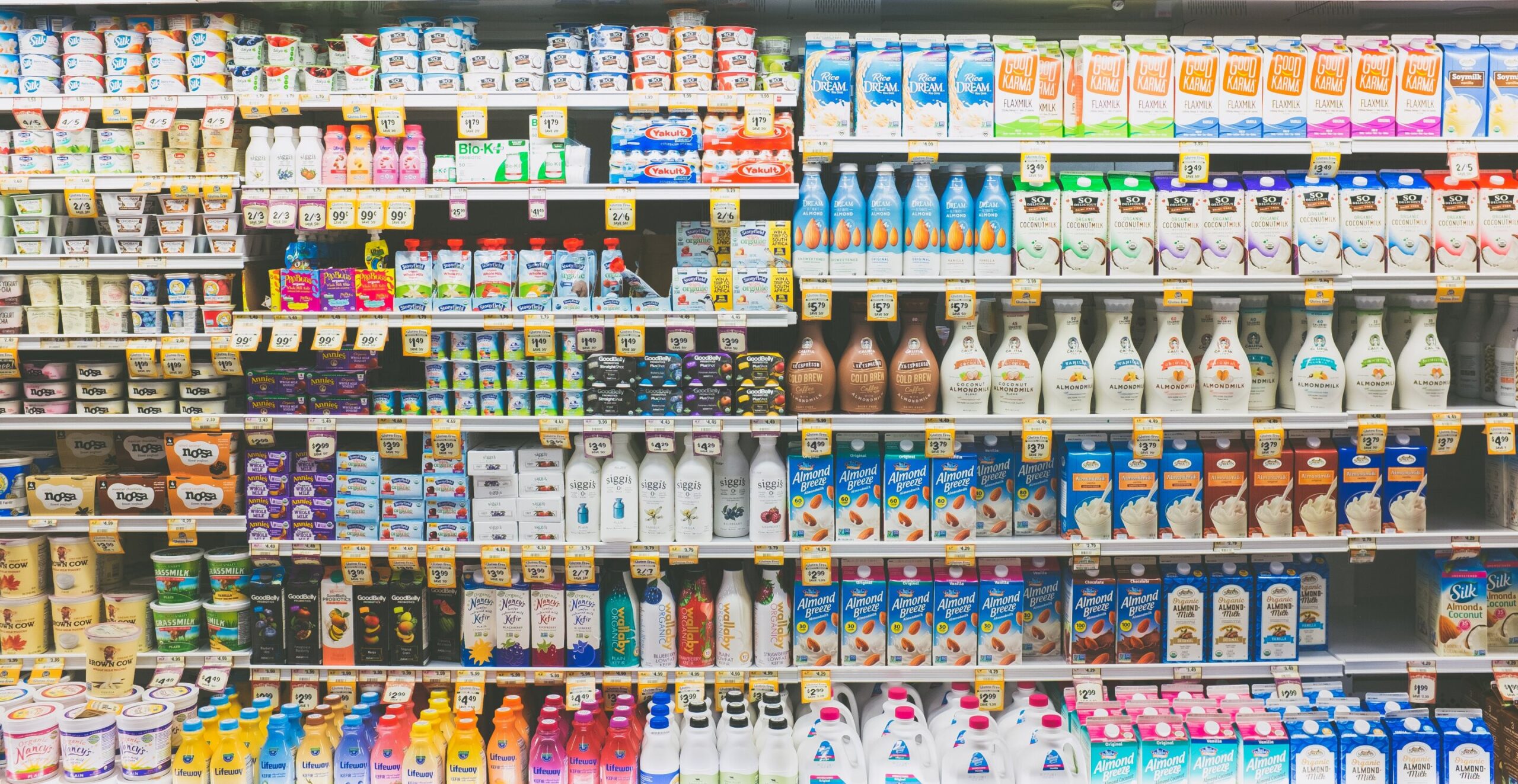
A battle has been waging in Sacramento over whether beverage cartons—the ones used for milk, juice, broth, wine, even egg whites—should get the coveted chasing arrows recycling label.
Earlier this year, the state agency in charge of recycling, CalRecycle, determined the cartons were probably not eligible, because they weren’t being sorted and recycled by the vast majority of the state’s waste haulers, a requirement of the state’s “Truth in Recycling” law, Senate Bill 54.
Three months later, the agency reversed course.
The label is critical for product and packaging companies to keep selling in California as the state’s single-use packaging law goes fully into effect. It calls for all single-use packaging products to be recyclable or compostable by 2032. If they’re not, they can’t be sold or distributed in the state.
According to internal agency emails, documents and industry news releases, the change was prompted by data from the carton packaging industry’s trade group, the Carton Council of North America. The council had also announced it was investing in a carton recycling facility in Lodi.
The waste agency’s reversal incensed several waste experts, anti-plastic activists and environmentalists, who say cartons have limited, if any, value or recycling potential. They say the new industry-backed facility in Lodi is nothing more than a facade—one of several similar operations that have failed across the country. CalRecycle’s revised determination about the recyclability of the material, they say, is based on flawed methods that are easy to exploit.
Some say it’s just the latest example of Gov. Gavin Newsom and CalRecycle retreating from the state’s landmark single-use plastic law, and other ambitious anti-waste and anti-plastic laws that he and the waste agency once touted.
“The big picture here is that the governor and CalRecycle are creating loopholes,” said Jan Dell, a chemical engineer and founder of Last Beach Cleanup, an anti-plastic organization.
“What we’ve got here is this Kingdom of California that wants to tell the world that ‘we’re the best in recycling, that recycling works, that we’re going to lead the way in recycling and build a circular economy.’ But, the reality on the ground is that this stuff’s not recyclable. It just isn’t.”
Yet others say what’s happened with carton material is exactly what the laws were designed to do: motivate plastic and packaging companies to make their packaging recyclable, or develop technologies and markets that will.
“We are gratified to see the Carton Council making these investments and demonstrating that recycling can work with a sincere commitment from industry,” said Sen. Ben Allen (D-Santa Monica), who authored both California’s truth in labeling and single-use plastic laws.
“For decades, Californians have been misled into believing that the tons of packaging we consume can be cleanly and effectively recycled if only we put it into the blue bin. Sadly, that is too often untrue.”
Melanie Turner, a CalRecycle spokeswoman, said the agency does not decide what products can get the recycling label; that is a decision made by the manufacturer. The agency’s role is to provide information to the manufacturer about the recyclability of the product in California.
The chasing arrows label has not only become increasingly important as the state’s single-use plastic law comes into effect, but it also provides comfort to consumers who are trying to minimize their environmental footprint.
Although at first glance most milk cartons appear to be primarily made of paper, they are actually comprised of alternating layers of paper, plastic and sometimes aluminum—a laminated sandwich of materials that extends a product’s shelf life, but also makes it hard to recycle.
The material is a challenge for commercial and residential waste haulers, said Robert Reed, a spokesman for Recology, a large waste hauling company in the Bay Area, Northern California, Oregon and Washington.
Not only are there few buyers for the milk-sodden cartons themselves (data show they currently fetch $0 in the recycling market), they risk contaminating other valuable items. For example, if more than 2% of a bale of mixed paper contains cartons, the bale is considered worthless.
In 2024, more than 106,000 tons (220 million pounds) of the old milk, juice and broth containers were dumped in landfills.
According to the Carton Council of North America, there are five facilities in North America that take cartons and try to give them new life. Four of them, in Wisconsin, Alabama, Canada, and Mexico, say they can harvest the paper fibers out of the containers and resell them to tissue and toilet paper manufacturers. All are more than 2,000 miles from downtown Los Angeles.
The fifth, a facility based in Waterbury, Connecticut, chops the blended material up, heats it so the plastic layer melts and turns into an adhesive, then presses it between two layers of fire-resistant material to create a gypsum-like roofing material.
It’s not clear if any of these facilities are paying for used cartons from waste operators, or taking them for free. None of the companies that operate these facilities responded to requests from The Times.
The carton council has announced it is investing in two new facilities (including the one in Lodi) where soiled cartons will be turned into roofing material.
But similar operations have either failed in the past, or never materialized. In 2022, the nationwide garbage operator Waste Management invested in a carton-to-roofing-material facility in Des Moines, Iowa. Two years later, it shut down with no explanation. Similar facilities in Colorado and Pennsylvania that were touted in news releases never materialized.
Waste Management did not respond to requests for comment.
In February, a consortium called ReCB, made up of the carton council and two corporate partners, purchased the abandoned Des Moines plant. According to Jan Rayman, ReCB managing director, the facility has been running 24/7 since June.
The two other partners include Elof Hansson U.S., a global trading company, and the Upcycling Group, a construction material production company co-founded by Rayman.
“We don’t use any glues or chemicals during the process. We don’t use any water in our manufacturing process. So we basically borrow the properties of the carton, and convert this composite package into a high-performance composite-building material,” he said.
He said the facility in Iowa pays for used cartons, rather than accepting them for free, indicating they have some value, a key point for the industry in establishing recyclability. Yet regional data from RecyclingMarkets.net shows the material’s value in the Midwest at $0 since January. There is no indication in regional data going back to 2013 that anyone will pay for used cartons.
A showcase facility
The consortium’s Lodi facility is in a rented warehouse on the northern edge of the city, not yet operating. Rayman said it is waiting on permits from the city.
On a recent weekday afternoon, it contained two new, bright blue state-of-the-art processing lines imported from the Czech Republic. They’ll be used to chop, heat and press the cartons. On the floor nearby, a bale of old milk, juice and soup cartons was attracting flies.
According to the carton council, when the facility is fully operational, it will be able to process 9,000 tons of cartons per year—or about 8.4% of what currently goes to state landfills every year. Rayman said that’s just the beginning; it will scale up as demand for his roofing product increases.
But even if it does, which Dell and others doubt, considering the track record of past operations, it’s the way that CalRecycle granted the recycling label that she says is most problematic.
Under California law, CalRecycle is supposed to find out whether the state’s waste operators are sorting a material at waste facilities. If they’re doing so for less than 60% of the state’s population, the material isn’t eligible for a recycling label.
In April, CalRecycle determined that only 47% of the state’s population, across 16 counties, had access to facilities that accepted cartons for recycling and sorted them out of the waste stream.
The state considers people to have access if a single waste hauler in their county accepts a material for recycling.
In other words, according to CalRecycle’s methodology, if one of Los Angeles’ 17 mechanical recycling facilities separates out food and beverage cartons, the county’s entire 9.8 million population—or nearly 25% of the state’s population—is served.
“It’s like saying that because you have air conditioning in one of L.A.’s 1,000 or more schools, then all the schools are air-conditioned,” said Dell. “It doesn’t make sense,” Dell said.
In fact, the state’s own Recycling and Disposal Reporting System shows that only one of the state’s 74 waste sorting operations sends carton bales off for recycling.
The state estimate of 47% meant the cartons were ineligible for the recycling label.
In the weeks that followed, however, the carton council provided the agency with new data, indicating that more than 70% of Californians, across 23 counties, have access. That higher percentage came in part from recycling operations that received new sorting machinery, called optical sorters, from the carton council.
“The endorsement or promotion of false recycling labels drives up costs for consumers because it ultimately leads to more contamination in curbside bins,” said Susan Keefe, the Southern California director for Beyond Plastics, an anti-plastic group based in Bennington, Vermont.
“Granting an unearned, false recycling label to the carton packaging companies disrespects California taxpayers, who have seen their recycling costs continue to climb year after year due to contamination and false promises of recyclability.”
2025 Los Angeles Times. Distributed by Tribune Content Agency, LLC.
Citation:
Inside the fight over the recycling label on milk cartons (2025, September 2)
retrieved 2 September 2025
from https://techxplore.com/news/2025-09-recycling-cartons.html
This document is subject to copyright. Apart from any fair dealing for the purpose of private study or research, no
part may be reproduced without the written permission. The content is provided for information purposes only.








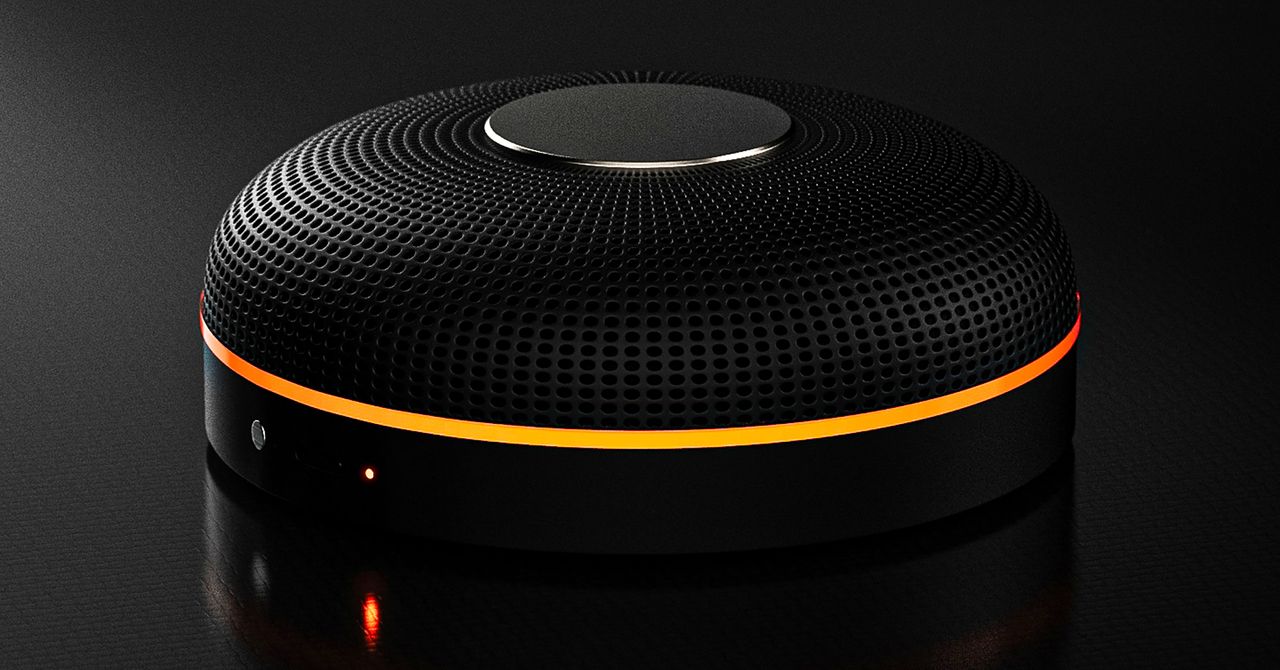
Deveillance also claims the Spectre can find nearby microphones by detecting radio frequencies (RF), but critics say finding a microphone via RF emissions is not effective unless the sensor is immediately beside it.
“If you could detect and recognize components via RF the way Spectre claims to, it would literally be transformative to technology,” Jordan wrote in a text to WIRED after he built a device to test detecting RF signatures in microphones. “You’d be able to do radio astronomy in Manhattan.”
Deveillance is also looking at ways to integrate nonlinear junction detection (NLJD), a very high-frequency radio signal used by security professionals to find hidden mics and bugs. NLJD detectors are expensive and used primarily in professional contexts like military operations.
Even if a device could detect a microphone’s exact location, objects around a room can change how the frequencies spread and interact. The emitted frequencies could also be a problem. There haven’t been adequate studies to show what effects ultrasonic frequencies have on the human ear, but some people and many pets can hear them and find them obnoxious or even painful. Baradari acknowledges that her team needs to do more testing to see how pets are affected.
“They simply cannot do this,” engineer and YouTuber Dave Jones (who runs the channel EEVblog) wrote in an email to WIRED. “They are using the classic trick of using wording to imply that it will detect every type of microphone, when all they are probably doing is scanning for Bluetooth audio devices. It’s totally lame.” Baradari reiterates that the Spectre uses a combination of RF and Bluetooth low energy to detect microphones.
WIRED asked Baradari to share any evidence of the Spectre’s effectiveness at identifying and blocking microphones in a person’s vicinity. Baradari shared a few short videoclips of people putting their phones to their ears listening to audioclips—which were presumably jammed by the Spectre—but these videos do little to prove that the device works.
Future Imperfect
Baradari has taken the critiques in stride, acknowledging that the tech is still in development. “I actually appreciate those comments, because they’re making me think and see more things as well,” Baradari says. “I do believe that with the ideas that we’re having and integrating into one device, these concerns can be addressed.”
People were quick to poke fun at the Spectre I online, calling the technology the cone of silence from Dune. Now, the Deveillance website reads, “Our goal is to make the cone of silence become reality.”
John Scott-Railton, a cybersecurity researcher at Citizen Lab, who is critical of the Spectre I, lauded the device’s virality as an indication of the real hunger for these kinds of gadgets to win back our privacy.
“The silver lining of this blowing up is that it is a Ring-like moment that highlights how quickly and intensely consumer attitudes have shifted around pervasive recording devices,” says Scott-Railton. “We need to be building products that do all the cool things that people want but that don’t have the massive privacy- and consent-violation undertow. You need device-level controls, and you need regulations of the companies that are doing this.”
Cooper Quintin, a senior staff technologist at the Electronic Frontier Foundation, echoed those sentiments, even if critics believe Deveillance’s efforts to be flawed.
“If this technology works, it could be a boon for many,” Quintin wrote in an email to WIRED. “It is nice to see a company creating something to protect privacy instead of working on new and creative ways to extract data from us.”
Portrait Light: You can change up the lighting in your portrait selfies after you take them by opening them up in Google Photos, tapping the Edit button, and heading to Actions > Portrait Light. This adds an artificial light you can place anywhere in the photo to brighten up your face and erase that 5 o’clock shadow. Use the slider at the bottom to tweak the strength of the light. It also works on older Portrait mode photos you may have captured. It works only on faces.
Health and Accessibility Features
Cough & Snore Detection (Tensor G2 and newer): On the Pixel 7 and newer, you can have your Pixel detect if you cough and snore when sleeping, provided you place your Pixel near your bed before you nod off. This will work only if you use Google’s Bedtime mode function, which you can turn on by heading to Settings > Digital Wellbeing & Parental Controls > Bedtime Mode.
Guided Frame (Tensor G2 and newer): For blind or low-vision people, the camera app can now help take a selfie with audio cues (it works with the front and rear cameras). You’ll need to enable TalkBack for this to work (Settings > Accessibility > TalkBack). Then open the camera app. It will automatically help you frame the shot.
Simple View: This mode makes the font size bigger, along with other elements on the screen, like widgets and quick-settings tiles. It also increases touch sensitivity, all of which hopefully makes it easier to see and use the screen. You can enable it by heading to Settings > Accessibility > Simple View.
Safety and Security Features
Theft Protection: This is a broader Android 15 feature, but essentially, Google’s algorithms can figure out if someone snatches your Pixel out of your hands. If they’re trying to get away, the device automatically locks. Additionally, with another device, you can use Remote Lock to lock your stolen Pixel with your phone number and a security answer. To toggle these features on, go to Settings > Security & privacy > Device unlock > Theft protection.
Identity Check: If your Pixel detects you’re in a new location, Identity Check will require your fingerprint or face authentication before you can make any changes to sensitive settings, offering extra peace of mind in case you lose your phone or if it’s stolen. You can enable this in Settings > Security & privacy > Device unlock > Theft protection > Identity Check.
Courtesy of Google
Private Space: Another Android 15 addition, Pixel phones finally have a feature that lets you hide and lock select apps. You can use a separate Google account, set a lock, and install any app to hide away. To set it all up, head to Settings > Security & privacy > Private space.
Satellite eSOS (Pixel 9 and Pixel 10 series, excluding Pixel 9a): Like Apple’s SOS feature on iPhones, you can now reach emergency contacts or emergency services even when you don’t have cell service or Wi-Fi connectivity. It’s not just available in the continental US, but also in Hawaii, Alaska, Canada, and even Europe.
Portrait Light: You can change up the lighting in your portrait selfies after you take them by opening them up in Google Photos, tapping the Edit button, and heading to Actions > Portrait Light. This adds an artificial light you can place anywhere in the photo to brighten up your face and erase that 5 o’clock shadow. Use the slider at the bottom to tweak the strength of the light. It also works on older Portrait mode photos you may have captured. It works only on faces.
Health and Accessibility Features
Cough & Snore Detection (Tensor G2 and newer): On the Pixel 7 and newer, you can have your Pixel detect if you cough and snore when sleeping, provided you place your Pixel near your bed before you nod off. This will work only if you use Google’s Bedtime mode function, which you can turn on by heading to Settings > Digital Wellbeing & Parental Controls > Bedtime Mode.
Guided Frame (Tensor G2 and newer): For blind or low-vision people, the camera app can now help take a selfie with audio cues (it works with the front and rear cameras). You’ll need to enable TalkBack for this to work (Settings > Accessibility > TalkBack). Then open the camera app. It will automatically help you frame the shot.
Simple View: This mode makes the font size bigger, along with other elements on the screen, like widgets and quick-settings tiles. It also increases touch sensitivity, all of which hopefully makes it easier to see and use the screen. You can enable it by heading to Settings > Accessibility > Simple View.
Safety and Security Features
Theft Protection: This is a broader Android 15 feature, but essentially, Google’s algorithms can figure out if someone snatches your Pixel out of your hands. If they’re trying to get away, the device automatically locks. Additionally, with another device, you can use Remote Lock to lock your stolen Pixel with your phone number and a security answer. To toggle these features on, go to Settings > Security & privacy > Device unlock > Theft protection.
Identity Check: If your Pixel detects you’re in a new location, Identity Check will require your fingerprint or face authentication before you can make any changes to sensitive settings, offering extra peace of mind in case you lose your phone or if it’s stolen. You can enable this in Settings > Security & privacy > Device unlock > Theft protection > Identity Check.
Courtesy of Google
Private Space: Another Android 15 addition, Pixel phones finally have a feature that lets you hide and lock select apps. You can use a separate Google account, set a lock, and install any app to hide away. To set it all up, head to Settings > Security & privacy > Private space.
Satellite eSOS (Pixel 9 and Pixel 10 series, excluding Pixel 9a): Like Apple’s SOS feature on iPhones, you can now reach emergency contacts or emergency services even when you don’t have cell service or Wi-Fi connectivity. It’s not just available in the continental US, but also in Hawaii, Alaska, Canada, and even Europe.


Flipkart Layoffs 2026: Why Has E-Commerce Firm Sacked Around 500 Employees?

Nepal’s rapper-mayor Balendra Shah poised to become prime minister

Stephanie Buttermore, fitness influencer dies suddenly aged 36: What actually happened

-
 Business1 week ago
Attock Cement’s acquisition approved | The Express Tribune
-

 Fashion1 week ago
Policy easing drives Argentina’s garment import surge in 2025
-

 Politics1 week ago
What are Iran’s ballistic missile capabilities?
-
 Business1 week ago
India Us Trade Deal: Fresh look at India-US trade deal? May be ‘rebalanced’ if circumstances change, says Piyush Goyal – The Times of India
-

 Sports1 week ago
LPGA legend shares her feelings about US women’s Olympic wins: ‘Gets me really emotional’
-

 Entertainment1 week ago
Bobby J. Brown, “The Wire” and “Law & Order: SUV” actor, dies of smoke inhalation after reported fire
-

 Fashion1 week ago
South Korea’s Misto Holdings completes planned leadership transition
-

 Fashion1 week ago
Texwin Spinning showcasing premium cotton yarn range at VIATT 2026