

Business
President directs use of all possible measures to induce inflationary impact in meeting with PM Shehbaz | The Express Tribune

Says despite difficult geographical and regional situation, maximum relief should be provided to the people
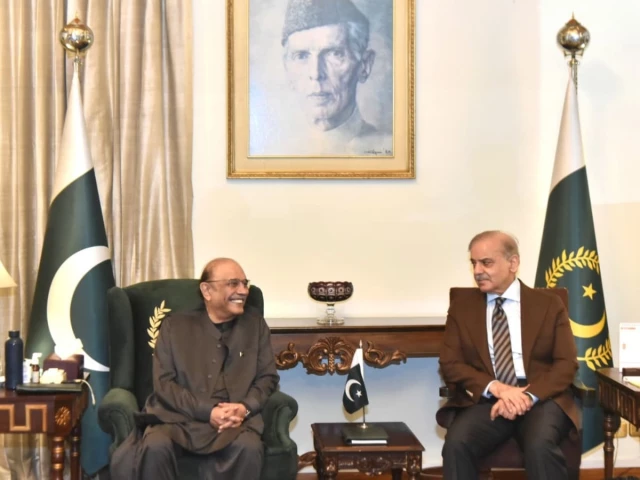
A meeting between President Asif Ali Zardari and Prime Minister Shehbaz Sharif in Islamabad on Monday. — PID
President Asif Ali Zardari directed the use of all possible measures to reduce the impact of inflation on the populace in a meeting with Prime Minister Shehbaz Sharif.
A press release from the presidency said the two held a meeting at the Aiwan-e-Sadr with Deputy PM and Foreign Minister Ishaq Dar, National Assembly Speaker Ayaz Sadiq, Interior Minister Mohsin Naqvi, Law Minister Azam Nazeer Tarar and others also present.
“The president directed possible measures to reduce inflationary pressures, ensure availability of essential goods and provide relief to the common man,” the statement said.
The president said that despite the difficult geographical and regional situation, tensions in the Middle East and disruption of the supply chain, maximum relief should be provided to the people.
The statement said the overall situation of the country, matters related to Afghanistan and the changing situation in the region were also discussed in the meeting.
The meeting’s participants further paid tribute to the martyrs of last year’s May conflict against India and the professional capabilities of the armed forces while reiterating “unwavering commitment to national defence”.
صدر مملکت آصف علی زرداری سے وزیرِاعظم محمد شہباز شریف کی ایوانِ صدر میں ملاقات۔
ملاقات میں نائب وزیرِاعظم و وزیرِخارجہ اسحاق ڈار، اسپیکر قومی اسمبلی سردار ایاز صادق، وفاقی وزیرِداخلہ محسن نقوی، وفاقی وزیرِقانون اعظم نذیر تارڑ، سینیٹر سلیم مانڈوی والا اور ڈاکٹر عاصم بھی موجود… pic.twitter.com/mo9HvlTYhp
— PPP (@MediaCellPPP) May 11, 2026
The directives came in the wake of the government on Friday raising the prices of both petrol and high-speed diesel (HSD) by Rs15 amid fluctuation in global oil prices due to closure of the Strait of Hormuz. It was the second hike in fuel prices in May.
The sharp increase in petroleum prices has triggered a fresh wave of economic anxiety across Pakistan, with transporters raising fares, businesses warning of mounting operational costs, and ordinary citizens bracing for another inflationary shock in an economy already under severe strain.
HSD is widely used in the transport and agriculture sectors. The sowing season for crops is underway; therefore, the increase in its prices will negatively impact the agriculture sector, where input costs are already high.
The price of fertiliser has already increased due to a rise in transportation costs. Petrol is used in motorcycles and cars. However, the prime minister had earlier announced a continuation of a Rs100 per litre subsidy for motorists.
During the ongoing Gulf war, Iran and the United States have maintained a blockade of the Strait of Hormuz, which supplies 20% of global oil. The entire world is facing a crisis-like situation as oil prices have jumped due to a shortage of supplies. Middle East countries like Saudi Arabia, UAE and Kuwait also face issues of supplies as their oil facilities have been hit. Iran is also a key oil supplier to China.






Advertisers will be hearing about the slate of live events in the coming year — and how AI is being integrated. Plus, media consolidation reshapes the lineup.
Source link
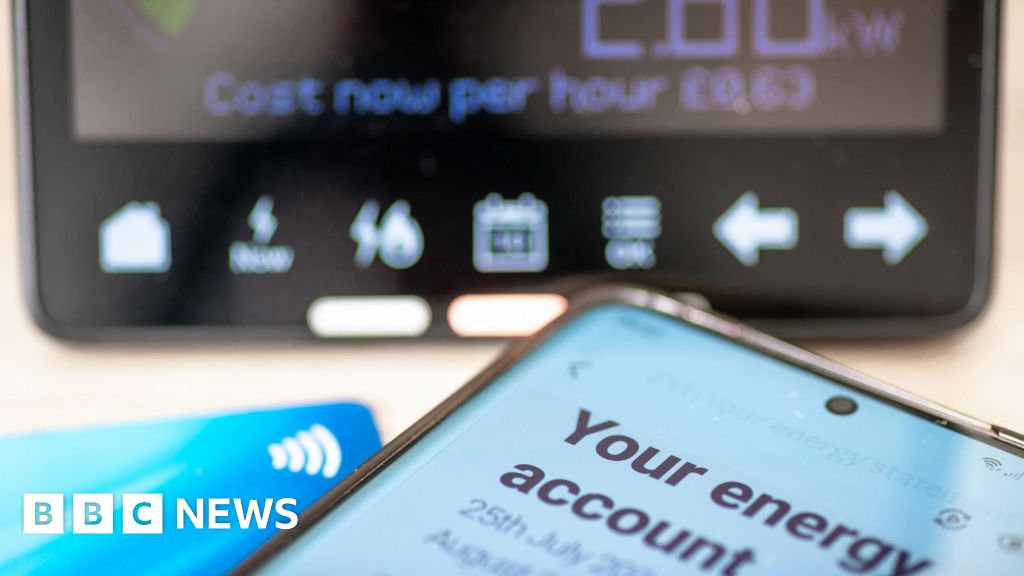
All existing tariffs will be honoured in full under a planned deal that could create Britain’s largest energy supplier.
Source link
Britain faces a projected loss of 163,000 jobs this year, with lower-income regions set to bear the brunt of the economic fallout from the Iran war, a new report warns.
The Item Club’s latest regional outlook highlights south Wales and Humber, two of the UK’s most economically vulnerable areas, as those most likely to endure severe job market difficulties over the coming year.
These regions, heavily reliant on manufacturing and construction, are particularly susceptible to sharp increases in energy prices and supply chain disruptions stemming from the Middle East conflict. The report forecasts job reductions of 5,700 in south Wales and 2,800 in Humber by 2026.
Tim Lyne, economic adviser to the Item Club, explained: “Some of the lowest income regions will feel the biggest effects of the manufacturing and construction sectors reducing headcount in the face of rising energy prices and supply chain disruption.
“While consumers in these areas typically have less rainy-day savings, which will reduce spending in the retail and hospitality sectors.”
Overall, the report predicts a 0.4 per cent decline in UK employment this year, equating to 163,000 net job losses. This downturn is attributed to a pullback in consumer spending, escalating costs for fuel, energy, materials, and ingredients, alongside significant shipping disruptions.
The Bank of England recently cautioned that UK unemployment could climb to 5.6 per cent this year, up from its current 5.2 per cent, under its more pessimistic scenario regarding the war’s impact.
The Item Club further noted that as households curb discretionary spending amid a surging cost of living, the retail and hospitality sectors in Britain’s major cities will experience the most significant slowdowns.
London is expected to see a drop of 25,000 jobs, Birmingham 12,500, Leeds 9,800, and Glasgow 6,200, as these sectors contract.
However, the outlook isn’t entirely bleak, with Cambridge anticipated to experience employment growth in 2026, and Belfast and Edinburgh projected to face relatively limited job losses.
Mr Lyne added: “Across the UK, the jobs market is going to soften, but it’s looking especially fragile in south Wales and Humber as they’re particularly exposed to manufacturing businesses that are seeing big increases in their costs of materials. Resilience will come in places like Cambridge, where the tech sector is based.”
While publicly funded sectors, including education, public administration, and health and social work, are expected to increase hiring this year, these gains will not be sufficient to offset the broader job market contractions.
The report also issues a stark warning about a widening disparity in living standards across the UK, exacerbated by the Iran war.
Lower-income households are set to endure the steepest increases in the cost of living, as a larger proportion of their income is spent on essentials such as food, fuel, and energy bills, all of which are forecast to see substantial price hikes.
Cities like Newcastle, Belfast, and Birmingham see households dedicating up to 13 per cent of their disposable income to energy and food, significantly higher than the less than 9 per cent for an average London household.
This disparity leaves these cities particularly vulnerable if the Iran war continues unresolved, according to the Item Club.
A government spokesperson said: “Recent figures show that there was an improvement in the labour market at the beginning of the year with unemployment falling below 5 per cent, and 332,000 more people in work than a year ago.
“But we cannot escape the effects of the war in the Middle East, which are likely to feed through to prices and employment in the coming months.
“We will do everything we can to support the country through this period, including by slashing energy bills by up to 25 per cent for 10,000 manufacturers.
“Our mission for clean power by 2030 will get us off the rollercoaster of fossil fuel prices, to cut bills for businesses and households for good.”


SIMA hails India’s ECLGS 5.0 support amid West Asia crisis

Suspect in Trump attempted assassination pleads not guilty

WHCD shooting suspect pleads ‘not guilty’ to attempted assassination of Trump

-

 Politics1 week ago
Iran weighs US reply delivered via Pakistan as Trump signals opposition to deal terms
-

 Fashion1 week ago
US cotton export sales show strong recovery, Upland rise 36%
-

 Sports1 week ago
Sajid Ali Sadpara summits world’s fifth-highest peak
-

 Tech1 week ago
DHS Demanded Google Surrender Data on Canadian’s Activity, Location Over Anti-ICE Posts
-
 Business1 week ago
Heineken to invest £44.5m in hundreds of pubs creating 850 jobs
-
 Business1 week ago
Government notifies FDI changes on China funds – The Times of India
-

 Fashion1 week ago
Middle East conflict clouds India’s FY27 GDP forecast of 7-7.4%: Govt
-
 Business1 week ago
UK airlines to be allowed to cancel flights in advance over fuel shortages