

Business
Video: What to Know About Trump’s Deal With A.I. Chipmakers

new video loaded: What to Know About Trump’s Deal With A.I. Chipmakers
By Tripp Mickle, Karen Hanley, Jon Hazell and David Jouppi•
Nvidia and AMD will give the Trump administration a cut of chip sales to China in a deal that raises questions about national security and trade policy goals. Tripp Mickle explains.
Recent episodes in Behind the Reporting












Business
US-Israel-Iran war hits oil supplies: How India is preparing for the economic fallout – The Times of India
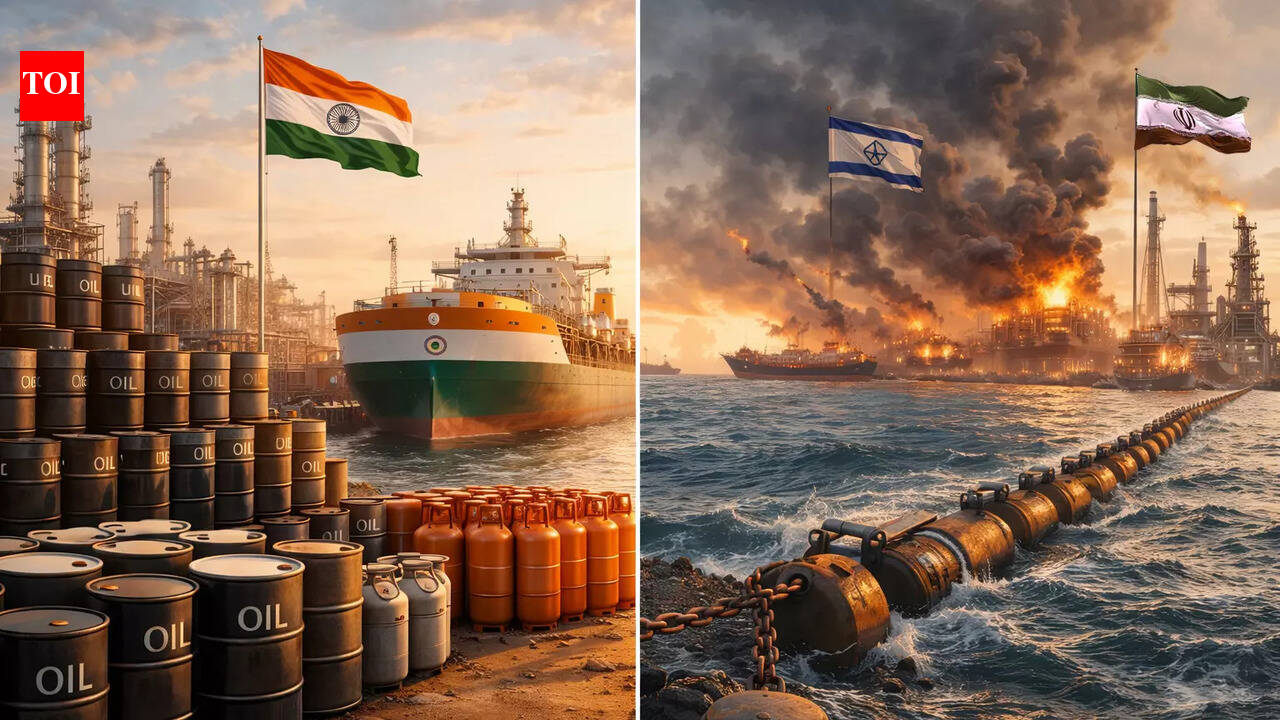
India is looking at several emergency measures to tackle the risk of fuel shortages if shipping through the Strait of Hormuz remains affected for an extended period. Strait of Hormuz in the Persian Gulf is a prominent and vital maritime route for transmit of oil and goods. According to people aware of discussions between the government and industry stakeholders, the options under consideration include curbing exports of petrol and diesel, stepping up crude purchases from Russia, and implementing demand-side steps such as rationing LPG supplies.Even as the Centre and oil firms maintained that there is no immediate scarcity, refiners have begun scouting for alternative crude sources to offset supplies affected by the conflict in West Asia.
The geopolitical strain has pushed up global oil and gas prices. For India, which relies heavily on imports, this surge translates into a higher import bill and adds to inflationary pressures.
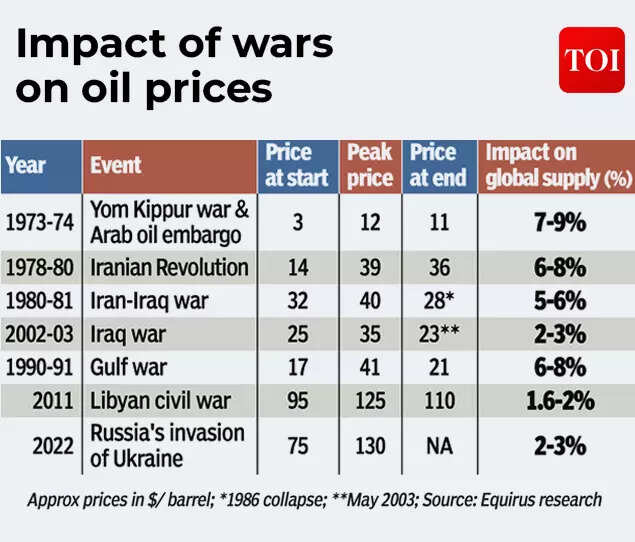
India depends on overseas purchases for almost 90 per cent of its crude oil needs. It also relies on imports to meet around 60–65 per cent of its LPG consumption and roughly 60 per cent of its LNG requirement. A significant portion of these supplies originates in West Asia and moves through the Strait of Hormuz, a vital corridor that faces the risk of disruption amid the ongoing conflict.
India to curb oil exports?
With concerns mounting over potential disruptions in crude oil availability, the government is considering measures to encourage refiners to channel a larger share of automobile fuels and LPG toward the domestic market by trimming exports, according to a TOI report. It is also exploring ways to step up cooking gas output to ensure uninterrupted supplies for local consumers.Currently, India sends abroad roughly one-third of its petrol production, about a quarter of its diesel output, and nearly half of the aviation turbine fuel it produces. If necessary, refiners can also channel excess ATF into alternative product streams, they said.
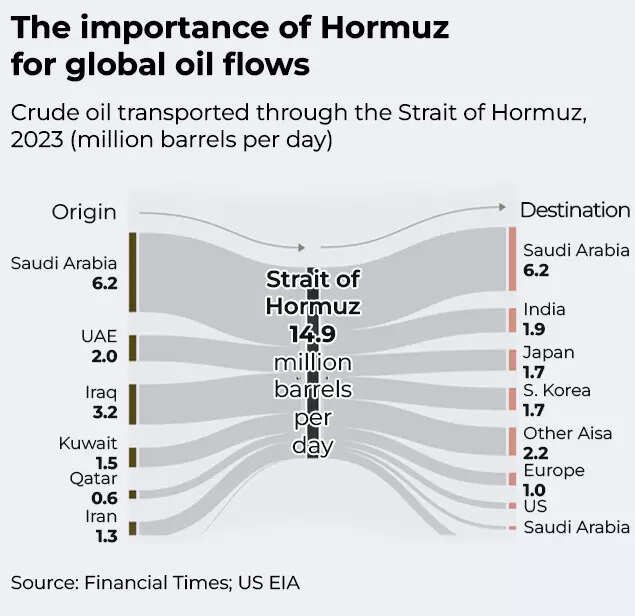
Data from the International Energy Agency shows that 5.9 per cent of India’s petroleum output was exported in 2023. During the period from April to December 2025, the country shipped petroleum products worth nearly $330 billion, with key markets including the Netherlands, the UAE, the US, Singapore, Australia and China. In 2024, petroleum gas exports totalled $454 million, largely destined for Nepal, China and Myanmar. The Reliance Industries Limited refinery at Jamnagar remains the country’s biggest exporter.An executive at an oil company said refiners have already initiated discussions with traders to secure capacity amid concerns over a potential blockade of the Strait of Hormuz. By Monday, global markets were unsettled following QatarEnergy’s decision to halt gas shipments.
LNG and LPG disruptions
The most pressing area of concern is LPG, as the country relies on imports to meet close to two-thirds of its consumption and keeps relatively limited stockpiles. Around 85–90 per cent of LPG imports originate from Gulf nations.Industry assessments indicate that existing inventories, including domestic storage and cargoes that have already passed through the Strait of Hormuz, would be sufficient for less than a fortnight if fresh supplies are halted. To prepare for such a scenario, Indian Oil Corporation, Hindustan Petroleum Corporation Limited, and Bharat Petroleum Corporation Limited have started raising LPG production at select refineries integrated with petrochemical units.Officials are also examining focused demand-management strategies, including the possibility of rationing LPG for consumers who have access to alternate cooking fuels, particularly in rural regions, the people said. India’s crude oil stockpiles are estimated to cover around 17–18 days of consumption, while reserves of refined products such as petrol and diesel could last approximately 20–21 days.LNG inventories are sufficient for about 10–12 days. Without additional shipments through the Strait of Hormuz, these reserves would gradually diminish. Increasing purchases of Russian crude is another option being evaluated, sources told ET.Another industry executive noted that while any disruption could pose short-term challenges, Indian companies maintain a diversified LNG sourcing portfolio, including supplies from the US, with vessels routed via the Suez Canal.“Even if there is a force majeure, we have other sources of supply, which we can tap. Besides, no one is going to stop supplies indefinitely,” the executive said. Although oil and gas prices climbed on Monday, efforts remain focused on keeping supply chains operational.
No rise in petrol, diesel prices expected
Officials indicated that pump prices of petrol and diesel are unlikely to be revised upward in the near term. Oil marketing companies continue to adhere to a calibrated pricing strategy, absorbing losses when international rates climb and recovering margins when they ease. Retail fuel prices have effectively remained frozen since April 2022.On a day when Iranian drone strikes damaged sections of a Saudi Aramco refinery and QatarEnergy, the world’s largest LNG producer, announced a temporary halt to exports, Petroleum Minister Hardeep Singh Puri convened a meeting with senior officials and oil company representatives to review the status of crude and gas supplies.“We are closely tracking the fast-changing developments and will take every necessary measure to maintain both the supply and affordability of key petroleum products across the country,” the oil ministry said in a message posted on X.
Measures for Exporters
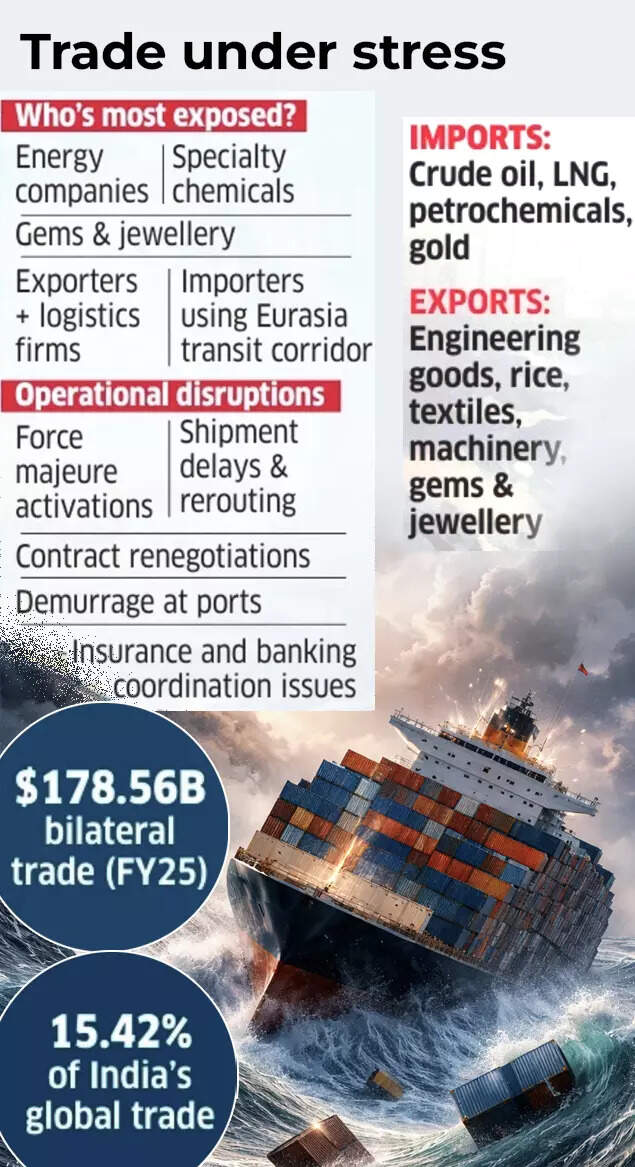
The government has sought to reassure exporters, saying that it stands prepared to extend necessary support and introduce flexible measures to ease trade operations in view of the uncertainty stemming from tensions in West Asia.At a meeting held in the commerce department and chaired by special secretary Suchindra Misra and DGFT Lav Agarwal, exporters highlighted several areas of concern.
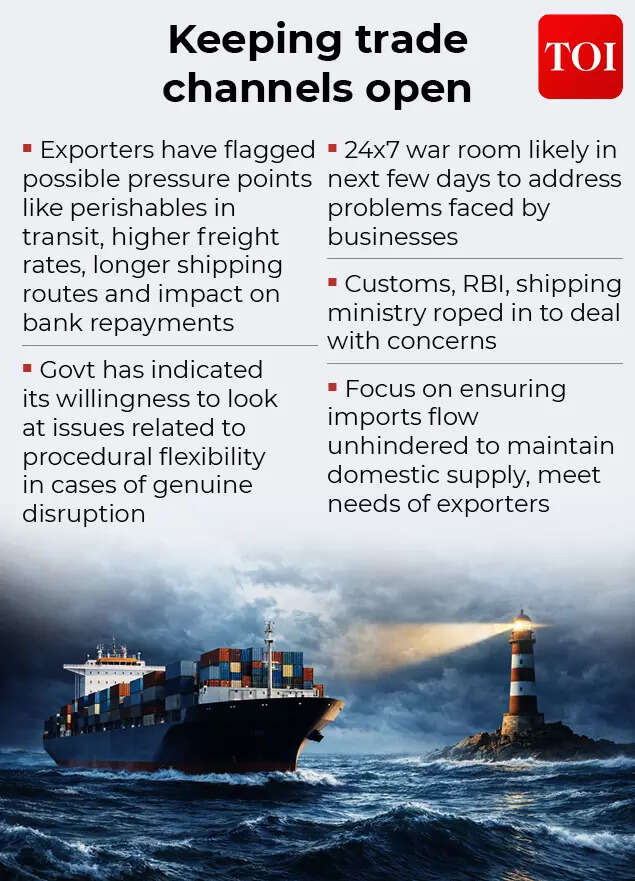
These included risks to perishable consignments already in transit, escalating freight costs, demurrage charges, rerouting of shipments leading to longer transit times, dependence on imported inputs for exports, and potential strain on loan repayments to banks.According to an official statement, authorities are considering setting up a monitoring mechanism or round-the-clock control room to improve inter-agency coordination and swiftly address emerging challenges. The government reiterated its commitment to facilitating trade and signalled openness to granting procedural relaxations in instances of genuine disruption. It also indicated that it would work closely with customs officials to ensure timely clearances and coordinate with banks and insurance companies to ease operational bottlenecks.

Pakistan’s inflation rose to 7% in February 2026, marking the highest level since October 2024, as electricity price hikes and rising global uncertainty pushed consumer costs upward.
According to the Pakistan Bureau of Statistics, the Consumer Price Index (CPI) increased 6.98% year-on-year, compared to 5.8% in January and 1.5% in February last year.
Electricity Tariffs Drive Surge
The biggest impact came from higher electricity prices after subsidy cuts and revised tariff structures.
Housing, water, electricity, gas & fuels index rose 9.65% annually
Electricity prices alone increased 10.03% month-on-month
These adjustments significantly burdened households already coping with high living costs.
Core Inflation & Interest Rates
Core inflation showed slight easing:
Urban core inflation: 7.1% (down from 7.2%)
Rural core inflation: Stable at 8.3%
The rise in CPI reduced real interest rates by around 120 basis points. The State Bank of Pakistan kept its policy rate unchanged at 10.5% last month.
Food Prices Mixed
Food inflation rose to 5.8%, up from 3.9% in January.
Major increases:
Tomatoes: +82%
Wheat: +42.6%
Wheat flour: +25.9%
Meat: +11.3%
Milk powder: +9.4%
Price declines:
Potatoes: -40%
Chicken: -21.8%
Gram pulse: -21.7%
Onions: -17%
Wholesale Pressure Rising
The Wholesale Price Index (WPI) increased to 1.0%, signaling growing producer-level cost pressures that could pass on to consumers in coming months.
External Risks Loom
Analysts warn that escalating Middle East tensions could:
Raise global oil prices
Increase Pakistan’s import bill
Pressure the rupee
Worsen inflation further
With millions of Pakistanis working in Gulf countries, any prolonged instability could also affect remittances — a key pillar of the economy.
Business
Asian stocks today: Nikkei falls over 1,400 points, Kospi plunges 4%; markets continue to fall amid Middle East tensions – The Times of India
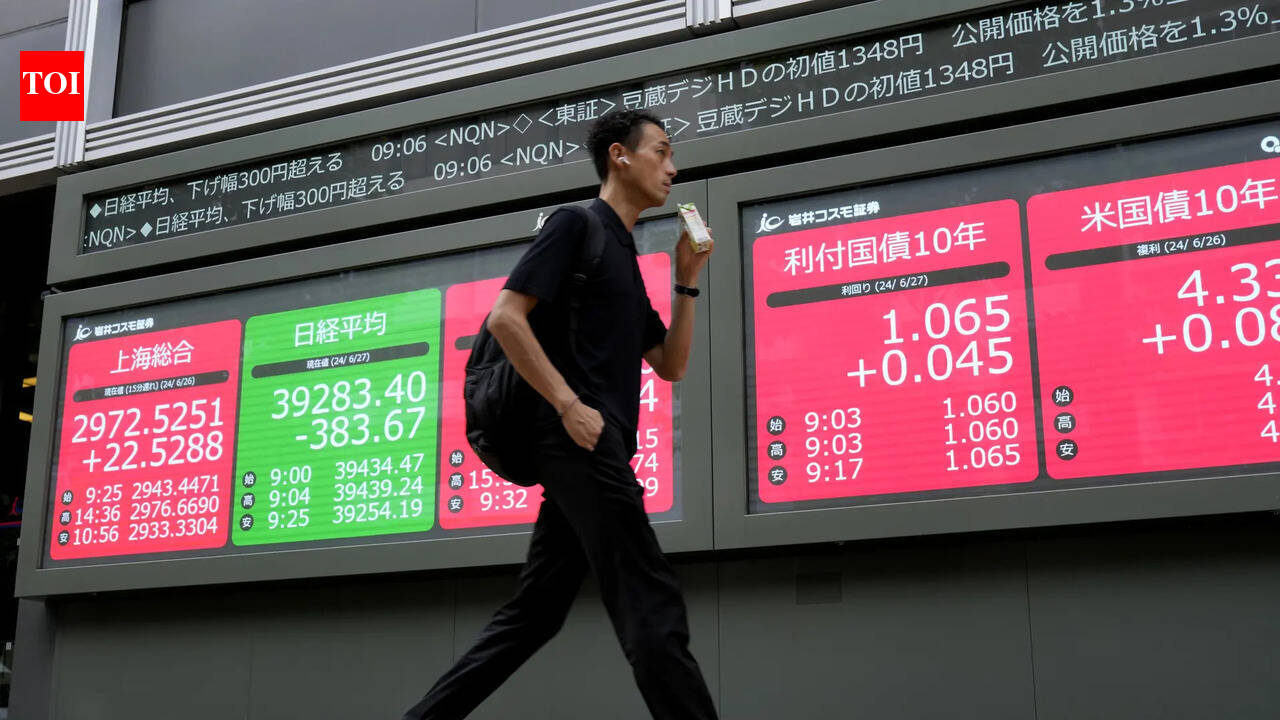
Asian stocks plunged on Tuesday as investors reacted to the ongoing tensions in Iran and its potential impact of regional energy supplies. In Hong Kong, HSI was down 74 points or 0.29% to 25,985. South Korea’s Kospi index also opened sharply lower after Monday’s holiday, plunging 4.88% to 5,939.Shanghai and Shenzhen also fell 0.07% and 1.05% respectively. Japan’s Nikkei 225 declined 2.4% or 1,427 points, landing at 56,629 by 10:10 am. Analysts noted that Japan, which relies heavily on oil and natural gas shipments through the Strait of Hormuz, could face supply challenges. However, the country’s stockpile of over 200 days of energy means the immediate threat remains limited. Japanese energy shares were hit particularly hard, with Eneos Corp. falling nearly 6% and Idemitsu Kosan down almost 4%. Defence stocks, which had recently gained on expectations of increased spending under Prime Minister Sanae Takaichi, retreated, with Mitsubishi Heavy Industries down 5% and IHI losing 4%. Oil prices continued to climb amid concerns over supply disruptions. Benchmark US crude rose 77 cents to $72.00 a barrel, while Brent crude added $1.10 to $78.84 a barrel. Both contracts remain higher than pre-conflict levels despite Monday’s fluctuations. On Wall Street trading, airline stocks were among the hardest hit, pressured by rising fuel costs and regional travel disruptions. In Asia, ANA shares fell 2.4%, Japan Airlines dropped 5.2%, Korean Air lost 8.9%, and Qantas Airways declined 2.9%. On Monday, the S&P 500 fluctuated but ended nearly unchanged at 6,881.62. The Dow Jones Industrial Average dipped 0.1% to 48,904.78, while the Nasdaq rose 0.4% to 22,748.86. Gold climbed 1.2% as investors sought safer assets, while US officials reassured markets that the conflict is unlikely to be prolonged. Rising oil prices boosted energy stocks, with Exxon Mobil up 1.1% and Marathon Petroleum rising 5.9%. Defence contractors also strengthened: Northrop Grumman climbed 5.9%, RTX gained 4.7%, and Palantir Technologies rose 5.8%. Nvidia led Big Tech gains with a 2.9% increase. In the bond market, the 10-year Treasury yield rose to 4.04% from 3.97%, aided by stronger-than-expected US manufacturing data. In currencies, the US dollar slipped to 157.32 yen from 157.47 yen, while the euro inched up to $1.1693 from $1.1690.


US’ Gap Inc. president & CEO Richard Dickson to be honoured by FIT
US-Israel-Iran war hits oil supplies: How India is preparing for the economic fallout – The Times of India

Thailand’s Indorama Ventures’ revenue, profit decline in 2025

-

 Politics5 days ago
What are Iran’s ballistic missile capabilities?
-
 Business6 days ago
Households set for lower energy bills amid price cap shake-up
-

 Sports5 days ago
Sri Lanka’s Shanaka says constant criticism has affected players’ mental health
-
 Business6 days ago
Lucid widely misses earnings expectations, forecasts continued EV growth in 2026
-
 Business5 days ago
Attock Cement’s acquisition approved | The Express Tribune
-

 Tech6 days ago
Here’s What a Google Subpoena Response Looks Like, Courtesy of the Epstein Files
-
 Business6 days ago
Income Tax Draft Rules 2026: Key Changes On How And When Pan Card Will Be Required?
-

 Sports5 days ago
Who has the advantage at WWE Elimination Chamber? Notes, stats and history to consider