

Tech
Chicago tech entrepreneur Eric Lefkofsky has launched six unicorns, building a legacy far beyond Groupon

Since the dawn of the new millennium, there have been at most several thousand startup tech companies across the U.S. that have achieved unicorn status—crossing the $1 billion valuation.
Eric Lefkofsky, 55, the Chicago-based serial entrepreneur best known for co-founding online daily deals site Groupon, has given rise to six of them, evolving from discount coupons for pedicures to potentially lifesaving cancer treatments using artificial intelligence.
For most Chicagoans, however, the soft-spoken Lefkofsky remains something less than a household name, a billionaire entrepreneur whose brand is not emblazoned on a skyscraper, despite helping to put the city on the tech world map.
“He’s been a huge force in Chicago,” said Howard Tullman, a Chicago venture capitalist and the former CEO of 1871, the city’s influential tech hub. “This is not a guy who spent a lot of time chasing recognition, and he’s been a little bit below the radar. And I think that’s really particularly admirable.”
While unicorns are far more plentiful now than when venture capitalist Aileen Lee coined the mythical appellation in 2013, Lefkofsky remains a rarity in Chicago tech circles and beyond, launching and nurturing a diverse portfolio of big ideas brought to life.
For much of Lefkofsky’s remarkable run, the startups have been developed at 600 W. Chicago Ave., the century-old former Montgomery Ward Catalog building, which became known colloquially as the Groupon building with the stratospheric rise of the e-commerce website.
At one point, Lefkofsky’s various ventures occupied more than three-fourths of the massive 1.65 million-square-foot building in the Goose Island neighborhood along the Chicago River.
Founded in 2008, Groupon, which once spurned a $6 billion takeover offer from Google on its way to a $25 billion valuation, has fallen in recent years to a fraction of its previous worth amid sharp revenue declines. In January 2024, a downsizing Groupon moved to smaller digs downtown, leaving a 300,000-square-foot hole in the onetime nexus of the Chicago tech scene.
Once its largest shareholder with a 40% stake, Lefkofsky stepped down from an active leadership role at Groupon in 2015 and has since pared his holdings to just under 10%.
But Lefkofsky is still hard at work inside the building where the online daily deals site was born, fully invested in developing the next big thing.
Besides Groupon, the list of billion-dollar startups founded by Lefkofsky includes InnerWorkings, Echo, Mediaocean and Pathos AI. In recent years, most of his time, money and energy have been focused on Tempus, an AI-powered health care technology company he founded in 2015 to treat cancer and other diseases.
Lefkofsky serves as CEO of Tempus, a publicly traded company with 4,000 employees, offices and labs across the country and a market cap of more than $13 billion. More than any other company in his portfolio, the mission is personal to Lefkofsky, who started Tempus after his wife was diagnosed with breast cancer.
“In the process of her treatment, I ended up deciding that I really wanted to focus on this space, and spend the rest of my career thinking about cancer, how to bring technology to cancer care,” Lefkofsky said during a recent visit to Tempus headquarters, a bustling office and laboratory space that occupies 217,000 square feet of the former Montgomery Ward/Groupon building.
More than 1,000 employees circumnavigate the bustling fifth floor Tempus office around an atrium that Lefkofsky said was a spiral parking ramp before the building—a National Historic Landmark that once housed the country’s oldest mail-order firm—was converted to tech space 25 years ago.
The Tempus workforce is a melange of techies, scientists, oncologists and pathologists, all blended together with the same goal: using AI to better treat cancer.
“What’s unique about Chicago is that we have a little bit of everything,” Lefkofsky said, navigating seamlessly between the worlds of technology and science on a tour of his sprawling office.
There are two main areas of focus for Tempus.
In the life sciences realm, the company is analyzing molecular and clinical data with the help of artificial intelligence to facilitate drug research and development. Tempus is also pioneering new technology such as biological modeling, where “mini-tumors” are regrown from lab samples to test the efficacy of drugs.
The other half of the business for Tempus is clinical genomic sequencing, where tissue from cancer patients is shipped into the lab from all over the U.S. and analyzed using artificial intelligence to personalize treatment based on molecular biomarkers.
Half of the nation’s 14,000 or so oncologists regularly order sequencing tests from Tempus, Lefkofsky said. Tempus is one of the largest genomic sequencing companies in the country, helping doctors identify mutations to inform cancer treatment decisions, he said.
“When we started Tempus 10 years ago, maybe 10% of the patients were sequenced,” he said. “Today it’s over 50% in the United States, and soon it will be 100%. It’s just standard care.”
Lefkofsky has poured $100 million into Tempus, which has yet to turn a profit. He is confident that is about to change.
Tempus reported nearly 90% year-over-year revenue growth during its second quarter earnings report Aug. 8, raising its full-year 2025 revenue guidance to $1.26 billion. The company, whose stock price has more than doubled this year, is projecting a positive adjusted EBITDA of $5 million for 2025.
Beyond seed money, growing Tempus from a startup to a $13 billion company has also required a lot of sweat equity from Lefkofsky.
“It was not a small amount of money that I ended up putting into a series of rounds,” he said. “But more than the capital, it’s been kind of all-consuming for the last 10 years of my life.”
He was pretty busy before Tempus as well.
In addition to the six unicorns, Lefkofsky co-founded venture capital firm Lightbank. His startup success has made him the 643rd richest person in the world with a net worth of $5.9 billion, according to the Forbes real-time billionaires list.
A Detroit native, Lefkofsky earned a bachelor’s and a law degree at the University of Michigan before making his mark on the Chicago tech scene.
In the wake of the dot.com bubble burst, Lefkofsky launched a string of startups, beginning with InnerWorkings, a printing technology company he founded in 2001. Two years later, Lefkofsky moved InnerWorkings into 600 W. Chicago, the hulking former warehouse that had been recently redeveloped as a tech center.
“When I came to the building, it was about 90% vacant—and most of these floors were concrete for parking,” Lefkofsky said. “There were maybe one or two built floors and they were maybe half built, and we took some space with InnerWorkings.”
With plenty of room to grow, Lefkofsky and his portfolio soon did.
In 2005, he co-founded Echo Global Logistics with longtime business partner Brad Keywell, using technology to drive freight transportation. The company went public in 2009, growing into a multibillion-dollar logistics giant.
Next up, Lefkofsky and Keywell founded MediaBank in 2006, an advertising technology startup that evolved into Mediaocean through a 2012 merger with a New York-based rival.
Then came Groupon, an e-commerce launch that has become almost mythic in its arc.
In 2007, Andrew Mason, then a recent Northwestern University music grad, started a website called The Point with $1 million in seed money from Lefkofsky. The initial concept was to bring together people with a common cause to take action, but the mission soon pivoted to a daily deals retailing site, and Groupon was born.
Groupon created its own e-commerce niche with heavily discounted daily deals on everything from manicures to meals, blasted out to subscribers via email. It exploded in popularity and employment grew from a handful to more than 10,000 worldwide as the company’s valuation blossomed into the billions.
Google tried to purchase Groupon for nearly $6 billion in 2010, but Mason and his investors said no deal. By 2011, Groupon was valued at $25 billion, and the company went public, raising $700 million in the largest tech initial public offering since Google.
From an investor standpoint, it has been mostly downhill from there.
Operating losses, management missteps—including a disastrous 2011 Super Bowl ad— and a rapid post-IPO decline in valuation led to the 2013 ouster of Mason as CEO.
In August 2013, Lefkofsky was named CEO of Groupon. But one year into his new role, Lefkofsky’s life changed when his wife, Liz, was diagnosed with breast cancer. By 2015, he stepped down as CEO at Groupon and started Tempus.
Ten years later, Lefkofsky said his wife is “doing well” and Tempus is thriving at the intersection of technology and medicine.
In this case, necessity was both the mother of invention—and their three children.
“The work we did to try to figure out how to treat her was actually personalized using data, and so it ended up producing a good outcome,” Lefkofsky said. “So in many ways, she was Patient One of Tempus.”
From the outset, Tempus employed artificial intelligence to analyze medical data—long before the term, and the technology, came into widespread use.
As the ability to use AI in health care at scale gains momentum, the opportunity for Tempus to become a standard diagnostic tool and an integral part of mainstream medicine continues to ramp up, Lefkofsky said.
“We’re helping tens of thousands of patients around the country manage their cancer care, and we’ve expanded it to other disease areas such as cardiology and neurology,” Lefkofsky said. “It’s just good to see a lot of the roots we planted take hold.”
Living up to his company’s name—tempus means time in Latin—Lefkofsky somehow manages to find enough time for a number of the city’s civic and cultural organizations.
Longtime Glencoe residents, Lefkofsky and his wife are actively engaged in philanthropic pursuits, establishing an eponymous family foundation in 2006. He has also served on a number of boards, including Steppenwolf Theater Company, Lurie Children’s Hospital and World Business Chicago.
“I think he’s been a tremendous entrepreneurial influence, and I think that he’s also been maybe even more impressive, frankly, on the philanthropic side,” Tullman said.
In November, the Art Institute named Lefkofsky as its new board chairman, putting the tech billionaire in charge of overseeing the museum, the school and an ambitious plan to usher in an era of new development at the historic South Michigan Avenue campus.
His new role came with some unexpected drama when the museum’s director, James Rondeau, returned from a voluntary leave in June following a board investigation into an incident where he removed his clothes and disrupted a United Airlines flight to Germany.
“As a board, we were thrilled to have him back and thrilled just to be moving forward,” Lefkofsky said.
Meanwhile, his day job may be entering a new phase as fledgling companies leave the nest and head off on their own—faster than new ones launch.
InnerWorkings, Echo and Mediaocean have all been acquired by private equity firms. Czech investor Dusan Senkypl, now the largest stakeholder in Groupon, took the helm of the struggling daily deals site and last year moved the company to a smaller space in the Leo Burnett Building on Wacker Drive as part of a larger cost-cutting initiative.
Pathos AI, a Chicago-based biotech startup Lefkofsky co-founded with Tempus COO Ryan Fukushima in 2020, gained unicorn status in March with a $365 million round of funding that brought its valuation to $1.6 billion. Its day-to-day management is vested in other hands.
Pathos, Echo and Tempus still call 600 W. Chicago Ave. home.
Lefkofsky continues to focus on building Tempus, which in late August announced the acquisition of Paige, an AI company specializing in digital pathology. The $81 million deal is mostly being paid with Tempus common stock.
With six unicorns under his belt, Lefkofsky is not ready to give up the CEO’s role at Tempus anytime soon.
“I think my focus over the next several years is just running Tempus and making sure that it delivers on its mission,” Lefkofsky said.
As to the prospects of starting unicorn No. 7 down the road, Lefkofsky didn’t rule it out.
“I don’t have any plans to start another company,” he said. “But every once in a while, you know, things come up and you get excited.”
2025 Chicago Tribune. Distributed by Tribune Content Agency, LLC.
Citation:
Chicago tech entrepreneur Eric Lefkofsky has launched six unicorns, building a legacy far beyond Groupon (2025, September 4)
retrieved 4 September 2025
from https://techxplore.com/news/2025-09-chicago-tech-entrepreneur-eric-lefkofsky.html
This document is subject to copyright. Apart from any fair dealing for the purpose of private study or research, no
part may be reproduced without the written permission. The content is provided for information purposes only.













In a time when almost everything is getting more expensive, this deal on the M5 MacBook Air has me hopeful about how laptop pricing will play out the rest of the year. The M5 MacBook Air has dropped back down to $949, which is $150 off its retail price. It’s only been at this price one other time since the product launched in early March and has more consistently sold for $1,049. As someone who’s reviewed every available MacBook and their strongest competitors, I can unequivocally say that this MacBook Air is one of the very best laptop deals right now.
Take the Surface Laptop 7th Edition, for example, which has been one of my favorite alternatives to the MacBook Air through all of 2025. It had been at competitive prices with the M4 MacBook Air all along, with both laptops sometimes dropping to as low as $799 during sales events like Prime Day throughout the year. But now, the Surface Laptop has gotten an official price hike due to the RAM shortage and is currently sitting at $1,200. It’s still a laptop I like quite a lot, but at $350 more than a similarly configured M5 MacBook Air, it’s very difficult to recommend.
Or consider the MacBook Neo, Apple’s new budget laptop that also launched in March. While it’s much cheaper overall, it’s only ever been sold for $10 off its full price. At this reduced price for the M5 MacBook Air of $949, that leaves only a dangerously small $260 gap between the Neo and the Air. It’s almost embarrassing how much better the Air is by comparison—in every way imaginable. If you’re curious how these two laptops stack up, I’ve done a comprehensive comparison between them that’s worth checking out. But to put it simply, despite all the excitement (and controversy) around the much cheaper MacBook Neo, the MacBook Air still has the most price flexibility in terms of deals.
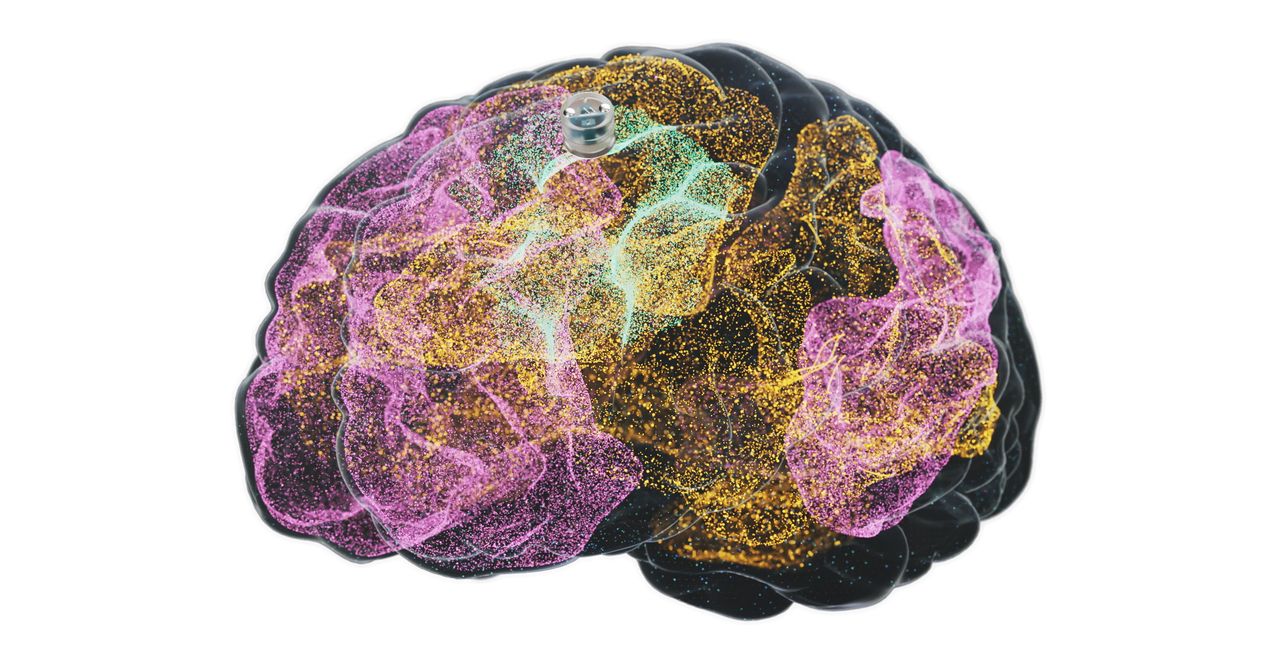
The latest brain-computer interface could help people recover from severe depression. Motif Neurotech announced Monday that the US Food and Drug Administration has approved a human study to trial the company’s blueberry-sized brain implant that sits in the skull and delivers electrical stimulation to treat depression.
The Houston-based startup, founded in 2022, is part of a budding industry pursuing technology to read and interpret brain signals. While other companies exploring similar technology, like Elon Musk’s Neuralink, Paradromics, and Synchron, are developing devices to enable paralyzed people to communicate and use computers, Motif is aiming to ease depression in people who have not benefited from medication.
The company’s device is implanted in the skull just above the dura, the brain’s protective membrane. It targets the central executive network, a part of the brain that is responsible for high-level cognitive functions and is underactive in major depressive disorder. The implant emits specific patterns of stimulation to turn “on” this network.
Motif’s device would allow patients to receive therapeutic brain stimulation at home. “Through frequent electrical stimulation, we think we can drive that neuroplasticity that creates stronger connectivity within the central executive network for patients with depression, so that they can get out of bed in the morning, call their friends, go to the gym,” says Jacob Robinson, Motif’s cofounder and CEO.
Courtesy of Motif
Electrical stimulation has been used for decades to treat depression, and Motif’s approach is just the latest iteration. Electroconvulsive or “shock” therapy began in the 1930s and is still used today in cases where patients don’t benefit from antidepressants. Deep brain stimulation, which involves surgically implanting electrodes into the brain, is occasionally used experimentally but is not FDA approved. A much milder form of stimulation known as transcranial magnetic stimulation, or TMS, was approved in 2008. While it can be highly effective, it typically requires a lengthy treatment regimen of five treatments a week for six weeks.
A study from 2021 found that during a 12-month period in the United States, nearly 9 million adults were undergoing treatment for major depressive disorder, and of those, almost 3 million were considered to have treatment-resistant depression, when symptoms do not improve after at least two, and often more, antidepressant medications.
Motif’s device can be implanted in a 20-minute outpatient procedure without the need for brain surgery. It’s powered by wireless magnetoelectric technology that Robinson developed while at Rice University and is charged with a baseball cap that patients will wear when receiving the stimulation.
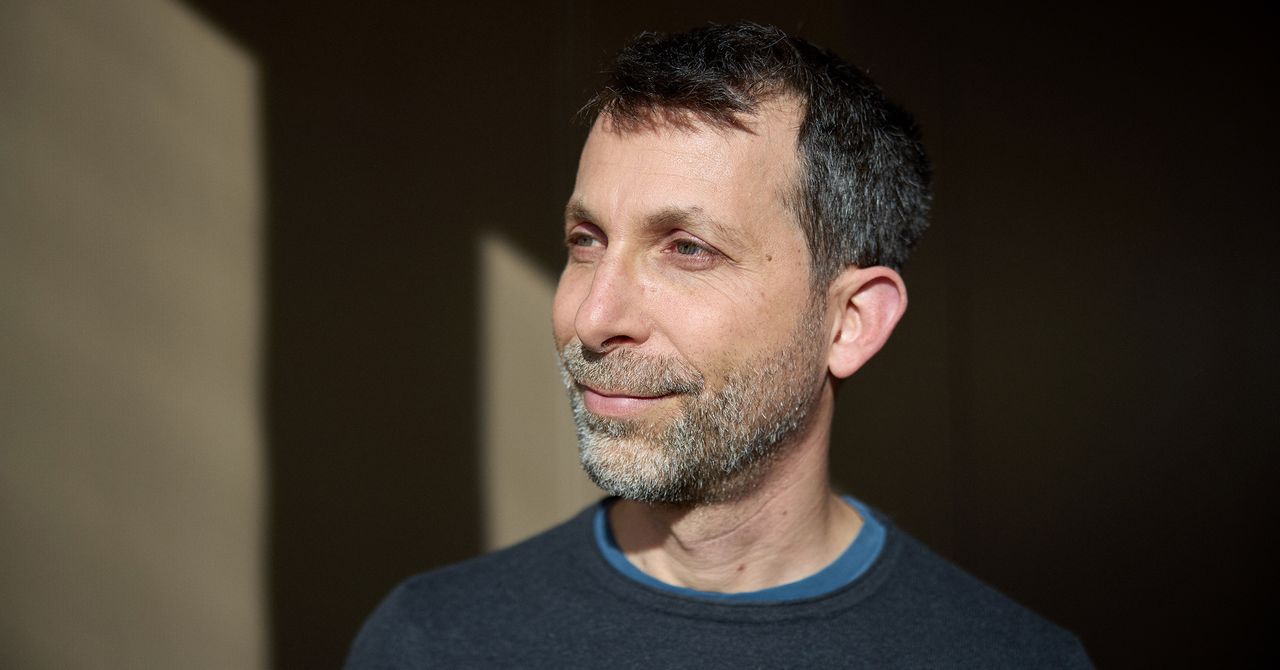
David Silver gave the world its very first glimpse of superintelligence.
In 2016, an AI program he developed at Google DeepMind, AlphaGo, taught itself to play the famously difficult game of Go with a kind of mastery that went far beyond mimicry.
Silver has since founded his own company, Ineffable Intelligence, that aims to build more general forms of AI superintelligence. The company will do this, Silver says, by focusing on reinforcement learning, which involves AI models learning new capabilities through trial and error. The vision is to create “superlearners” that go beyond human intelligence in many domains.
This approach stands in contrast to how most AI companies plan to build superintelligence, by exploiting the coding and research capabilities of large-language models.
Silver, speaking to WIRED from his office in London, says he thinks this approach will fail. As amazing as LLMs are, they learn from human intelligence—rather than building their own.
“Human data is like a kind of fossil fuel that has provided an amazing shortcut,” Silver says. “You can think of systems that learn for themselves as a renewable fuel—something that can just learn and learn and learn forever, without limit,” he says.
I’ve met Silver a few times and—despite this proclamation—he’s always struck me as one of the more humble people in AI. Sometimes, when talking about ideas he considers silly, he flashes a puckish grin. Right now, though, he’s deadly serious.
“I think of our mission as making first contact with superintelligence,” he says. “By superintelligence I really mean something incredible. It should discover new forms of science or technology or government or economics for itself.”
Five years ago, such a mission might have seemed ridiculous. But tech CEOs now routinely talk about machines outpacing human intelligence and replacing entire categories of workers. The idea that some new technical twist might unlock superhuman AI capabilities has recently spawned a raft of billion-dollar startups.
Ineffable Intelligence has so far raised $1.1 billion in seed funding at a valuation of $5.1 billion—an enormous sum by European AI standards. Silver has also recruited top AI researchers from Google DeepMind and other frontier labs to join his endeavor.
Silver says he will give all of the money he makes from equity in Effable Intelligence—a sum that could amount to billions if he is successful—away to charity.
“It’s a huge responsibility to build a company focusing on superintelligence,” he tells me. “I think this is something that has to be done for the benefit of humanity, and any money that I make from Ineffable will will go to high-impact charities that save as many lives as possible.”
Total Focus
Silver met Demis Hassabis, the CEO of Google DeepMind, at a chess tournament when they were kids, and the pair later became lifelong friends and collaborators.
They remained close after Silver left Google DeepMind, which he did only because he wanted to chart a completely new path. “I feel it’s really important that there is an elite AI lab that actually focuses a hundred percent on this approach,” he says. “That it’s not just a corner of another place dedicated to LLMs.”
The limits of the LLM-based approach can be seen, Silver says, with a simple thought experiment. Imagine going back in time and releasing a large language model in a world that believed the world was flat. Without being able to interact with the real world, the system, he says, would remain an avid flat-earther, even if it continued to improve its own code.
An AI system that can learn about the world for itself, however, could make its own scientific discoveries.


‘Euphoria’ star Jessica Blair Herman unveils truth about feud amongst cast

Banks to report all related party forex derivative transactions: RBI – The Times of India

Josh Duhamel provides relationship update with ex-wife Fergie

-

 Sports1 week ago
NCAA men’s gymnastics championship: All-time winners list
-

 Sports1 week ago
WWE WrestleMania 42 Night 2: Live match results and analysis
-

 Fashion1 week ago
UK’s Sosandar returns to profitability amid robust FY26 performance
-

 Politics7 days ago
UK’s Starmer seeks to deflect blame over Mandelson appointment
-

 Entertainment1 week ago
Lee Anderson, Zarah Sultana kicked out of UK Parliament for calling PM ‘liar’
-
 Business1 week ago
No fuel shortage: Govt assures 100% domestic LPG, PNG, CNG supply amid Hormuz energy crunch – The Times of India
-
 Business1 week ago
How Trump’s psychedelics executive order could unlock stalled cannabis reform
-

 Sports1 week ago
Quetta Gladiators opt to bowl after winning toss against Peshawar Zalmi in PSL 11 clash