

Fashion
More UK retail workers than ever at risk of quitting – report


Published
September 6, 2025
More than half of UK retail staff were at risk of leaving their jobs during spring than at any other time in the last two years over concerns around the insecurity of retail employment.
Some 54% of retail workers were a ‘flight risk’ between April and June, a 19% increase from the previous year, according to the latest Retail People Index from the Retail Trust and AlixPartners.
It is also the highest percentage that the Retail People Index has recorded since it began tracking wellbeing across the sector two years ago.
More than 600 employees were surveyed, and answers to questions about pay, recognition, development and work-related anxiety were among those used to help calculate the flight risk score, which shows the likelihood of employees leaving their jobs.
Overall, wellbeing fell seven points year-on-year, from 66 to 59, and the number of retail staff working while feeling physically or mentally unwell rose by 12%, to 44% of all employees.
The report says its findings follow separate data from the Office for National Statistics (ONS), which shows that there were 93,000 fewer retail jobs in March 2025 than in March 2024. The ONS also recently revealed that retail saw one of the largest drops in job vacancies between May and July 2025 compared to any other sector.
According to the Index, the impact of leading under-resourced teams has contributed to a decline in happiness levels among retail managers, which fell by 11%. This marks the first time that managers have reported feeling unhappier than non-managers since the publication of the first Index.
Many managers reported feeling unfairly paid and unrecognised for doing something well. Meanwhile, the number of retail workers reporting a positive relationship with their manager also dropped to its lowest level in two years.
Chris Brook-Carter, chief executive of the Retail Trust, said: “Our research has previously shown retail workers tend to be at their happiest going into the summer, once the busy winter is well behind them, but ongoing insecurities around jobs, finances and the political climate are continuing to take their toll on people working in retail.
“The rising employment costs announced in last year’s budget are placing huge economic pressures on the sector and we’re seeing this felt most severely by those working in management roles right now. They are the ones having to hold often under-resourced and unhappy teams together, and our findings suggest they feel inadequately supported for doing so.”
He added: “The financial pressures impacting the retail sector are largely outside of employers’ control, but there is an urgent need to address the particular burden this is now having on managers and to prevent the knock-on effect it will also have on their teams. Providing more training and support for leaders to look after themselves and those working for them is crucial if we are to prevent a further decline in morale, higher turnover and greater instability at a time when resilience is more important than ever.”
Laura Bond, a director at AlixPartners, also said: “This quarter’s Retail People Index reveals urgent challenges for retailers. With 54% of employees looking to leave their roles – the highest flight risk since our tracking began – and wellbeing scores dropping to 59%, below the critical 60% threshold, it’s clear that employees are struggling. Presenteeism rates have soared to 44%, the highest level seen in 18 months, while manager-employee relationships have deteriorated and reached a 24-month low.
“The seasonal spring wellbeing ‘bounceback’ is absent this year, and managers, traditionally the most resilient group, have seen an 11% decline in happiness year-on-year. Retailers must fundamentally shift their workplace culture to address these deeper issues, investing in manager support, overall morale, and staff wellbeing. Failing to do so risks continued talent loss, weakened service, and operational strain in an already challenging market.”
Copyright © 2025 FashionNetwork.com All rights reserved.












The apparel climate story has moved out of the ESG report and into the cost sheet. In ****–****, climate risk is showing up as cotton quality loss, import dependence, energy volatility, cooling capex, carbon-price exposure and mandatory textile-waste fees. For brands and suppliers, the question is no longer whether climate action is ‘responsible’. It is whether delay will make product margins uncompetitive.
The latest data makes the shift visible. Textile Exchange says global fibre production reached *** million tonnes in **** and could hit *** million tonnes by **** if business continues as usual. Polyester alone now makes up ** per cent of global fibre output, with ** per cent still fossil-based. That scale gives apparel a low-cost material engine, but it also ties the sector to fossil energy, petrochemical volatility and future carbon accounting.

Caprolactam (CPL) prices initially held near $*.**–*.**/kg with minimal movement, while nylon chips saw uptick to ~$*.***/kg (+*.* per cent WoW) driven by short-term restocking. Nylon filament yarn (DTY **D/**F) prices remained stable at ~$*.**–*.**/kg, supported by existing inventory and steady downstream textile operations.
By the second week (April * to April **), benzene stabilised, but caprolactam began to weaken to ~$*.**–*.**/kg (−*.* per cent WoW), signalling the start of broader chain pressure. Nylon chips responded with a mild correction to ~$*.***/kg (−* per cent WoW), while filament yarn prices continued to hold steady due to inventory buffers and ongoing execution of prior textile orders. In the third week (Apr **–**), caprolactam stable to ~$*.*/kg, and chips followed to ~$*.***/kg (Stable WoW).
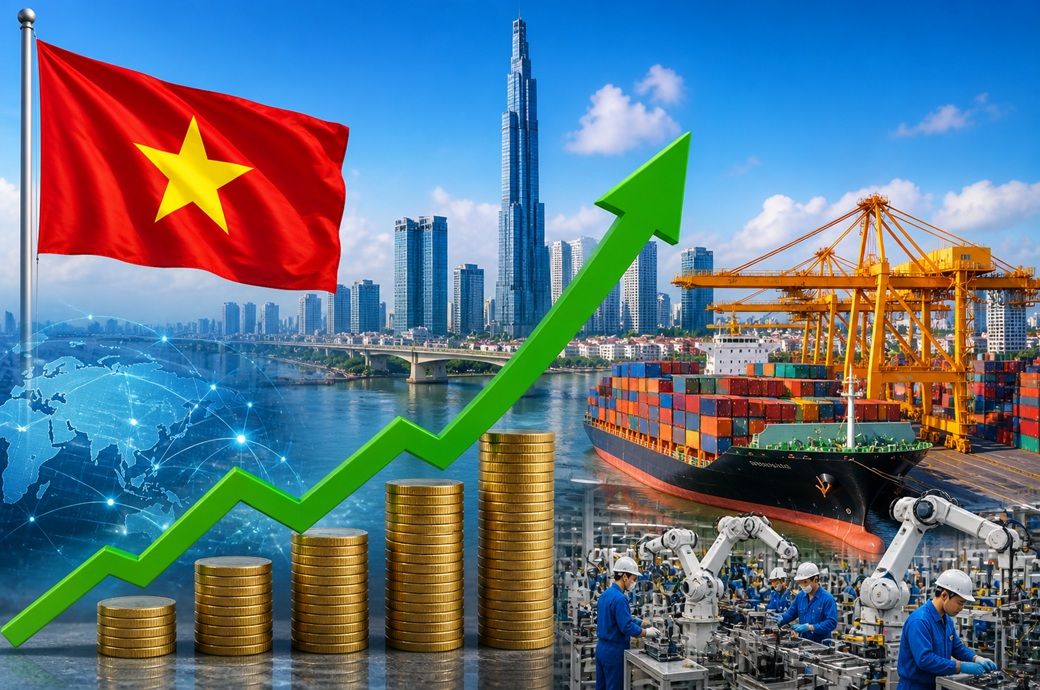
Total registered FDI, including newly registered and adjusted capital, along with foreign investors’ contributions and share purchases, reached $18.24 billion as of April 27, up 32 per cent year on year (YoY), according to the Ministry of Finance’s National Statistics Office (NSO).
Vietnam attracted $18.24 billion in FDI in January–April 2026, up 32 per cent, driven by manufacturing and processing.
Realised FDI hit a five-year high, signalling continued capacity expansion.
Trade surged to $344.17 billion, supported by strong US demand and rising imports from Asia, highlighting deeper global supply chain integration and export momentum.
A total of 1,249 new projects were licensed with combined registered capital of $12.15 billion, reflecting a 3.7 per cent annual increase in project numbers and a 2.2-fold rise in value. Manufacturing and processing dominated, attracting $8.12 billion, or 66.8 per cent of total newly registered capital.
Realised FDI in the January–April period was estimated at $7.40 billion, up 9.8 per cent YoY and marking the highest level for the period in the past five years. Of this, the manufacturing and processing sector disbursed $6.12 billion, accounting for 82.7 per cent. Meanwhile, 316 existing projects registered additional capital of $3.13 billion, representing a sharp 51 per cent decline compared to the same period last year. Combining newly registered and adjusted capital, total FDI into manufacturing and processing reached $10.49 billion, or 68.6 per cent of the total.
Foreign investors carried out 976 capital contribution and share purchase transactions worth $2.96 billion, up 61.9 per cent YoY. Among these, 325 deals increased enterprises’ charter capital by $445.13 million, while 651 share acquisitions without capital increases totalled $2.51 billion. Wholesale and retail trade led these investments, capturing $1.89 billion, or 63.9 per cent.
Among 53 countries and territories with newly licensed projects, Singapore was the largest investor with $6.05 billion, accounting for 49.8 per cent of the total. It was followed by the Republic of Korea with $4.08 billion (33.6 per cent), China with $524.1 million (4.3 per cent), Japan with $462 million (3.8 per cent), Hong Kong (China) with $329.2 million (2.7 per cent), and the Netherlands with $318.5 million (2.6 per cent).
On the trade front, Vietnam’s total trade with the rest of the world was estimated at $344.17 billion in the first four months of 2026, a significant increase from $277.21 billion in the same period last year, the NSO said. In April alone, trade volume reached an estimated $94.32 billion, rising 8 per cent from March and 26.7 per cent YoY.
The United States remained the largest importer of Vietnamese goods, with imports valued at $53.9 billion, while China continued as the top supplier with $69 billion. Imports from traditional markets also surged, with South Korea and ASEAN recording growth rates of 57.8 per cent and 44.3 per cent, respectively.
Fibre2Fashion News Desk (MS)


‘I Actually Thought He Was Going to Hit Me,’ OpenAI’s Greg Brockman Says of Elon Musk

EV maker Lucid suspends production guidance amid incoming CEO’s business review
Long-term borrowing costs in UK reach 28-year high amid rising inflation

-

 Tech1 week ago
A Brain Implant for Depression Is About to Be Tested in Humans
-

 Tech1 week ago
Almost 90% of women leave tech industry within 10 years | Computer Weekly
-

 Sports1 week ago
Pro wrestling star Steph De Lander reveals how colleague’s advice helped lead her to title triumph at ACW
-
 Business1 week ago
‘I had £20,000 stolen and had to fight a 13-month fraud reporting rule to get it back’
-

 Entertainment1 week ago
Norway joins Type 26 Frigate Programme to boost NATO naval power
-

 Tech1 week ago
Are tech leaders risking a cyber resourcing crisis? | Computer Weekly
-

 Entertainment1 week ago
Melania Trump says ABC should ‘take a stand’ on late-night host Kimmel
-
 Business6 days ago
PSX plunges over 4,800 points | The Express Tribune