

Business
Federal Reserve board nomination: Senate panel clears Trump pick Stephen Miran; Democrats flag loyalty test risk – The Times of India

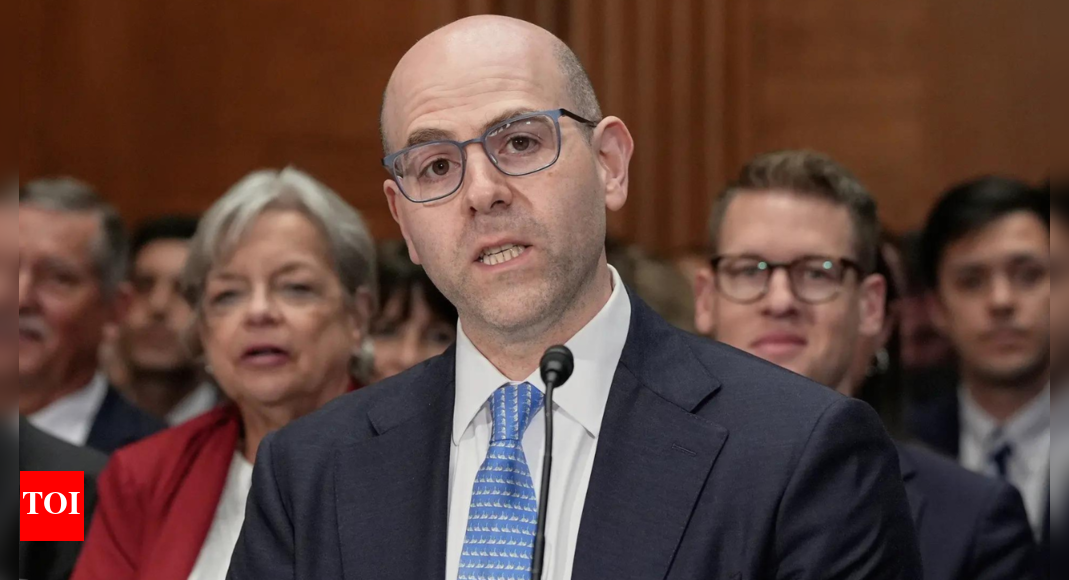
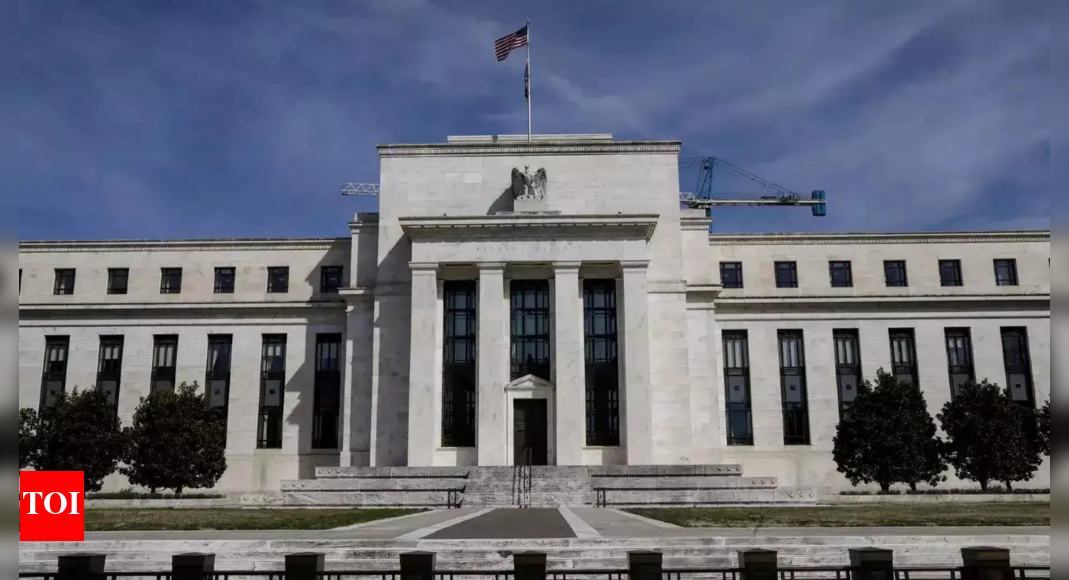
A US Senate committee on Wednesday advanced the nomination of President Donald Trump’s choice for the Federal Reserve board, Stephen Miran, despite concerns that he may not resign from the White House even if confirmed.Miran, who chairs the White House Council of Economic Advisers (CEA), cleared the Senate Banking Committee by a narrow 13-11 vote, with Democrats opposing the move, AFP reported. The approval paves the way for his full Senate confirmation, which could allow him to join the central bank’s Federal Open Market Committee (FOMC) in time for its September 16–17 policy meeting, AFP reported.Senator Elizabeth Warren, the top Democrat on the banking committee, criticised the nomination, warning it “sets up an obvious Trump loyalty test.” She argued that Miran’s rate votes could decide whether he is able to return to the White House role once his short Fed term ends.If confirmed, Miran would fill a short-term Fed vacancy lasting slightly over four months until January 2026. At his hearing, Miran said he only intended to take a leave of absence from the CEA during that period but later told lawmakers he would resign if nominated and confirmed for a longer term.Democratic lawmakers issued a letter after his testimony, warning that any decisions he took at the Fed would be seen as an attempt “to satisfy the demands of the President” and safeguard his White House position. Warren also expressed concern that he had not guaranteed to step down at the end of the short term if confirmed.The Fed’s seven-member board of governors holds 12 voting seats on the FOMC, which sets US interest rates. Since cutting rates in December, the Fed has kept policy steady this year while monitoring the effects of Trump’s sweeping tariffs on inflation. Analysts now expect a rate cut next week, citing limited tariff impact on prices but growing weakness in the jobs market.
Business
India among most resilient large EMs, better placed for future global shocks; policy reforms & strong buffers help: Moody’s – The Times of India
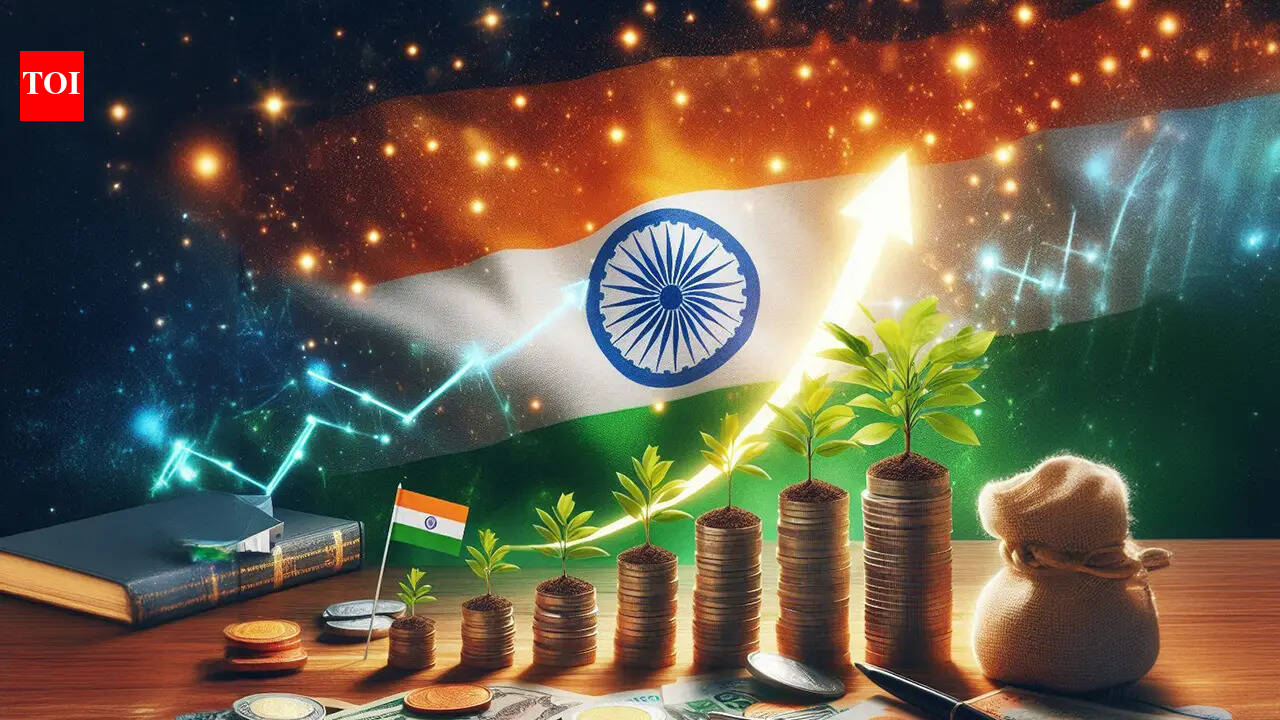
Amid the ongoing Middle East conflict, a recent report by Moody’s Ratings says that recent global shocks have shown India’s resilience among emerging economies to withstand pressures. The report credits the resilience to timely policy measures and the buildup of robust buffers.“India and Thailand are the sovereigns better placed to manage future global shocks. In both cases, the key policy choices that support stability were made well before the recent stress period,” Moody’s says.In its latest study on emerging-market sovereigns, the agency notes that India has ranked among the more resilient economies since 2020, based on multiple indicators such as sovereign bond spreads, domestic yield movements, and exchange-rate stability.The report highlights the following points of strength:Monetary policy frameworks are clear and predictable, inflation expectations are better anchored, and exchange rates are allowed to adjust when needed. This reduces the risk that currency moves turn into persistent inflation or force abrupt policy shifts.
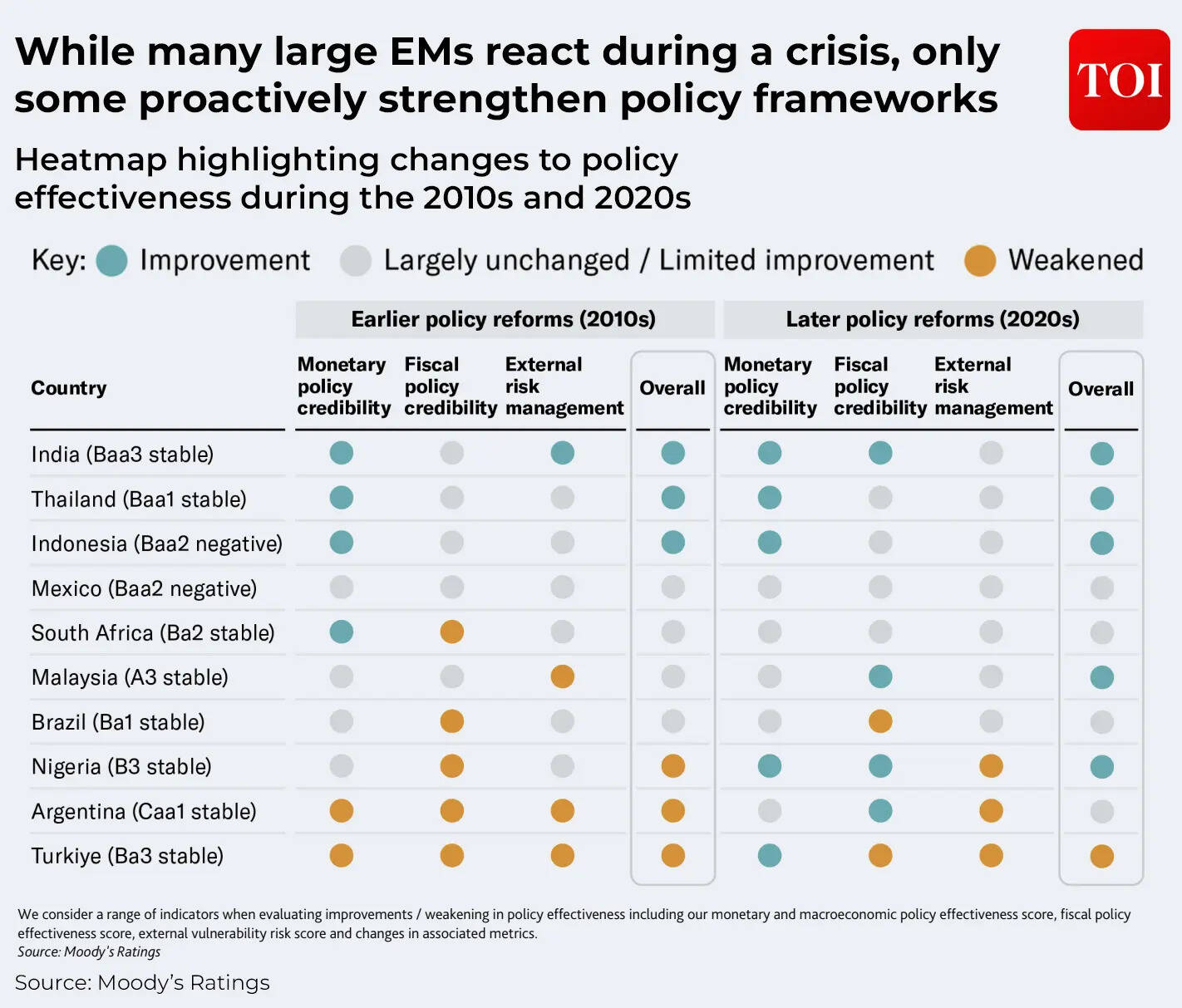
Both countries should also enter future periods of stress with strong and accessible buffers. India’s reliance on domestic funding is balanced by deep local markets and sizeable reserves, the report says.However it notes that India’s relatively high debt burden and weak fiscal balance limit the amount of space available to respond to successive shocks, while Thailand’s rising debt burden risks reducing resilience over time.The report points out that India has consistently demonstrated notable strength during periods of global volatility. Movements in credit spreads have been limited and short-lived, currency depreciation has remained controlled, and fluctuations in local bond yields have been orderly. These factors have helped the country retain uninterrupted access to financial markets even during turbulent phases.
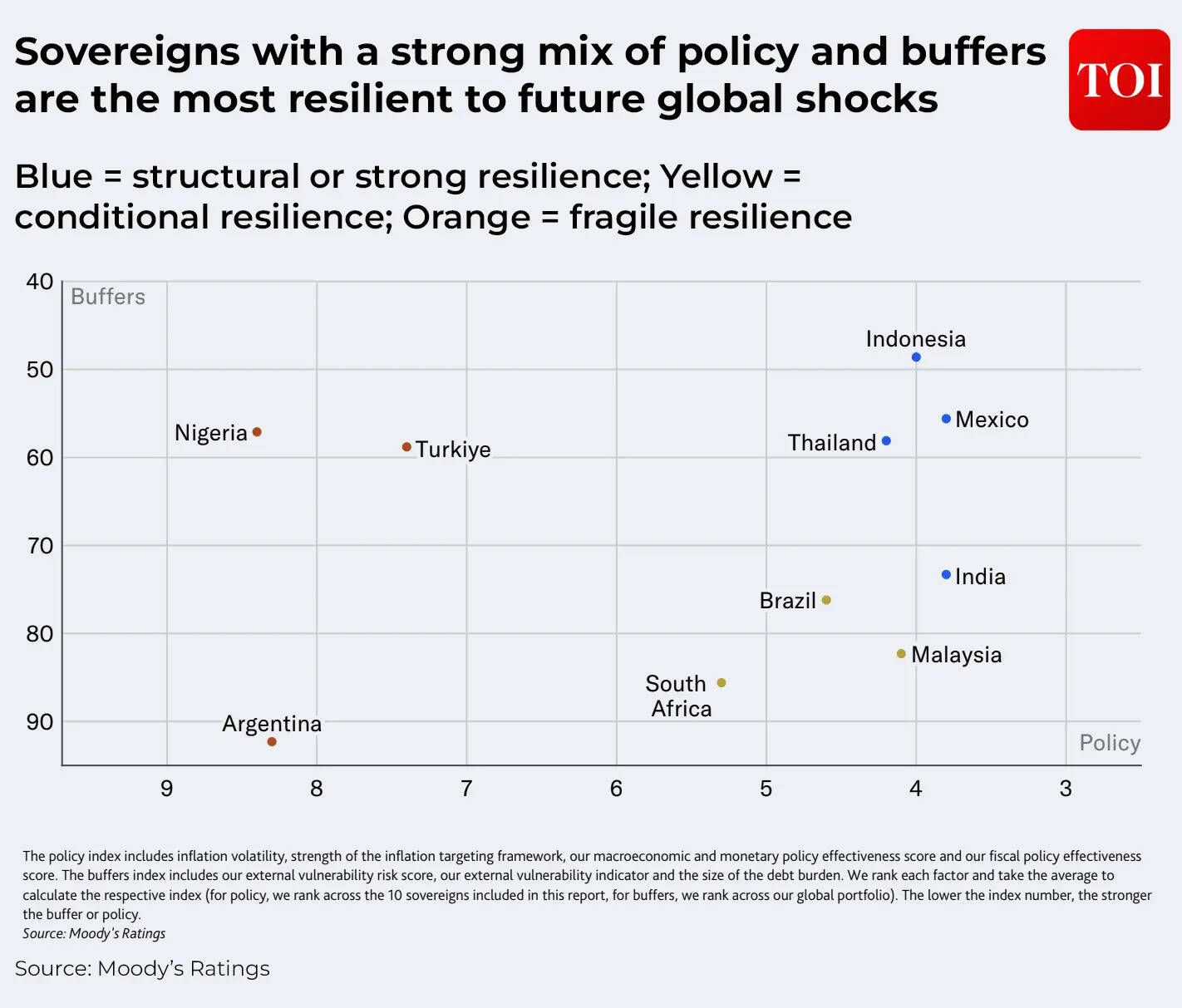
It underscores the role of India’s sizeable foreign-exchange reserves, which have helped stabilise the currency and maintain investor confidence during episodes of global stress, setting it apart from more vulnerable peers.Another key factor has been the presence of a transparent and consistent monetary policy framework. The adoption of inflation targeting well before recent global disruptions has ensured that inflation expectations remain anchored, thereby improving the economy’s ability to absorb external shocks.When compared with relatively more fragile economies such as Türkiye, Argentina and Nigeria, India has largely managed shocks through adjustments in prices rather than prolonged financing stress. This has been supported by deeper domestic financial markets and stronger policy credibility.
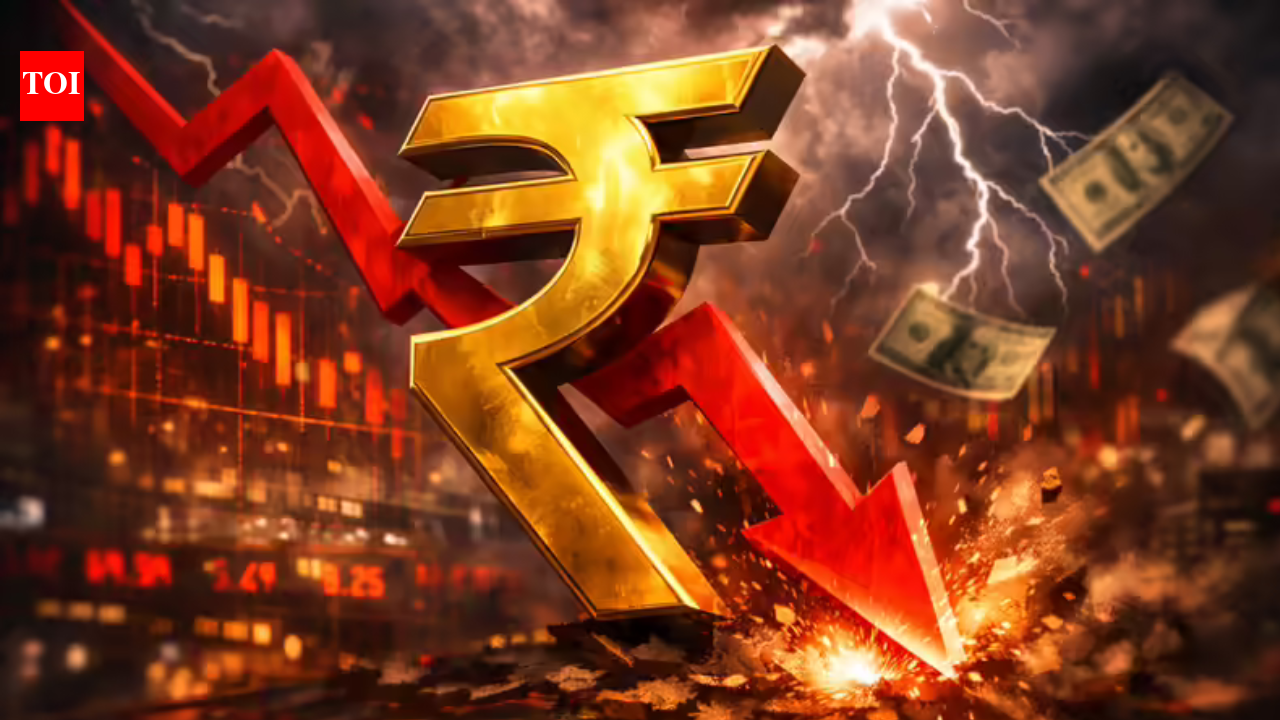
Rupee tumbled to a record low of 95.40 against US dollar in early trade on Tuesday, falling another 17 paise after already ending the previous session at its weakest-ever closing mark. Previously on Monday, the currency had declined sharply by 39 paise to close at 95.23 against the greenback.This comes as global uncertainty continues to be fueled by intensifying Middle East tensions, dragging down financial markets. Crude oil prices have remained elevated, intensifying concerns around inflation and slowing economic growth. During Monday’s trade, rupee opened at 94.95 in the interbank foreign exchange market before sliding throughout the session to settle at 95.23.The cautious sentiment was reflected on Dalal Street as well as benchmark indices tumbled in red. BSE Sensex was trading at 77,090.12, down 179.28 points or 0.23% as of 9:40 am. NSE Nifty50 also dipped to 24,036.95, down 63.85 points or 0.26%.Dilip Parmar, Senior Research Analyst, HDFC Securities told PTI, “The Indian rupee has hit a record low as the dollar recovered and crude oil prices held firm. This ongoing surge in oil prices, combined with foreign fund outflows, is putting a visible strain on India’s trade balance and broader economy. Persistent dollar demand is expected to keep the pressure on the rupee in the short term, driving the USD/INR higher toward the 95.35 and 95.70 levels.“Foreign Institutional Investors remained net buyers in equities worth Rs 2,835.62 crore on Monday, based on exchange figures. In the commodity market, oil prices continued to soar. Crude oil prices were trading at nearly $113 per barrel on May 5 as fresh attacks in the Strait of Hormuz heightened fears over the stability of the US-Iran ceasefire.

A Spirit Airlines plane sits parked at Hollywood Burbank Airport in California, April 16, 2026.
Justin Sullivan | Getty Images
Spirit Airlines struggled for years, battered by larger, cash-rich airlines that copied its business model as well as by failed mergers, higher costs and, most recently, a surge in jet fuel prices because of the war in Iran. It then faced the most unforgiving foe: time.
“We just kind of ran out of runway,” CEO Dave Davis said in an interview with CNBC on Monday.
Spirit had hoped to exit bankruptcy, its second in less than a year, in mid-2026. Four days before the U.S. and Israel attacked Iran, a conflict that has sent fuel prices skyrocketing, Davis said he and his team were optimistic that the exit strategy could still work. But that was contingent on fuel prices moderating in April.
They didn’t.
“Late March, early April, it became clear that it was going to be tough for us to get through,” Davis said, noting that crude oil prices were above $100 a barrel.
Time’s up
Other airlines leave printed instructions for travelers affected by the Spirit Airlines shut down at LaGuardia Airport’s Marine Air Terminal in New York on May 2, 2026.
Leslie Josephs/CNBC
To try to save the company from collapsing, Davis and others inside Spirit talked to the Trump administration about a bailout.
“We got connected with some various folks in government, including [Commerce] Secretary [Howard] Lutnick, through some contacts,” he said. “These guys … particularly Commerce, very eager to help.”
The Trump administration had been working on an offer for a $500 million loan to keep the airline afloat in a plan that could have given the U.S. government an up to 90% stake in the carrier. Bondholders weren’t on board and floated a counter proposal.
“Our bondholders also worked very hard to try to get something done,” Davis said.
The two sides were far apart on deal terms and it was clear by Thursday that it wasn’t going to work.
“I think we just ran out of time,” he said.
Spirit said some 17,000 people, both direct and indirect airline workers, lost their jobs in the airline’s collapse. Other carriers, smelling blood, had been circling for nearly a year if not longer, and within hours of the airline’s collapse were scrambling to both fly ticketed Spirit customers and add to their schedules in the absence left by Spirit’s yellow planes.
What’s next?
A Spirit Airlines poster on a LaGuardia Airport shuttle bus the day the airline shut down.
Leslie Josephs/CNBC
Spirit hired longtime airline executive Davis, most recently chief financial officer at Sun Country, in April 2025, about a month after the company zipped out of its first bankruptcy. Critics said it avoided bigger changes in that first bankruptcy, like shedding more assets to get costs down.
Last August, the airline filed for Chapter 11 bankruptcy protection again, facing many of the same problems, though it had slashed flights, gotten rid of some of its Airbus jets and furloughed crew members to save cash.
Davis previously worked at Northwest Airlines, which combined with Delta Air Lines in 2008, and also worked at US Airways, which merged with American Airlines in 2013. Along with United Airlines and Southwest Airlines, the four airlines control about 80% of U.S. capacity, after a major wave of consolidation.
More consolidation is likely and “what the lower end of the industry needs,” Davis predicted. He said if Spirit’s planned acquisition by JetBlue Airways wasn’t blocked by a judge two years ago, “I believe that we wouldn’t be in the situation we are right now.”
Low-fare airlines for a time were a headache for big legacy carriers, since they swooped into markets and offered eye-catching fares.
“There was no better exemplar of that than Spirit,” Davis said.
But then the big airlines started to copy some of the budget model, offering no-frills basic economy tickets and other add-on fees. That hurt carriers like Spirit, which was profitable in the 2010s but hadn’t turned a profit since 2019.
“Everybody saw the low-cost airlines just taking massive share,” he said. “The shoe was completely on the other foot then, than where it is today.”
He said another benefit the larger airlines have is their huge credit card programs, in which they earn money from banks when customers swipe their credit cards, a business that gives them a bigger cash cushion to weather shocks like high fuel prices.
Davis said in Spirit’s final days he was between Washington and the company headquarters in Dania Beach, Florida, trying to get to a deal. Some staff members, including pilots, didn’t get final word about the airline’s last flights until they were getting close to landing Friday night or early Saturday.
“You can’t announce ahead of time that you’re going to shut down,” he said. “What happens is vendors stop working. Fuelers stop fueling. Some crew members probably don’t come in. So then you’ve got airplanes and people and passengers scattered all over the place in foreign countries. It needs to be done in a very orderly way, and it needs to be done all at once.”
Davis said he is staying on at Spirit to oversee the airline’s closure. Leased planes will go back to lessors. Owned ones will get sold. Gates will be overseen by airports and likely used by other airlines. About 130 other employees are set to stay on for that work as well.
When asked if he would stay in the industry, Davis said: “I just love airplanes, and I like the industry, so I’ll probably never leave it, although sometimes it’s very trying and taxing on a person.”


North India cotton yarn prices rise despite weak domestic demand
India among most resilient large EMs, better placed for future global shocks; policy reforms & strong buffers help: Moody’s – The Times of India

Andrew, Fergie may reunite in Portugal after King Charles nod

-

 Tech1 week ago
A Brain Implant for Depression Is About to Be Tested in Humans
-
 Business1 week ago
‘I had £20,000 stolen and had to fight a 13-month fraud reporting rule to get it back’
-

 Tech1 week ago
Almost 90% of women leave tech industry within 10 years | Computer Weekly
-
 Business1 week ago
Pakistan’s oil market is fuelling the crisis | The Express Tribune
-

 Sports7 days ago
Pro wrestling star Steph De Lander reveals how colleague’s advice helped lead her to title triumph at ACW
-

 Entertainment1 week ago
Melania Trump says ABC should ‘take a stand’ on late-night host Kimmel
-

 Tech7 days ago
This Ambitious Laptop Doesn’t Leave Much Room for Your Hands
-

 Entertainment1 week ago
Norway joins Type 26 Frigate Programme to boost NATO naval power