

Business
Trump is threatening broadcast station licenses — what that means, and how it all works


A sign is seen outside of the “Jimmy Kimmel Live!” show outside the El Capitan Entertainment Centre on Hollywood Boulevard, from where the show is broadcast in Hollywood, California on Sept. 18, 2025.
Frederic J. Brown | AFP | Getty Images
Disney’s decision this week to pull “Jimmy Kimmel Live!” from its broadcast network ABC is shining a light on a part of the media business over which the federal government has control.
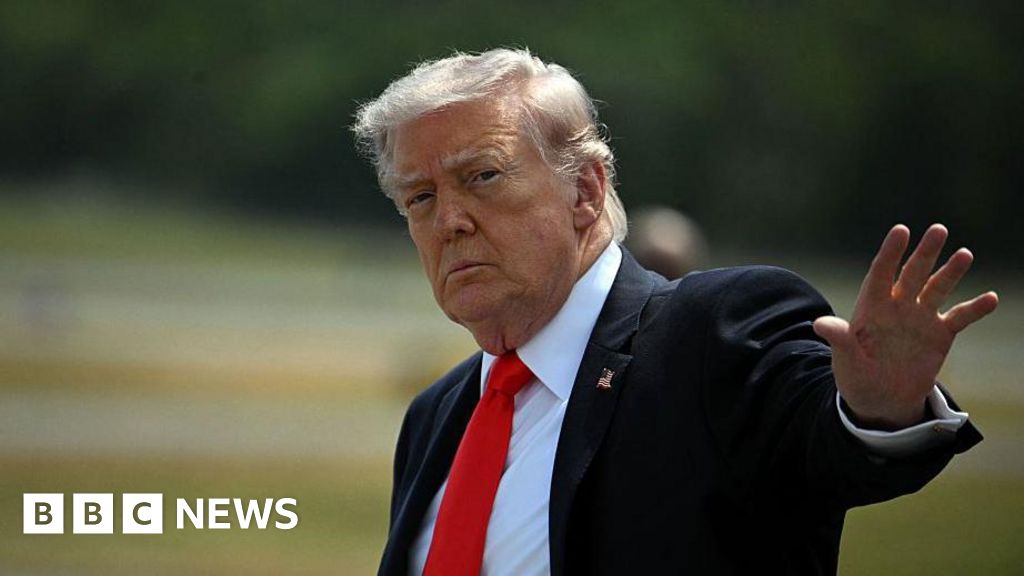
On Thursday, President Donald Trump suggested his administration should revoke the licenses of broadcast TV stations that he said are “against” him. Federal Communications Commission Chair Brendan Carr has made similar threats, including during a CNBC interview, also on Thursday.
It’s not the first time Trump or Carr has invoked the government’s power to pull a broadcast station license — putting an in-the-weeds part of the media business front and center for consumers, and flexing the government’s power over a major part of the industry.
What’s a broadcast license?
Let’s start with the basics: Networks such as Disney’s ABC, Paramount Skydance’s CBS, Comcast Corp.’s NBC and Fox Corp.’s Fox are part of a system that requires them to obtain over-the-air spectrum licenses from the federal government in order to broadcast these household-name stations.
That means free, over-the-air service to anyone with an antenna on their TV.
Pay-TV networks such as CNN, MTV or FX, for example, are considered “over-the-top” and available for subscription fees. They’re often bundled together and distributed by companies such as Comcast, Charter Communications or DirecTV.
Broadcasters such as ABC are known for programming that includes local news, live sports, prime-time sitcoms and dramas, as well as late-night shows such as “Jimmy Kimmel Live!”
Although the way consumers watch these programs has significantly changed from the days of using an antenna for free viewership — now they’re often viewed via pay-TV bundles, plus the content is frequently found on streaming platforms — the model has remained largely the same.
Companies that own local broadcast TV stations, such as Nexstar Media Group and Sinclair, license spectrum — or the public airwaves — from the government, with the FCC in control.
Through this public spectrum for radio and TV stations, the federal agency has the right to regulate broadcasting and requires each network “by law to operate its station in the ‘public interest, convenience and necessity.’ Generally, this means it must air programming that is responsive to the needs and problems of its local community of license,” according to the FCC website.
Can Trump and the FCC revoke licenses?
That definition of serving the “public interest” is what the FCC’s Carr has zeroed in on with conversations around revoking licenses.
On Thursday, Carr told CNBC’s “Squawk on the Street” that comments by Kimmel, linking the suspect in the killing of conservative activist Charlie Kirk to Trump’s MAGA movement, were “not a joke,” and instead, he said, were “appearing to directly mislead the American public about … probably one of the most significant political events we’ve had in a long time.”
When Trump has noted the government’s right to take away licenses — both this week and in the past — he has pointed to what he said is bias against him as president.
“I have read someplace that the networks were 97% against me, again, 97% negative,” Trump said Thursday, referring to his 2024 election victory.
“They give me only bad publicity, press. I mean, they’re getting a license,” Trump said. “I would think maybe their license should be taken away.”
People protest at the El Capitan Entertainment Centre, where “Jimmy Kimmel Live!” was recorded for broadcast, following his suspension for remarks he made regarding Charlie Kirk’s assassination, on Hollywood Boulevard in Los Angeles, California, U.S. Sept. 18, 2025.
David Swanson | Reuters
In August, Trump accused networks ABC and NBC of being “two of the worst and most biased networks in history” and suggested revoking their broadcast licenses.
Carr earlier this year, freshly in his post as FCC chairman, reawakened complaints directed at ABC, NBC and CBS from the conservative organization the Center for American Rights.
And in February, during a conversation at Semafor’s “Innovating to Restore Trust in News” summit in Washington, D.C., he suggested the agency would be looking closely at licenses.
“If you’re going to have a license to be a broadcaster, it comes with something called ‘you have to serve the public interest.’ If you don’t want to do that, that’s OK,” Carr said during the summit. “I will give you the address of the FCC … you’re free to turn your license in and you can go podcast and you go over-the-top.”
What happens if ABC or NBC loses its license?
If the federal government deems a broadcast TV network isn’t acting in the public interest, it can revoke the license from the station’s owner, and the local station would effectively go dark in its market.
The local networks can preempt the programming, meaning air something other than what the broader network is offering up. That would theoretically keep the stations in compliance if the FCC were to find the broadcast content unlawful. But it’s unclear where that line would fall.
The process of revoking a license isn’t so simple, according to Roy Gutterman, a professor and expert on communications law and the First Amendment at Syracuse University’s Newhouse School.
“There’s a whole process before you can yank someone’s license,” Gutterman said, adding that the matter would be subject to an investigation and procedure — and would likely garner legal challenges.
Typically, the discussion of whether a station violated the FCC’s guidelines centers around children’s programming, a cut to news content, or obscenity — such as Janet Jackson’s wardrobe malfunction during the Super Bowl in 2004.
Trump and his administration’s threats take a different tack.
“This is such an unprecedented issue,” Gutterman said. “Responsible use of the airwaves doesn’t mean having the political language [the government] doesn’t want on there … Responsible use isn’t a political issue.”
Pressure mounting
There’s another factor at play here: The government’s role in local TV consolidation.
On Wednesday, before ABC sidelined Kimmel, Nexstar announced its stations affiliated with ABC wouldn’t air the late night show and instead would preempt it “for the foreseeable future” due to the host’s statements.
While Disney owns a portion of its ABC-affiliated networks, Nexstar, as well as Sinclair — which similarly said it would preempt the show — own the vast majority. Nexstar owns about 30 ABC-affiliated networks across the U.S., or 10% of the more than 200 stations Nexstar owns in total.
Nexstar is currently seeking government approval of a $6.2 billion deal to merge with fellow broadcast TV station owner Tegna, which would upend longstanding regulations for broadcast station owners.
Sinclair has also said it’s looking to merge its broadcast TV station business with another competitor, although a deal has yet to be announced.
While Nexstar and its peers have bulked up over the years through acquisitions, they’ve been subject to longstanding federal limits on the number of stations that these parent companies can own.
On Tuesday, May 13, 2025 at North Javits in New York City, an incredible roster of all-star talent will tout their connections to storytelling, Disney, and each other while showcasing their latest projects for the upcoming year.
Michael Le Brecht | Disney General Entertainment Content | Getty Images
Following Trump’s election in November, leaders of the station owners — as well as other media businesses — saw an opening for further consolidation and deals.
The FCC’s Carr has also publicly said in recent months that he would support getting rid of broadcast station ownership rules and caps, paving the way for such deals, which could help salvage a business model that’s being disrupted.
With the rise of streaming, the pay-TV ecosystem has bled consumers, and broadcast TV networks and local affiliates have also felt the effects.
While the stations are free to air, distributors such as Charter pay the broadcasters so-called retransmission fees, on a per-subscriber basis, for the right to carry the stations. These lucrative fees heavily buoy the profits of companies such as Nexstar, which means dwindling pay-TV customers cuts into broadcast profits.
Disclosure: Comcast is the parent company of NBCUniversal, which owns CNBC. Versant would become the new parent company of CNBC under a planned spinoff.





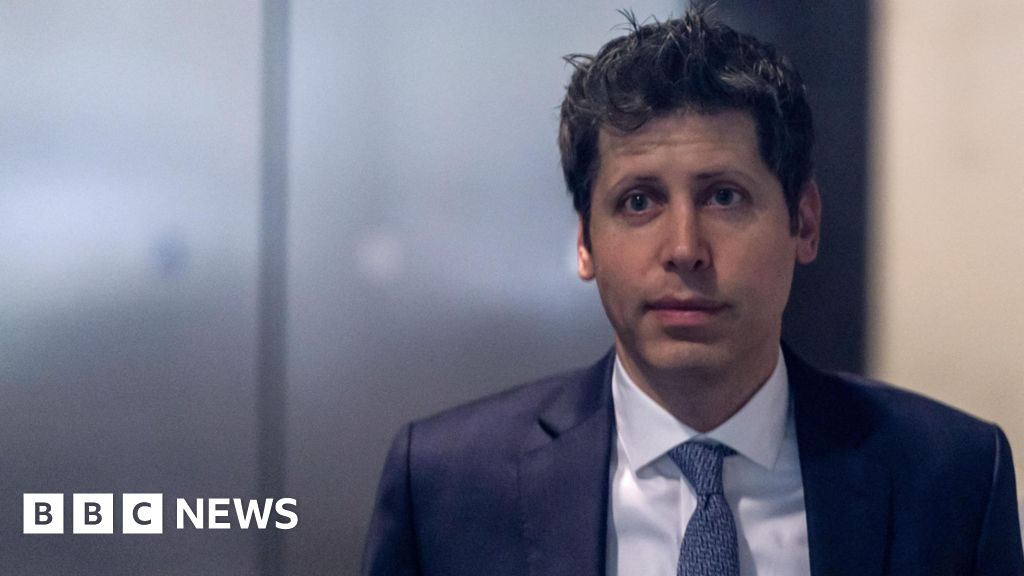
Sam Altman said Elon Musk tried many times for total control of OpenAI, which he’s now suing.
Source link

A United Airlines plane approaches the runway at Denver International Airport on March 23, 2026.
Al Drago | Getty Images
United Airlines flight attendants approved a new five-year labor contract with 31% average raises to base pay by August and other improvements, marking the last of the major carriers with unionized flight crews to reach a deal post-Covid.
The labor deal would give United’s roughly 30,000 flight attendants their first raises in close to six years. The company and the flight attendants’ union reached a preliminary deal in March. Crews had rejected a contract last year.
The union said the contract won 82% approval from the flight attendants, with close to 90% of them voting.
“The contract will immediately change the lives of United Flight Attendants, especially our thousands of new hires who have been hired since the pandemic,” said Ken Diaz, president of the United chapter of the Association of Flight Attendants.
The contract also includes boarding pay, or pay for when the aircraft’s door is open and travelers are getting on. Airlines had for years started flight attendants’ pay clock once the boarding door was closed.
The contract comes with a roughly 7% to 8% increase in compensation and $741 million in back pay, as well as quality-of-life improvements like restrictions on red-eye flights and “sit pay” during disruptions of more than 2½ hours.
Stocks struggled on Tuesday, although blue chips proved resilient, amid a triple whammy of domestic political strife, surging US inflation and a lack of progress in the Middle East.
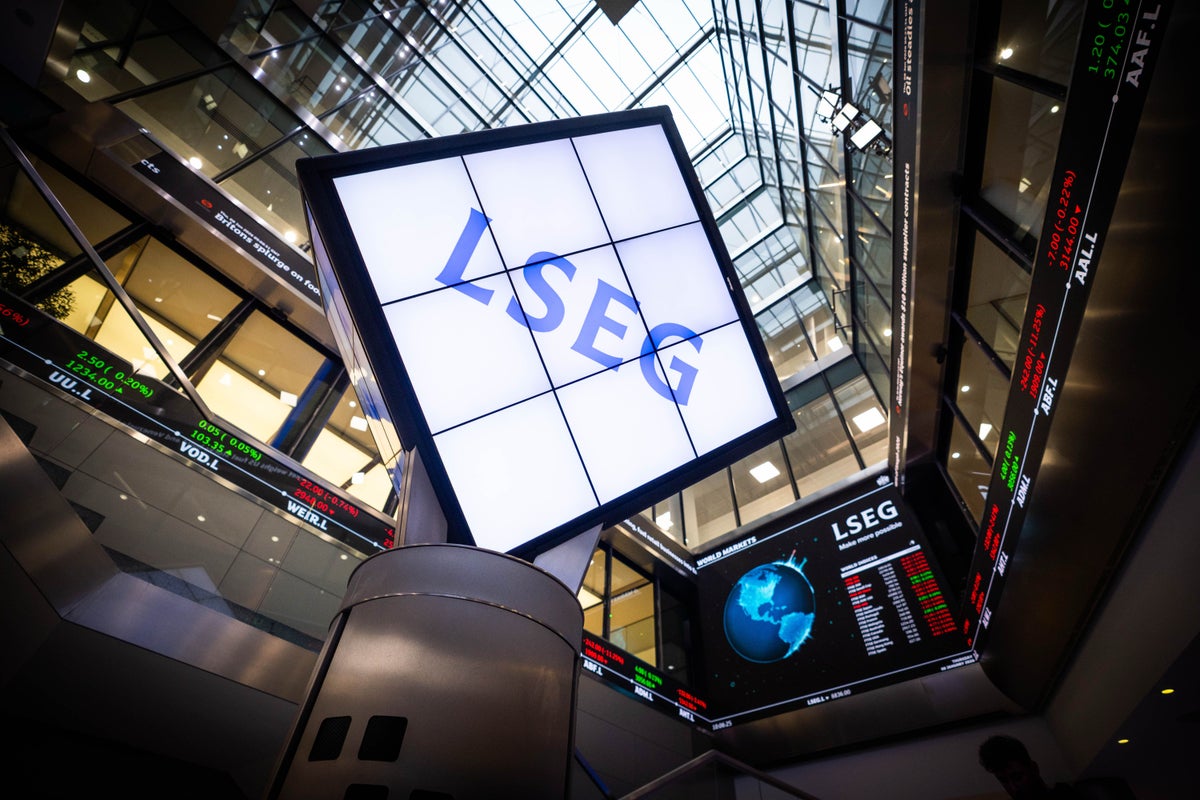
The FTSE 100 closed down just 4.11 points at 10,265.32. The FTSE 250 ended down 341.66 points, 1.5%, at 22,466.20, and the AIM All-Share fell 11.75 points, 1.4%, at 810.66.
The pound fell to 1.3505 dollars on Tuesday afternoon from 1.3651 dollars on Monday. Against the euro, sterling was lower at 1.1517 euros from 1.1584 euros on Monday.
The yield on UK 10-year gilts traded at 5.10%, up from 5.01% the day before.
Prime Minister Sir Keir Starmer defied calls for him to quit, despite a growing number of Labour MPs demanding that he steps aside.
“The Labour Party has a process for challenging a leader and that has not been triggered,” Sir Keir told ministers during crunch talks over his future, as no one person has stepped forward to challenge him yet.
“The country expects us to get on with governing. That is what I am doing and what we must do as a Cabinet,” he added.
More than 80 of Labour’s 403 MPs have now called for Sir Keir to quit immediately, or to set out a timetable for his resignation, including some ministers.
Banks sold off, amid reports of a possible windfall tax on the sector should there be a change at the top of the Government.
“Banks narrowly avoided a higher tax rate at the last budget, but our base case now assumes the UK banking surcharge to increase from 3% to 5%,” said the banking team at JPMorgan.
NatWest fell 3.2%, Lloyds Banking Group dipped 4.4% and Barclays declined 3.6%.
Meanwhile, the surging bond yields weighed on interest rate-sensitive housebuilders, with Barratt Redrow down 4.1% and Taylor Wimpey 2.4% lower.
Adding to the uncertain mood was another spike in the oil price as the impasse in the Middle East carried on.
Iran’s chief negotiator said on Tuesday that Washington must accept Tehran’s latest peace plan or face failure, after US President Donald Trump warned a truce was on the brink of collapse.
“Relations between Washington and Tehran appear to be more strained than at any time since the original ceasefire was announced just over a month ago,” observed David Morrison at Trade Nation, suggesting that hostilities could “resume at any time”.
Brent crude for July delivery was trading at 108.07 dollars a barrel on Tuesday, up compared with 103.70 dollars at the time of the equities close in London on Monday.
In Europe on Tuesday, the CAC 40 in Paris ended down 1.0%, and the DAX 40 in Frankfurt declined 1.6%.
In New York, the Dow Jones Industrial Average was down 0.5%, the S&P 500 fell 1.0% while the Nasdaq Composite was 1.7% lower.
The yield on the US 10-year Treasury widened to 4.46% on Tuesday from 4.39% on Friday. The yield on the US 30-year Treasury stretched to 5.02% from 4.97%.
The impact of the Iran war was reflected in soaring US inflation figures for April.
Annual CPI inflation sped up to 3.8% in April from 3.3% in March, above FXStreet-cited expectations of a 3.7% rise.
Monthly, energy costs were up 5.6% in April after a 21.3% jump in March.
Excluding food and energy costs, core CPI was up 2.8% year-on-year in April, up from 2.6% in March and higher than an expected 2.7%.
Analysts explained that much of the upside in core inflation came from a spike in shelter costs.
TD Economics said the numbers reinforce why the Fed needs to remain “patient”.
“Even assuming a ‘more normal’ reading on shelter prices last month, core inflation would’ve still firmed relative to March. With secondary price effects from higher energy prices likely to intensify in the months ahead, we’re likely to see core measures of inflation drift a bit higher and hover around 3% through year-end,” the broker said.
While Bank of America said the latest increase means inflation is getting “very uncomfortable” for the Fed.
Following the data, Fed futures now place a 60% probability of a rate hike by March next year.
The euro traded slightly lower against the greenback, at 1.1729 dollars on Tuesday from 1.1782 dollars on Monday. Against the yen, the dollar was trading at 157.73 yen, higher than 157.01 yen.
Back in London, Vodafone fell back 7.0% after mixed full-year results with adjusted earnings short of hopes but adjusted cash flow ahead.
“In the stock market it’s often said that it’s better to travel than arrive, hence why shares in Vodafone dipped on robust-looking full-year results after a strong rally in the past 12 months,” said Dan Coatsworth, head of markets at AJ Bell.
Vodafone shares have risen 60% in the last 12 months.
Intertek led the risers, up 6.4%, as it said it was “reviewing” the latest takeover proposal from suitor EQT Fund Management Sarl.
Intertek has turned down three previous approaches from EQT.
On the FTSE 250, Greggs rose 8.0% after reporting higher sales in the opening weeks of 2026 and maintaining full-year expectations.
But Wickes plunged 12% after reporting mixed trading as wet weather weighed on retail demand at the start of 2026.
Gold traded lower at 4,663.87 dollars an ounce on Tuesday, from 4,733.27 dollars on Monday.
The biggest risers on the FTSE 100 were Intertek, up 320.00p at 5,300.00p, British American Tobacco, up 255.00p at 4,634.00p, Compass Group, up 1.74p at 31.93p, Imperial Brands, up 104.00p at 2,832.00p and London Stock Exchange Group, up 328.00p at 9,348.00p.
The biggest fallers on the FTSE 100 were Vodafone Group, down 8.45p at 111.95p, 3i Group, down 116.00p at 2,400.00p, St James’s Place, down 52.50p at 1,154.50p, Lloyds Banking Group, down 4.28p at 94.06p and Marks & Spencer, down 13.60p at 308.90p.
Wednesday’s global economic calendar has eurozone industrial production and GDP data, the King’s Speech in the UK and US PPI figures.
Wednesday’s local corporate calendar has a trading statement from Spirax Group.
Contributed by Alliance News


South Korea reviews phased support for Strait of Hormuz security efforts

Kim Kardashian faces legal trouble by ‘innocent’ man

President to undergo medical examination amid serious concerns

-

 Tech1 week ago
DHS Demanded Google Surrender Data on Canadian’s Activity, Location Over Anti-ICE Posts
-
 Business1 week ago
Heineken plans huge investment in hundreds of UK pubs ahead of World Cup
-

 Tech5 days ago
A new frontier: Identity stack evolves for agentic systems | Computer Weekly
-

 Tech4 days ago
‘Orbs,’ ‘Saucers,’ and ‘Flashes’ on the Moon: Pentagon Drops New UFO Files
-

 Fashion5 days ago
New orders in German manufacturing up 5% MoM in Mar 2026: Destatis
-

 Tech5 days ago
What Microsoft Executives Really Thought About OpenAI in 2018
-
 Business1 week ago
India among most resilient large EMs, better placed for future global shocks; policy reforms & strong buffers help: Moody’s – The Times of India
-
 Business1 week ago
US denies Iranian report warship was struck by missiles