

Business
Club nation: Why Costco, Sam’s Club and BJ’s are opening new stores and gaining members


Costco Wholesale, Sam’s Club and BJ’s Wholesale stores.
Getty Images
On Costco’s last earnings call, executives were grilled about a problem few companies have: how is the company managing crowded stores and jammed-up parking lots?
That dilemma is a sign of the times for membership-based warehouse clubs. More Americans have literally joined the club — fueling growth for Costco, Walmart-owned Sam’s Club and BJ’s.
All three retailers are opening more locations across the country. Shares of the companies have shot up in the past five years, with Costco’s stock up about 215% and BJ’s up about 305% since the day the Covid pandemic began in March 2020. And Gen Z and millennial shoppers have helped fuel the club channel’s gains, as trendier brands and more convenient digital offerings attract younger shoppers.
High inflation “brought the club channel more and more into focus,” said Bobby Griffin, a consumer analyst at equity research firm Raymond James. The clubs have long been known as a place to buy cheaper gas or bulk packs of household staples for less.
Yet the companies have continued to “up the ante,” he said. Merchandise has gotten sharper, private label offerings have become stronger and the shopping experience has gotten more enjoyable as the retailers have spruced up stores and added more technology, he said.
Clubs have benefitted from an element of surprise, too. Along with selling bulk packs of paper towels and Keurig coffee pods, clubs have caught the attention of shoppers with items that tap into a desire for dupes or go viral on social media — such as Costco’s gold bars, which racked up more than $100 million in sales in a single quarter.
Along with the breakaway hit of gold bars, the many card-carrying members of Costco prompted an unusual message from the U.S. Transportation Security Administration this year. As the government agency phased in stricter requirements for ID cards, it announced across its social media accounts in June that Costco’s membership cards don’t count as a Real ID.
And Costco’s loyal fan following helped it to post strong sales — and attract support — despite some backlash for sticking by its diversity, equity and inclusion policies.
As they pick up newer and younger members, the warehouse clubs see more room for growth.
Sam’s Club earlier this year announced plans to open 15 clubs per year going forward, along with renovating its approximately 600 current clubs. It’s expanding its footprint again after shutting 63 locations across the country in 2018.
BJ’s plans to open 25 to 30 new clubs over the next two fiscal years. The smallest club player, which has historically had more locations on the East Coast, has broken into new markets like Texas by opening four locations in the Dallas-Fort Worth area.
And Costco has stuck with an aggressive expansion plan of opening about 30 clubs per year, with just over half of those in the U.S. and the rest in other parts of the globe, CFO Gary Millerchip told CNBC. In early August, Costco opened four clubs in three different countries: Quebec, Canada; North Guadalajara, Mexico; The Villages in Florida and Richland, Washington.
Costco is opening some of its new locations this year in existing markets where its clubs are crowded, Millerchip said.
Club retailers still face pressure, though, including an uncertain job market and tariffs. The companies have laid out strategies to reduce their hit from the duties: Costco leaders, for example, said on an earnings call that they diverted imported merchandise with high tariffs to their warehouse clubs in other parts of the world instead of the U.S.
Clubs’ rotating brands and treasure hunt approach could reduce their vulnerability to tariffs. While the retailers sell imported merchandise like furniture and clothing, the bulk of sales come from groceries, and the retailers could swap out or drop an item hit by high tariffs, Griffin said.
BJ’s will carry more holiday items this year from the U.S. or countries with lower tariff exposure, said Bill Werner, BJ’s executive vice president of strategy and development.
As retailers digest the long-term effects of tariffs, Costco will give the latest read on its business, and the club channel, when it reports earnings on Thursday.
Sushi dinners and speedier shopping
The desire for both convenience and cheaper food options has been a boon to warehouse clubs in recent years. Instead of ordering from a restaurant, customers have turned to club chains to deliver dinner.
Earlier this year, Sam’s Club’s rotisserie chicken, which costs $4.98, and its hot pizzas, which cost $8.98 apiece, joined the list of items that members can get dropped at their doors. And starting last year, the retailer began setting up sushi stations where chefs make fresh rolls, which start at around $8 for a roll, in front of customers each day. It recently made sushi available for curbside pickup and delivery, too.
Those are examples of the way that warehouse clubs — notoriously low-tech and low-frills — have flipped the script in the digital age.
Sam’s Club has added sushi stations to its stores where chefs make the rolls fresh. The sushi can also be delivered by same-day delivery to customers’ homes.
Courtesy of Sam’s Club
In the past, shoppers made a tradeoff for lower prices at clubs, Sam’s Club CFO Todd Sears said. They faced long lines, waited to get receipts checked at the store exit and navigated a maze of aisles when trying to find an item.
“Experience wasn’t a huge element of the club channel,” Sears said in an interview. “In fact, it was kind of billed as the experience might be a little bit worse, but you’re going to make up for it with value.”
Now, curbside pickup, home delivery and new store tech has made the shopping experience faster and more pleasant, he said.
“Someone coming home for work can pop in and get out within three minutes and have a meal for home,” Sears said, noting the company is seeing more frequent club visits instead of just huge stock-ups.
Sam’s Club, in particular, has used tech to stand out from competitors. Customers can skip the checkout line by using Scan & Go, a feature in the retailer’s app that allows shoppers to ring up their own items while browsing the aisles. About 40% of its transactions are through Scan & Go, Sears said.
It’s leaned on other tech, too, including automated floor scrubbers that free up employees’ time to help customers and high-tech archways at the exits that verify most purchases automatically instead of requiring an employee to manually check a receipt.
BJ’s, too, has capitalized on speedier digital options that appeal to busy families and younger shoppers. E-commerce sales at the club jumped 34% in the most recent quarter compared to the year-ago period. CEO Bob Eddy described the digital gains as a “generational unlock” that’s attracted busy families and younger shoppers.
Digital offerings have become a popular and lucrative part of BJ’s business, Werner said. Same-day delivery orders tend to be about 25% to 30% bigger baskets than in-club shops, he said. It charges a $15 fee for the deliveries, or members can pay $100 per year for unlimited same-day deliveries.
Still, Werner said BJ’s biggest selling point “comes back to value” with its pledge to undercut typical grocery store prices by roughly 25%. Food and household essentials like laundry detergent drive about 85% of its sales, he said.
At Costco, the largest club player by size and stock price, have more than doubled over the last decade. Yet digital sales, while growing, account for only a small part of its overall sales.
About 8% of Costco’s business comes from e-commerce, excluding third-party deliveries from Instacart and travel bookings, CEO Ron Vachris said on the company’s May earnings call.
Over half of members have downloaded Costco’s app, but its digital business is still in the early stages, Millerchip said on the company’s earnings call. He said as Costco will keep adding customer-friendly features, such as making it easier to search for items or save a credit card to speed up checkout.
“We still see it [e-commerce] as an area where we’d expect to outpace our overall growth,” he said on its earnings call.
A customer pushes a shopping cart towards the entrance of a BJ’s Wholesale Club Holdings Inc. location in Miami, Florida.
Scott McIntyre | Bloomberg | Getty Images
Younger shoppers, trendier brands
The retailers’ membership counts reflect how the U.S. has become a club nation.
Costco had nearly 80 million paid household members globally as of the end of its most recent quarter, which ended in mid-May. BJ’s, the smallest of the three club names, has grown to about 8 million members as of the most recently reported quarter, a 55% increase since it went public seven years ago.
Sam’s Club does not disclose its membership total, but its membership income grew nearly 8% in the U.S. in the most recent quarter. And its gains inspired the retailer to pledge this spring that it would double its membership over the next eight to 10 years.
Yet that growth is coming from a different kind of member. Along with soccer moms and big families, it’s drawn more Gen Z and millennial consumers. Those members include new homeowners, households without kids, and city dwellers who don’t have mortgages or abundant pantry space.
Sam’s Club’s fastest growing customer category is Gen Z and millennials, which have accounted for half of its membership growth for more than two years, Sears said.
Customers look over clothing items displayed on April 18, 2025 at a Costco branch in Niantic, Connecticut.
Robert Nickelsberg | Getty Images
Costco’s Millerchip told CNBC that its average age of members has fallen, and just under half of its new members that sign up each year are now under age 40. He said the club’s popularity during the Covid pandemic, the ease of digital sign-ups and increased social media attention on Costco all contributed to that trend.
Customers between the ages of 25 and 34 are the fastest growing spending segment of the club channel when it comes to merchandise outside of the grocery department, according to market research firm Circana.
That age group’s spending on general merchandise at clubs rose by 3% for January to July 2025 compared to the same period in the year prior, according to Circana, which tracks checkout data across retailers.
All three warehouse clubs have broadened their merchandise and bulked up digital options, particularly since the Covid pandemic, said Marshal Cohen, a chief industry advisor for Circana.
Along with lower-priced private label versions of items like olive oil and paper towels, clubs carry children’s clothing and back-to-school supplies, sell giftable items like jewelry and offer lower-priced health and wellness items like hearing aids, contact lenses and vitamins. That’s given shoppers more reasons to return to their stores and websites between stock-ups.
“They’re curating not only the brands better, but creating a better sense of adventure for the shopper,” he said.
Plus, he said the “great migration” of younger Americans during the pandemic from smaller apartments in cities to bigger homes in the suburbs or rural areas created a new customer base.
The improved merchandise at clubs has caught the attention and ire of competitors as well. Lululemon filed a lawsuit against Costco in late June, alleging that the company violated patents by selling lower-priced dupes of its athleisurewear including hoodies, jackets and pants.
Costco’s CFO Millerchip declined to comment on the lawsuit.
Clubs have drawn both young and more established brands that want to get picked up by the retailers.
Wellness brand Frida, best known for popular baby supplies like the NoseFrida, is exploring how its products could be packaged and sold in a club, founder and CEO Chelsea Hirschhorn said. She said the club channel has become more appealing as it moves away from generic products and adds more modern brands.
For some members, including Patrick Bannon, club retailers’ eye-catching assortment can be a danger to the wallet. The 29-year-old graduate student joined Costco about two years ago. At least every other month, he drives to a nearby Costco for a shopping trip — even though the drive can take 45 minutes in traffic and on weekend and evening visits, it can be tricky to “move your cart more than an inch without running into somebody.”
For Bannon, it takes creativity to squeeze bulk purchases into the cabinets, freezer and fridge space of the one-bedroom apartment in the Boston area that he rents with his girlfriend.
In his apartment, he has currently stashed away five different types of protein bars, two pounds of frozen vegetables, two one-gallon jugs of vegetable oil and three or four pounds of frozen chicken.
He signed up for Costco to buy cheaper groceries and staples like trash bags, but he’s wound up purchasing giant bags of snacks, a new brand of cold brew coffee and even khaki pants.
“You get to be a kid in the candy store again,” he said. “Except it’s not all candy.”






Joni Lamb, the president of Daystar Television Network, a televangelism broadcaster she founded with her husband, Marcus Lamb, turning their family into stars of Christian entertainment, died on Thursday. She was 65.
In an announcement posted on Daystar’s website, the company described the cause as “serious health matters” exacerbated by a recent back injury. It did not say where she died.
On a trip to Jerusalem in 1983, shortly after the couple married, Mr. Lamb visited the Mount of Olives and felt God telling him to move to Montgomery, Ala., and start a Christian TV station. He and Ms. Lamb poured their energy and modest finances into the effort and began appearing on the air two years later.
By the time they founded Daystar — in Texas in 1997 — they were experienced entrepreneurs and performers. After just a few years, they owned 24 stations around the country. By 2010, they had become the second-largest Christian broadcaster, after Trinity Broadcasting Network, and were reaching more than 200 countries, The Dallas Morning News reported.
Compared with other televangelists, the Lambs “are younger and come across as more ordinary folks,” David Clark, the president of a rival Christian broadcaster, told The Fort Worth Star-Telegram in 2001. “They come across as being sincere.”
Mr. Clark added: “Marc is sharp, and his wife, Joni, is a big asset.”
The Lambs frequently appeared on their own network in a talk show format, discussing the pleasures and challenges of domestic life in a Christian idiom. Ms. Lamb, who liked to break into song, was Daystar’s leading talk show host, over the decades moderating shows like “Taking a Break With Joni” and “Joni Table Talk.” She would often be surrounded by other female regulars, putting questions to a male guest who had wisdom to impart.
The prominent pastor Jentezen Franklin visited earlier this year, for example, to discuss his new book, “The Power of Short Prayers.” The conversation slipped easily into evangelism.
“For someone watching right now: You’ve been listening; God’s opened your heart,” Ms. Lamb said. “In fact, your heart’s already been opened for some time, as you’ve been looking, searching, and you tried everything else. Always say, ‘Why don’t you try Jesus?’ A simple prayer: That will change your life for eternity.”
During the episode she was flanked, as she often was, by her two daughters, Rachel Lamb Brown and Rebecca Lamb Weiss, and referred to her husband by his first name, as if the viewers at home were family friends.
In 2021, Mr. Lamb died, at 64, of Covid-19, after having frequently suggested that people should pray instead of getting vaccinated. Ms. Lamb announced his death on air.
The travails of the Lamb family were often incorporated into the station’s programming. In 2010, Mr. Lamb admitted on live TV to an extramarital affair and described an attempt to extort millions of dollars in blackmail.
“Christian TV took a soap opera turn,” The Dallas Morning News wrote of the episode.
In 2020, Daystar returned a $3.9 million Paycheck Protection Program loan after the CBS program “Inside Edition” investigated the company’s purchase of a Gulfstream jet used by the Lamb family for beach and golf trips.
Four years later, a panel of Ms. Lamb’s talk show regulars questioned her on air about an accusation by her son, Jonathan, that there had been a coverup of a family member’s sexual molestation of his infant daughter. Ms. Lamb denied that any abuse had occurred, and after an investigation, no charges were filed.
Joni Lynn Trammell was born on July 19, 1960, in Greenville, S.C., where she grew up. Her father, Billy Frank Trammell, worked for a local refrigeration and heating company and would evangelize with friends he made playing basketball. Her mother, Sandra (Hudson) Trammell, competed in the Miss Greenville beauty pageant.
The Lambs met at a Greenville church in 1980, when Mr. Lamb, a traveling Pentecostal preacher, was visiting. They married in 1982.
Their early investments in TV stations came fortuitously, at a time of deregulation that The Star-Telegram would describe as “market bottom.” They later made money buying and selling small broadcast towers, and selling airtime to ministries and churches.
In 2023, Ms. Lamb married Doug Weiss, a sex therapist who became a co-host on Daystar. He survives her; other survivors include her three children and several grandchildren.
On air earlier this year, Ms. Lamb told viewers that the Christian faith guaranteed a posthumous reward.
“When you pray that prayer, and you receive Jesus, he forgives your sins,” she said. “When you die, you’re going to heaven.”
Business
US consumer price inflation hits 3.8% in April, highest in nearly 3 years as Iran war fuels energy costs – The Times of India

US inflation rose in April to 3.8 per cent as surging fuel costs amid the ongoing Iran-US conflict drove up consumer prices, hitting a three-year high complicating the Federal Reserve’s path on interest rates.Data released by the Labor Department on Tuesday showed the Consumer Price Index (CPI) increased 0.6 per cent in April after a 0.9 per cent jump in March, the biggest monthly rise since June 2022. On an annual basis, inflation accelerated to 3.8 per cent, marking the highest year-on-year increase, since May 2023.Petrol prices in the US are now more than 28 per cent higher than a year ago, according to official data. AAA estimates show average gasoline prices have crossed $4.50 per gallon, roughly 44 per cent above year-ago levels, squeezing household budgets and raising concerns about broader economic fallout.The spike in energy prices follows the escalation of hostilities between the US, Israel and Iran earlier this year. Markets were rattled after Tehran blocked access through the Strait of Hormuz — a critical global energy route that handles nearly one-fifth of the world’s oil and liquefied natural gas supplies.Core inflation, which excludes food and energy prices, remained relatively contained. Core CPI rose 0.4 per cent month-on-month and 2.8 per cent annually, suggesting that higher fuel costs have not yet fully spread across the wider economy.Food prices also edged higher in April. Grocery costs rose 0.7 per cent from March, led by increases in meat prices after a slight decline in the previous month.The latest inflation reading adds to uncertainty for the Federal Reserve, which had earlier been expected to begin cutting interest rates in 2026. Policymakers are now signalling caution amid fears that prolonged geopolitical tensions and elevated oil prices could trigger another wave of inflation.US President Donald Trump has repeatedly criticised the Fed for not lowering borrowing costs faster to support economic growth. Attention is now turning to Kevin Warsh, Trump’s nominee to succeed outgoing Federal Reserve Chair Jerome Powell, whose Senate confirmation is expected this week.Higher fuel costs are also beginning to weigh on corporate America. Appliance maker Whirlpool Corporation said last week that quarterly revenue fell nearly 10 per cent, warning that the war-driven economic slowdown had severely dented consumer confidence.
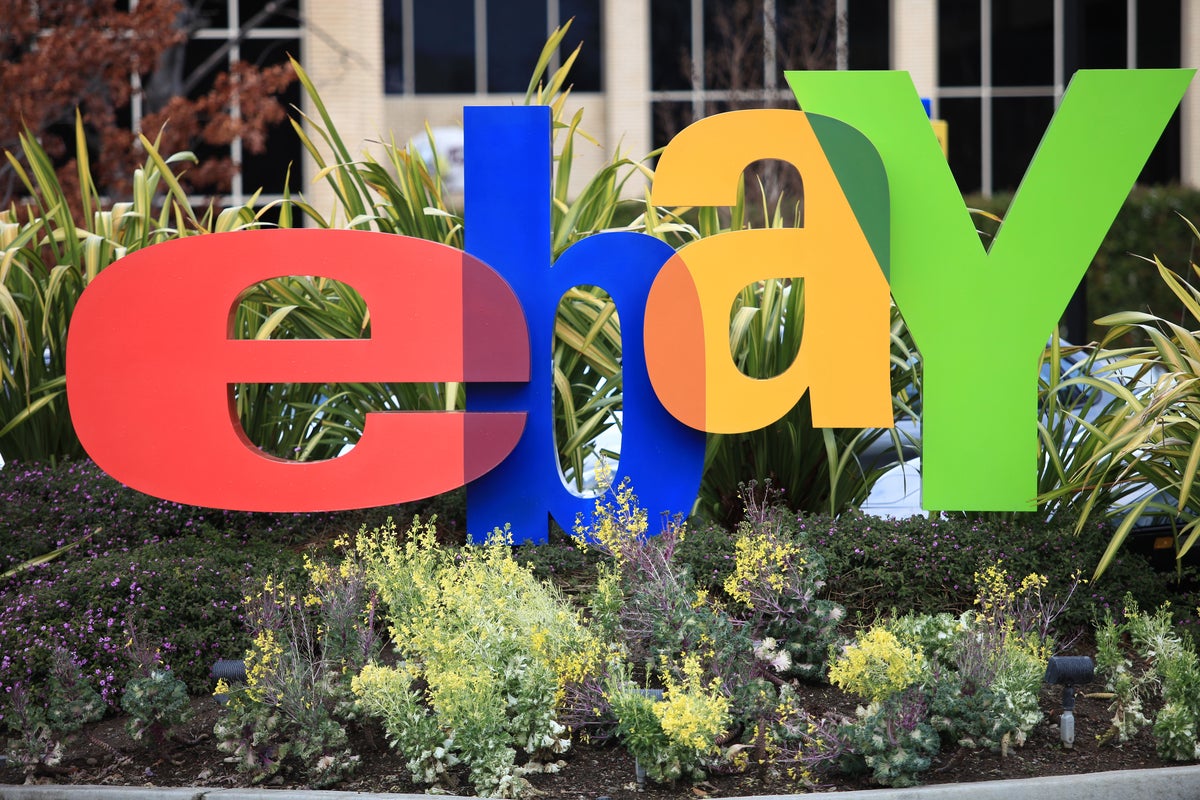
EBay has turned down a 56 billion US dollar (£41.4 billion) takeover move from GameStop, labelling the proposal as “neither credible or attractive”.
GameStop boss Ryan Cohen launched an unsolicited offer of 125 dollars (£92.40) per share – half in cash and half in GameStop stock – to eBay shareholders last week.
However, the online marketplace’s board confirmed on Tuesday that it had now rejected the move.
In a letter, eBay chairman Paul Pressler said it reviewed the offer but believes that eBay is a “strong, resilient business”.
He added: “We have sharpened our strategic focus, strengthened execution, enhanced our marketplace and seller experience, and consistently returned capital to shareholders.
“With its differentiated global marketplace and a clear strategy, eBay’s board is confident that the company, under its current management team, is well-positioned to continue to drive sustainable growth, execute with discipline, and deliver long-term value for our shareholders.”
GameStop, which runs around 1,600 shops around the US, said it started accumulating eBay shares earlier this year and currently has a 5% stake.
Mr Cohen had previously indicated he would take his proposal directly to eBay shareholders if the company’s board rejected the deal.

[CinePlex360] Please moderate: “Ever Seen A Sar

Who could replace Keir Starmer as Britain’s prime minister?
WPForms

-

 Politics1 week ago
Iran weighs US reply delivered via Pakistan as Trump signals opposition to deal terms
-

 Tech1 week ago
DHS Demanded Google Surrender Data on Canadian’s Activity, Location Over Anti-ICE Posts
-
 Business1 week ago
Heineken to invest £44.5m in hundreds of pubs creating 850 jobs
-

 Entertainment1 week ago
Jelly Roll reacts to daughter Bailee Ann’s major life milestone
-
 Business1 week ago
Heineken plans huge investment in hundreds of UK pubs ahead of World Cup
-

 Tech4 days ago
A new frontier: Identity stack evolves for agentic systems | Computer Weekly
-

 Tech4 days ago
‘Orbs,’ ‘Saucers,’ and ‘Flashes’ on the Moon: Pentagon Drops New UFO Files
-

 Tech5 days ago
What Microsoft Executives Really Thought About OpenAI in 2018