

Business
Will AI make language dubbing easy for film and TV?

Technology Reporter
 XYZ Films
Finding international films that might appeal to the US market is an important part of the work XYZ Films.
Maxime Cottray is the chief operating officer at the Los Angeles-based independent studio.
He says the US market has always been tough for foreign language films.
“It’s been limited to coastal New York viewers through art house films,” he says.
It’s partly a language problem.
“America is not a culture which has grown up with subtitles or dubbing like Europe has,” he points out.
But that language hurdle might be easier to clear with a new AI-driven dubbing system.
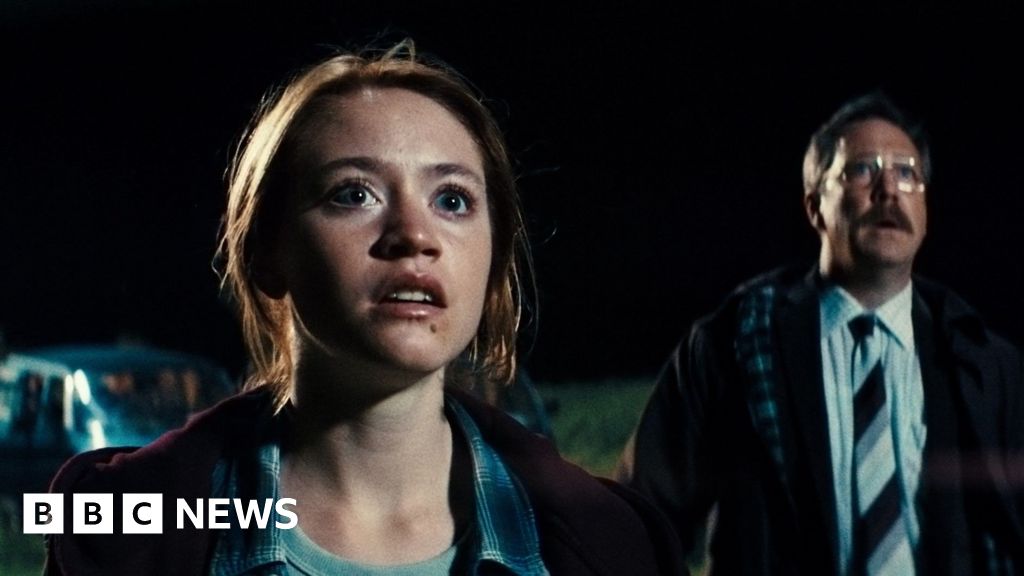
The audio and video of a recent film, Watch the Skies, a Swedish sci-fi film, was fed into a digital tool called DeepEditor.
It manipulates the video to make it look like actors are genuinely speaking the language the film is made into.
“The first time I saw the results of the tech two years ago I thought it was good, but having seen the latest cut, it’s amazing. I’m convinced that if the average person if saw it, they wouldn’t notice it – they’d assume they were speaking whatever language that is,” says Mr Cottray.
The English version of Watch The Skies was released in 110 AMC Theatres across the US in May.
“To contextualise this result, if the film were not dubbed into English, the film would never have made it into US cinemas in the first place,” says Mr Cottray.
“US audiences were able to see a Swedish independent film that otherwise only a very niche audience would have otherwise seen.”
He says that AMC plans to run more releases like this.

 Flawless
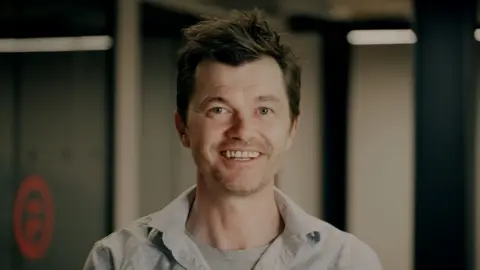
DeepEditor was developed by Flawless, which is headquartered in Soho, London.
Writer and director Scott Mann founded the company in 2020, having worked on films including Heist, The Tournament and Final Score.
He felt that traditional dubbing techniques for the international versions of his films didn’t quite match the emotional impact of the originals.
“When I worked on Heist in 2014, with a brilliant cast including Robert De Niro, and then I saw that movie translated to a different language, that’s when I first realised that no wonder the movies and TV don’t travel well, because the old world of dubbing really kind of changes everything about the film,” says Mr Mann, now based in Los Angeles.
“It’s all out of sync, and it’s performed differently. And from a purist filmmaking perspective, a very much lower grade product is being seen by the rest of the world.”
 Flawless
Flawless developed its own technology for identifying and modifying faces, based on a method first presented in a research paper in 2018.
“DeepEditor uses a combination of face detection, facial recognition, landmark detection [such as facial features] and 3D face tracking to understand the actor’s appearance, physical actions and emotional performance in every shot,” says Mr Mann.
The tech can preserve actors’ original performances across languages, without reshoots or re-recordings, reducing costs and time, he says.
According to him, Watch the Skies was the world’s first fully visually-dubbed feature film.
As well as giving an actor the appearance of speaking another language, DeepEditor can also transfer a better performance from one take into another, or swap a new line of dialogue, while keep the original performance with its emotional content intact.
Thanks to the explosion of streaming platforms such as Netflix and Apple, the global film dubbing market is set to increase from US$4bn (£3bn) in 2024 to $7.6bn by 2033, according to a report by Business Research Insights.
Mr Mann won’t say how much the tech costs but says it varies per project. “I’d say it works out at about a tenth of the cost of shooting it or changing it any other way.”
His customers include “pretty much all the really big streamers”.
Mr Mann believes the technology will enable films to be seen by a wider audience.
“There is an enormous amount of incredible kind of cinema and TV out there that is just never seen by English speaking folks, because many don’t want to watch it with dubbing and subtitles,” says Mr Mann.
The tech isn’t here to replace actors, says Mann, who says voice actors are used rather than being replaced with synthetic voices.
“What we found is that if you make the tools for the actual creatives and the artists themselves, that’s the right way of doing it… they get kind of the power tools to do their art and that can feed into the finished product. That’s the opposite of a lot of approaches that other tech companies have taken.”
 Natan Dvir
However, Neta Alexander, assistant professor of film and media at Yale University, says that while the promise of wider distribution is tempting, using AI to reconfigure performances for non-native markets risks eroding the specificity and texture of language, culture, and gesture.
“If all foreign films are adapted to look and sound English, the audience’s relationship with the foreign becomes increasingly mediated, synthetic, and sanitised,” she says.
“This could discourage cross-cultural literacy and disincentivise support for subtitled or original-language screenings.”
Meanwhile, she says, the displacement of subtitles, a key tool for language learners, immigrants, deaf and hard-of-hearing viewers and many others, raises concerns about accessibility.
“Closed captioning is not just a workaround; it’s a method of preserving the integrity of both visual and auditory storytelling for diverse audiences,” says Prof Alexander.
Replacing this with automated mimicry suggests a disturbing turn toward commodified and monolingual film culture, she says.
“Rather than ask how to make foreign films easier for English-speaking audiences, we might better ask how to build audiences that are willing to meet diverse cinema on its own terms.”
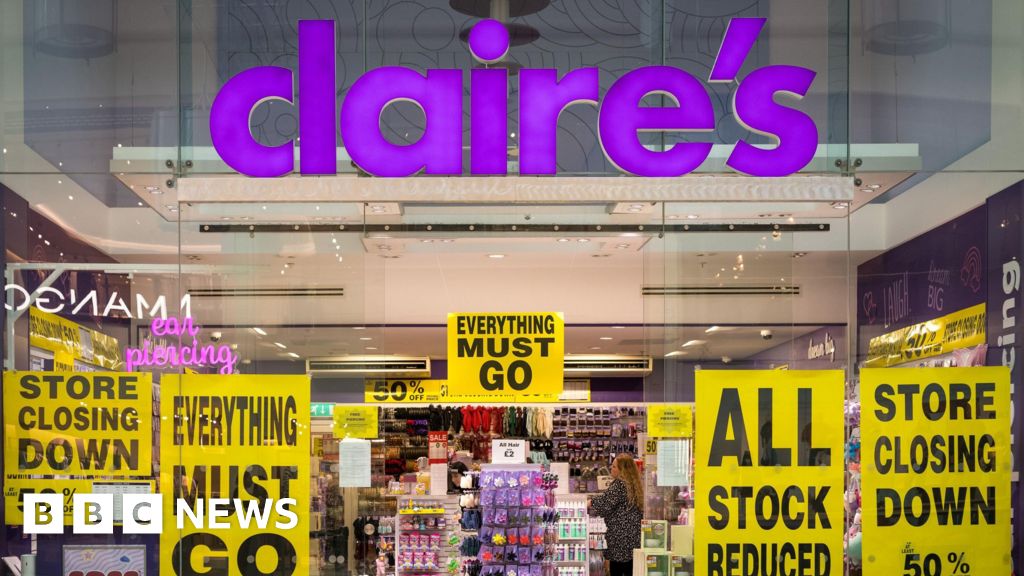
All of the chain’s standalone stores have stopped trading in the UK and Ireland.
Source link

A pedestrian walks by a Domino’s Pizza on Dec. 9, 2025 in San Francisco, California.
Justin Sullivan | Getty Images
Domino’s Pizza stock fell 10% in morning trading on Monday after it reported weaker-than-expected U.S. same-store sales growth.
The chain’s domestic same-store sales rose just 0.9%, lower than the 2.3% bump expected by Wall Street analysts, based on StreetAccount estimates.
“We’re not happy with it,” CEO Russell Weiner told CNBC.
The pizza chain also lowered its full-year U.S. same-store sales forecast to low-single digit growth, down from its prior projection that U.S. same-store sales will increase 3%.
Weiner said he expects more fast-food chains to report similar headwinds from winter weather and weak consumer sentiment, which took a dive in March due to spiking fuel prices caused by the U.S.-Israeli war with Iran.
“One of the bad things about reporting first is you don’t get to hear about anybody else,” Weiner said.
Domino’s kicked off the earnings season for restaurant chains. Starbucks is on deck after the bell on Tuesday, and Chipotle Mexican Grill and Pizza Hut owner Yum Brands are expected to share their results on Wednesday. Rival Papa John’s will report its earnings next Thursday.
During the quarter, Domino’s also faced stiffer competition from rival pizza chains. Papa John’s and Pizza Hut both matched Domino’s $9.99 “Best Deal Ever” with promotions at the same price point. And Little Caesars undercut Domino’s $6.99 Mix & Match deal with a $5.99 version.
“People are seeing what we’re doing, and they’re sick of losing share, and they’re coming at it,” Weiner said, adding that he still expects Papa John’s and Pizza Hut to report same-store sales declines for the quarter despite the new promotions.
Looking ahead, Weiner expressed confidence that Domino’s will prove itself in the long run.
“Domino’s has got a bigger advertising budget than our second two competitors combined,” he said. “And those competitors are both going up for sale, so we know things aren’t good there right now.”
Yum announced in November that it was exploring strategic options for Pizza Hut, which could include a sale. And Papa John’s is reportedly in talks with Qatari-backed Irth Capital to go private. Both chains have also announced plans to close hundreds of restaurants this year, which could further boost Domino’s dominant position in the pizza category.
And if either Pizza Hut or Papa John’s goes private, Weiner said he expects that a new owner would shutter even more locations — a win for Domino’s.
Shares of Domino’s have lost nearly a third of their value over the last year. The company’s market cap has fallen to roughly $11.2 billion.

United Airlines CEO Scott Kirby (L) and American Airlines CEO Robert Isom listen as U.S. Transportation Secretary Sean Duffy speaks to reporters outside the White House on October 30, 2025 in Washington, D.C.
Kevin Dietsch | Getty Images
United Airlines CEO Scott Kirby confirmed Monday that he contacted American Airlines about a potential merger, a possibility American rejected.
“I approached American about exploring a combination because I thought we could do something incredible for customers together,” Kirby said in a statement. He said he shared his “big, bold vision” because he was confident it could win regulatory approval.
American rejected the idea and its CEO, Robert Isom, last week said such a merger would be bad for customers and “anticompetitive.”
Kirby had floated the idea to the Trump administration earlier this year, according to people familiar with the matter who weren’t authorized to discuss the private conversation, in hopes that the combination would mean a big global airline to compete with foreign rivals
American declined to comment on Kirby’s Monday statement.
“I was hoping to pitch that story to American, but they declined to engage and instead responded by publicly closing the door,” Kirby said in his statement Monday. “And without a willing partner, something this big simply can’t get done.”
He said that “American’s public comments make it clear that a merger like this is off the table for the foreseeable future” but outlined his vision for a combined airline.
Kirby reiterated that the country has deficit with foreign airlines that fly more than half of the long-haul seats into the U.S., with most of the customers being Americans.
“The combined scale of United and American would be a better way to compete with foreign carriers,” he said.
President Donald Trump said he was against the idea of a combination last week.
“I don’t like having them merge,” he told CNBC’s “Squawk Box” on Tuesday morning. He said he would, however, like someone to buy struggling discount carrier Spirit but he also suggested that the federal government could “help that one out.”
Spirit and the Trump administration are in advanced talks for a rescue package.


Melania Trump says ABC should ‘take a stand’ on late-night host Kimmel

A Brain Implant for Depression Is About to Be Tested in Humans

UN proliferation meeting begins amid ‘looming’ risk of nuclear arms race

-

 Sports1 week ago
NCAA men’s gymnastics championship: All-time winners list
-

 Sports1 week ago
WWE WrestleMania 42 Night 2: Live match results and analysis
-

 Politics6 days ago
UK’s Starmer seeks to deflect blame over Mandelson appointment
-

 Fashion1 week ago
UK’s Sosandar returns to profitability amid robust FY26 performance
-
 Business1 week ago
No fuel shortage: Govt assures 100% domestic LPG, PNG, CNG supply amid Hormuz energy crunch – The Times of India
-

 Entertainment7 days ago
Lee Anderson, Zarah Sultana kicked out of UK Parliament for calling PM ‘liar’
-
 Business7 days ago
How Trump’s psychedelics executive order could unlock stalled cannabis reform
-

 Sports1 week ago
Quetta Gladiators opt to bowl after winning toss against Peshawar Zalmi in PSL 11 clash