

Business
Will AI make language dubbing easy for film and TV?

Technology Reporter
 XYZ Films
Finding international films that might appeal to the US market is an important part of the work XYZ Films.
Maxime Cottray is the chief operating officer at the Los Angeles-based independent studio.
He says the US market has always been tough for foreign language films.
“It’s been limited to coastal New York viewers through art house films,” he says.
It’s partly a language problem.
“America is not a culture which has grown up with subtitles or dubbing like Europe has,” he points out.
But that language hurdle might be easier to clear with a new AI-driven dubbing system.
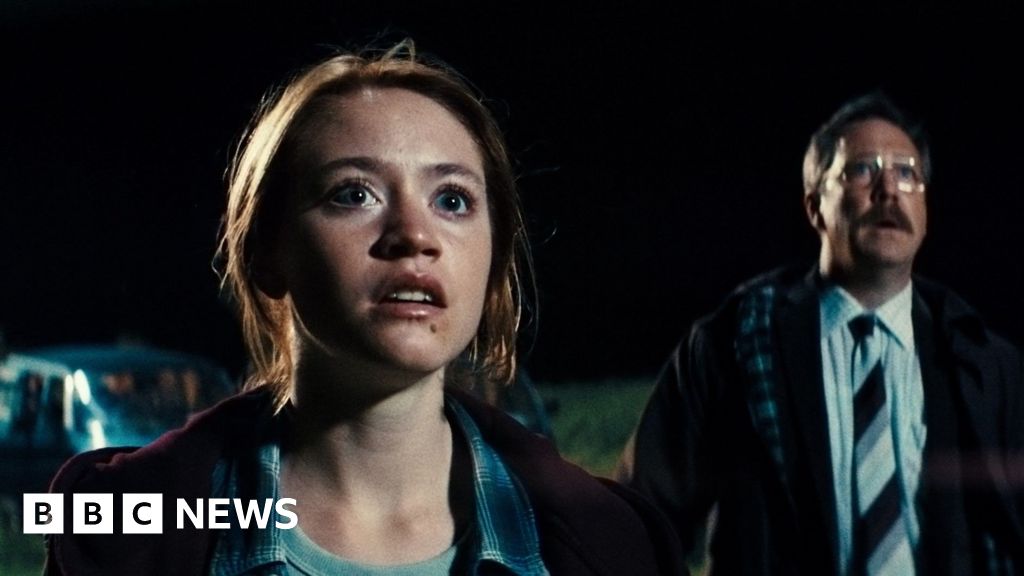
The audio and video of a recent film, Watch the Skies, a Swedish sci-fi film, was fed into a digital tool called DeepEditor.
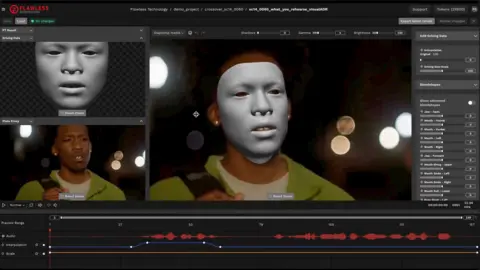
It manipulates the video to make it look like actors are genuinely speaking the language the film is made into.
“The first time I saw the results of the tech two years ago I thought it was good, but having seen the latest cut, it’s amazing. I’m convinced that if the average person if saw it, they wouldn’t notice it – they’d assume they were speaking whatever language that is,” says Mr Cottray.
The English version of Watch The Skies was released in 110 AMC Theatres across the US in May.
“To contextualise this result, if the film were not dubbed into English, the film would never have made it into US cinemas in the first place,” says Mr Cottray.
“US audiences were able to see a Swedish independent film that otherwise only a very niche audience would have otherwise seen.”
He says that AMC plans to run more releases like this.

 Flawless
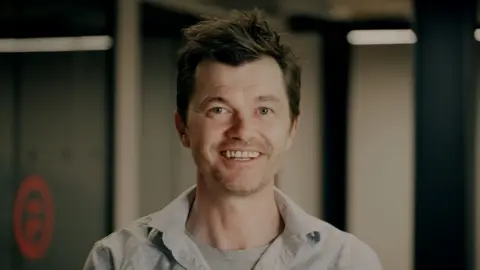
DeepEditor was developed by Flawless, which is headquartered in Soho, London.
Writer and director Scott Mann founded the company in 2020, having worked on films including Heist, The Tournament and Final Score.
He felt that traditional dubbing techniques for the international versions of his films didn’t quite match the emotional impact of the originals.
“When I worked on Heist in 2014, with a brilliant cast including Robert De Niro, and then I saw that movie translated to a different language, that’s when I first realised that no wonder the movies and TV don’t travel well, because the old world of dubbing really kind of changes everything about the film,” says Mr Mann, now based in Los Angeles.
“It’s all out of sync, and it’s performed differently. And from a purist filmmaking perspective, a very much lower grade product is being seen by the rest of the world.”
 Flawless
Flawless developed its own technology for identifying and modifying faces, based on a method first presented in a research paper in 2018.
“DeepEditor uses a combination of face detection, facial recognition, landmark detection [such as facial features] and 3D face tracking to understand the actor’s appearance, physical actions and emotional performance in every shot,” says Mr Mann.
The tech can preserve actors’ original performances across languages, without reshoots or re-recordings, reducing costs and time, he says.
According to him, Watch the Skies was the world’s first fully visually-dubbed feature film.
As well as giving an actor the appearance of speaking another language, DeepEditor can also transfer a better performance from one take into another, or swap a new line of dialogue, while keep the original performance with its emotional content intact.
Thanks to the explosion of streaming platforms such as Netflix and Apple, the global film dubbing market is set to increase from US$4bn (£3bn) in 2024 to $7.6bn by 2033, according to a report by Business Research Insights.
Mr Mann won’t say how much the tech costs but says it varies per project. “I’d say it works out at about a tenth of the cost of shooting it or changing it any other way.”
His customers include “pretty much all the really big streamers”.
Mr Mann believes the technology will enable films to be seen by a wider audience.
“There is an enormous amount of incredible kind of cinema and TV out there that is just never seen by English speaking folks, because many don’t want to watch it with dubbing and subtitles,” says Mr Mann.
The tech isn’t here to replace actors, says Mann, who says voice actors are used rather than being replaced with synthetic voices.
“What we found is that if you make the tools for the actual creatives and the artists themselves, that’s the right way of doing it… they get kind of the power tools to do their art and that can feed into the finished product. That’s the opposite of a lot of approaches that other tech companies have taken.”
 Natan Dvir
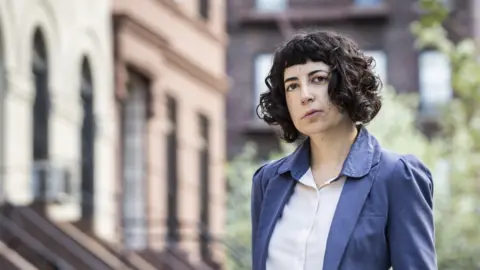
However, Neta Alexander, assistant professor of film and media at Yale University, says that while the promise of wider distribution is tempting, using AI to reconfigure performances for non-native markets risks eroding the specificity and texture of language, culture, and gesture.
“If all foreign films are adapted to look and sound English, the audience’s relationship with the foreign becomes increasingly mediated, synthetic, and sanitised,” she says.
“This could discourage cross-cultural literacy and disincentivise support for subtitled or original-language screenings.”
Meanwhile, she says, the displacement of subtitles, a key tool for language learners, immigrants, deaf and hard-of-hearing viewers and many others, raises concerns about accessibility.
“Closed captioning is not just a workaround; it’s a method of preserving the integrity of both visual and auditory storytelling for diverse audiences,” says Prof Alexander.
Replacing this with automated mimicry suggests a disturbing turn toward commodified and monolingual film culture, she says.
“Rather than ask how to make foreign films easier for English-speaking audiences, we might better ask how to build audiences that are willing to meet diverse cinema on its own terms.”

Sarah has now got her money back but there are calls to reform the deadline for reporting scams to banks.
Source link

Intellia Therapeutics, building exterior and company sign, Cambridge, Massachusetts, USA.
Spencer Grant | Universal Images Group | Getty Images
Intellia Therapeutics said its Crispr-based treatment for a rare swelling condition met its goals in a late-stage trial, marking a milestone for the field of gene editing and putting the company on track to seek approval from the U.S. Food and Drug Administration.
The company’s treatment uses Nobel Prize-winning technology Crispr to edit DNA and turn off the gene that controls production of a peptide that’s overactive in people with hereditary angioedema, causing them to experience potentially life-threatening swelling attacks. Intellia’s treatment is administered once through an hourslong infusion, making the edits directly in the liver.
Intellia said the one-time treatment reduced attacks by 87% compared with a placebo, meeting the study’s main goal. Six months after treatment, 62% of patients were free from attacks and weren’t using other therapies, Intellia said.
The company described the safety and tolerability of the treatment as “favorable,” reporting the most common side effects were infusion-related reactions, headaches and fatigue. Analysts were closely watching safety in the trial since a patient in a separate trial of a different treatment from Intellia died. That patient developed a liver injury and ultimately died from septic shock following an ulcer, according to the company.
“When you think about where we started with Crispr, just 12 years ago with some of the fundamental insights, I think there was a lot of talk about what might be possible, and we’ve had reports along the way in terms of milestones, but this is the first Phase 3 data in any indication with in vivo Crispr where you’re actually changing a gene that causes disease,” said Intellia CEO John Leonard.
The only FDA-approved Crispr-based medicine comes from Vertex Pharmaceuticals. Called Casgevy, the gene editing is done outside the body, or ex vivo. The process requires collecting a person’s blood cells, making the edits outside the body, then reinfusing them back into a patient. Intellia’s treatment, meanwhile, makes the edits inside the body, or in vivo.
Intellia said it has started a rolling application with the FDA and plans to complete the filing in the second half of this year. The company expects to launch the treatment in the U.S. in the first half of next year, if it’s approved.
If approved, Intellia’s treatment, lonvoguran ziclumeran, will compete with about a dozen other chronic drugs for HAE. Despite the allure of a one-time treatment, genetic medicines haven’t always been a commercial successes. BioMarin withdrew its gene therapy for Hemophilia A because of weak sales, for example.
Leonard said there are important differences between the two, like the fact that BioMarin’s therapy faced questions about how long the effects would last. In contrast, he said Intellia hasn’t seen a single case in almost six years where the effects diminished over time.
Despite the results, he’s reluctant to call Intellia’s treatment a functional cure.
“I think this is a tipping point for the disease and tipping point for Crispr-based in vivo therapy where you can make a change [and] it’s permanent,” Leonard said. “And, as far as we can tell, we don’t have a single patient in this program or other program where there’s been any waning of the effect of what we did to the gene or the effect of what we’ve seen with the clinical aspects of the disease itself. So it’s pretty exciting.”
Clarification: This story has been updated to clarify that a patient in a separate trial of a different treatment from Intellia developed acute liver injury and ultimately died from septic shock following an ulcer.

While many airlines say they are raising prices due to high fuel costs, József Váradi says European airlines are trying to boost demand
Source link

‘I had £20,000 stolen and had to fight a 13-month fraud reporting rule to get it back’

King Charles and the Trumps unite at White House for a historic tea meeting

This M5 MacBook Air Discount Has Renewed My Faith in Cheap Laptops for 2026

-

 Sports1 week ago
NCAA men’s gymnastics championship: All-time winners list
-

 Sports1 week ago
WWE WrestleMania 42 Night 2: Live match results and analysis
-

 Fashion1 week ago
UK’s Sosandar returns to profitability amid robust FY26 performance
-

 Politics7 days ago
UK’s Starmer seeks to deflect blame over Mandelson appointment
-

 Entertainment1 week ago
Lee Anderson, Zarah Sultana kicked out of UK Parliament for calling PM ‘liar’
-
 Business1 week ago
No fuel shortage: Govt assures 100% domestic LPG, PNG, CNG supply amid Hormuz energy crunch – The Times of India
-
 Business1 week ago
How Trump’s psychedelics executive order could unlock stalled cannabis reform
-

 Sports1 week ago
Quetta Gladiators opt to bowl after winning toss against Peshawar Zalmi in PSL 11 clash