

Business
How weight-loss injections are making obesity a wealth issue

 Nick TriggleHealth correspondent
 BBC
BBCThree years ago, a fashion editor friend returned from Milan Fashion Week bursting with a story to tell.
Most fashion editors stayed at the same hotel, she explained, and each bedroom had its own mini fridge. After checking out, en route to the airport, a stylist in her party cried out that he’d left “an important package” in his fridge and telephoned the hotel, pleading with them not to throw it away.
“Turns out he’d forgotten his Ozempic,” my editor friend whispered. We were baffled. Ozempic?
Back then, Ozempic was not part of the common lexicon. But quietly, in certain circles, this injectable drug, which is licensed for the treatment of type 2 diabetes, was being prescribed privately and off-label for weight loss.
Flash forward to today and the picture is vastly different. “So many fashion people are on it,” she tells me today. “And now they’re very vocal.”
Serena Williams, Elon Musk and Whoopi Goldberg have all spoken about using weight-loss injections. Some are now prescribed by the NHS, including Wegovy and Mounjaro, generating scores of headlines.
Really, this should have made it a great leveller. In theory, anyone struggling with obesity can – without the expense of a private doctor – get help to manage their weight.
Only that’s not the full picture.
 AFP via Getty Images
Thousands of NHS patients are believed to be missing out. And with the NHS tightly restricting access, some working in the field warn a two-tier system around weight-loss drugs is developing – one that’s benefitting the most well-off.
Martin Fidock, who is UK managing director of Ovivia, which provides Wegovy and lifestyle support to NHS patients, claims that thanks to varying thresholds of eligibility in different regions, NHS prescriptions are a “postcode lottery”.
An estimated 1.5 million people in the UK use these drugs – but more than nine in 10 are believed to pay privately. Prices vary but it generally costs between £100 and £350 a month, depending on the dose and lifestyle support.
Then, last month, it was reported that pharmaceutical giant Eli Lilly was expected to increase the list price of Mounjaro by as much as 170%.
They have since done a deal for UK distributors, meaning rises are likely to be less, and the deal doesn’t affect the cost to the NHS – but it has still caused concern in some quarters.
“It’s scary,” says Brad, a tech company worker in his 40s. He has been taking Mounjaro for a year and worries he may not be able to afford to continue.
“I’ve lost 20kg and want to keep using it, but it’s a lot of money. It’s unfair.”
 Getty Images (R) AFP via Getty Images (L)
Nutritionists and GPs I spoke to have also expressed concerns about the broader system, and in particular whether existing health inequalities could worsen.
“We cannot allow good health to become a luxury for the wealthiest by limiting access to weight-loss drugs to those who can pay privately,” argues Katharine Jenner, executive director of Obesity Health Alliance.
So could it really be that weight-loss injections – for all of their benefits – are turning obesity into a wealth issue?
The NHS ‘postcode lottery’
Weight-loss drugs have been available on the NHS for some time, but the landscape changed significantly with the introduction of some newer medications – among them, semaglutide, marketed under the brand name Wegovy, and tirzepatide, sold as Mounjaro.
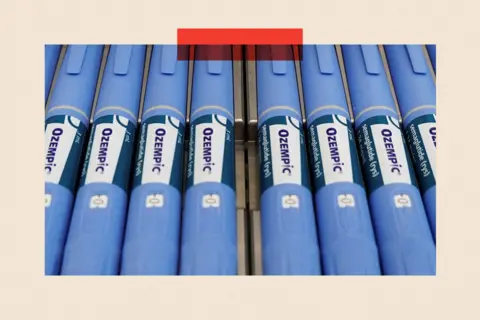
Wegovy was first prescribed for obesity by the NHS in 2023, while Mounjaro followed earlier this year. They work in part as an appetite suppressant by mimicking a hormone, which makes people feel fuller.
Studies have suggested patients can lose as much as a fifth of their body weight.
They are licensed for people with a BMI of 27 or more for those with a health condition or above 30 for those without (adjusted for certain ethnic groups). But tougher NHS criteria are being applied, and in England and Wales the drugs are mostly restricted to those with a BMI of over 35.
Plus there are more restrictions too.
For Wegovy, local areas are making their own decisions on access.
Martin Fidock claims that in recent months a third of regional health boards have increased the BMI threshold, which he says has resulted in fewer people being able to get it. (The BBC has been unable to verify this data.)
A spokesperson for Novo Nordisk, the pharmaceutical giant that makes Wegovy, told the BBC it is “concerned about the growing disparity” in access to NHS specialist weight management services.
“This has led to a large proportion of people needing to pay out of pocket, an option which is out of reach in areas of depravation where obesity rates are significantly higher.”
NHS England has said the differences could be related to different levels of need and other providers being more active in certain regions, but confirmed it was up to local areas to decide how much to spend.
 Reuters
For Mounjaro, NHS England has started it for people with a BMI above 40 who also have certain health conditions. The NHS roll-out officially began in June, but a report published earlier this month suggests that not all general practices had started offering it.
Just 18 out of 42 NHS boards across England confirmed that they’d begun prescribing it in line with the roll-out plan, according to data obtained by freedom of information requests published in the BMJ.
The NHS has previously said it is supporting the phased rollout for eligible patients and that “these represent brand-new services in primary care that are being established and scaled up over time”.
But Mr Fidock believes we are seeing a “postcode lottery”.
“We have got an obesity epidemic and these drugs provide us with an opportunity to tackle it in a way we have never been able to do before. But your ability to benefit is dependent largely on whether you have the means to pay.”
Adding to the challenge is the fact that more people from deprived areas struggle with obesity in the first place: more than a third of people in the most deprived areas are obese – twice that of more affluent neighbourhoods.
Beyond the physical health risks – and there are many, including higher risks of cancer and heart disease, plus mental health problems – there may be social consequences too.
One US study found that obese men with a bachelor’s degree earn 5% less than their thinner colleagues, while those with a graduate degree earn 14% less. For obese women it is worse still, earning 12% and 19% less respectively, based on data concerning 23,000 US workers, published in The Economist in 2023.
NHS GP Matthew Calcasola, who is also involved in a service Get a Drip, which offers weight-loss drugs privately, has his own concerns.
“We’re concerned health inequality will build,” he says. “GPs worry about this.”
Private patients priced out
Meanwhile, a booming private market has emerged. Sara de Souza, a business analyst from Nottingham, is among those delighted that it has.
Following the birth of her son Vito in 2023, she put on 30kg. “I got to 96kg,” she recalls. “Me and my husband both got into bad habits. We were so busy, we were eating junk food and having chocolates.
“I was always tired and struggled to pick up my baby. But I just couldn’t lose the weight.”
Sara tried dieting and went to see her GP who referred her to a lifestyle diet and activity programme. But still the pounds stuck.
At her heaviest her BMI was 37.5, but she wasn’t eligible for NHS access and paid £200 a month for the drug through an app called Juniper, which also gave her diet and lifestyle advice. Within a year she had lost the full 30kg.

“It completely changed my life. I felt like a new person, alive again. It’s not just how I look, it’s how I feel and being able to keep up with my son.”
Sara says the cost didn’t impact her. “Even if it had, I’d have carried on, because of the benefits.”
Not everyone feels the same. Some 18% of overweight Britons would be willing to pay for weight-loss drugs – but if they were available on the NHS, 59% said they would be keen on using them, according to new polling by communications agency Strand Partners.
And some of those willing to pay privately fear they could find themselves being priced out following the proposed price spike.
 Getty Images
“If I’d had to pay £300 or even more, I would have really struggled to afford it,” says Pete Beech, 57, from Southampton.
He weighed 18 stone and paid £160 a month for a prescription of Mounjaro to help him lose weight to qualify for an ultrasound treatment as part of his treatment for prostate cancer.
“The way the NHS is rationing these drugs has consequences beyond just obesity.”
James O’Loan, head of online pharmacy Chemist 4 U, has already observed some people stretching themselves financially to get hold of weight-loss drugs – some have asked for payment plans, which they cannot offer.
“Some people can’t move on to the higher doses because of cost,” he explains.
 Getty Images for ESSENCE
Then there are concerns about a weight-loss drug black market, or unscrupulous dispensing.
“Some services are desperate to dispense the stuff and don’t care what happens,” claims Professor Richard Donnelly, editor of medical journal Diabetes, Obesity and Metabolism. “People are just asked to fill in a quick questionnaire. There’s no proper medical assessment or follow up.”
He also stresses that they should not be seen as a quick fix. “They’re not there to lose a bit of fat around the tummy.”
Whilst generally well tolerated, there are risks of certain side effects — including nausea, constipation and diarrhoea. A study into potential serious side effects of weight loss jabs has also been launched after hundreds of people reported problems with their pancreas.
The NHS advises people never take a medicine for weight management if it has not been prescribed for them.
‘Not a magic bullet’
Some argue that the answer is, simply, to widen NHS access. The issue, of course, comes in part down to cost.
Michael Shah, senior analyst at Bloomberg Intelligence, believes that this could start to resolve itself in time.
“There are more than 160 weight-loss drugs in clinical development,” he says. Once available, he predicts that the competition could push costs down across the board.
“NHS bargaining power should improve as additional players and treatments enter the space.”
 Kevin Mazur/WireImage via Getty Images
Earlier this year the Tony Blair Institute suggested that the drugs should be offered to everyone with BMIs over 27, arguing that it costs even more to deal with the consequences of obesity.
Obesity is estimated to cost the economy £98bn a year, according to research commissioned by the think tank, once you take into account lost productivity as well as the NHS treatment costs and the impact on the individual.
The Institute suggests a means-tested system with those entitled to free prescriptions getting it free and others self-funding or encouraging employers to share the cost.
NHS England has said it is looking at an option to “accelerate roll out to even more people in the future”.
But it also pointed out that weight loss drugs should not be seen as a “magic bullet”.
Are we medicalising a social issue?
All of this begs a broader question – that is, in medicalising debates around tackling obesity, do we risk overlooking the wider social issue?
“By thinking we have a treatment for obesity we lose focus and stop thinking about the more difficult issues around the food industry and regulation, which are the root cause of this,” warns Greg Fell, president of the Association of Directors of Public Health.
“I do have concerns about equity of access,” he adds. “But I think the NHS has carefully thought about this and probably is, more or less, in the right place.”
 Getty Images
In post-war Britain, obesity was rare due to food shortages and physically demanding lifestyles – lower-income groups were more likely to suffer from malnutrition.
Only since the 1980s have obesity rates risen across all social classes, with a growing disparity between rich and poor.
It is driven by several interconnected factors. Katharine Jenner argues there needs to be more done to address one of them in particular: our “broken food system”.
“People in poorer areas are surrounded by junk food advertising, more unhealthy takeaways, and face bigger barriers to buying healthy food,” she says.
“Without investment in prevention, health will get worse, inequalities will widen, and the costs will fall on all of us.”
How to effectively achieve that is perhaps the biggest question of all. But whatever the answer – and regardless of whether the onus really should be on the state or as others argue, the individual – it runs far deeper than the cost of a weight-loss jab.
“We live in a society that prizes freedom of choice and expression, values material wealth and tolerates vast inequality,” argues Chris Rojek, sociology professor at City St George’s, University of London. “In such a system, casualties are inevitable.
“It would be naïve — or even pious — to claim we can simply solve this. The answer is complex and touches the very fabric of our society.”
Top picture credit: Onzeg/ Getty Images
BBC InDepth is the home on the website and app for the best analysis, with fresh perspectives that challenge assumptions and deep reporting on the biggest issues of the day. And we showcase thought-provoking content from across BBC Sounds and iPlayer too. You can send us your feedback on the InDepth section by clicking on the button below.
Business
AI shopping: Google partners Walmart, Shopify and Wayfair to turn Gemini into in-chat checkout platform; what you need to know – The Times of India
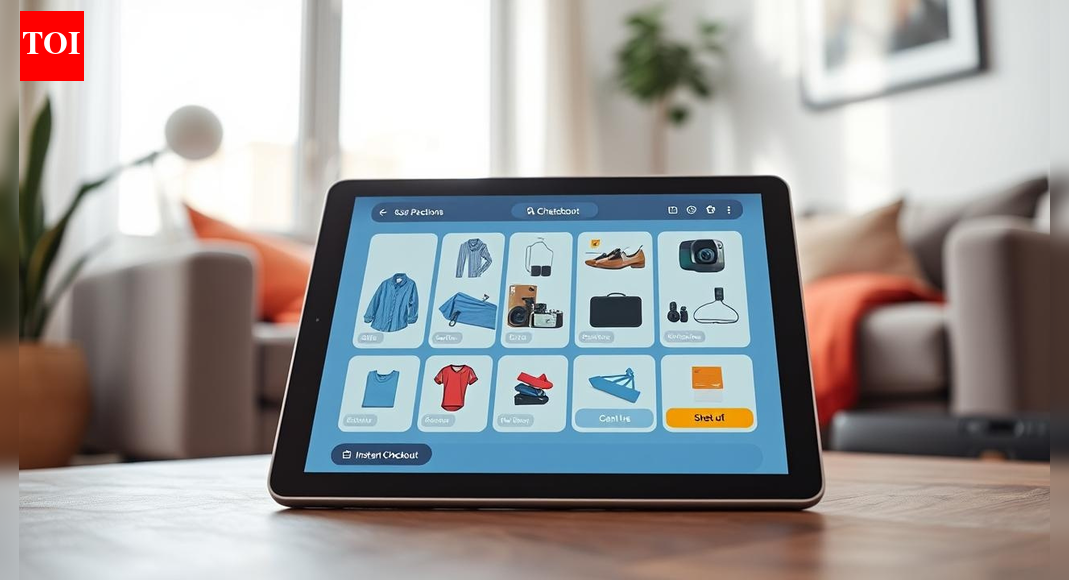
Google has expanded the shopping capabilities of its Gemini AI chatbot by partnering with major retailers including Walmart, Shopify and Wayfair, enabling users to browse and buy products directly within the chatbot, the company said on Sunday, AP reported.The move, announced on the opening day of the National Retail Federation’s annual convention in New York, positions Gemini as both a virtual shopping assistant and a transaction platform, allowing customers to complete purchases without leaving the chat interface.According to Google and Walmart, an instant checkout feature will let users buy products from participating retailers through multiple payment providers directly inside Gemini. Customers who link their Walmart and Gemini accounts will receive personalised recommendations based on past purchases, and items bought through the chatbot can be added to their existing Walmart or Sam’s Club online carts.“The transition from traditional web or app search to agent-led commerce represents the next great evolution in retail,” Walmart’s incoming president and CEO John Furner said in a joint statement with Google and Alphabet CEO Sundar Pichai.Google said Gemini’s shopping feature can respond to product-related queries — such as recommendations for ski gear — by pulling items from participating retailers’ inventories and facilitating purchases within the same conversation.The announcement comes amid intensifying competition among tech giants to dominate AI-powered commerce. Google, OpenAI and Amazon are all racing to enable seamless shopping experiences that take users from product discovery to checkout within chatbots.OpenAI and Walmart unveiled a similar partnership in October, allowing ChatGPT users to purchase most items available on Walmart’s website through instant checkout, excluding fresh food. Ahead of the holiday shopping season, OpenAI also launched in-chat purchasing for select retailers and Etsy sellers.Salesforce estimates that artificial intelligence influenced $272 billion, or about 20 per cent, of global retail sales during the recent holiday season.Google said the AI-assisted shopping features in Gemini will initially be available only to users in the US, with international expansion planned in the coming months.
Business
Boeing’s airplane deliveries are the highest in 7 years. Now it’s about to pick up the pace

A Boeing Co. 737 Max airplane at the company’s manufacturing facility in Renton, Washington, US, on Thursday, Nov. 20, 2025.
David Ryder | Bloomberg | Getty Images
Boeing is set to report this week that it delivered the most airplanes since 2018 last year after it stabilized its production, the clearest sign of a turnaround yet after years of safety crises and snowballing quality defects.
Now, the aerospace giant is planning to ramp up production.
“It’s a long road back from a … shall we say, a rather dysfunctional culture, but they’re making big progress,” said Richard Aboulafia, managing director at AeroDynamic Advisory, an aerospace industry consulting firm.
Boeing was forced to scale back production in recent years following two fatal crashes of its popular 737 Max aircraft in 2018 and 2019 and a midair blowout of a door plug from one of its planes in the first week of 2024. The Covid pandemic snarled airplane assembly at both Boeing and its chief rival, Airbus, with supply chain delays and loss of experienced workers, even after the worst of the health crisis subsided.
A Boeing 737 approaches San Diego International for a landing, May 10, 2025.
Kevin Carter | Getty Images
Boeing’s leaders, including CEO Kelly Ortberg — a longtime aerospace executive who came out of retirement to take the top job months after the midair door plug accident — are gearing up to increase production this year of its cash cow 737 Max aircraft and the longer-range 787 Dreamliners.
That could help the manufacturer, the top U.S. exporter by value, return to profitability, as analysts expect this year, territory that was out of reach for seven years as its leaders focused on damage control and were stuck reassuring frustrated airline executives who were awaiting late planes.
Their tone has changed as Boeing has become more predictable and increased production, with the Federal Aviation Administration’s blessing. In a sign of the FAA’s increased confidence in Boeing, the agency in September said Boeing could issue its own air worthiness certificates before customers receive some of its 737s and 787s after years of restrictions.
Boeing’s commercial aircraft business is its largest unit, accounting for about 46% of sales in the first nine months of last year, with the rest coming from its defense and services business. Boeing last reported a full-year profit in 2018.
Investors are optimistic for further improvement. Boeing shares have gained 36% over the last 12 months, outpacing the S&P 500‘s nearly 20% advance.
“Boeing is definitely better and more stable,” said Bob Jordan, CEO of all-Boeing airline Southwest Airlines, in an interview Dec. 10.
The company is scheduled to outline its production plans for 2026 later this month when it reports quarterly results on Jan. 27.
Getting into gear
For Boeing, the recent turnaround has taken place largely on the assembly floor.
Under Ortberg, the manufacturer has slashed so-called traveled work, in which assembly tasks are done out of order, to avoid costly mistakes. The company has made other manufacturing changes, as well, including added training.
The National Transportation Safety Board in June said inadequate training and management oversight had been among the problems at the company, according to its investigation into what led to the door plug blowout in January 2024.
On Dec. 8, Boeing also completed its acquisition of fuselage maker Spirit AeroSystems, which Boeing had spun out of the company two decades ago. It now has more direct control of the crucial supplier.
Moving out jets
Boeing handed over 537 aircraft in the first 11 months of last year. It reports December deliveries on Tuesday, but Jefferies estimates the company delivered 61 commercial jets last month, 44 of them Boeing’s bestseller, the 737 Max.
Boeing delivered 348 aircraft in 2024 and 528 in 2023. Last year’s total would still be far off the 806 airplanes it handed over in 2018.
Last October, the FAA raised its production cap on Boeing’s 737 Max from 38 a month to 42. (The FAA required its sign-off after the door plug accident.) CFO Jay Malave said at a UBS conference on Dec. 2 that he expects the company to get to that rate in early 2026. Ortberg told investors in October that further rate increases are on the table, in increments of five planes.
Kelly Ortberg, chief executive officer of Boeing Co., during a media event at the Boeing Delivery Center in Seattle, Washington, US, on Wednesday, Jan. 7, 2026.
M. Scott Brauer | Bloomberg | Getty Images
Handovers to airlines in 2026 will likely be new production, compared with clearing out older inventory, Malave had said. Boeing is also likely to produce about eight Dreamliners a month as of early this year, he added.
Deliveries are key for airplane makers, because airlines and other customers pay the bulk of an airplane’s price when they receive the aircraft. Boeing’s chief competitor, Airbus, is scheduled to report 2025 orders and deliveries on Monday.
Still, several planes that were expected to already flying passengers aren’t certified yet, including the Boeing 777X as well as the Max 7 and Max 10 variants, depriving Boeing of cash and driving up costs.
Southwest is awaiting the delayed Max 7, the smallest plane of the Max family. The model is important for airline routes that have lower demand so airlines can avoid oversupplying the market with seats, pushing down fares.
Southwest CEO Jordan last month said that he doesn’t expect the airline to fly the Max 7 before the first half of 2027 as Boeing certification work continues. Boeing at one point expected it to enter service in 2019.
“They’re still very short in terms of delivering the aircraft that we need, but I’m glad to see the progress on the Max 7,” Jordan told CNBC.
Robust demand
Orders for both Boeing and Airbus jets look solid, with demand set to continue outstripping supply into the next decade, Bernstein aerospace analyst Douglas Harned said in a note last week.
Airbus outpaced Boeing in deliveries last year, though Boeing appears to have outsold its European competitor in new orders.
Through November, Boeing logged 1,000 gross orders compared with 797 from Airbus. Airline customers have started to look beyond this decade, snagging delivery slots into the mid-2030s as they plot out growth and international expansions.
On Wednesday, Alaska Airlines said it is ordering 105 Boeing 737 Max 10 jets, the longest aircraft of the Max group. Alaska fleet chief Shane Jones told CNBC the order is a sign of “our confidence in the Max 10 certification” as well as “our confidence in Boeing and their turnaround and their ability to produce quality aircraft on time.”
Alaska also exercised options for five 787 Dreamliners for more international routes just over a year after it acquired Hawaiian Airlines — a combination that handed Alaska more Dreamliners and Airbus A330s to reach for destinations that it couldn’t get to before, like Japan, South Korea and Italy.
The wide-body aircraft market is now picking up steam, said Ron Epstein, aerospace analyst at Bank of America, with orders starting to get handed over faster to customers.
International travel, especially at the high end, has been particularly strong in the years after the pandemic as travelers splash out on vacations around the world. More and more global airlines are looking at snagging long-haul jets like Boeing’s Dreamliner and Airbus’ A330 and A350s for the coming years, heating up the wide-body airplane market, analysts said.
Globally, airplanes flew nearly 84% full in November, the highest level on record, according to the latest data available from the International Air Transport Association, an airline industry group.
With travel demand still robust, orders to replace older jets and secure new ones will continue to fuel growth.
“The magic, if you will, of air transportation is until somebody comes up with a transporter, you know, [like] ‘Star Trek,’ where you sort of vaporize and show up someplace else, we’re going to be flying,” Epstein said.
Business
‘Side Hustle Generation’: Over 50% Of US Gen Z Opting For Extra Gigs Amid Economic Uncertainty

Last Updated:
At least 57% of Gen Z in the US now have side gigs, from retail to gig work, amid economic uncertainty and concerns over the impact of AI on jobs.



Gen-Z is the first generation for whom a 9-to-5 job isn’t essential for achieving financial success. (AI-Generated Image)
Amid widespread economic uncertainty, more than half of the Gen Z population in the United States is opting for side gigs to navigate the job market and for extra cash.
At least 57% of Gen Z in the US now have side gigs, compared to 21% of boomers and older, according to The Harris Poll, which dubbed them “America’s first true ‘side hustle’ generation.”
Most of them are picking up side hustles, from retail to gig work, for extra cash. Younger people “want to work [and] find success, but many of them just feel disillusioned with the opportunities to get there through the traditional career ladder,” Glassdoor chief economist Daniel Zhao told Axios.
Role Of AI
In an August report, Glassdoor researchers said that some of the youths are chasing creative or entrepreneurial goals. Moreover, AI and other technological advances have made it easier for professionals to monetise their skills and passions.
“We’re witnessing a true side hustle generation where work identity lives outside of traditional employment. Additional commentary and research also shows that there’s a growing number of Employee+ workers who diversify income streams without abandoning job security,” Glassdoor said.
“For Gen Z, the day job funds the passion project. Work pays the bills, but identity and fulfilment can come from entrepreneurial pursuits, creative endeavours, or social causes they care about,” it added.
Why Are Gen-Z Opting For Side Gigs?
One of the main reasons for this shift is job anxiety. Recent graduates are struggling to secure jobs, while those with them aren’t seeing the career growth they expect, according to Zhao.
Data shows that the financial optimism for college students has fallen to their lowest level since 2018, mostly due to concerns over unemployment and ‘AI-induced layoffs’. The advent of AI remains the most pressing concern among young workers.
As per The Harris Poll, Gen Z is the first generation for whom a 9-to-5 job isn’t essential for achieving financial success. Side hustles are not merely distractions or fallback options; they are central to Gen Z’s identity, offering creative, entrepreneurial, or activist outlets that main jobs cannot supply.
“It definitely makes me feel more financially secure,” Katie Arce, who works full-time in e-commerce and picks up shifts at a vintage clothing store in Austin, Texas, told Axios.
 Click here to add News18 as your preferred news source on Google.
United States of America (USA)
January 11, 2026, 17:08 IST
Read More


Deflated LaFleur deflects job talk after Pack loss

Carrie Coon and Tracy Letts on their joint love for, and beyond, the theater

Offseason guide for eliminated NFL teams: Key free agents, draft outlook, priorities and predictions

-

 Sports6 days ago
VAR review: Why was Wirtz onside in Premier League, offside in Europe?
-

 Entertainment4 days ago
Does new US food pyramid put too much steak on your plate?
-

 Politics4 days ago
UK says provided assistance in US-led tanker seizure
-

 Entertainment4 days ago
Why did Nick Reiner’s lawyer Alan Jackson withdraw from case?
-
 Business7 days ago
8th Pay Commission: From Policy Review, Cabinet Approval To Implementation –Key Stages Explained
-

 Sports7 days ago
Steelers escape Ravens’ late push, win AFC North title
-

 Politics7 days ago
China’s birth-rate push sputters as couples stay child-free
-

 Entertainment6 days ago
Minnesota Governor Tim Walz to drop out of 2026 race, official confirmation expected soon