

Tech
A Cyberattack on Jaguar Land Rover Is Causing a Supply Chain Disaster

Almost immediately after the cyberattack, a group on Telegram called Scattered Lapsus$ Hunters, claimed responsibility for the hack. The group name implies a potential collaboration between three loose hacking collectives— Scattered Spider, Lapsus$, and Shiny Hunters—that have been behind some of the most high-profile cyberattacks in recent years. They are often made up of young, English-speaking, cybercriminals who target major businesses.
Building vehicles is a hugely complex process. Hundreds of different companies provide parts, materials, electronics, and more to vehicle manufacturers, and these expansive supply chain networks often rely upon “just-in-time” manufacturing. That means they order parts and services to be delivered in the specific quantities that are needed and exactly when they need them—large stockpiles of parts are unlikely to be held by auto makers.
“The supplier networks that are supplying into these manufacturing plants, they’re all set up for efficiency—economic efficiency, and also logistic efficiency,” says Siraj Ahmed Shaikh, a professor in systems security at Swansea University. “There’s a very carefully orchestrated supply chain,” Shaikh adds, speaking about automotive manufacturing generally. “There’s a critical dependency for those suppliers supplying into this kind of an operation. As soon as there is a disruption at this kind of facility, then all the suppliers get affected.”
One company that makes glass sun roofs has started laying off workers, according to a report in the Telegraph. Meanwhile, another firm told the BBC it has laid off around 40 people so far. French automotive company OPmobility, which employs 38,000 people across 150 sites, told WIRED it is making some changes and monitoring the events. “OPmobility is reconfiguring its production at certain sites as a consequence of the shutdown of its production by one of its customers based in the United Kingdom and depending on the evolution of the situation,” a spokesperson for the firm says.
While it is unclear which specific JLR systems have been impacted by the hackers and what systems JLR took offline proactively, many were likely taken offline to stop the attack from getting worse. “It’s very challenging to ensure containment while you still have connections between various systems,” says Orla Cox, head of EMEA cybersecurity communications at FTI Consulting, which responds to cyberattacks and works on investigations. “Oftentimes as well, there will be dependencies on different systems: You take one down, then it means that it has a knock on effect on another.”
Whenever there’s a hack in any part of a supply chain—whether that is a manufacturer at the top of the pyramid or a firm further down the pipeline—digital connections between companies may be severed to stop attackers from spreading from one network to the next. Connections via VPNs or APIs may be stopped, Cox says. “Some may even take stronger measures such as blocking domains and IP addresses. Then things like email are no longer usable between the two organizations.”
The complexity of digital and physical supply chains, spanning across dozens of businesses and just-in-time production systems, means it is likely that bringing everything back online and up to full-working speed may take time. MacColl, the RUSI researcher, says cybersecurity issues often fail to be debated at the highest level of British politics—but adds this time could be different due to the scale of the disruption. “This incident has the potential to cut through because of the job losses and the fact that MPs in constituencies affected by this will be getting calls,” he says. That breakthrough has already begun.










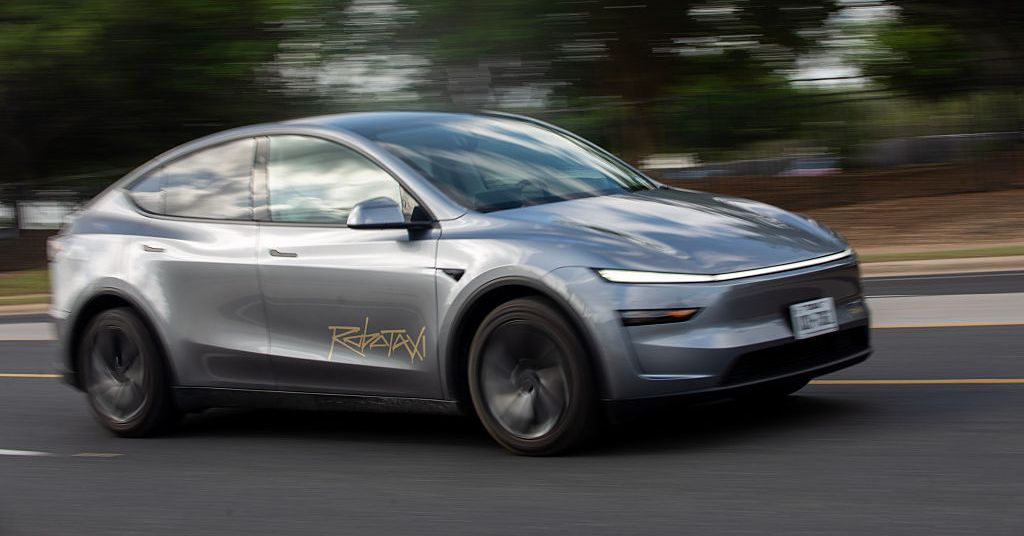
For more than a year, Tesla has shielded details about its robotaxi crashes from public view. Now, the company has published new details in a federal database about 17 incidents, which took place between July 2025 and March 2026. In at least two of them, Tesla’s human employees appear to have played a hand in the crashes by remotely driving the otherwise autonomous cars into objects on the street.
In both crashes, which happened in Austin, “safety monitors” were in the vehicles’ passenger seats to oversee the still-fledgling self-driving tech, and no passengers were riding in the cars. Both crashes occurred at speeds below 10 miles per hour. The new details were first reported by TechCrunch.
In one incident, which took place in July 2025, the safety monitor experienced “minor” injuries after a remote worker drove the Tesla up a curb and into a metal fence at 8 mph. The monitor, who had requested help from Tesla’s remote driving team after the car stopped on the side of a street and wouldn’t move forward, was not hospitalized, Tesla reported.
The other incident, in January 2026, happened after a safety monitor requested navigation help from the remote team. The remote driver took control and drove the car straight into a temporary construction barricade at 9 mph. The crash left the robotaxi’s front left fender and tire scraped up, but Tesla didn’t report any injuries.
Tesla, which does not have a public relations team, did not respond to WIRED’s request for comment.
The new details draw attention to an often misunderstood but safety-critical part of autonomous vehicle operations: the human backstops who remotely monitor the robot cars and intervene when they get into trouble. All US self-driving operators maintain these remote teams, according to letters submitted to a US senator earlier this year. But Tesla appears to be an outlier because it more frequently allows these remote workers to directly drive the cars.
Other companies typically allow their workers to remotely provide input to the autonomous vehicle software, which the system can choose to use or reject. (Waymo says that specially trained workers can remotely drive its cars up to 2 mph, but said in February that it hadn’t used that functionality outside of training.)
Safety advocates have raised questions about remote driving, which can be challenging in places without consistent cellular connectivity and in contexts where remote drivers need a perfect understanding of a car’s surroundings to guide it out of complex situations.
The new details on the two Tesla crashes “raise questions about what the teleoperator can see in both coverage and resolution, and what kind of latency they are experiencing while driving,” Noah Goodall, an independent self-driving vehicle researcher, tells WIRED in a message.
Tesla’s still-fledgling robotaxi service is operating in three Texas cities: Austin, Dallas, and Houston. But the service has fewer than 100 vehicles operating in total, compared to Waymo’s nearly 4,000. Less than half of Tesla’s cars appear to operate without a safety monitor sitting in the passenger seat. Reuters reported this week that service wait times in Houston and Dallas, where robotaxis launched in April, are upward of 35 minutes. Even in Austin, where the cars have been carrying passengers for almost a year, a reporter for the publication found that robotaxis were sometimes completely unavailable.
Tesla CEO Elon Musk has said that autonomous vehicles and robotics are the automaker’s focus instead of manufacturing electric cars. Musk’s compensation—a potential $1 trillion paycheck by 2035—is now tied to vehicle and robot deliveries, as well as sales of not-yet-released self-driving subscriptions and the number of robotaxis in commercial operation.
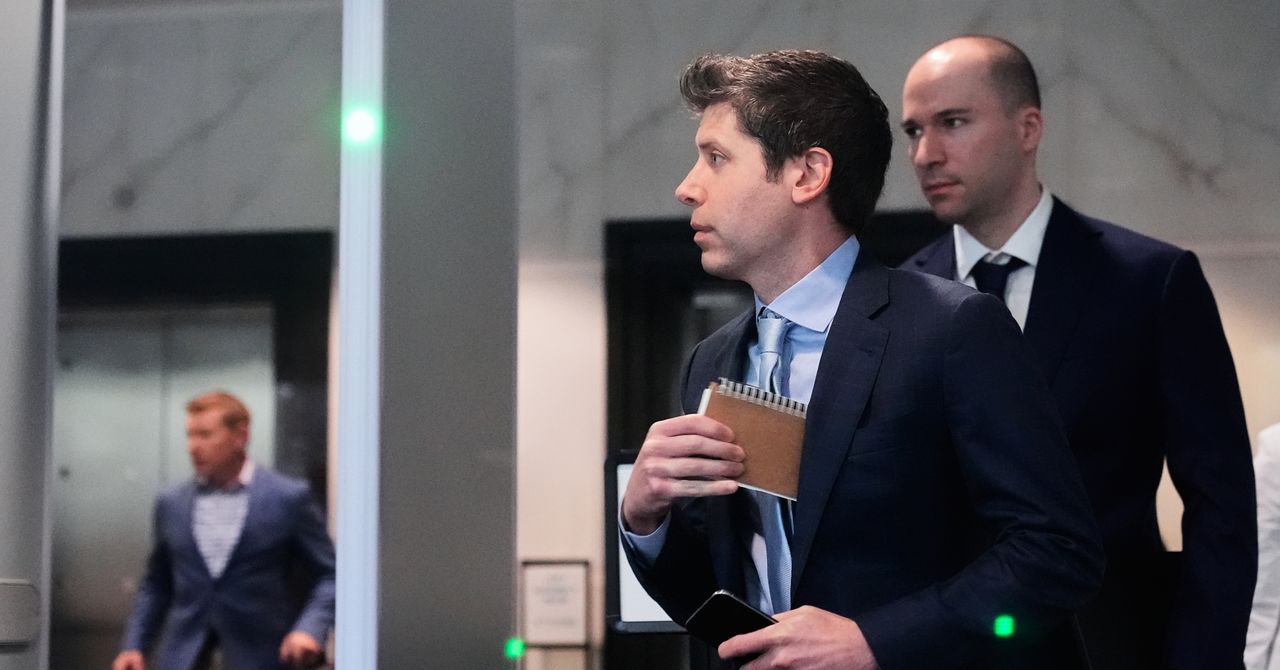
OpenAI told staff on Friday that it would reorganize the company as part of an ongoing effort to unify its product offerings, WIRED has learned. OpenAI cofounder and president Greg Brockman will now lead the company’s product strategy, in addition to his work on AI infrastructure, OpenAI confirms to WIRED. Brockman was previously assigned to oversee OpenAI products on an interim basis while CEO of AGI deployment, Fidji Simo, was on medical leave; the change is now official.
“We’re consolidating our product efforts to execute with maximum focus toward the agentic future, to win across both consumer and enterprise,” Brockman said in a memo to staff seen by WIRED. Brockman added that OpenAI’s products are naturally converging, and that the company has decided to merge ChatGPT and Codex into one unified experience.
OpenAI says it’s folding ChatGPT, its AI coding agent Codex, and its developer-facing API into one core product team. The company says that Codex is increasingly powering its consumer and enterprise offerings, which are gaining the ability to perform digital tasks autonomously on behalf of users.
Two other OpenAI leaders are also taking on larger roles at the company as part of the changes. OpenAI’s head of Codex, Thibault Sottiaux, has been tapped to lead the core product and platform across consumer, enterprise, and developer surfaces. Sottiaux was a key leader in building Codex into one of the company’s fastest-growing products of all time. OpenAI’s longtime head of ChatGPT, Nick Turley, is moving to a new role at the company that aims to revamp enterprise products. OpenAI says Turley will continue his work on ChatGPT, which he has helped grow to more than 900 million weekly active users since he took over in 2022.
The changes are the latest shakeup for OpenAI as leadership aims to refocus the company on a few key product areas, including ChatGPT, Codex, and its forthcoming “everything app.” Last month, OpenAI announced many executive changes, including that CEO of AGI dDeployment, Fidji Simo, was taking a medical leave to focus on her health. OpenAI previously said Brockman would oversee product strategy in her absence. The company tells WIRED that Simo remains on medical leave, and worked directly with Brockman on these organizational changes and product strategy.
In the last year, OpenAI has faced increasing pressure from competitors, including Anthropic in coding domains and Google in consumer chatbots. OpenAI leaders are hoping to simplify product offerings ahead of its plan to file for an IPO, which could happen later this year.
Other OpenAI executives left the company entirely last month, including the head of its AI workspace for scientists, Kevin Weil; head of Sora, Bill Peebles; and its chief technology officer of enterprise applications, Srinivas Narayanan.
This is a developing story. Please check back for updates.

Employee benefits are in the spotlight this week, and that’s because of three recent stories about US companies cutting back on non-wage compensations for workers.
A Texas tech consulting firm with a forgettable name—TTEC—suddenly became a lot more memorable when it suspended its discretionary 401(k) match program for 16,000 employees through at least the end of 2026. According to Business Insider, which viewed an internal TTEC memo, the company plans to invest in AI certifications, AI tools and training, and automation, among other things.
The auditing and consulting giant Deloitte is also reportedly slashing benefits for some workers starting next year. This includes reducing PTO, halving parental leave, and eliminating a $50,000 reimbursement for family planning services such as adoption, surrogacy, and IVF. San Francisco-based Zoom, meanwhile, has made a smaller-scale change and reduced its parental leave for employees from 22 weeks to 18 weeks for birthing parents.
So what’s the driving force behind this? And are there more cuts to come? The latter is impossible to answer, and the former is unfortunately more complicated than “corporate ghouls go AI.”
First off, “what Deloitte did is completely unconscionable,’” says Joan C. Williams, a professor at UC Law San Francisco, the author of several books on work culture and class dynamics, and an oft-cited scholar on these topics. The consulting firm is cutting the benefits of a specific class of internal workers—in admin, IT support, and finance—while leaving intact benefits for people in client-facing roles. An affected worker will see their parental leave cut from 16 weeks to just eight weeks.
“It treats people differently based on the type of job they’re in, and cutting any mother down to eight weeks of paid leave is just outlandish,” Williams says. “When labor is tight, employers are more generous. But once the power shifts, the benefits contract.”
AI certainly is a convenient excuse these days for any corporate decision that harms workers. But the impetus here is also the cost of the benefits themselves. Earlier this year subsidies from the Affordable Care Act lapsed, and people began dropping out of health care plans entirely. Insurers have cited this as one reason they’ve raised premiums.
Sarahjane Sacchetti, a former top executive at benefits administration companies Cleo and Collective Health, who is working on a new health care initiative, told me that the costs of employer-sponsored health plans have increased significantly over the past five years. A survey last year of over 1,700 US employers by the Mercer health care consulting group found that the health care cost per worker was expected to rise on average 6.5 percent in 2026, the highest since 2010. And this was after factoring in cost-reduction measures; otherwise, the cost of a plan would go up by nearly 9 percent.
“This just starts to eat into how you think about total compensation as an employer,” Sacchetti says. That doesn’t mean the corporation is the ‘good guy,’ she says, but the poor state of American health care policy and lack of safety net are responsible for a lot of the stress that plagues undercompensated or laid-off workers.
Williams points out that the US is one of the few countries that doesn’t offer a federal paid maternal leave—putting it in league with Papua New Guinea and Suriname. “This just shows how crazy it is to provide employee basics like pension and paid parental leave through private employers rather than how other industrialized countries do it,” Williams says. Her proposed solution? “The US needs to join the rest of the universe.”
The irony, of course, is that the US government professes to be obsessed with women having more babies. If women in the US are—as celebrity doctor Mehmet Oz put it this week in the Oval Office—“underbabied,” a comprehensive paid federal leave policy would be the obvious place to start. (Oz also said that “making babies” is “the most creative thing the universe knows.” Don’t tell the AI CEOs.)


Petrol, diesel prices up by Rs 3, CNG by Rs 2, further hike likely; no change in piped gas yet

Tesla Reveals New Details About Robotaxi Crashes—and the Humans Involved
[CinePlex360] Please moderate: “Budget 2026 Income

-
 Tech1 week ago
A new frontier: Identity stack evolves for agentic systems | Computer Weekly
-

 Tech1 week ago
‘Orbs,’ ‘Saucers,’ and ‘Flashes’ on the Moon: Pentagon Drops New UFO Files
-

 Fashion1 week ago
New orders in German manufacturing up 5% MoM in Mar 2026: Destatis
-
 Tech1 week ago
Nick Bostrom Has a Plan for Humanity’s ‘Big Retirement’
-
 Tech1 week ago
What Microsoft Executives Really Thought About OpenAI in 2018
-

 Sports1 week ago
Shaheen Afridi achieves landmark feat during opening Test against Bangladesh
-

 Fashion1 week ago
US’ Carter’s taps retail veteran Sharon Price John as new CEO
-

 Entertainment1 week ago
Rihanna embraces new tattoo given by children