

Business
Agentic network security operations: when AI becomes the operator, not the assistant


Check Point Software is a Business Reporter client
Enterprise security has reached an inflection point. The rules that kept organisations safe for years are straining under the machine speed of AI. Modern networks that were once static environments with clearly defined perimeters have morphed into sprawling, continuously evolving ecosystems shaped by hybrid cloud adoption, mergers and acquisitions, and an ever-shifting mix of vendors, tools and policies.
AI is reshaping all the assumptions we’ve had about cyber-security – and network security is no exception. Threats are bombarding networks faster and with such frequency that non-machine teams cannot manage the scope and speed (in time) to keep their organisations safe. Security teams are being asked to implement Zero Trust architectures and micro-segmentation strategies that look elegant in theory, only to collapse under the weight of real-world complexity. Policies accumulate, drift and fragment. Critical projects stall. And the gap between intended security posture and actual enforcement is widening more each day.
What’s needed is not incremental improvement, but a fundamental shift in how network security operations are carried out.
Network security: evolved from assistance to autonomy
Security strategists have been building for this moment, architecting systems intended to augment human operators with better tools as a means of combatting more challenging cyber-threats. But this approach has only resulted in more dashboards and analytics to safeguard environments, leading to more fragmented security that requires more time and energy to manage.
As AI has matured, we’ve embraced AI copilots as the next tool du jour for security practitioners to up the security ante. But copilots are limited to answering questions and generating recommendations, and are still dependent on humans to interpret, decide and execute.
These models are now giving way to agentic systems that can act independently. Agentic network security operations represent a new category where AI does not simply assist, but operates, reasoning over complex environments, selecting appropriate tools, executing multi-step actions, evaluating outcomes and iterating until a defined objective is achieved. Human involvement shifts from constant intervention to strategic oversight.
This shift from human-driven to machine-driven security operations led directly to the development of our new Agentic Network Security Operations Platform. Rather than offering another interface for administrators to query, it delivers an autonomous agent architecture designed to execute security operations across enterprise environments, saving time, reducing risk and ensuring a more secure network.
The crisis of network scale
To understand why this shift matters, it’s important to look at the root cause of today’s security challenges: scale. Enterprise environments have grown in both size and complexity. Hybrid cloud infrastructures blur the boundaries between on-premises and cloud assets. Mergers and acquisitions introduce overlapping systems and conflicting policies. Multi-vendor ecosystems create fragmented visibility and inconsistent enforcement.
Security policy sprawl has become an issue, with some enterprise businesses having tens of thousands of rules that have accumulated over time, many of them poorly documented or no longer understood. This leads to what practitioners call “policy drift”, where there is a gradual divergence between what policies were intended to do and what they actually enforce. And all of this impacts your security posture.
The consequences are significant. Zero Trust initiatives often stall because teams cannot confidently tighten policy access without risking disruption. Micro-segmentation projects drag on for months or years as mapping dependencies and defining policies becomes a herculean task. Compliance efforts devolve into periodic fire drills that require extensive manual effort to show adherence to regulatory frameworks.
To manage this complexity, the limiting factor is no longer technology, but human capacity.
Grounding AI in network reality
Context is one of the most critical factors shaping AI and agentic systems. General-purpose AI models still lack the domain-specific understanding required to safely operate in complex network environments. Without precise context, they risk generating plausible but incorrect action, an unacceptable outcome in production systems.
Agentic network security must be grounded in a real-time, high-fidelity representation of the environment it is operating in. A continuously updated, relational model of the enterprise network is the only way to ensure context is maintained at machine speed.
Integrating topology, traffic flows, asset dependencies and live configuration data will help keep an updated view of the environment, allowing agents to understand not just what exists in the network, but how it behaves and how changes will impact it.
Building a semantic intelligence layer into this model helps interpret the intent behind existing policies. By understanding the business purpose behind these rules, agentic systems can make informed decisions about how to modify, optimise or replace them without introducing risk.
A workforce of specialized agents
Agentic network security is not powered by a single monolithic AI, but by a co-ordinated system of specialised agents. In this architecture, a central orchestrator deconstructs complex tasks into smaller components and delegates them to dedicated agents responsible for mapping, policy analysis, threat intelligence and compliance.
These agents operate in a closed loop, executing actions, evaluating results and refining their approach until the objective is achieved. They operate like a team of digital domain experts that work in parallel at machine speed. Tasks that would traditionally require weeks of co-ordination and manual effort can now be completed in a fraction of the time.
One of the most significant impacts of agentic operations is the transformation of large, complex initiatives into continuous processes. Consider micro-segmentation. Traditionally, this involves months of analysis, mapping dependencies and carefully implementing policies to avoid breaking applications. However, with agentic systems policies can be generated automatically based on observed traffic and application intent, dramatically reducing both time and risk.
Zero Trust is also elevated from a static goal into a continuous process. Instead of periodic policy reviews, agents continuously analyse traffic, identify over-permissive rules and recommend (or execute) tightening actions in real time. Troubleshooting turns from a time-consuming task to an automated process, and compliance is an “always-on” function with the help of AI. Every configuration change is automatically mapped to regulatory frameworks such as DORA, PCI-DSS and NIST, ensuring ongoing alignment without the need for disruptive audits.
Agentic systems must also be designed with governance at their core. In practice, this means every action taken by an agent is fully auditable, logged and reversible. Routine operations can proceed autonomously within predefined boundaries, while high-impact changes are routed through human approval workflows. Guardrails operate alongside the agents, validating inputs, checking outputs and enforcing safety constraints at every step. Full execution traces provide visibility into each decision, tool invocation and outcome, ensuring that security teams retain ultimate authority.
An “autonomy with governance” model allows organisations to scale operations without sacrificing control.
The future of security operations
The transition to agentic network security operations represents a marked shift in how professionals need to think about security across their organisation. AI enablement means security no longer needs to be governed by the human constrains of time and energy. Now, it can be unlocked to scale in line with the environments it protects.
The question is no longer whether AI will play a role in security operations, but how far that role will extend. As agentic systems mature, the balance will continue to shift from humans as operators to humans as supervisors of autonomous systems capable of reasoning and acting at machine speed.
As threats intensify in severity and speed, using autonomous AI will be the only option to manage network complexity and meet machine speed threats with machine speed protection.
For more information, visit checkpoint.com.

AUBURN HILLS, Mich. — Stellantis said Thursday it plans to invest 60 billion euros ($69.7 billion) under a new five-year strategic plan by CEO Antonio Filosa that also targets annual cost savings of 6 billion euros by 2028.
The plan includes putting 36 billion euros toward the company’s massive portfolio of automotive brands, with 60% of the investment expected for North America. The company expects to introduce more than 60 new vehicles and conduct major refreshes of 50 models, including all-electric vehicles, hybrids and traditional internal combustion engines.
The other 24 billion euros will be put toward global vehicle platforms and new technologies for the automaker and its products, according to the company.
Stellantis also said it plans to achieve positive free cash flow by 2028 after losing 22.3 billion euros last year with a 22 billion euro restructuring pulling back from all-electric vehicles.
The company is targeting revenue growth across its major global operations through 2030. Most notably, it’s aiming for North American revenue growth of 25%, with adjusted operating income, or AOI, of between 8% and 10% in that period. It’s also targeting 15% revenue growth and AOI of between 3% and 5% for enlarged Europe. It expects double-digit revenue increases in South America, the Middle East and Africa, with an AOI of between 4% and 6% in Asia-Pacific.
Under the plan, Stellantis will not eliminate any of its 14 automotive brands, but it will fold operations of its DS and Lancia European units into Citroen and Fiat, respectively, according to the company.
Fiat is one of four designated “global brands” alongside Jeep, Ram Trucks and Peugot. That division also includes the Pro One commercial operations. Its regional brands will include Chrysler, Dodge, Citroen, Opel and Alfa Romeo. It also owns luxury brand Maserati.

Shares of Stellantis listed in the U.S., Italy and France.
To assist in reducing costs, Stellantis plans to launch a new “STLA One” vehicle platform in 2027. The new platform is designed to bring together five different platforms into “one scalable architecture, reducing complexity and expanding coverage.” It targets achieving 20% cost efficiency, the company said.
By 2030, Stellantis targets 50% of its volume will be produced on three global platforms, with up to 70% component reuse.
Filosa — who began leading the automaker less than a year ago — and other executives are set to lay out details of the “FaSTLAne 2030” plan throughout the day Thursday during his first investor day as CEO at the company’s North American headquarters near Detroit.
Stellantis Chairman John Elkann, a scion of Fiat’s Agnelli family and CEO of Europe’s prominent holding company Exor, on Thursday called the plan “ambitious, but realistic” while outlining industry challenges as well as opportunities for the company under Filosa and his new plan.
The plan’s core pillars are “sharper management” of the brand portfolio, new investments, enhanced partnerships, an optimized manufacturing footprint, “excellence in execution” and empowerment of the company’s regions and local teams.
“What we want you to take away from today is that Stellantis, with all its assets, its capabilities, and its new strategic plan, is well positioned to succeed,” Filosa said to open the event. “You will hear from us today how we leverage our regional roots, our global scale, our partnerships and the new technologies in our journey going forward.”
Antonio Filosa, CEO of Stellantis, speaking with CNBC on May 21st, 2026.
CNBC
The company this week announced several new or expanded tie-ups that included Jaguar Land Rover for the U.S. as well as with Chinese automakers Leapmotor and Dongfeng Group, primarily for Europe and China.
As Stellantis partners with Chinese automakers, it’s also competing against them as many of the companies increase sales in Europe.
Amid such competition, Stellantis said it expects to cut European capacity by more than 800,000 units, while repurposing plants and leveraging partnerships. Filosa said the company plans to reduce production without any plant closures.
In both Europe and the U.S., Stellantis said it targets 80% plant utilization in 2030.
Filling those plants will be a variety, or a “freedom of choice,” of products, according to Stellantis. The company’s new or refreshened products are expected to include 29 battery-electric vehicles, 15 plug-in hybrid or extended-range electric vehicles, 24 hybrids and 39 mild hybrids or traditional vehicles with internal combustion engines.
“The interest of consumers around hybrids is growing, also pushed by the oil prices, and range-extended [vehicles] actually is a more customer-centric idea,” Filosa told CNBC’s Phil LeBeau.

Rachel Reeves has announced a cut in the rate of VAT on tickets for theme parks, zoos and museums from 20% to 5% over the summer holidays.
The Chancellor set out the measure as part of a package aimed at easing the impact on the cost of living from the Iran war.
Sir Keir Starmer said the support would give families concerned about the months ahead “a bit of breathing room” to “enjoy moments that matter without the same level of financial strain”.
Ms Reeves told the Commons in a statement on Thursday: “This will apply to ticket prices for both adults and children, covering attractions such as fairs, theme parks, zoos and museums.
“It will include children’s tickets for cinemas, concerts, soft play, and the theatre, and it will cut the cost of children’s meals in restaurants and cafes from 20% VAT to 5% as well.”
She said the changes will apply across England, Wales, Scotland and Northern Ireland from June 25 until September 1.
The Government expects businesses to pass on VAT savings to customers.
Her “Great British Summer Savings” scheme, which the Treasury estimated would cost around £300 million, also includes free bus travel for children aged between five and 15 in England during the school holidays in August.
Other measures announced by Ms Reeves include a 10p per mile increase in tax-free mileage rates backdated to April, a £350 million critical chemicals resilience fund and a £120 million fund to help the ceramics sector, and the cutting of import tariffs on more than 100 types of food products.
As expected, Ms Reeves did not announce immediate help with energy bills driven up by Donald Trump’s war in the Middle East.
The household energy price cap is predicted to rise by £209 a year from July after the closure of the Strait of Hormuz pushed up global oil and gas prices.
Ms Reeves told MPs: “Because of the decision that I made at the budget last year to cut £150 from energy bills, we have lessened the impact of rising prices and current external forecasts suggest that the cap from July will be at a similar level to the cap in April last year.
“We stand ready to act if market conditions worsen significantly later this year and I have been leading cross-Government contingency work on design of potential future targeted and temporary support for businesses.”
The Chancellor said she would pay for cost-of-living support by changing how oil and gas companies with overseas operations are taxed.
This would put an end to the practice of some oil and gas groups structuring their tax affairs “in a way which ensures they pay little or no corporation tax on their UK energy trading profits” and “raise hundreds of millions of pounds a year”, Ms Reeves said.
Final costings for all the measures will be detailed at the next budget following scoring from the Office for Budget Responsibility, according to the Treasury.
Sir Keir, who was seeking to regain control of the political agenda with the announcements after his premiership came under pressure, said it was “not right” that “for too many families those things – a trip to the seaside, a visit to the zoo, a bus ride into town for a day out, even a simple treat at the end of the week – are starting to feel out of reach”.
The Government was providing “a serious response” to the “concerns people have about the months ahead” due to global instability, the Prime Minister wrote on Substack.
“This summer, we are making it easier and more affordable for families to get out, spend time together, and make memories they will cherish for life.”
Theme parks and cinemas welcomed the the slashing of VAT, with British Association of Leisure Parks, Piers and Attractions chief executive Paul Kelly saying it was “a very welcome and timely boost for the UK’s visitor attraction sector”.
“Our members stand ready to pass on this benefit and deliver brilliant, memorable experiences for visitors of all ages.”
UK Hospitality chairwoman Kate Nicholls said a lower rate of VAT for hospitality was “the quickest and simplest way to lower prices and boost consumer confidence”.
Business
US big quantum technology bet: Trump administration backs firms with $2 billion funding tied with equity stake
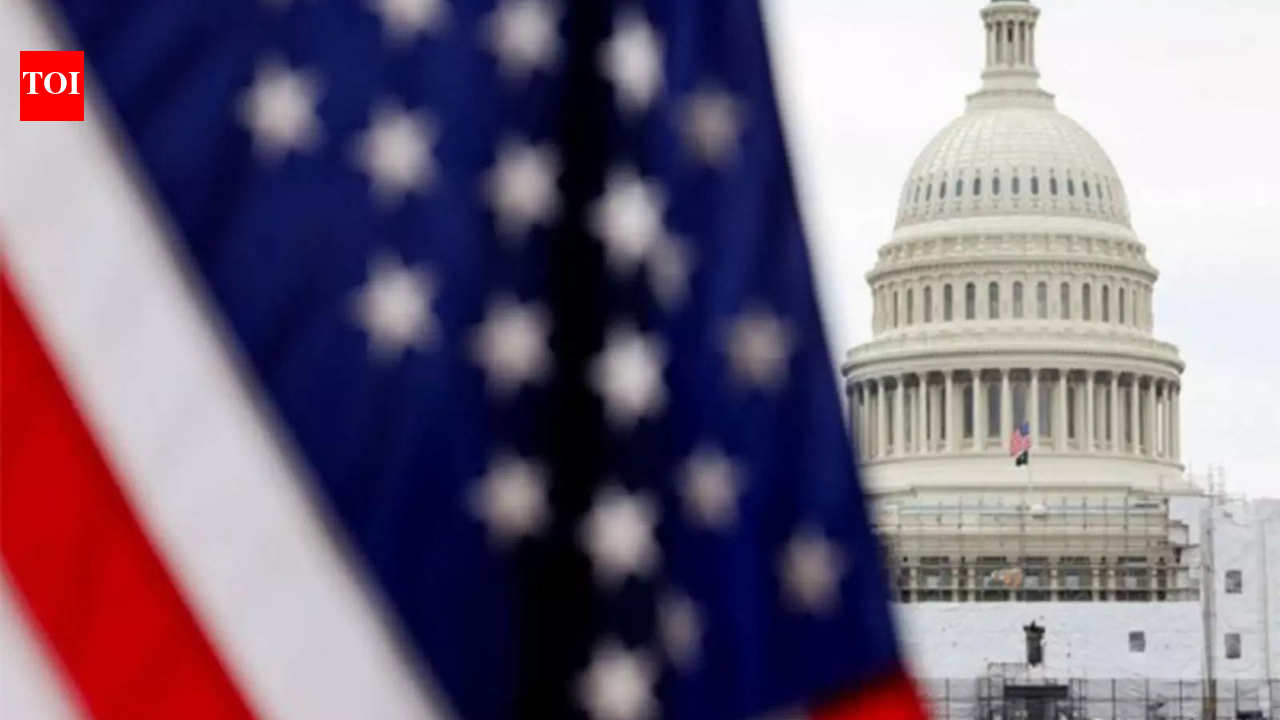
The Trump administration is awarding grants to a group of quantum computing companies, including IBM, in exchange for equity stakes in some of them, deepening Washington’s push to support sectors viewed as critical to domestic supply chains and technological competitiveness, Reuters reported.The move expands the administration’s strategy of taking ownership positions in companies considered strategically important, particularly in areas where the US is seeking to counter China’s influence, including advanced technology and semiconductor-related sectors.The US government has previously taken significant stakes in companies such as Intel and rare-earth miner MP Materials.Under the latest initiative, IBM will receive $1 billion, while GlobalFoundries is set to receive $375 million, according to statements issued by the companies on Thursday.Other firms, including D-Wave Quantum, Rigetti Computing and Infleqtion, are expected to receive around $100 million each in exchange for a US government stake in the companies.Shares of companies involved in the programme rose between 7 per cent and 25 per cent in premarket trading.According to an earlier report by the Wall Street Journal, the administration is awarding a total of $2 billion in grants to nine quantum-computing companies.Quantum computers are designed to process information exponentially faster than traditional supercomputers, although the technology still faces major technical challenges, including high error rates that limit practical applications.GlobalFoundries said it launched a business called Quantum Technology Solutions aimed at scaling manufacturing capabilities for quantum computing hardware, while the US government agreed to take an equity stake of around 1 per cent in the company.IBM also announced plans to launch a company called Anderon in New Albany, New York, which it described as America’s first dedicated quantum chip manufacturing facility.Backed by $1 billion in incentives under the CHIPS Act from the Commerce Department and an additional $1 billion cash contribution from IBM, Anderon will operate as a 300-millimetre quantum wafer foundry.IBM said it would contribute intellectual property, assets and workforce capabilities to Anderon and bring in additional investors as the company expands.“These strategic quantum technology investments will build on our domestic industry, creating thousands of high-paying American jobs while advancing American quantum capabilities,” Commerce Secretary Howard Lutnick said.

Stellantis unveils $70 billion turnaround plan, targets positive cash flow by 2028

ICE cotton sees mixed trend as rain forecasts weaken sentiment

Britney Spears police report sheds new light on singer’s March DUI arrest

-

 Entertainment1 week ago
Conan O’Brien hat tricks as Oscar host
-

 Fashion1 week ago
Italy’s Zegna Group’s Q1 growth boosted by strong organic performance
-
 Business1 week ago
Pound wobbles and bonds suffer as Starmer battles on
-

 Entertainment5 days ago
Where Pete Davidson, Elsie Hewitt stand after breakup: Details revealed
-
 Business1 week ago
Tui issues update on summer jet fuel shortage fears
-

 Tech1 week ago
Microsoft releases rare zero-day free Patch Tuesday update | Computer Weekly
-
 Business1 week ago
Jersey Election 2026: Cost of living concern in St Helier Central
-

 Sports1 week ago
Messi remains MLS’s highest-paid player with $25m salary