

Tech
Air conditioning isn’t the only answer

I recently returned from visiting family in America and was struck by how hot I felt back home in London, despite the temperatures being lower. Partly, this was down to humidity: London is sticky in summer, while Utah, where my uncle lives, is very dry.
But it’s also down to the buildings. My brick house absorbs and retains heat while every building I went to in America was either well ventilated or had air conditioning blasting away.
That contrast got me thinking: as the UK warms, can it keep its homes and workplaces comfortable without relying solely on air-con?
Jesus Lizana, Nicole Miranda and Radhika Khosla at the University of Oxford say that northern Europe is dangerously unprepared for the heat of the near future.
They looked at the coming demand for cooling using the concept of “cooling degree days,” which essentially assesses how often people will need to take extra measures, like switching the air-conditioning on, to keep themselves cool.
They found countries like Nigeria and Chad will see the biggest absolute rise in cooling degree days. “A clear indication that Africa is shouldering the burden of a problem it did not create,” they note.
But they also found that countries in northern latitudes will face the greatest relative increase in uncomfortably hot days.
“Of the top ten countries with the most significant relative change in cooling degree days as global warming exceeds 1.5°C and reaches 2°C, eight are located in northern Europe.”
It gets worse. “Buildings in the northern hemisphere,” they write, “are primarily designed to withstand cold seasons by maximizing solar gains and minimizing ventilation—like greenhouses.”
The solution seems obvious: let’s all get air-con.
Coal-powered air-con?
But Mehri Khosravi says it isn’t that simple. An energy researcher at the University of East London, she warns that:
“Cooling requires huge amounts of energy at the exact moments when demand is already high. In 2022 and 2023, the UK had to briefly restart a coal power plant to keep the lights—and the air conditioners—on.”
Khosravi says the UK and similar countries should instead focus on reducing demand for cooling.
In winter, she says, we rightly focus on better insulation to reduce heating demand, as “it’s a lot harder to warm a house than it is to stop heat escaping in the first place.”
So how do we stop a northern European brick house from heating up in the first place?
Khosravi suggests we look to southern Europe for inspiration, where 35°C summers were common long before climate change. Her suggestions include shading and shutters to block sunlight before it enters a building, natural ventilation to let heat escape in cooler hours, and reflective or light-colored buildings that reflect sunlight.
It’s hard to imagine Scarborough being turned into Santorini any time soon. But while we wait to adapt our buildings for the new normal, Khosravi says we should adapt our behavior too.
In Spain, the hottest hours are for siestas. Outdoor activities are paused, and people are more active in the mornings and evenings. Culturally, they understand that keeping curtains closed during the day and opening windows at night can prevent homes from overheating.
In the UK, heat is still culturally framed as “good weather”. Sunny weekends trigger beach trips, barbecues and more outdoor activity, even when it’s dangerously hot. This mismatch between perception and risk is a major public health challenge.
Smarter cooling
Perhaps there are smarter ways to cool down. Academics in Australia recently published research suggesting a “fan first” approach, even when air-conditioning is installed.
“The approach is simple,” they write: “use electric fans as your first cooling strategy, and only turn on air conditioning when the indoor temperature exceeds 27°C.”
These fans use only a tiny fraction of the electricity used to run air conditioning, but “can make you feel up to 4°C cooler.” In their research, the Australian team increased an office’s air conditioning set-point from 24 to 26.5°C, with supplementary air movement from desk and ceiling fans. This “reduced energy consumption by 32%, without compromising thermal comfort.”
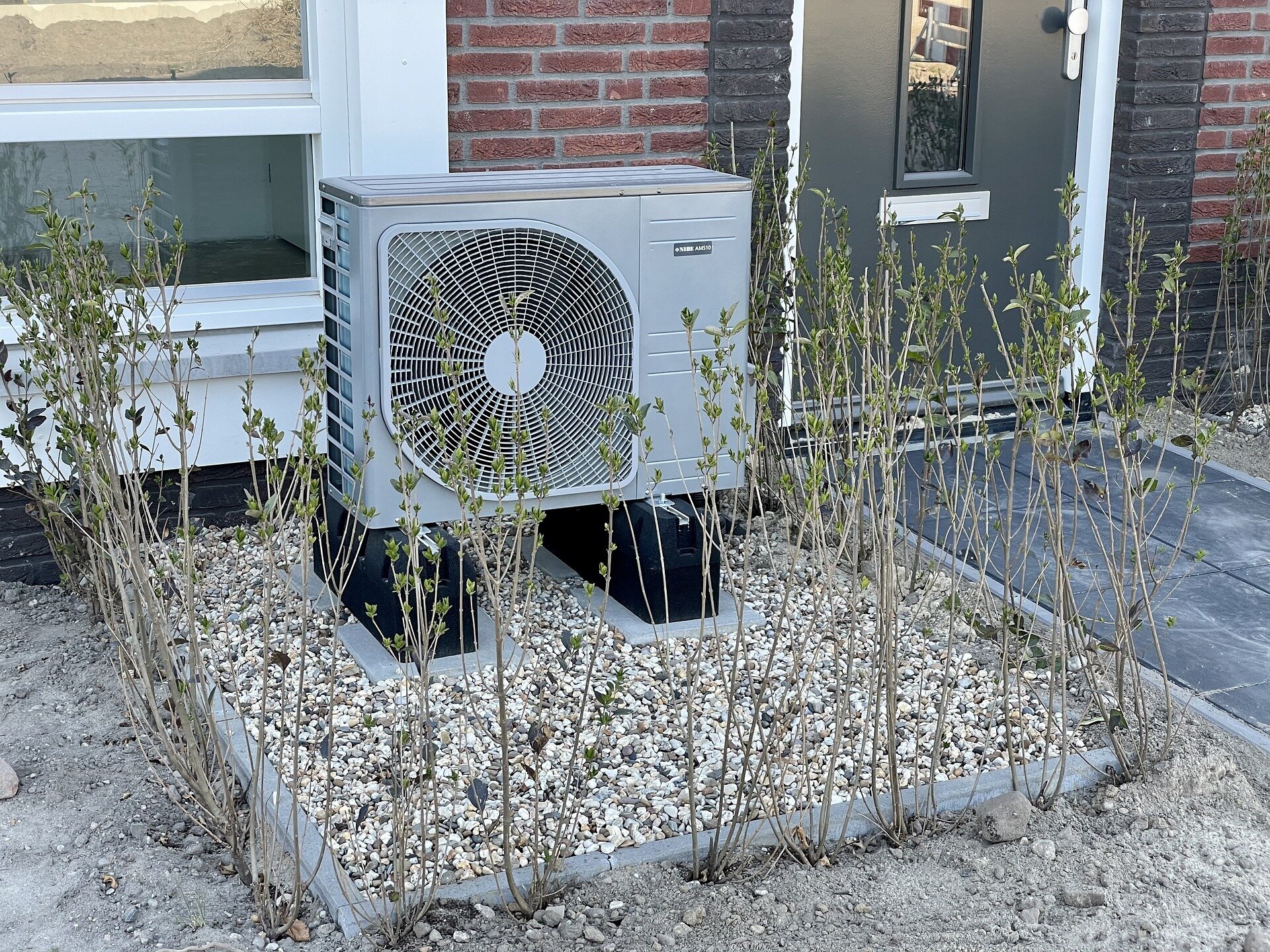
Air conditioning doesn’t have to mean the typical rows of humming white boxes. Heat pumps—already central to Britain’s low-carbon heating plans—can also keep homes cool in summer.
Essentially, they’re able to act like reversible air conditioners: in winter, they draw warmth into a building, and in summer they can run in reverse to push heat out.
Crucially, they do so with far greater efficiency than traditional systems. Theresa Pistochini, an engineer at UC Davis in California, points out that heat pumps can be “anywhere from 200% to 400% efficient,” meaning they move more than twice as much energy (heat) than the energy required to operate them.
Her analysis found that “buying a heat pump today will reduce global-warming impact in almost all geographical locations.”
For households, this could mean one appliance that covers both heating and cooling, slashes energy bills, and avoids the climate-damaging lock-in of conventional air conditioning. For policymakers, heat pumps may offer a way to meet surging cooling demand without blowing the carbon budget.
But heat pumps aren’t a perfect fix. Installation is costly, many older homes will still need upgrades, and there aren’t enough trained engineers. They’ll need further support if they’re to become a mainstream alternative to air-con.
Nonetheless, together with simple measures like fans and shutters, heat pumps point to a smarter approach to cooling. And it could be made even more sustainable if paired with clean energy from rooftop solar.
Homes equipped with solar panels can generate electricity during the hottest parts of the day—exactly when air conditioners or heat pumps are working hardest.
Tom Rogers and colleagues at Nottingham Trent University say solar will play a “pivotal role” in “addressing summer cooling demand and enhancing climate resilience.” They analyzed satellite images to estimate that rooftop solar could provide “nearly one third” of the city’s electricity demand.
The UK is warming, and staying comfortable in hotter summers is a must. But there’s more than one way to cool down. Simple measures like fans, efficient heat pumps and rooftop solar—combined with smarter building design and passive cooling—could keep homes safe, energy use low and emissions in check.
This article is republished from The Conversation under a Creative Commons license. Read the original article.
Citation:
Air conditioning isn’t the only answer (2025, August 28)
retrieved 28 August 2025
from https://techxplore.com/news/2025-08-air-conditioning-isnt.html
This document is subject to copyright. Apart from any fair dealing for the purpose of private study or research, no
part may be reproduced without the written permission. The content is provided for information purposes only.








Google DeepMind’s AlphaFold has already revolutionized scientists’ understanding of proteins. Now, the ability of the platform to design safe and effective drugs is about to be put to the test.
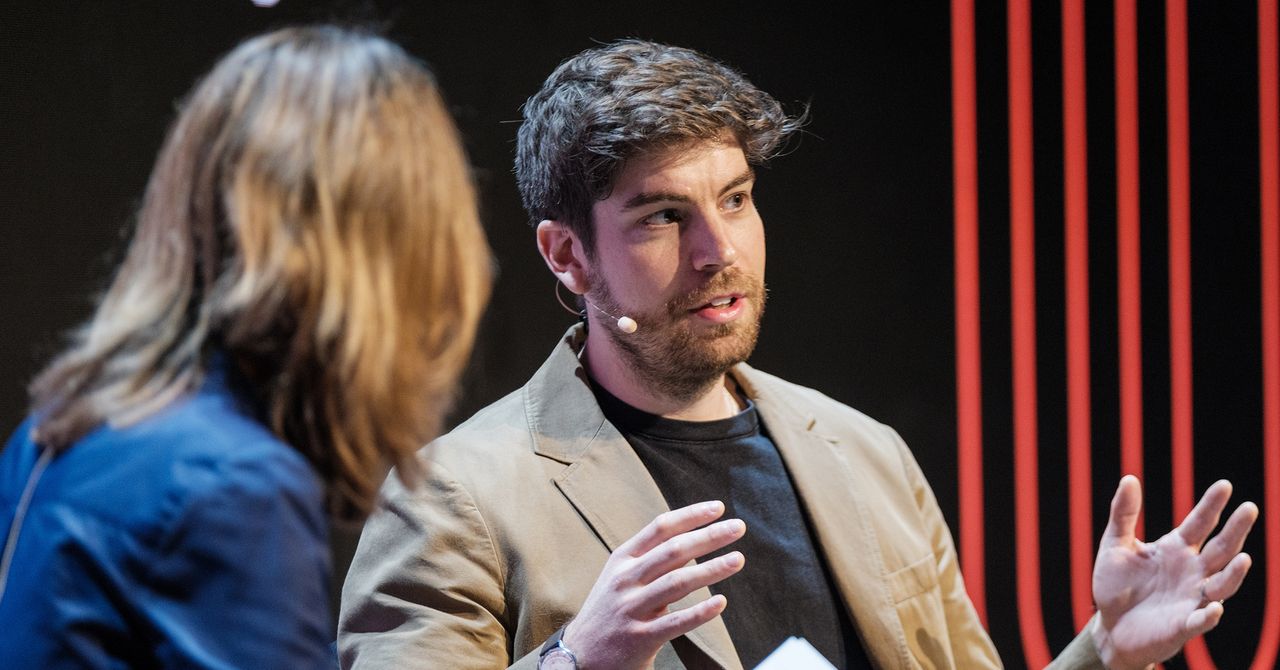
Isomorphic Labs, the UK-based biotech spinoff of Google DeepMind, will soon begin human trials of drugs designed by its Nobel Prize–winning AI technology. “We’re gearing up to go into the clinic,” Isomorphic Labs president Max Jaderberg said on April 16 at WIRED Health in London. “It’s going to be a very exciting moment as we go into clinical trials and start seeing the efficacy of these molecules.”
Jaderberg did not elaborate on the timeline, but it’s later than the company had planned to initiate human studies. Last year, CEO Demis Hassabis said it would have AI-designed drugs in clinical trials by the end of 2025.
Isomorphic Labs was founded in 2021 as a spinoff from Alphabet’s AI research subsidiary, Google DeepMind. The company uses DeepMind’s AlphaFold, a groundbreaking AI platform that predicts protein structures, for drug discovery.
Built from 20 different amino acids, proteins are essential for all living organisms. Long strings of amino acids link together and fold up to make a protein’s three-dimensional structure, which dictates the protein’s function. Researchers had tried to predict protein structures since the 1970s, but this was a painstaking process given the astronomically high number of possible shapes a protein chain can take.
That changed in 2020, when DeepMind’s Hassabis and John Jumper presented stunning results from AlphaFold 2, which uses deep-learning techniques. A year later, the company released an open-source version of AlphaFold available to anyone.
In 2024, DeepMind and Isomorphic Labs released AlphaFold 3, which advanced scientists’ understanding of proteins even further. It moved beyond modeling proteins in isolation to predicting other important molecules, such as DNA and RNA, and their interactions with proteins.
“This is exactly what you need for drug discovery: You need to see how a small molecule is going to bind to a drug, how strongly, and also what else it might bind to,” Hassabis told WIRED at the time.
Since its release, the AlphaFold platform has been able to predict the structure of virtually all the 200 million proteins known to researchers and has been used by more than 2 million people from 190 countries. The breakthrough earned Hassabis and Jumper the Nobel Prize for chemistry in 2024, with the Nobel committee noting that AlphaFold has enabled a number of scientific applications, including a better understanding of antibiotic resistance and the creation of images of enzymes that can decompose plastic.
Earlier this year, Isomorphic Labs announced an even more powerful tool, what it calls IsoDDE, its proprietary drug-design engine. In a technical paper, the company touts that the platform more than doubles the accuracy of AlphaFold 3.
The startup has formed partnerships with Eli Lilly and Novartis to work together on AI drug discovery and is also advancing its own “broad and exciting pipeline of new medicines” in oncology and immunology, Jaderberg said.
“The exciting thing about the molecules that we’re designing is because we have so much more of an understanding about how these molecules work, we’ve engineered them to be very, very potent,” Jaderberg told the audience at WIRED Health. “You can take them at a much lower dose, and they’ll have lower side effects, off target effects.”
Last year, Isomorphic appointed a chief medical officer and announced it had raised $600 million in its first funding round to gear up for clinical trials. Meanwhile, the company has been building a clinical development team. Its mission is to “solve all disease.”
“It’s a crazy mission,” Jaderberg said. “But we really mean it. We say it with a straight face, because we believe this should be possible.”

With huge crowds set to descend on London for the city’s iconic marathon this weekend, IT services provider Tata Consultancy Services (TCS), in partnership with Neurun, has launched a map-based tool powered by artificial intelligence (AI) to help participants and spectators navigate the event.
TCS RunConcierge is said to act as a “digital brain” for the London Marathon, bringing together official guidance, route support and course information in real time – a useful tool for this mass participation event, which saw more than 56,000 runners cross the finish line in 2025 and hundreds of thousands of spectators lining the 26.2-mile route.
Powered by Google Gemini, the platform is designed to deliver instant and reliable guidance for users, whether that be runners seeking information about start line logistics or the location of drinks stops – which will be very much needed with wall-to-wall sunshine forecast on the day – or supporters wishing to locate the best spot from which to cheer on participants or travel as quickly as possible between viewing points.
Users can see their current location on the map, ask for directions to key event destinations and access pre-loaded routes with direct links to Google Maps navigation. The tool also suggests personalised follow-up questions and features voice activation to enable hands-free use on the move. And with 60 languages supported, visitors from all over the world will be able to benefit from the event guidance.
For runners specifically, the immersive 3D map includes an elevation tracker, which could help them plan their strategy.
The partnership between TCS and Neurun is said to be built on a foundation of continuous innovation. New back-end capabilities include a self-serve admin portal that allows event organisers to manage RunConcierge independently, as well as a unique internal AI agent that tests the platform to help maintain content quality and identify improvements
Vinay Singhvi, head of UK and Ireland at Tata Consultancy Services, described the London Marathon as a monumental event, for which its goal is to use technology to make the experience as seamless and enjoyable as possible.
“Our partnership with Neurun allows us to innovate at pace, and the enhanced TCS RunConcierge is a prime example of how we are using AI to solve complex logistical challenges, providing runners and spectators with a trusted companion for the moments that matter most,” he said.
Neurun founder Cade Netscher said its partnership with TCS had been instrumental in developing the RunConcierge tool for the world’s most prestigious marathons, with previous successful deployments at the Sydney and New York City events.
“For London, we’ve integrated the latest AI advancements to create our most powerful and user-friendly version yet. We are excited to see how it helps thousands of people enjoy a more connected and stress-free marathon weekend,” he said.
Separately, in a demonstration of digital healthcare technology in action, TCS has created a digital twin of a para-athlete’s heart, which uses sensors and AI to monitor her heart during training sessions.
The para-athlete, Milly Pickles, is aiming to complete the London Marathon in under four-and-a-half hours next year, and is harnessing digital healthtech to reach her goal.
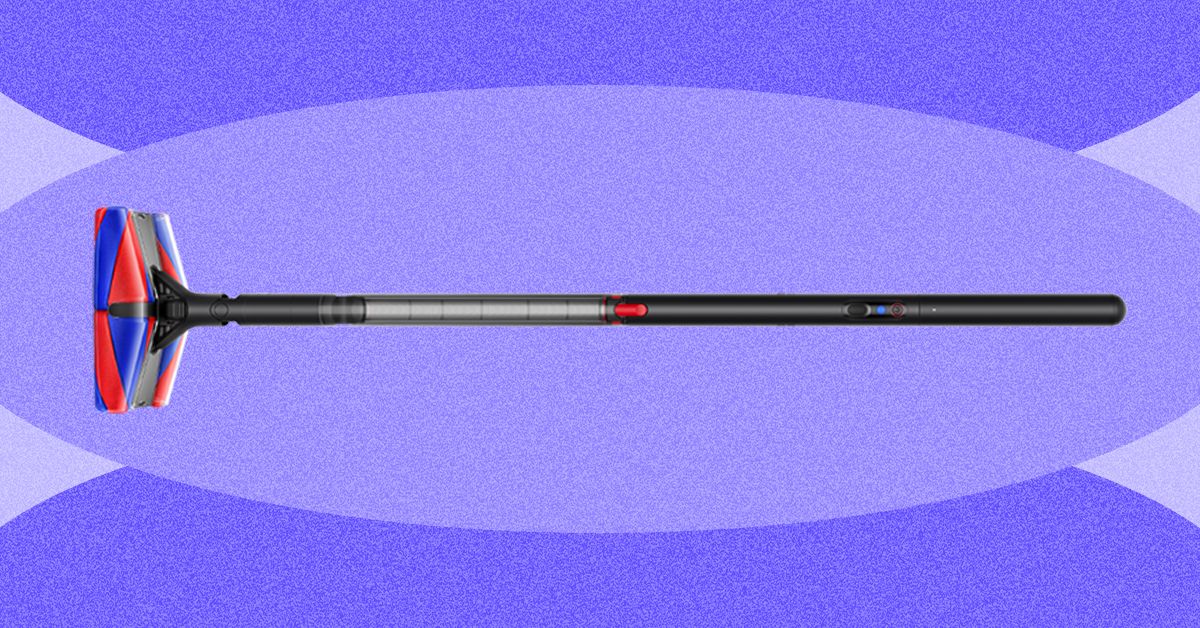
The vacuum connects to Dyson’s app, where you’ll find resources such as how to empty the dustbin and wash the filter, but not much else. It can tell you how long your last vacuuming session was, but no other details, so it’s not as interesting or as informative as the data you’d get from a robot vacuum.
Fluffy Face
Photograph: Nena Farrell

Photograph: Nena Farrell
This vacuum’s full name is the Dyson PencilVac Fluffycones, aptly named for the four fluffy cones inside the vacuum head. Dyson’s previous recent stick vacuums all have the Fluffy Optic cleaner head for vacuuming hard floors. While both have a fluffy roller bar, the Fluffycones have a conical shape that Dyson says will detangle and remove hair rather than the hair getting stuck all around it. It did detangle hair for me, but when I vacuumed up larger portions of hair from my bathroom floor (a place where many a stray hair comes to die at the hands of my hairbrush, comb, and towel), it actually bunched up the hair into a ball and spat it back out a few times before finally sucking it up into the dustbin.
Video: Nena Farrell
While the hair results weren’t great, I did love this vacuum for sucking up the cat litter that constantly plagues my home. It did a great job with flour on my hard floors and a solid job with dry oats, but it occasionally just bumped the oats around instead of immediately sucking them up. I was even able to quickly run it over the top of my carpet, but rolling back and forth on the carpet a bunch did stop the cones.
The head is designed to move in just about any direction. The cones make it easy to swivel around, and the green illuminating lights on the front and back help you spot any debris you might otherwise miss. With its compact size that fits in tricky corners, the PencilVac finally lets me vacuum up all the litter around the base of my toilet and pedestal sink. It’s part of what makes me reach for this vacuum over and over, even after my robot vacuum cleaned the day before.
Forward Momentum

Photograph: Nena Farrell
Do I think this vacuum replaces Dyson’s existing cordless options? No. But Dyson has other new vacuums planned that could do that. This vacuum has a specific design for a specific use: smaller homes with entirely hard floors. There’s an accessibility opportunity here, too. This lightweight vacuum can be much easier to use for folks with mobility and strength restrictions. The magnetic charging base also makes it easy to store and access for a variety of people, whether they struggle with fine motor skills or can’t bend over and grab the vacuum.


AI-Designed Drugs by a DeepMind Spinoff Are Headed to Human Trials

US justice department drops probe into Fed chairman Jerome Powell

Offset teases new album plans after recent shooting accident

-

 Fashion1 week ago
France’s LVMH Q1 revenue falls 6%, shows resilience amid Iran war
-

 Tech1 week ago
CYBERUK ’26: UK lagging on legal protections for cyber pros | Computer Weekly
-

 Sports5 days ago
WWE WrestleMania 42 Night 2: Live match results and analysis
-

 Sports5 days ago
NCAA men’s gymnastics championship: All-time winners list
-
 Business1 week ago
PepsiCo earnings beat estimates as North American food business improves
-

 Sports1 week ago
Faheem Ashraf backs Islamabad United’s push, calls league a ‘career-changing platform’
-

 Tech1 week ago
Anthropic Plots Major London Expansion
-
 Business1 week ago
Oil prices fall again amid Middle East ceasefire hopes