

Tech
Amazon is overhauling its devices to take on Apple in the AI era

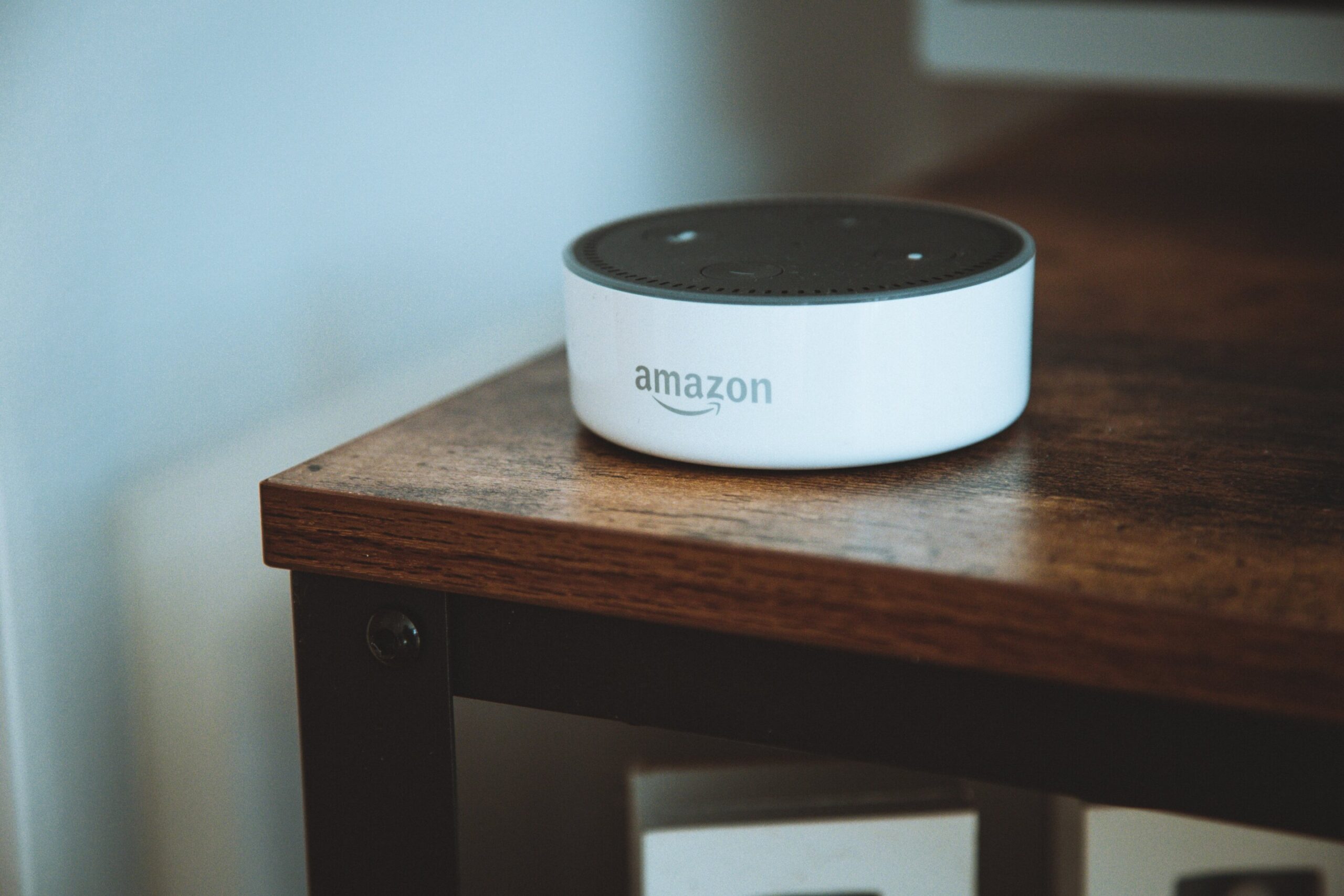
When Amazon.com Inc. recruited longtime Microsoft Corp. product chief Panos Panay in 2023 to run its devices division, his new colleagues thought the e-commerce giant was preparing to take its consumer gadget line upscale.
Panay pushed back on the idea during an all-hands meeting with thousands of engineers from the Alexa, Echo and Fire TV brands. But his vision for the business didn’t come into clearer focus until this week, when the executive unveiled a suite of new products at an event in New York. The message: Panay aims to build devices that people want to show off in their homes and use—at every price tag. “The idea is putting a lot of detail into every product,” he said in an interview.
Though most of the new devices, including updated smart speakers, e-book readers, home security tools, TV accessories and other offerings, do carry higher prices, the company’s more affordable products are equally key, Panay said.
“The superpower of designing for cost is such a rare talent,” he said. “When you just anchor on that and now you’re making great products and you can serve everyone—that’s how we can have an impact on the world.”
Ralf Groene, a former top designer at Microsoft who came out of retirement earlier this year to become head of design at Amazon, echoes that sentiment. “There’s lots of sophistication in the material, but we don’t want you to be like, ‘Oh, it’s so sophisticated.’ It needs to blend in.” He compares it to not noticing your shoes when you run. Or when you play the guitar and are “just into the music,” Groene said.
While Panay is thrilled with Amazon’s slick-looking new Echo speakers and Kindle e-readers, he talks most proudly about an updated $40 4K Fire TV stick—an unglamorous peripheral that lets people stream programming on their television. That product has a new operating system with improved speed and performance “on the cheapest possible 4K device,” he said.
“In my heart, that’s a great product,” Panay said, “because so many can afford that and get an incredible experience.”
Still, making more premium hardware—something Panay calls the “signature” line—to generate higher profit margins, a la Apple, is also a major part of the goal. Amazon’s hardware division has long been seen as a loss leader—with the real money coming from subscriptions and purchases made through the Alexa voice assistant.
Panay disputes that view. While the overall division continues to lose money, some product lines are profitable, and others are heading in that direction, he said.
Panay also oversees Amazon’s efforts beyond Alexa and devices, including its push into satellite internet through Project Kuiper and autonomous vehicles with Zoox. The profit drive has been a priority for the group in recent years as Chief Executive Officer Andy Jassy seeks to cut costs and reform a unit that sometimes operated as a borderline research lab.
“My belief is that our job is to make devices the next big business at Amazon,” Panay said. To accomplish that—and continue building the organization—certain levers need to be pulled to make the business more successful, he said.
The revamped devices could help. Other than the Fire TV stick, most of the new Amazon-branded hardware has a higher price tag. The latest Echo Show 8, for instance, is $80 more than the current model. And the new color Kindle Scribe is the priciest Amazon e-reader by about $200. With those higher prices, you’re also getting a much better product, Panay said. But you’re not getting an overhaul built around high-end metals or the world’s priciest fabrics.
“The first transformation is just elevating those products to the next generation of what they should be,” Panay said. “It’s just the beginning of that.”
His department’s top leaders assemble every Thursday for confidential planning discussions, and they’ve created a road map for the next three years of products, Panay said. A key first step was releasing an AI-fueled version of Amazon’s voice assistant, Alexa+, a rollout that began in March. That set the stage for a device strategy: “Great products made even better through ambient AI,” Panay said.
Though Alexa+ can run on Amazon gadgets dating back more than five years, the latest hardware is the first to include the system already installed. The devices also have new features.
The updated Echo Show—a smart speaker with a screen—combines AI with sensors to know who just walked up to the device. It then immediately displays a person’s preferences and can serve up tailored podcasts or photos. The Kindle, meanwhile, can upload a user’s notes to help fulfill Alexa queries made on speakers.
While the company is now confident enough to include Alexa+ as the default option on its new devices, the rollout hasn’t been entirely smooth. Users have complained about slow deployment, broken compatibility with some appliances and the system misunderstanding commands. Still, Panay is all in.
“This is not an easy transition,” he said, given that hundreds of millions of people use the current version. Still, “an Alexa+ home is probably the most exciting home product that I’ve ever seen,” he said.
Amazon already has double-digit millions of users running the new Alexa, which costs either $20 per month or comes free with a Prime subscription, but the company is working at full speed to improve it, Panay said. “Everybody will want it and use it,” he said, adding that it will take time to resolve kinks across every use case.
Daniel Rausch, Panay’s lieutenant in charge of Alexa and Echo, said the results are already promising: The new interface boasts two to three times more usage than the old-school Alexa—for those who have it. (The regular Alexa still has hundreds of millions of users).
In a world where people are glued to their smartphones and computer displays, Panay wants to steer Amazon users in the other direction. That means creating AI devices that work in the background and require less screen time.
But plenty of other companies are chasing that dream, including Apple, Alphabet Inc.’s Google and Meta Platforms Inc. Even Panay’s predecessor, Dave Limp, had been exploring the idea at Amazon.
For Amazon to be a true contender in this market, the company will finally need to crack the code on mobile devices. A decade ago, it tried and failed with the Fire Phone—back when Panay was at Microsoft designing tablet-laptop hybrids. The company is working on future earbuds and smart glasses that tap into Alexa, but the real win will be something entirely new that’s portable and built around AI.
“There’s an entire paradigm shift of user interfaces that’s coming—I think the way people interact with their devices is being challenged,” Panay said. “I am a firm believer in ambient AI and being able to talk to something, have that conversation wherever, whenever, however you want to. I think it’ll take different form factors to accomplish that.”
To help, Amazon acquired a startup called Bee in August. That company developed a wristband that can record a person’s day and send the user a summary to a phone app. Though Amazon didn’t discuss the idea during its product unveiling Tuesday, it aims to eventually update the device and tie it into Alexa+.
To reshape Amazon’s hardware group, Panay has brought in collaborators from his Microsoft days, as well as veterans from Amazon itself. The team includes Aidan Marcuss, who worked on Windows until last year and now heads Amazon’s TV business, as well as J Allard, the co-inventor of Xbox who now leads a team focused on new form factors.
Ring creator Jamie Siminoff, meanwhile, returned earlier this year. Perhaps the most significant addition is the German-born Groene, who left his Microsoft role when Panay exited.
When Groene joined Amazon eight months ago, his first order of business was bringing all of the company’s designers—across hardware, software and user experience—under one roof. That created a structure similar to the way Apple develops its products.
Before the shift, design was implemented on a product-by-product basis by individual product managers. While this structure allowed for efficient product creation, there were silos that prevented teams from building on one another’s achievements, Groene said. It also yielded a slate of mostly utilitarian products that, aside from the Amazon smile logo, shared few common design traits.
Two other major changes: involving design from day one of the product process and making rapid prototyping a core part of development. Rausch, who has worked in Amazon’s devices division since 2009, said the biggest change is that sketch artists, prototypers, material scientists and engineers now work together from the start.
“Bringing it all together much sooner, iterating on the product much sooner, setting the bar higher much sooner lets you end up with something much more complete and just frankly better,” he said.
Amazon is launching its new products just weeks after Apple rolled out new iPhones—some of the company’s biggest updates in years—proving that this decades-old form factor is here to stay.
Meanwhile, Meta released new smart glasses with a display, showing that companies outside of Apple are eager and capable of introducing entirely new categories of devices.
OpenAI also looks to become a contender in mobile hardware, with ex-Apple designer Jony Ive working on a bevy of new AI-centric gadgets.
For Amazon to become a true leader in devices, it will need breakthroughs that go beyond its current lineup. It will also need to convince users that Alexa+ and its AI is worth paying for—lest they revert to or downgrade to the old version of Alexa. In any case, it will take years for the company’s strategy to take shape, Groene said.
“It’s really a journey,” he said. “In 12 months, you’ll see the story one step further, but it’s still not the full picture. It’ll take its time.”
2025 Bloomberg L.P. Distributed by Tribune Content Agency, LLC.
Citation:
Amazon is overhauling its devices to take on Apple in the AI era (2025, October 4)
retrieved 4 October 2025
from https://techxplore.com/news/2025-10-amazon-overhauling-devices-apple-ai.html
This document is subject to copyright. Apart from any fair dealing for the purpose of private study or research, no
part may be reproduced without the written permission. The content is provided for information purposes only.












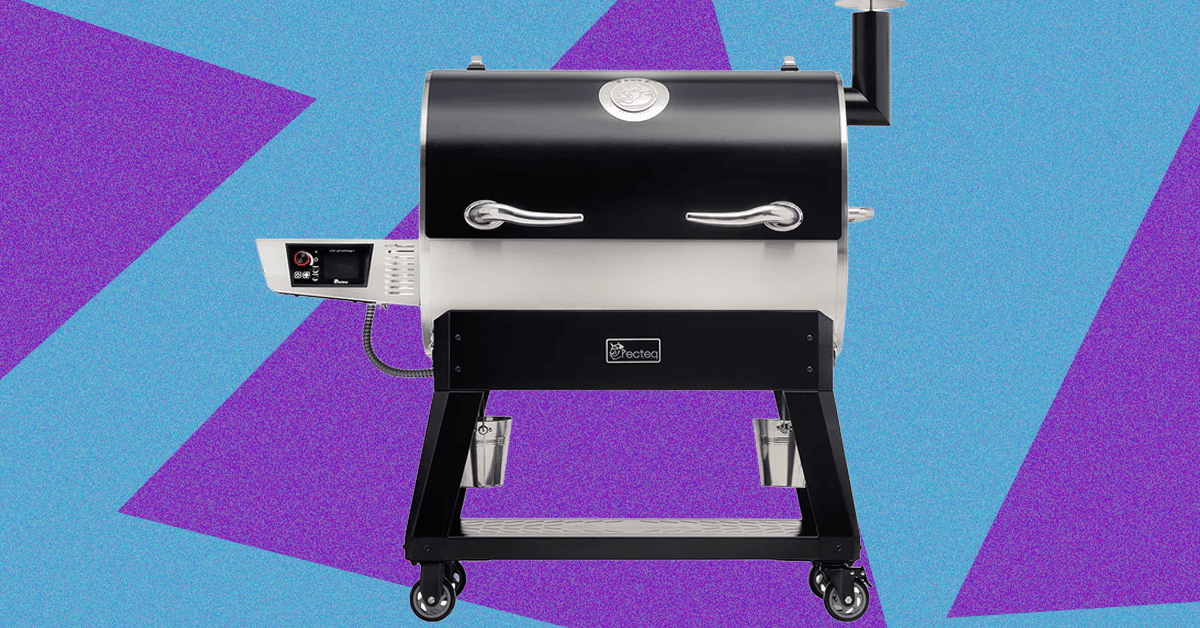
While my love of smoked meats is well-documented, my own journey into actually tending the fire started just last spring when I jumped at the opportunity to review the Traeger Woodridge Pro. When Recteq came calling with a similar offer to check out the Flagship 1600, I figured it would be a good way to stay warm all winter.
While the two smokers have a lot in common, the Recteq definitely feels like an upgrade from the Traeger I’ve been using. Not only does it have nearly twice the cooking space, but the huge pellet hopper, rounded barrel, and proper smokestack help me feel like a real pitmaster.
The trade-off is losing some of the usability features that make the Woodridge Pro a great first smoker. The setup isn’t as quite as simple, and the larger footprint and less ergonomic conditions require a little more experience or patience. With both options, excellent smoked meat is just a few button presses away, but speaking as someone with both in their backyard, I’ve been firing up the Recteq more often.
Getting Settled
Photograph: Brad Bourque
Setting up the Recteq wasn’t as time-consuming as the Woodridge, but it was more difficult to manage on my own. Some of the steps, like attaching the bull horns to the lid, or flipping the barrel onto its stand, would really benefit from a patient friend or loved one. Like most smokers, you’ll need to run a burn-in cycle at 400 degrees Fahrenheit to make sure there’s nothing left over from manufacturing or shipping. Given the amount of setup time and need to cool down the smoker after, I would recommend setting this up Friday afternoon if you want to smoke on a Saturday.
The main job of Google Chrome is to give you a window to the web. With so much engaging content out there on the internet, you may not have given much thought to the browser framework that serves as the container for the sites you visit.
You’d be forgiven for still using the default toolbar configuration that was in place when you first installed Chrome. But if you take a few minutes to customize it, it can make a significant difference to your browsing. You can get quicker access to the key features you need, and you may even discover features you didn’t know about.
If you’re reading this in Chrome on the desktop, you can experiment with a few customizations right now—all it takes is a few clicks. Here’s how the toolbar in Chrome is put together, and all the different changes you can make.
The Default Layout
Take a look up at the top right corner of your Chrome browser tab and you’ll see two key buttons: One reveals your browser extensions (the jigsaw piece), and the other opens up your bookmarks (the double-star icon). There should also be a button showing a downward arrow, which gives you access to recently downloaded files.
Right away, you can start customizing. If you click the jigsaw piece icon to show your browser extensions, you can also click the pin button next to any one of these extensions to make it permanently visible on the toolbar. While you don’t want your toolbar to become too cluttered, it means you can put your most-used add-ons within easy reach.
For the extension icons you choose to have on the toolbar, you can choose the way they’re arranged, too: Click and drag on any of the icons to change its position (though the extensions panel itself has to stay in the same place). To remove an extension icon (without uninstalling the extension), right-click on it and choose Unpin.
Making Changes

Click the three dots up in the top right corner of any browser window and then Settings > Appearance > Customize your toolbar to get to the main toolbar customization panel, which has recently been revamped. Straight away you’ll see toggle switches that let you show or hide certain buttons on the toolbar.

“The trade-off isn’t only ethical or economic,” Andreaux adds. “It’s also about reliability, privacy and personal security.”
Abed Kataya, digital content manager at SMEX, a Beirut-based digital rights organization focused on internet policy in the Middle East and North Africa, says piracy in the region is shaped less by culture than by structural barriers.
“I see that piracy in MENA is not a cultural choice; rather, it has multiple layers,” Kataya tells WIRED Middle East.
“First, when the internet spread across the region, as in many other regions, people thought everything on it was free,” Kataya says. “This perception was based on the nature of Web 1.0 and 2.0, and how the internet was presented to people.”
Today, he says, structural barriers still lead many users towards illegal platforms. “Users began to watch online on unofficial streaming platforms for many reasons: lack of local platforms, inability to pay, bypassing censorship and, of course, to watch for free or at lower prices.”
Payment access also remains a major factor. “Not to mention that many are unbanked, do not have bank accounts, lack access to online payments, or do not trust paying with their cards and have a general distrust of online payments,” Kataya adds.
Algerian students also share external hard drives loaded with television series, while in Lebanon streaming passwords are frequently shared across households. In Egypt, large Telegram channels distribute content across different genres, including Korean dramas, classic Arab films and underground music.
“We grew up solving problems online,” says Mira. “When something is blocked, you find a way around it. It’s … a fundamental human instinct.”
Streaming Platforms Adapting
Andreaux says StarzPlay has tried to address some of the payment barriers that limit streaming adoption in the region. “StarzPlay recognized early that payment friction was a regional barrier to adoption,” he says. “That’s why we invested in flexible subscription models and alternative payment methods, including telecom-led billing options that make access easier across different markets.”
At the same time, international media companies are working together to combat piracy through the Alliance for Creativity and Entertainment (ACE), a coalition of film studios, television networks and streaming platforms that targets illegal distribution of films, television and sports content. Its members include global companies such as Netflix as well as regional players like OSN Group, which operates the streaming service OSN+ across the Middle East and North Africa.
Kataya notes that legitimate streaming platforms are still expanding across the region. “The user base of official streaming platforms has been growing in the region,” he says. “For example, Shahid, the Saudi platform, is expanding and Netflix has dedicated packages for the region.”
“Other players, like StarzPlay and local platforms in Egypt, are also finding their place,” Kataya adds. “Social media also plays a huge role, especially when a film is widely discussed or controversial.”
Piracy carries legal and security risks, Andreaux says. “Rather than just ‘free streaming’, piracy exposes consumers to malware and insecure payment channels,” he says. “It also weakens investment in local content by depriving creators of revenue and reducing jobs.”
But the structural barriers described by users across the region remain. For many viewers in North Africa and the Levant, the challenge is not choosing between piracy and legality—it is whether legitimate access exists at all.


Two ships hit near Strait of Hormuz as fears grow of oil price rises

IRGC Claims Missile Strikes on US Aircraft Carrier Amid Escalation

Maggie Gyllenhaal details emotional reunion with brother Jake Gyllenhaal

ICE cotton ticks higher on crude oil rally

Pakistan carries out precision strikes on seven militant hideouts in Afghanistan

Eye-popping rise in one year: Betting on just gold and silver for long-term wealth creation? Think again! – The Times of India

-
 Fashion1 week ago
ICE cotton ticks higher on crude oil rally
-
 Politics1 week ago
Pakistan carries out precision strikes on seven militant hideouts in Afghanistan
-
Business1 week ago
Eye-popping rise in one year: Betting on just gold and silver for long-term wealth creation? Think again! – The Times of India
-

 Sports1 week ago
Kansas’ Darryn Peterson misses most of 2nd half with cramping
-

 Entertainment1 week ago
Saturday Sessions: Say She She performs "Under the Sun"
-

 Entertainment1 week ago
Viral monkey Punch makes IKEA toy global sensation: Here’s what it costs
-

 Tech1 week ago
These Cheap Noise-Cancelling Sony Headphones Are Even Cheaper Right Now
-

 Sports1 week ago
Floyd Mayweather to come out of retirement again