

Politics
Americans’ support for Palestinians rises: survey

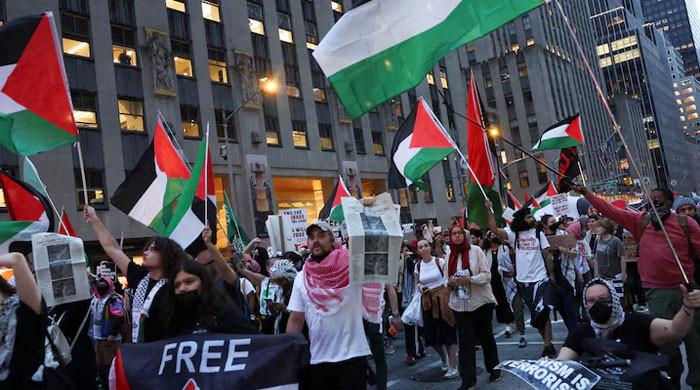
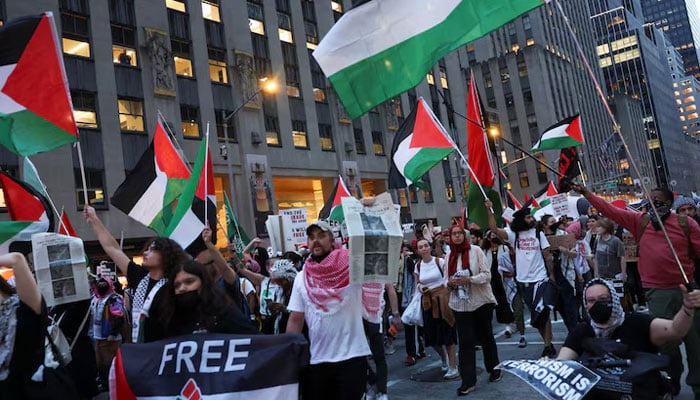
A new national survey suggested that the United States citizens’ attitudes towards Israel have worsened significantly in recent years, largely driven by increasingly negative opinions among Democrats and independent voters, Fox News reported.
The poll, conducted by NBC News, comes at a time when support for Israel has become a contentious issue within the Democrats, more than two years after the outbreak of the Israel–Hamas war in Gaza.
According to the survey conducted between February 27 and March 2, only 32% of Americans currently hold a positive view of Israel, while 39% express a negative opinion. The results mark a notable shift compared with three years ago, when public sentiment was more positive, with 47% viewing Israel favourably and 34% negatively.
Much of the decline in positive sentiment appears to stem from changes in opinion among Democrats and independent voters, according to the survey.
In 2023, Democratic views on Israel were fairly evenly split, with 34% expressing positive opinions and 35% negative ones. The latest poll, however, showed a sharp shift, with only 13% of Democrats now viewing Israel positively and 57% expressing negative views.
Among independents, favourable opinions have also dropped substantially, moving from a 40% positive to 22% negative balance previously, to 21% positive and 48% negative in the latest findings.
Republican attitudes towards Israel, by contrast, have seen only a modest change. Positive views among Republicans declined from 63% in 2023 to 54% now, while negative opinions rose slightly from 12% to 18%, according to the survey.
The poll was conducted during a period when the US and Israel had begun military strikes against Iran. It also found that Americans are now nearly evenly divided on whether they feel greater sympathy for Israelis or Palestinians.
In 2013, Americans expressed stronger sympathy for Israel by a margin of 45% to 13%. Today, the gap has effectively disappeared, with 40% saying they sympathise more with Israel and 39% indicating greater sympathy for Palestinians.
The shift has been particularly pronounced among Democrats. In 2013, they leaned towards Israel by a margin of 34% to 18%. The latest poll showed a dramatic reversal, with 67% now saying they sympathise more with Palestinians and only 17% with Israel.
Independents have also moved in a similar direction. Thirteen years ago, they were more sympathetic to Israel by a 37% to 10% margin. Now, they lean towards Palestinians by 37% to 27%.
Republicans, however, continue to show strong support for Israel. In 2013 they favoured Israel by a 67% to 8% margin, which has remained largely consistent today at 69% to 13%.
The findings also highlighted a clear generational divide, with younger Americans showing a greater decline in favourable views and sympathy towards Israel compared with older age groups.
While most Republicans remain broadly supportive of Israel, the ongoing war in Gaza has intensified disagreements among Democrats, with the issue emerging as a significant point of debate in the party’s 2026 primary contests.
Israel’s military in Gaza over the past two and a half years has resulted in more than 72,000 deaths, according to health authorities in the Palestinian territory.
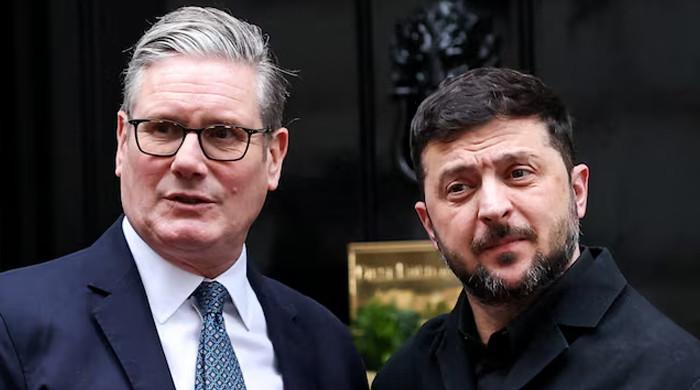
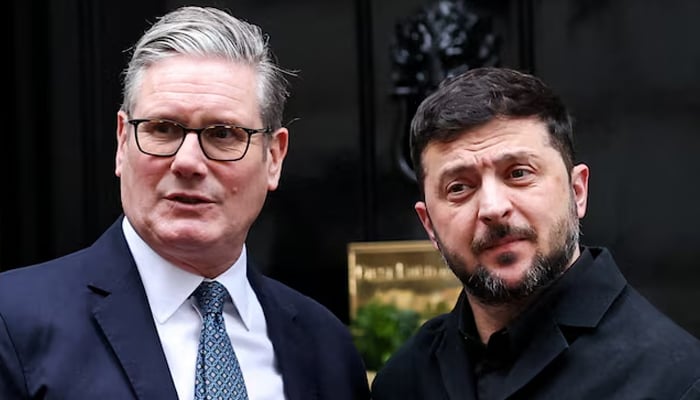
Britain and Ukraine are set to sign a defence partnership aimed at addressing the threat of low-cost drones, Downing Street announced ahead of a visit from Ukraine’s leader on Tuesday.
Since the start of the US-Israeli war with Iran late last month, Tehran has mainly used ballistic missiles to attack Israel but has relied on drones to strike targets in Gulf states.
The UK-Ukraine agreement will “boost global defensive capability against the proliferation of low-cost, high-tech military hardware, including drones”, British Prime Minister Keir Starmer’s office said in a statement.
It seeks to leverage Ukraine’s “expertise” in fending off drones from its years-long war with Russia, as well as Britain’s industrial base, “to manufacture and supply drones and innovative capabilities”.
“Drones, electronic warfare and rapid battlefield innovation are now central to national and economic security, and that has only been further magnified by the conflict in the Middle East,” Starmer said in the statement.
“By deepening our defence partnerships, we are strengthening Ukraine’s ability to defend itself from Russia’s brutal, ongoing attacks, while ensuring the UK and our allies are better prepared to meet the threats of the future.”
The deal would also provide 500,000 pounds ($670,000) to fund an “AI Centre of Excellence” to be integrated into the Ukrainian Ministry of Defence.
Ukrainian President Volodymyr Zelensky’s visit to London on Tuesday comes after he expressed concerns that global attention on the Middle East conflict could overshadow Ukraine’s war with Russia.
Ukraine’s European allies have vowed to keep up their support for Kyiv after Washington partly rolled back sanctions against Moscow to cool oil prices sent soaring by the Middle East war.
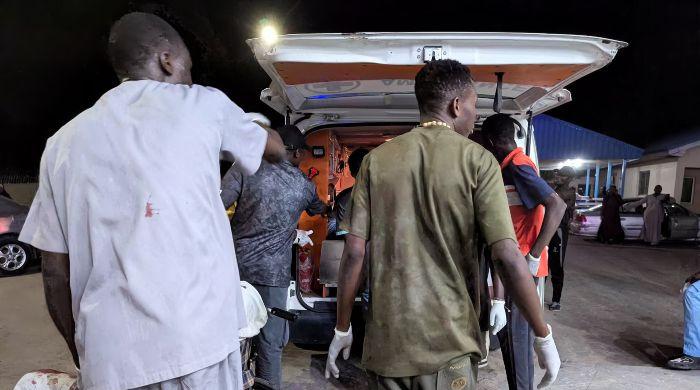
- Security tightened, investigation underway in Maiduguri.
- Multiple blasts hit post office, market, hospital, and Kaleri.
- Security say attacks follow pattern of Boko Haram insurgency.
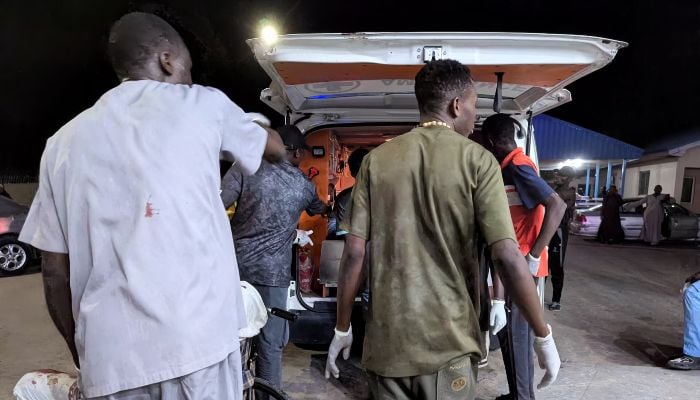
MAIDUGURI: At least 23 people were killed and 108 injured in suspected multiple suicide-bomb attacks in Maiduguri city, capital of Nigeria’s insurgency-hit northeastern state of Borno, the state police command said in a statement late on Monday.
Borno is at the heart of Nigeria’s extremist insurgency for the past 17 years, which has claimed thousands of lives and displaced 2 million people.
The first blast went off at a post office in the city centre and was immediately followed by another at the popular Monday market nearby, two security sources and three Maiduguri residents told Reuters on Monday.
One blast hit the University of Maiduguri Teaching Hospital, and another struck the eastern neighbourhood of Kaleri, all in the early evening of Monday.
“Preliminary investigation reveals that the incidents were carried out by suspected suicide bombers,” the state police said in the statement, without saying who was responsible.
Police said normalcy had been restored and security forces had tightened patrols across the city to prevent further attacks, adding that an investigation into the circumstances of the attack was underway.
Security analysts said the attacks had the hallmarks of insurgent group Boko Haram, which together with Daesh West Africa Province, has been escalating attacks against the Nigerian military in Borno.
Maiduguri is among the safest cities in Borno state but at least five worshippers were killed and 35 others injured on Christmas Eve last year when a suspected suicide bomber detonated an explosive inside a mosque.
Besides the insurgency in the northeast, militants have also been expanding in the northwest of the country, where bandit gangs have caused havoc through kidnappings and attacks on communities and schools.
The United States carried out air strikes in Nigeria’s northwest in December and has begun deploying a small number of troops to train Nigerian forces confronting militants.
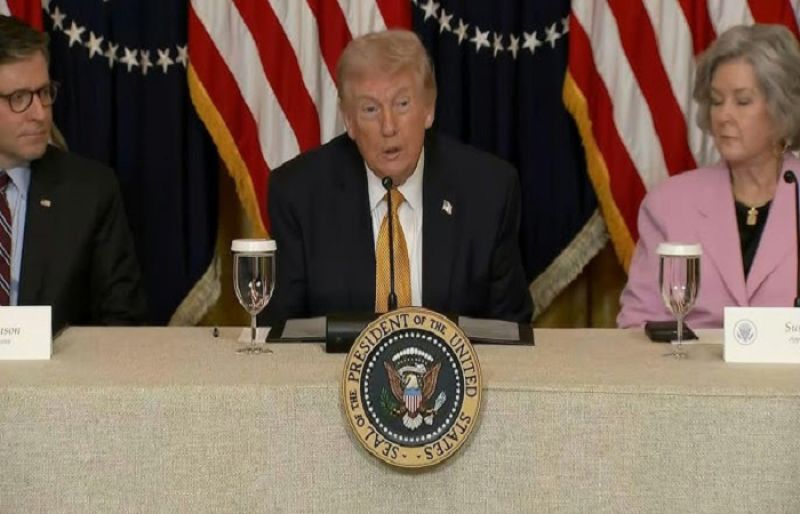

“For 40 years, we’re protecting you, and you don’t want to get involved,” Trump told reporters. “We strongly encourage the other nations to get involved with us and get involved quickly and with great enthusiasm,” he added.
Meanwhile, Iran vowed at the United Nations on Monday that it would not submit to “lawless aggression”, and said its citizens were in “grave danger” from US and Israeli strikes.
At the UN Human Rights Council in Geneva, where countries were discussing the rights situation in Iran — notably following its deadly crackdown on protesters in recent months — Tehran said the focus instead should be on the Middle East war.
“The most urgent and fundamental human rights issue concerning Iran is the imminent threat to the lives of 90 million people whose lives are in immediate and grave danger under the shadow of reckless military aggression,” said Ali Bahreini, Iran’s ambassador to the UN in Geneva.
He called it “an aggression that is carried out by some of the most lawless and unscrupulous actors on the international stage”.
Bahreini said that if such “reckless militarism” was met with indifference, “Iran will most certainly not be the last country to suffer such treatment”.
On February 28, the US and Israel launched their war on Iran, that has seen the Islamic republic retaliate against multiple countries in the Middle East.
The six Gulf Cooperation Council countries, plus Jordan, condemned Iran’s attacks on their territories, saying they endangered regional security and civilian lives, and “cannot be justified under any pretext”.
The UN Human Rights Council was holding an interactive dialogue between nations and the council’s special rapporteur on rights in Iran and its fact-finding mission on the country.
Special rapporteur Mai Sato said Tehran’s deadly crackdown on the nationwide protests that began on December 28, in which “over 7,000 deaths have been reported by civil society”, followed a “pattern of persecution” that long predated the uprising.
Israel police says shrapnel from missiles, interceptors fell in Jerusalem holy sites
Israeli police say they have found missile and interceptor fragments at holy sites in Jerusalem’s Old City, including areas near the Al-Aqsa mosque and the Church of the Holy Sepulchre, AFP reports.
“During the recent missile salvo fired from Iran toward Jerusalem, several intercepts occurred over the city,” the police said.
The forces said it had located “fragments of missiles and interceptor debris, some of significant size, at multiple sites in the Old City, including the Temple Mount complex, the Church of the Holy Sepulchre complex, and the Jewish Quarter”.
Earlier, NATO allies and other Western nations pushed back Monday on US President Donald Trump’s demand that alliance members help reopen the Strait of Hormuz, the critical conduit for crude oil that Iran has effectively closed.
UK Prime Minister Keir Starmer said London was working with allies to craft a “viable” plan to reopen the waterway, but ruled out a NATO mission, while Berlin insisted it was “not NATO’s war”.
Polish Foreign Minister Radoslaw Sikorski noted the country’s president had already “ruled out the participation of the Polish Armed Forces in this operation” as Spanish Defence Minister Margarita Robles said Madrid was “absolutely not” mulling a military contribution.
The lukewarm response from European capitals came after Japan and Australia voiced similar sentiments earlier Monday, with Canberra noting it would not be sending a navy ship to the Strait of Hormuz.
Trump over the weekend called on countries including China, France, Japan, South Korea and Britain to send warships to escort tankers through the strait, warning refusing would be “very bad for the future of NATO”.
Oil prices have jumped after the strait was closed and Monday remained above $100 as the Iran war moved into a third week. The volatility further underlined the importance of ensuring safe passage for tankers through the vital transport route.
Starmer, who has faced stinging criticism from Trump over Britain’s refusal to join the US and Israel in offensive attacks on Iran, told reporters he had discussed the waterway with the US leader Sunday.
“We’re working with all of our allies, including our European partners, to bring together a viable collective plan that can restore freedom of navigation in the region as quickly as possible and ease the economic impacts,” he said in Downing Street.
“Let me be clear: that won’t be, and it’s never been envisioned to be, a NATO mission,” Starmer said, while also stressing Britain “will not be drawn into the wider war”.
“That’ll have to be an alliance of partners,” he added of any Strait of Hormuz mission.
In Berlin, German Chancellor Friedrich Merz’s spokesman said the conflict has “nothing to do with NATO”.
“NATO is an alliance for the defence of territory” and “the mandate to deploy NATO is lacking” in the current situation, Stefan Kornelius told reporters.
Meanwhile German Defence Minister Boris Pistorius said there would be “no military participation” from his country, but added the country was prepared to support diplomatic efforts “to ensure safe passage through the Strait of Hormuz”.
Following Trump’s demand for military support, some other European countries sought to appear open-minded while remaining non-committal.
Several US allies have responded cautiously, or declined outright, after President Donald Trump urged seven countries to deploy warships to help secure the Strait of Hormuz, a vital oil artery disrupted amid the Iran war.
Australia said it would not contribute naval assets, with cabinet minister Catherine King telling ABC that while the strait is critically important, Canberra has not been asked to send a ship and is not planning to do so.
“We won’t be sending a ship to the Strait of Hormuz. We know how incredibly important that is, but that’s not something that we’ve been asked or that we’re contributing to,” Catherine King said.
France’s firm ‘no’
France has explicitly stated it has no plans to send additional warships to the volatile region.
The diplomatic friction began on Saturday when President Trump took to his social media platform, Truth Social, to announce that countries affected by the Iranian blockade would join forces with the US to keep the Strait open.
Trump expressed expectations that nations including China, France, Japan, South Korea, and the UK would join this coalition.
However, the French Foreign Ministry swiftly moved to debunk reports that it was preparing to deploy ten warships to the Middle East. In a post on X (formerly Twitter), the Ministry clarified: “No. The carrier strike group remains in the Eastern Mediterranean. France’s position remains unchanged: defensive and protective.”
This refusal is seen as a significant setback to Trump’s efforts to build a unified military front in the Persian Gulf.
Japan not mulling maritime ops
Japan said Monday it was not currently thinking about ordering maritime security operations, after US President Donald Trump called for other countries to send warships to help protect the Strait of Hormuz.
“In the current Iran situation, we are not at the moment considering issuing a maritime security operation,” Defence Minister Shinjiro Koizumi told parliament.
Trump called for reinforcements on Saturday from countries including Japan after earlier vowing that the US Navy would “very soon” begin escorting tankers through the vital shipping lane for oil in the Middle East.
Japanese Prime Minister Sanae Takaichi said Monday that any maritime security operation would be “extremely difficult legally”.
Sending its Self-Defense Forces abroad is politically sensitive in officially pacifist Japan, as many voters support the US-imposed, war-renouncing 1947 constitution.
Takayuki Kobayashi, the policy chief of Takaichi’s ruling Liberal Democratic Party, said Sunday the threshold was “extremely high” for Tokyo to send in its warships.
The world’s number-four economy is the fifth-biggest importer of oil, with 95 percent of it coming from the Middle East and 70 percent passing through the Strait of Hormuz.
South Korea seeks more talks
South Korea said it would continue consultations with Washington before deciding, with the presidential office noting that any move would follow a careful review.
UK strikes diplomatic tone
Britain struck a diplomatic tone, with Prime Minister Keir Starmer discussing the need to reopen the strait with Trump to ease global shipping disruptions, according to Downing Street.
Starmer also spoke with Canadian Prime Minister Mark Carney, agreeing to continue talks on the Middle East crisis at a meeting scheduled for Monday.
Trump warns Nato
President Trump said that NATO faces a “very bad” future if US allies fail to help open the Strait of Hormuz, the critical oil transport conduit effectively shut by Iran in the Mideast war.
In a brief interview with The Financial Times, Trump said that as the United States has aided Ukraine in the war with Russia, he expects Europe to help on the Strait of Hormuz, whose closure has sent energy prices soaring around the world.
“If there’s no response or if it’s a negative response I think it will be very bad for the future of NATO,” said Trump, who over the years has criticized the alliance as freeloading on US largesse.
Trump also said an upcoming summit in Beijing with his Chinese counterpart Xi Jinping could be delayed as he presses for China’s help to open the strait.
“We’d like to know before” the summit, Trump said, noting that China as well as many European countries rely more than the United States on oil flowing from the Gulf.
“It’s only appropriate that people who are the beneficiaries of the Strait will help to make sure that nothing bad happens there,” Trump said.
Trump said separately to reporters travelling with him on Air Force One that the United States was in discussions with “about seven” countries on getting help to reopen the Strait of Hormuz.
Asked about specific help he was looking for, Trump told the FT he wanted minesweepers as well as “people who are going to knock out some bad actors that are along the (Iranian) shore.”
Iran Guards threaten to target US companies in region
Iran’s Revolutionary Guards threatened on Monday to target US companies across the region, calling on employees to evacuate the sites.
“Employees of American companies… are requested to leave these areas immediately. These areas will soon be targeted by the Islamic Revolutionary Guard Corps,” said the Guards in on their official Sepah News website.
It was not immediately clear which companies would be targeted but last week, the Tasnim news agency published a list of potential targets on Telegram that included the offices of tech giants such as Amazon, Google, Microsoft and Nvidia in Gulf countries.
Israel army begins ‘limited ground operations’ in south Lebanon
The Israeli military said on Monday it had begun what it described as “limited ground operations” against Hezbollah in southern Lebanon.
Lebanon was drawn into the Middle East war on March 2 when the Tehran-backed Hezbollah attacked Israel in response to the killing of Iranian supreme leader Ayatollah Ali Khamenei in US-Israeli strikes, with Israel launching air raids on the neighbouring country and troop incursions into border areas.
“In recent days, IDF troops from the 91st division have begun limited and targeted ground operations against key Hezbollah strongholds in southern Lebanon, aimed at enhancing the forward defence area,” the military said in a statement.
“This activity is part of broader defensive efforts to establish and strengthen a forward defensive posture, which includes the dismantling of terrorist infrastructure and the elimination of terrorists operating in the area, in order to remove threats and create an additional layer of security for residents of northern Israel,” it said.
“Prior to the troops’ entry into the area, the IDF conducted strikes using both artillery and the Israeli Air Force against numerous terrorist targets in order to mitigate threats in the operational environment.”
Iran defiant as strikes hit Gulf transport, energy hubs
Iran said it was ready to take the Middle East war “as far as necessary” as it launched strikes across the region Monday, while Donald Trump piled pressure on world powers to help reopen a shipping lane choked off by the Islamic republic.
Global oil prices have surged by 40 to 50 percent as Iran has attacked shipping in the Strait of Hormuz and launched waves of strikes in the Gulf, in retaliation for the war launched against it by the United States and Israel.
Iran’s Revolutionary Guards said Monday they had targeted Tel Aviv and Ben Gurion Airport in Israel, as well as military bases used by US forces in the United Arab Emirates and Bahrain.
“By now they have learned a good lesson and understood what kind of nation they are dealing with, one that does not hesitate to defend itself and is ready to continue the war wherever it may lead, and take it as far as necessary,” Foreign Minister Abbas Araghchi told reporters in Tehran.
A drone sparked a fuel tank fire near Dubai airport, disrupting travel, while a missile killed a civilian in their car in Abu Dhabi, and another drone sparked a blaze in an area housing oil infrastructure in the eastern emirate of Fujairah.
Israel military says launching new wave of strikes across Iran
Israel’s military said on Monday it had launched a broad wave of strikes on the Iranian cities of Tehran, Shiraz and Tabriz, more than two weeks into the US-Israeli war against the Islamic republic.
“The IDF has just begun a wide-scale wave of strikes targeting infrastructure of the Iranian terror regime in Tehran, Shiraz, and Tabriz”, the military said in a statement.
Saudi, UAE call
The war has engulfed much of the region, with Iran responding to Israeli and US strikes with attacks against at least 10 countries that host US forces.
Saudi Arabia intercepted more than 60 drones overnight, its defence ministry said Monday, and Iraqi authorities said rockets wounded five people at Baghdad’s airport, which houses a US diplomatic facility.
Saudi Crown Prince Mohammed bin Salman and Emirati President Mohamed bin Zayed expressed solidarity against “the continued and blatant Iranian attacks” in a call on Monday, according to a statement published by Emirati media.
The statement did not make explicit reference to US and Israeli strikes in Iran.
Iran’s Revolutionary Guards said some 700 missiles and 3,600 drones had been fired at US and Israeli targets so far.
Despite the violence and 17 days of internet blackout, some Iranians have sought to restore some normalcy in recent days.
Traffic was busier over the weekend, AFP journalists saw, with some cafes and restaurants reopening and more than a third of stalls in the Tajrish bazaar, a popular shopping hub, open ahead of the upcoming Persian new year.
More than 1,200 Iranians have been killed by US and Israeli strikes, according to the last toll from Iran’s health ministry on March 8, which could not be independently verified.
The UN refugee agency says up to 3.2 million people have been displaced in Iran.
Qatar says diplomacy with Iran possible ‘if they stop the attacks’
Diplomatic talks with Iran are only possible if it ceases its attacks, Qatar’s foreign ministry spokesman said on Monday, as Tehran presses its missile and drone campaign against Gulf states.
“If they stop the attacks, then we can find a way out with diplomacy. But as long as our countries are being attacked, this is not the time to establish committees, it’s the time to take a very principled position (on) protecting our countries and for them to stop attacking us immediately,” Qatar’s foreign ministry spokesman Majed al-Ansari said.
UK, allies working on ‘viable’ plan for Hormuz but no NATO mission: PM Starmer
Prime Minister Keir Starmer said Monday Britain was working with allies to come up with a “viable” plan to reopen the key Strait of Hormuz, but ruled out a NATO mission.
During a press conference in Downing Street, Starmer told reporters he had discussed the situation in the vital oil transport route, effectively closed by Iran during the Middle East war, with US President Donald Trump.
“We’re working with all of our allies, including our European partners, to bring together a viable collective plan that can restore freedom of navigation in the region as quickly as possible and ease the economic impacts,” said the UK leader.
He added the intention was to make the plan “credible” and ruled out NATO involvement.
“Let me be clear, that won’t be and it’s never been envisioned to be a NATO mission,” Starmer said.
“That’ll have to be an alliance of partners, which is why we’re working with partners, both in Europe, in the Gulf, and with the US,” he added.
His comments came after Trump said NATO faces a “very bad” future if US allies fail to help re-open the key oil transport route.
EU to discuss extending naval mission to Strait of Hormuz
EU foreign ministers will Monday discuss extending the bloc’s Red Sea naval mission to help reopen the strategically vital Strait of Hormuz, the bloc’s top diplomat Kaja Kallas said.
The Iran war has virtually halted activity in the key waterway, through which a fifth of the world’s crude supplies and a substantial amount of gas normally run — sending oil prices soaring.
“It is in our interest to keep the Strait of Hormuz open, and that’s why we are also discussing what we can do in this regard,” Kallas told journalists heading into the Brussels talks.
An option on the table would be to change the mandate of the EU’s naval mission in the Red Sea, Operation Aspides, Kallas said.
She suggested this would be the “fastest” way for the 27-member bloc to boost security in the Strait of Hormuz, where Iranian retaliatory attacks to a US-Israeli bombing campaign have largely halted maritime traffic.
“If we want to have security in this region, then it would be easiest to actually already use the operation that we have in the region,” she said.
But it remained to be seen whether EU countries were willing to use it to that end, Kallas added.
Fire in UAE’s Fujairah oil industry zone
A drone attack on oil infrastructure on the UAE’s east coast sparked a fire on Monday, authorities said as Iran presses its campaign of strikes against Gulf states.
“A large fire broke out in the Fujairah Oil Industries Zone as a result of being targeted by a drone, with no injuries reported,” Fujairah authorities said, adding “efforts continue to bring it under control”.
The site sits on the UAE’s Gulf of Oman coast, beyond the Strait of Hormuz, which has effectively been closed by Iran.
Iran threatens to target facilities used by outlawed TV channel
Iran’s military has warned countries in the region against cooperating with the London-based TV channel Iran International, saying media infrastructure used to support the channel would be placed on its list of targets.
“The Zionist International Network, using the satellite capacity and media infrastructure of some countries in the region, is acting to create tension, create false narratives… to help the goals of criminal America and the Zionist regime,” the operational command Khatam Al-Anbiya said in a statement late Sunday.
“We warn that if you continue to help this evil and satanic network, the elements of cooperation with it will be placed in the bank of targets of the Islamic Republic of Iran,” it added, according to the state television website.
It was not immediately clear where the infrastructure used by the channel in the region was located.
Iran has labelled Iran International a terror organisation since 2022 and in recent months said it was “affiliated with the Zionist regime,” warning that cooperation with the channel would be punishable.
On Sunday, Iranian authorities announced the arrest of at least 18 people accused of sending images and information to the channel.
Iran has been at war with the United States and Israel since February 28, when US-Israeli strikes killed the Islamic Republic’s supreme leader Ayatollah Ali Khamenei, sparking Iranian retaliation across the region.
Flights temporarily suspended at Dubai airport
Flights were temporarily suspended Monday at Dubai’s airport, previously one of the world’s busiest, after a “drone-related incident” sparked a fire nearby, city authorities said.
The incident impacted a fuel tank, the Gulf financial hub’s media office said, later adding authorities had extinguished the blaze that broke out and no injuries had been reported.
Iran calls strikes on Tehran fuel depots ‘ecocide’
Iran’s Foreign Minister Abbas Araghchi said on Monday that Israeli strikes on Tehran fuel depots constituted “ecocide” due to the long-term risks to residents’ health.
Trump says ‘talking’ to Iran
President Trump said that the United States was in discussions with Iran as the war enters its third week but that Tehran was not ready for a deal to end it. “But I don’t think they’re ready.
But they are getting pretty close,” Trump said. Iran’s foreign minister had denied earlier that any talks with the United States were taking place.
Saudi Arabia intercepts 60 drones
Saudi Arabia has intercepted more than 60 drones since midnight, according to a tally of defence ministry figures released on Monday.
The Saudi defence ministry posted a series of statements on X describing the interception of a total of 61 drones in the east of the country in the early hours of Monday morning.
Macron tells Iran attacks on French interests ‘unacceptable’
French President Emmanuel Macron said Sunday he had told Iranian President Masoud Pezeshkian it was “unacceptable” to target French interests, after an Iranian-designed drone killed a French soldier in Iraq’s Kurdistan region last week.
“I called on him to put an immediate end to the unacceptable attacks that Iran is carrying out against countries in the region, whether directly or through proxies, as in Lebanon and Iraq,” Macron said on X after his call with Pezeshkian.
Israel strikes Beirut again
Israel launched a fresh strike on Beirut’s southern suburbs late Sunday as Israel’s military said it was striking Hezbollah infrastructure in the city following earlier raids mainly in the country’s south.
On Sunday morning, an AFP photographer in south Beirut saw empty streets covered with debris and buildings flattened, with smoke still rising from strikes in previous days.
Israel has ‘thousands’ more targets
“We still have thousands of targets in Iran, and we are identifying new targets every day,” Israeli military spokesman Brigadier General Effie Defrin told a televised briefing.
Trump-Starmer call
US President Donald Trump and British Prime Minister Keir Starmer spoke about the “importance” of reopening the Strait of Hormuz, currently blocked by Iran, the UK leader’s office said.
Iran hikes wages
Iran’s labour minister has announced a more than 60-percent hike in the minimum wage, local media reported, months after anti-government protests that began over discontent with dire economic conditions.
UN force shot at
The United Nations Interim Force in Lebanon said its peacekeepers were fired upon three times, “likely by non-state armed groups”, in the country’s south, two days after another position was hit.
Baghdad airport hit
Five people were wounded in a rocket attack on the Baghdad airport complex, which houses a US diplomatic facility, Iraqi authorities said.
Rafah crossing to partially reopen
Israel said it would partially reopen Gaza’s Rafah crossing with Egypt on Wednesday, after it closed the key gateway when it launched strikes on Iran.
Oil reserves released
Strategic oil reserves will be released “immediately” in Asia and Oceania, and as early as the end of March in America and Europe, the International Energy Agency said, as governments try to contain the surge in prices caused by the war.
Iran says no talks
Foreign Minister Abbas Araghchi said Iran was not interested in talks with the United States, pushing back on Trump’s stance that Tehran wants a deal to end the war.
Israelis injured
At least eight people were injured in Israel following repeated missile launches from Iran, at least two of which contained cluster munitions, according to Israeli authorities.
Italy-US base hit
Italy’s military said there had been a drone attack on the Ali Al Salem airbase in Kuwait hosting Italian and US forces, but said all its personnel were safe.
Lebanon says 850 dead
Lebanon’s health ministry said Israeli attacks have killed 850 people in the country during two weeks of war between Israel and Iran-backed militant group Hezbollah, including 66 women, 107 children and 32 health workers, with 2,105 wounded.
Hezbollah missile
Hezbollah said its fighters targeted Israel’s Palmachim air base south of Tel Aviv with “an advanced missile”.
Hamas official killed
An Israeli strike in south Lebanon’s Sidon area killed Hamas official Wissam Taha, a source from the Palestinian militant group told AFP, after state media reported a strike on an apartment.
Overnight strikes in Sidon and nearby Al-Qatrani killed at least four people, Lebanese state media and the government said.


Azerbaijan Textile Association joins ITMF to boost global integration

Close Brothers to cut hundreds of jobs amid criticism over car finance scandal plan

Nine African players to watch at March Madness on ESPN in Africa and Disney+

Stock market crash today (March 12, 2026): Nifty50 opens below 23,600; BSE Sensex down over 900 points on continuing US-Iran war – The Times of India

Intertextile Shanghai 2026: Fringe events spotlight market trends

2026 NCAA Tournament Berth Tracker: Automatic Bids, Championship Game Times, and Defending Champs

-
Business5 days ago
Stock market crash today (March 12, 2026): Nifty50 opens below 23,600; BSE Sensex down over 900 points on continuing US-Iran war – The Times of India
-
 Fashion1 week ago
Intertextile Shanghai 2026: Fringe events spotlight market trends
-
 Sports1 week ago
2026 NCAA Tournament Berth Tracker: Automatic Bids, Championship Game Times, and Defending Champs
-

 Entertainment7 days ago
What time will NASA’s 600 kg satellite crash to Earth today— 14 years after launch?
-
 Business1 week ago
Gulf war risks global economic shock | The Express Tribune
-

 Fashion1 week ago
German brand Adidas posts 13% revenue growth in 2025
-

 Fashion6 days ago
UK’s Topshop unveils Tolu Coker capsule collection
-
 Business6 days ago
8th Pay Commission: How Much Will Central Govt Employees’ Salaries Rise? What We Know So Far