

Tech
Everpure’s Evergreen One for AI brings Exa flash and GPU-based service-level agreements | Computer Weekly

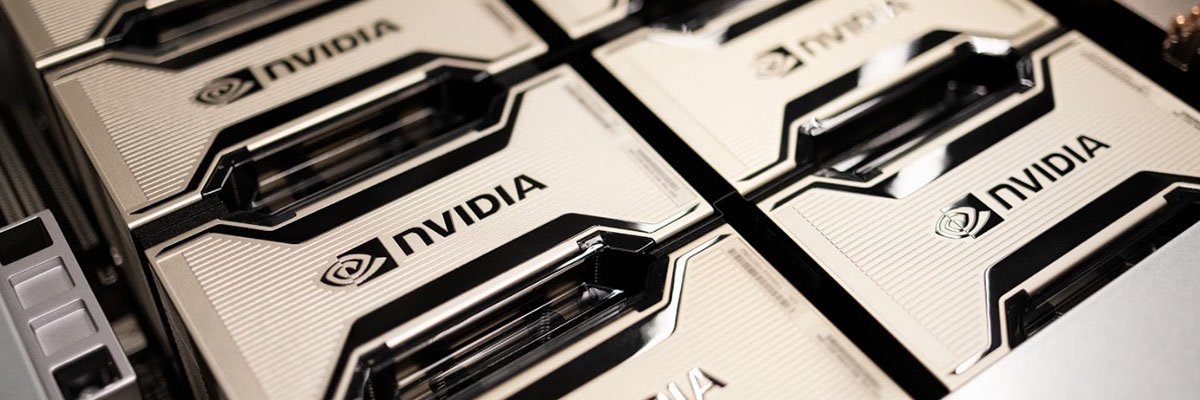
Everpure has announced Evergreen One for AI, a performance-backed consumption model for artificial intelligence (AI) that extends to use of its FlashBlade//Exa high-performance storage. Meanwhile, the company – known as Pure Storage until recently – has announced the beta release of its Datastream automated AI pipeline appliance.
Evergreen One for AI differs from existing flexible capacity offers in the Everpure range by providing use of FlashBlade//Exa and service-level agreements (SLA) based on graphics processing unit (GPU) count. The aim here is to ensure that the storage environment provides the throughput to keep GPU resources fully utilised.
FlashBlade//Exa, Everpure’s highest-performance platform, was previously excluded from the Evergreen One consumption model.
Exa aims at AI and high-performance computing (HPC) workloads that demand extremely high throughput, likely in customers between large enterprise users of AI and the hyperscalers.
At its launch, FlashBlade//Exa introduced an architecture to the Pure product line in which metadata and bulk storage are disaggregated with different hardware and protocols in use.
Kaycee Lai, vice-president for AI with Everpure, said Evergreen One for AI shifted the financial and operational risk away from the customer. “Specifically, we have an offering which we call Evergreen One for AI,” he said. “The big difference for AI is that we set the performance level of the offering based on the number of GPUs that you have … it is an SLA-backed performance guarantee.”
Evergreen One and Flex are Pure Storage’s pay-as-you-go procurement models, while Forever involves upfront purchase with built-in upgrades.
Automating the RAG pipeline
Everpure also announced the beta availability of Datastream. First previewed in late 2024, Datastream is a “single SKU” appliance that integrates Nvidia GPUs with Everpure storage. It is designed to tackle the “data readiness” challenge, said Lai. This refers to the oft-cited statistic that data teams spend 80% of their time preparing unstructured data for use.
The appliance automates the retrieval-augmented generation (RAG) pipeline, which includes ingest, curation and vectorisation of data. By providing an integrated hardware and software stack, Everpure aims to provide an “easy button” for enterprises building chatbots or autonomous agents, he said.
The software capability behind Datastream was built in-house, though it can connect to third-party data sources including Dell, HP and NetApp environments, as well as cloud-resident data. This flexibility allows the appliance to act as a central hub for AI readiness regardless of where the data lives.
“Today, people run RAG pipelines … they do the chunking, the embedding, the indexing to make sure that the data is going to be accurate and relevant so that chatbot agents can consume them in a specific format,” said Lai. “That takes up about 80% of most data teams’ time because there’s no standard tool.”
Underpinning performance
To support these launches, Everpure revealed new benchmarks intended to validate its hardware under AI stress. In MLPerf 2.0 testing, the company claimed the top spot for checkpointing – a critical function for saving the state of a model during long training runs – reporting results up to two times better than competitors such as Huawei and Vast.
The company also cited Spec Storage AI image benchmarks, where it outperformed NetApp’s AFX platform by approximately 20%, he said.

When anthropology researcher Ashley McDermott was doing fieldwork in Kyrgyzstan a few years ago, she says many people voiced the same concern: Children were losing touch with their indigenous language. The Central Asian country of 7 million people was under Russian control for a century until 1991, but Kyrgyz (pronounced kur-giz) survived and remains widely spoken among adults.
McDermott, a doctoral student at the University of Michigan, says she also heard that some kids in rural villages where Kyrgyz dominated had spontaneously learned to speak Russian. The adults largely blamed a singular force: YouTube.
McDermott and a team of five researchers across four universities in the US and Kyrgyzstan have released new research they believe proves the fears about YouTube’s influence are valid. The group simulated user behavior on YouTube and collected nearly 11,000 unique search results and video recommendations.
What they found is that Kyrgyz-language searches for popular kid interests such as cartoons, fairy tales, and mermaids often did not yield content in Kyrgyz. Even after watching 10 children’s videos featuring Kyrgyz speech to demonstrate a strong desire for it, the simulated users received fewer Kyrgyz-language recommendations for what to watch next than, surprisingly, bots showing no language preference at all. The findings show YouTube prioritizes Russian-language content over Kyrgyz-language videos, especially when searching or browsing children’s topics, according to the researchers.
“Kyrgyz children are algorithmically constructed as audiences for Russian content,” Nel Escher, a coauthor who is a postdoctoral scholar at UC Berkeley, said during a presentation at the school last week. “There is no good way to be a Kyrgyz-speaking kid on YouTube.”
McDermott recalls one frustrated Kyrgyzstani mother in 2023 explaining that she paid the internet bill a day late each month to regularly have one day without internet and, thus, YouTube at home.
YouTube, which has “committed to amplifying indigenous voices,” did not respond to WIRED’s requests for comment. The researchers are attempting to meet with YouTube’s parental controls team to discuss the potential for language filters, according to Escher.
The researchers say their work is the latest to show how online platforms can reinforce colonial culture and influence offline behavior. Under Soviet control, people in Kyrgyzstan had to learn Russian to succeed. Today, many adults are fluent in both Russian and Kyrgyz, with Russian remaining important for commerce. Kids are required to learn at least some Kyrgyz in school. But many spend several hours a day online, and watching YouTube is the leading activity, McDermott says. Quoting from Russian language videos is common, whether creators’ refrains like “Let’s do a challenge,” adaptations of American words such as “cringe,” or parroting accents and syntax.
In one of the researchers’ experiments, they searched for several subjects which are spelled the same in Russian and Kyrgyz, including Harry Potter and Minecraft. The results were predominantly Russian. Overall, just 2.7 percent of the videos the research team analyzed appeared to even include ethnically Kyrgyz people.
YouTube “socializes youth to view Russian as the default language of entertainment and technology and to view Kyrgyz as uninteresting,” the researchers wrote in a self-published paper accepted to a social computing conference scheduled for October.
The researchers say there is ample Kyrgyz-language children’s content for YouTube to promote. In 2024, the 35th-most viewed channel on YouTube across the world was D Billions, a Kyrgyzstan-based children-focused content studio with a dedicated Kyrgyz-language channel that has nearly 1 million subscribers.

As the first week of trial in Musk v. Altman comes to a close, one person has emerged as a critical behind-the-scenes manager of communications and egos in OpenAI’s early years: Shivon Zilis.
A longtime employee of Musk and the mother to four of his children, Zilis first joined OpenAI as an advisor in 2016. She later served as a director of its nonprofit board from 2020 until 2023 and has also worked as an executive at Musk’s other companies, Neuralink and Tesla.
When asked about the nature of his relationship with Zilis in court, Musk offered several answers. At one point, he called her a “chief of staff.” Later, a “close advisor.” At another point, he said “we live together and she’s the mother of four of my children,” though Zilis said in a deposition that Musk is more of a regular guest and maintains his own residence. Last September, Zilis told OpenAI’s attorneys that she became romantic with Musk around 2016 after she had become an informal advisor to OpenAI. They had their first two children in 2021, she said.
But OpenAI’s lawyers have made the case in witness testimonies and evidence that her most important role, as it pertains to this lawsuit, is being a covert liaison between OpenAI and Musk, even years after he left the nonprofit’s board in February 2018.
“Do you prefer I stay close and friendly to OpenAI to keep info flowing or begin to disassociate? Trust game is about to get tricky so any guidance for how to do right by you is appreciated,” Zilis wrote in a text message to Musk on February 16, 2018, days before OpenAI announced he was leaving the board. Musk responded, “Close and friendly, but we are going to actively try to move three or four people from OpenAI to Tesla. More than that will join over time, but we won’t actively recruit them.”
When asked about this exchange on the witness stand, Musk said he “wanted to know what’s going on.”
In the same text thread, Musk said “there is little chance of OpenAI being a serious force if I focus on Tesla AI.” Zilis reaffirmed him, saying: “There is very low probability of a good future if someone doesn’t slow Demis down,” referring to the leader of Google DeepMind, who Musk has said he didn’t trust to control a superintelligent AI system. “You don’t realize how much you have an ability to influence him directly or otherwise slow him down. I think you know I’m not a malicious person but in this case it feels fundamentally irresponsible to not find a way to slow or alter his path.”
Roughly two months later, in an email from April 23, 2018, Zilis updated Musk on OpenAI’s fundraising efforts and progress on a project to develop an AI that could play video games. In the same message, she said she had reallocated most of her time away from OpenAI to his other companies, Neuralink and Tesla, but told him, “if you’d prefer I pull more hours back to OpenAI oversight please let me know.”
Almost a year earlier, in the summer of 2017, OpenAI’s cofounders had started negotiating changes to the organization’s corporate structure—Musk wanted control of the company to start out. In an email from August 28, 2017, Zilis wrote to Musk that she had met with Greg Brockman and Ilya Sutskever to discuss how equity would be divided up in the new company. She summarized points from the meeting, including that Brockman and Sutskever thought one person shouldn’t have unilateral power over AGI, should they develop it. Musk wrote back to Zilis, “This is very annoying. Please encourage them to go start a company. I’ve had enough.”
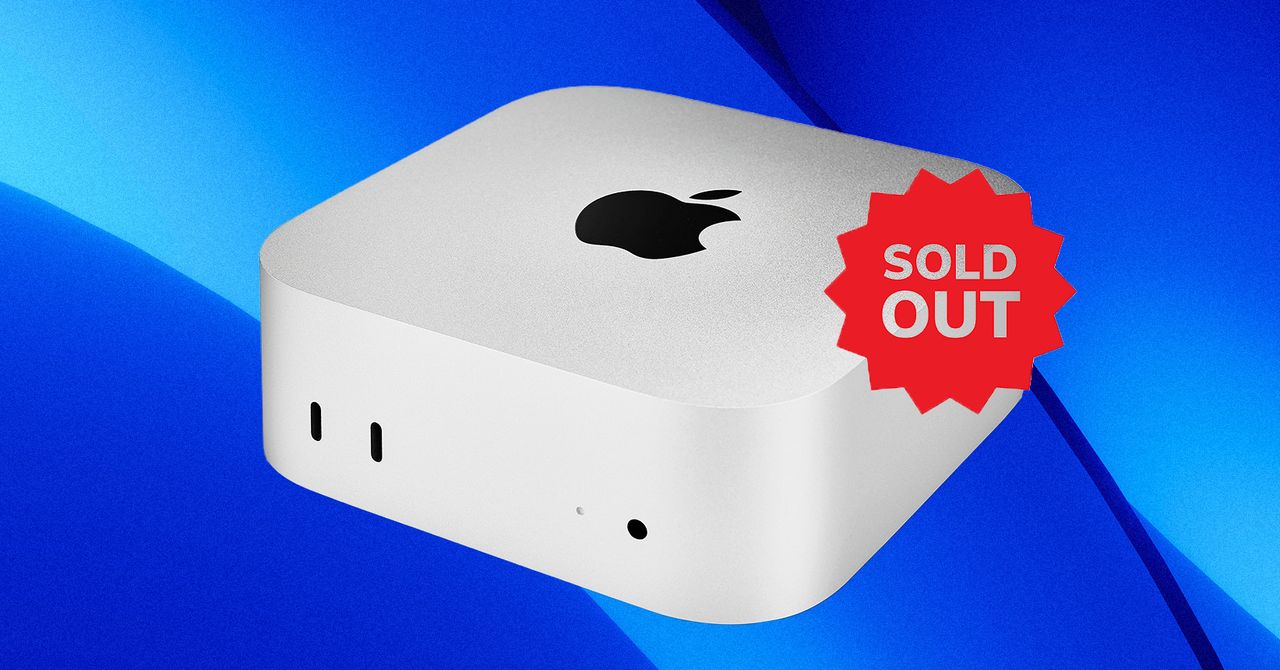
Apple CEO Tim Cook said on the company’s earnings call on Thursday that it could take “several months” to meet skyrocketing demand for the Mac Mini, the company’s compact but mighty, screen-free desktop computer. Cook’s remarks come after coders determined in recent months that the Mac Mini was the perfect machine for agentic AI tasks.
“On the Mac Mini and Mac Studio, both of these are amazing platforms for AI and agentic tools,” Cook said on the earnings call, in response to analyst questions. “And customer adoption of that is happening faster than we expected.”
The news comes amid another record-setting quarter for the company. iPhone sales came up shorter than expected, though demand for the iPhone 17 has been super high and Apple’s subscription services business has continued to grow.
Apple faced supply constraints on both the iPhone and the Mac product line this quarter. iPhone shortages are being driven mostly by a limited supply of the advanced chips that power the phones. But as Cook made clear, at least two different factors are driving shortages in Apple’s Mac business: The rapid adoption of generative AI, and unexpected demand for the company’s new, colorful, and more affordable MacBook Neo laptop.
Mac sales are typically a fraction of what iPhone sales are—$8.4 billion this quarter, compared to nearly $57 billion in sales of the iPhone—and the Mac Mini, specifically, is a fraction of that. But with the launch of OpenClaw earlier this year, an open-source AI tool, Mac Minis began flying off the shelves because they offer both enough power and a dedicated computing environment for agentic AI tasks.
Some eager customers have already been waiting for months for their Mac Minis. MacRumors reported last month that Apple had stopped selling a configuration of the computer that included 512 GB of memory. As of last week, the base model of Mac Mini was entirely sold out.
Cook, and his soon-to-be-successor John Ternus, also addressed Cook’s transition out of the CEO role later this year. Cook said on the earnings call that it’s the “right moment” to step into the executive chairman role for a “number of reasons,” including that Apple is well-positioned financially and that its upcoming product roadmap is “incredible.” He called Ternus a “person of remarkable character and a born leader.”
Ternus then joined the call for a minute to vouch for Cook as a business leader, and assure investors he’d take a similarly deliberate and thoughtful approach in leading the company. He, too, mentioned the company’s roadmap.
Both men were scant on details around this supposedly very exciting product roadmap, but hopefully, it includes more … road Macs.


Iran war redraws sea routes with Africa as the pivot

This Indigenous Language Survived Russian Occupation. Can It Survive YouTube?

Germany’s Adidas posts strong Q1 on DTC momentum, broad demand

-

 Sports1 week ago
PSL 11: Hyderabad Kingsmen opt to field after winning toss against Multan Sultans
-
 Business1 week ago
Trump administration in advanced talks for a rescue package for Spirit Airlines, source says
-

 Entertainment1 week ago
Anne Hathaway shares major news about ‘Princess Diaries 3’
-
 Business1 week ago
Gold prices in Pakistan Today – April 23, 2026 | The Express Tribune
-

 Fashion1 week ago
Canada forms new advisory committee to strengthen US trade relations
-

 Entertainment1 week ago
Mike Vrabel to miss Patriots’ final NFL draft day —here’s why
-
 Business1 week ago
Oil surges past 4% as Iran keeps Hormuz locked – SUCH TV
-

 Fashion1 week ago
US CBP to soon launch electronic system for importers to claim refunds