Connect with us

Politics

An Old Master’s secret ingredient? Egg yolk, new study suggests

Published

on

An Old Master’s secret ingredient? Egg yolk, new study suggests


Editor’s Note: Sign up for CNN’s Wonder Theory science newsletter. Explore the universe with news on fascinating discoveries, scientific advancements and more.


CNN
 — 

“Old Masters” such as Leonardo da Vinci, Sandro Botticelli and Rembrandt may have used proteins, especially egg yolk, in their oil paintings, according to a new study.

Trace quantities of protein residue have long been detected in classic oil paintings, though they were often ascribed to contamination. A new study published Tuesday in the journal Nature Communications found the inclusion was likely intentional — and sheds light on the technical knowledge of the Old Masters, the most skilled European painters of the 16th, 17th, or early 18th century, and the way they prepared their paints.

“There are very few written sources about this and no scientific work has been done before to investigate the subject in such depth,” said study author Ophélie Ranquet of the Institute of Mechanical Process Engineering and Mechanics at the Karlsruhe Institute of Technology in Germany, in a phone interview. “Our results show that even with a very small amount of egg yolk, you can achieve an amazing change of properties in the oil paint, demonstrating how it might have been beneficial for the artists.”

Simply adding some egg yolk to their works, it turns out, could have long-lasting effects that went beyond just aesthetics.

Compared with the medium formulated by ancient Egyptians called tempera — which combines egg yolk with powdered pigments and water — oil paint creates more intense colors, allows for very smooth color transitions and dries far less quickly, so it can be used for several days after its preparation. However, oil paint, which uses linseed or safflower oil instead of water, also has drawbacks, including being more susceptible to color darkening and damage caused by exposure to light.

Because making paint was an artisanal and experimental process, it is possible that the Old Masters might have added egg yolk, a familiar ingredient, to the newer type of paint, which first showed up in the seventh century in Central Asia before spreading to Northern Europe in the Middle Ages and Italy during the Renaissance. In the study, the researchers recreated the process of paint-making by using four ingredients — egg yolk, distilled water, linseed oil and pigment — to mix two historically popular and significant colors, lead white and ultramarine blue.

“The addition of egg yolk is beneficial because it can tune the properties of these paints in a drastic way,” Ranquet said, “For example by showing aging differently: It takes a longer time for the paint to oxidize, because of the antioxidants contained in the yolk.”

The chemical reactions between the oil, the pigment and the proteins in the yolk directly affect the paint’s behavior and viscosity. “For example, the lead white pigment is quite sensitive to humidity, but if you coat it with a protein layer, it makes it a lot more resistant to it, making the paint quite easy to apply,” Ranquet said.

“On the other hand, if you wanted something stiffer without having to add a lot of pigment, with a bit of egg yolk you can create a high impasto paint,” she added, referring to a painting technique where the paint is laid out in a stroke thick enough that the brushstrokes are still visible. Using less pigment would have been desirable centuries ago, when certain pigments — such as lapis lazuli, which was used to make ultramarine blue — were more expensive than gold, according to Ranquet.
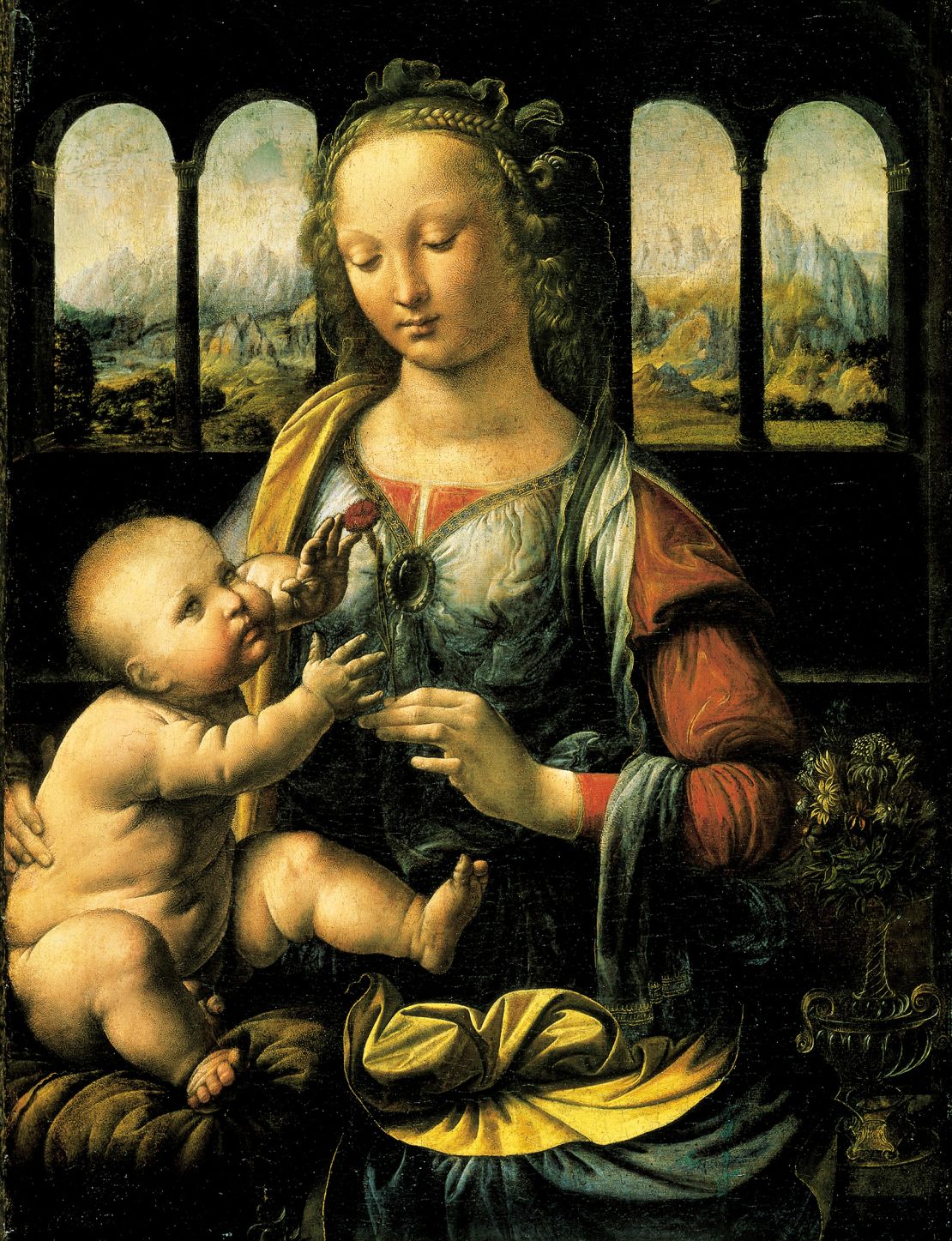
A direct evidence of the effect of egg yolk in oil paint, or lack thereof, can be seen in Leonardo da Vinci’s “Madonna of the Carnation,” one of the paintings observed during the study. Currently on display at the Alte Pinakothek in Munich, Germany, the work shows evident wrinkling on the face of Mary and the child.

“Oil paint starts to dry from the surface down, which is why it wrinkles,” Ranquet said.

One reason for wrinkling may be an insufficient quantity of pigments in the paint, and the study has shown that this effect could be avoided with the addition of egg yolk: “That’s quite amazing because you have the same quantity of pigment in your paint, but the presence of the egg yolk changes everything.”

Because wrinkling occurs within days, it’s likely that Leonardo and other Old Masters might have caught onto this particular effect, as well as additional beneficial properties of egg yolk in oil paint, including resistance to humidity. The “Madonna of Carnation” is one of Leonardo’s earliest paintings, created at a time when he might have been still trying to master the then newly popular medium of oil paint.

New understanding of the classics

Another painting observed during the study was “The Lamentation Over the Dead Christ,” by Botticelli, also on display at the Alte Pinakothek. The work is mostly made with tempera, but oil paint has been used for the background and some secondary elements.

“We knew that some parts of the paintings show brushstrokes that are typical for what we call an oil painting, and yet we detected the presence of proteins,” Ranquet said. “Because it’s a very small quantity and they are difficult to detect, this might be dismissed as contamination: In workshops, artists used many different things, and maybe the eggs were just from the tempera.”

However, because adding egg yolk had such desirable effects on oil paint, the presence of proteins in the work might be an indication of deliberate use instead, the study suggested. Ranquet hopes that these preliminary findings might attract more curiosity toward this understudied topic.

Maria Perla Colombini, a professor of analytical chemistry at the University of Pisa in Italy, who was not involved in the study, agreed. “This exciting paper provides a new scenario for the understanding of old painting techniques,” she said in an email.

“The research group, reporting results from molecular level up to a macroscopic scale, contributes to a new knowledge in the use of egg yolk and oil binders. They are not more looking at simply identifying the materials used by Old Masters but explain how they could produce wonderful and glittering effects by employing and mixing the few available natural materials. They try to discover the secrets of old recipes of which little or nothing is written,” she added.

“This new knowledge contributes not only to a better conservation and preservation of artworks but also to a better comprehension of art history.”


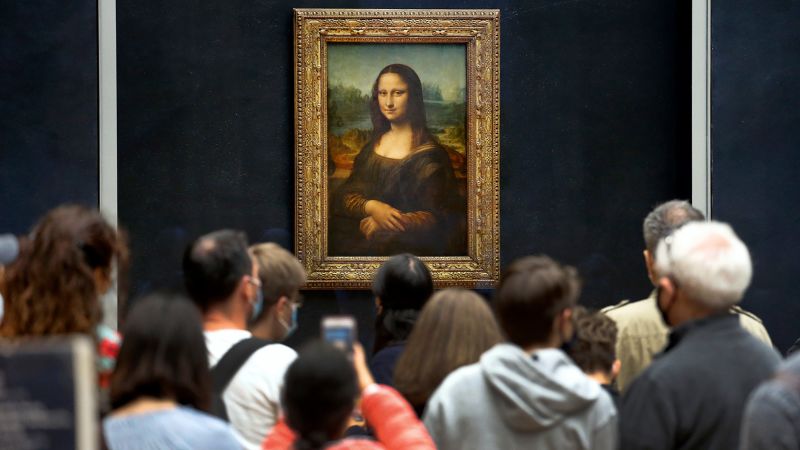
Top image: The “Mona Lisa” by Leonardo Da Vinci


Source link

Continue Reading
Click to comment

Leave a Reply

Your email address will not be published. Required fields are marked *

Politics

Law firms helping migrants pose as gay to get asylum in UK: report

Published

on

Law firms helping migrants pose as gay to get asylum in UK: report


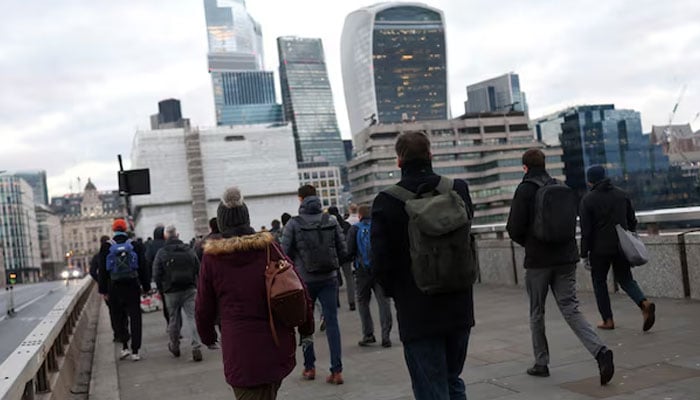
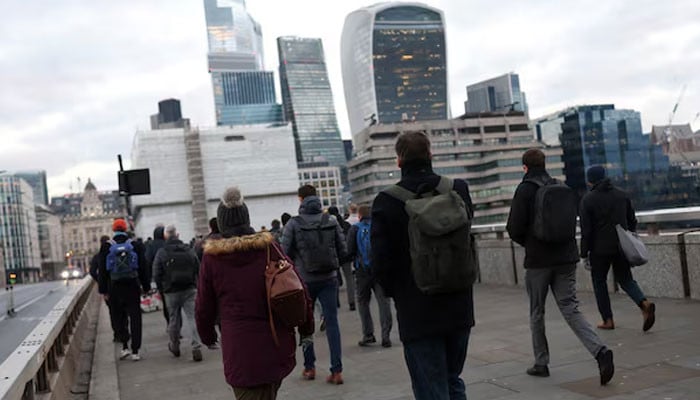
This representational image shows commuters cross London Bridge, in London, Britain, January 13, 2025. — Reuters
This representational image shows commuters cross London Bridge, in London, Britain, January 13, 2025. — Reuters 

LONDON: A BBC undercover investigation has alleged that a network of immigration advisers, paralegals and associated intermediaries has been helping migrants fabricate asylum claims in the UK by falsely presenting themselves as gay, charging thousands of pounds for false narratives, staged evidence and interview coaching.

At least three law firms – one of these owned by Pakistanis – have been accused by the BBC of fabricating the asylum claims through illegal means.

The law firms include Law and Justice Solicitors and Connaught Law. Law and Justice is owned by Michael Oluyemi Makinde and Connaught Law is owned by Nauman Javid, Sheryar Khan, Zehra Tamkan and Awais Javed.

According to the BBC investigation, the abuse centres on migrants, particularly from Pakistan and Bangladesh, whose student, work or tourist visas are close to expiring and who are then allegedly advised to seek asylum on the basis of sexual orientation, as being gay or lesbian.

Using undercover reporters posing as international students from Pakistan and Bangladesh, the BBC said it tested whether immigration advisers would encourage false sexuality-based asylum claims.

It reported finding multiple individuals willing to discuss fake claims, suggest supporting evidence and quote fees for handling such cases. Among the findings were allegations that Connaught Law firm quoted up to £7,000 for a fabricated claim and described the chances of refusal as “very low”, while another adviser allegedly offered to arrange fake supporting letters, photographs and even a supposed sexual partner to back up an asylum application.

The BBC undercover reporter made an appointment with Aqeel Abbasi, a senior legal adviser at Connaught Law, which has its offices in Central London on Gray’s Inn Road.

Abbasi told the BBC reporter that he could help him stay in the country and appeared to be willing to direct him on how to fabricate evidence for a fake claim. He promised that the chance of refusal by the Home Office was “very low”.

He said his fee would be £7,000 and, once that had been paid, his office would contact the undercover reporter to guide them through the process and the kind of evidence required.

This would include advising him on “where to go or what specific actions to take”.

The legal adviser also suggested the undercover reporter would need to find someone willing to pretend to be his male/gay partner. When the reporter said he had a wife in Pakistan, Abbasi was quick to suggest a cover story to explain this, by saying that things were “more open” in the UK than in Pakistan and that he now had a male partner.

“We will prepare a statement for you, and once you read it, you will understand exactly how it is,” said Abbasi.

A significant part of the investigation focused on Worcester LGBT, a support organisation for gay and lesbian asylum seekers, which holds monthly meetings attended by large numbers of migrants from across the country.

The BBC traced the undercover reporter’s route to the group through Mazedul Hasan Shakil, a paralegal at Law and Justice Solicitors, an immigration firm based in Birmingham and London, who is also described as founder and chairman of Worcester LGBT.

The reporter received a call from a woman identified as Tanisa (Shakil’s associate), who, in Urdu, allegedly became much more direct about using a “gay case” as the only realistic route to stay in Britain.

When told the reporter was not gay, Tanisa replied: “There is nobody who is real. There is only one way out in order to live here now and that is the very method everyone is adopting.” The BBC identified her as Tanisa Khan, an adviser linked to Worcester LGBT.

The broadcaster then described an initial meeting in Forest Gate, east London, which took place in Tanisa’s home.

According to the report, she laid out a plan to fabricate an asylum claim on the grounds of same-sex orientation, warning that the applicant would have to memorise a false story convincingly for Home Office interviews. The report said she offered to obtain a letter from someone claiming to have had sexual relations with the applicant and said she would fully prepare him for the Home Office process.

She charged £2,500, with additional costs if the claim failed and went to appeal. The BBC also said she suggested that if the reporter later brought his wife from Pakistan to Britain, she too could make a false asylum claim by pretending to be lesbian.

The BBC showed its footage to immigration lawyer Ana Gonzalez, who has 30 years of experience. She said Tanisa appeared to be “committing fraud by manufacturing a claim” and warned that such conduct makes life harder for genuine asylum seekers, especially LGBT claimants whose cases are often difficult to prove objectively.

The report said precise figures for fabricated claims are impossible to establish, but Home Office data suggests a disproportionate number of sexuality-based asylum claims come from Pakistani nationals.

In 2023, there were 3,430 initial decisions on LGBT asylum claims and nearly 1,400 new claims based on sexual orientation. Of these, 42% were lodged by Pakistani nationals, who also accounted for the highest number in each of the previous five years. The article noted that Pakistanis were only the fourth most common nationality across all asylum applications and made up just 6% of total claims overall.

Nearly two-thirds of asylum seekers claiming persecution on grounds of sexual orientation had their claims granted at initial decision stage in 2023.

The Home Office told the BBC that making an asylum claim through deception is a criminal offence and that anyone convicted can face prison and deportation.

It said misuse of protections designed for people fleeing genuine persecution because of their sexuality was deplorable, but insisted that the asylum system includes safeguards and that claims are rigorously assessed.

The department added that abuse is actively investigated and procedures are continually reviewed.


Source link

Continue Reading

Politics

Iran says to host Pakistani delegation as exchanges continue with US

Published

on

Iran says to host Pakistani delegation as exchanges continue with US


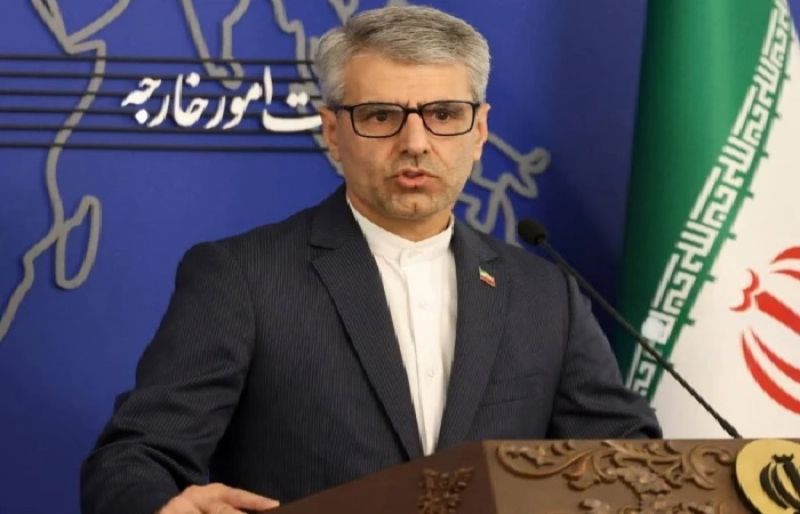
Iran will be hosting a high-ranking political and security delegation from Pakistan on Wednesday, as indirect exchanges of messages between Tehran and Washington continue, the Iranian Foreign Ministry spokesman announced.

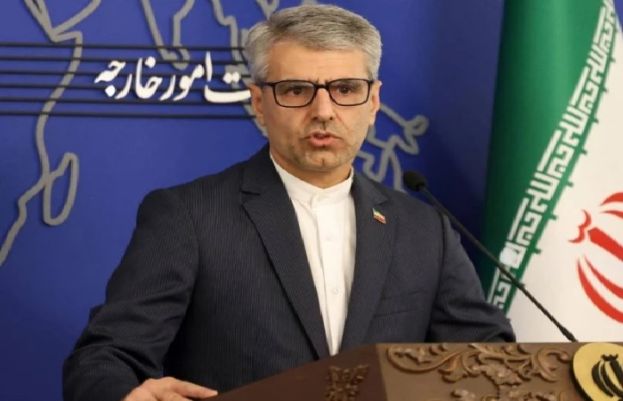
Esmail Baghaei, speaking in response to a question from IRNA, confirmed that Tehran is expected to receive the Pakistani delegation today.

“Today, we are most likely hosting a delegation from Pakistan,” Baghaei said.

“Following the talks that took place in Islamabad, and also the discussions that the Pakistani side has had with the United States, our views have been conveyed and heard,” he said.

He added, “Naturally, during this visit, the two sides are expected to discuss their viewpoints in detail.”

Meanwhile, informed sources in Pakistan confirmed that a high-level security-political delegation, comprising prominent Pakistani figures, left Islamabad for Tehran a short while ago, IRIB news reported.

According to the sources, the delegation is carrying a new message from Washington for Tehran.

The delegation is scheduled to meet with Iranian officials to discuss future negotiations, the sources said.

The development comes as a two-week ceasefire between Iran and the United States will expire on April 22.

The United States and Israel launched their unprovoked war of aggression against Iran on February 28, assassinating the Leader of the Islamic Revolution and striking nuclear facilities, schools, hospitals and civilian infrastructure.


Source link

Continue Reading

Politics

Israel must not be allowed to sabotage US-Iran ceasefire: Turkey’s Erdogan

Published

on

Israel must not be allowed to sabotage US-Iran ceasefire: Turkey’s Erdogan


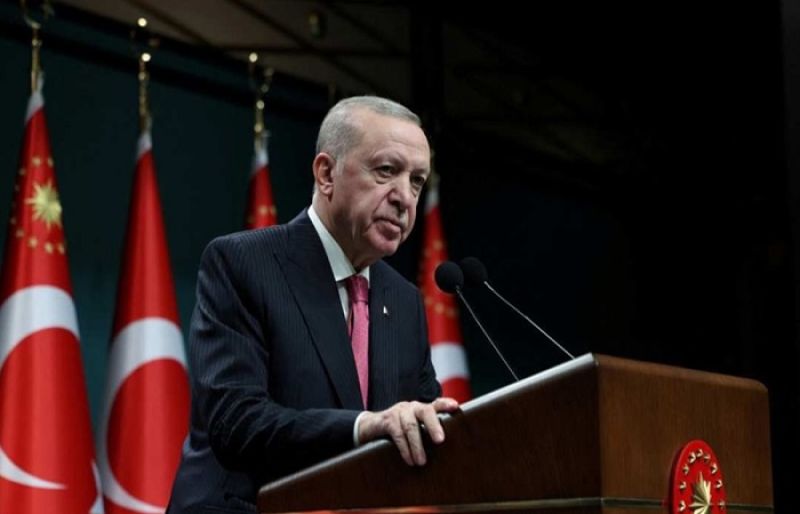
Turkish President Recep Tayyip Erdogan has warned against the Israeli regime’s attempts to sabotage a fragile ceasefire between the US and Iran, saying that Ankara will push for an extension of the truce and ensure peace talks continue in Pakistan.

Addressing a parliament session on Wednesday, Erdogan said that the Israeli prime minister’s cabinet, “which is known to be unhappy with the ceasefire process, must not be allowed to sabotage it.”

The Turkish leader said that his government is making the “necessary appeals and initiatives” to ease tensions and extend the ceasefire, which is set to expire on April 20.

The two-week ceasefire, announced last week, 40 days after the US and the Israeli regime launched their war of aggression against Iran, provided a fragile window for diplomacy. It will expire on April 22.

Over the weekend, high-level peace talks between US and Iranian officials took place in Pakistan’s capital, Islamabad. While the talks ended without an agreement, regional governments are urging both sides to return to the negotiating table.

Erdogan also urged the two sides to utilize “the window of opportunity opened by the ceasefire” before its expiration.

“If there is to be peace in our region, it will be despite the Zionist regime,” Erdogan said. “If stability is achieved, it will again be despite the Israeli government.”

The Turkish president also condemned the aggression against Lebanon, warning that continued airstrikes are harming hopes for peace.

He said that Turkey will continue “to be the follower of the cause of children killed in their sleep in Lebanon,” referring to Israel’s airstrikes that have killed more than 2,000 people—including many women and children—since early March, according to the Lebanese health ministry.

Despite the fact that the ceasefire between the US and Iran explicitly covered Lebanon, the Israeli regime continues its military aggression against the country, blatantly ignoring the terms of the truce.

This ongoing aggression is seen by regional observers as a deliberate attempt by Tel Aviv to sabotage the peace talks.


Source link

Continue Reading

Trending