

Business
Apollo’s John Zito questions private equity’s software valuations: ‘All the marks are wrong’


Apollo Global Management signage in New York on Dec. 5, 2023.
Jeenah Moon | Bloomberg | Getty Images
Apollo’s John Zito had a blunt assessment of how private equity firms are valuing their software holdings as shares of comparable public tech companies have plunged: They’re not, he said.
Zito, co-president of the firm’s giant asset management division and its head of credit, spoke to clients of investment bank UBS last month in remarks first published by the Wall Street Journal. CNBC confirmed Zito’s comments.
“I literally think all the marks are wrong,” Zito told the clients. “I think private equity marks are wrong.”
For weeks, investors have punished the shares of public software companies on fears that the latest tools from Anthropic and OpenAI will make these companies obsolete. That has fed concerns that private credit lenders are sitting on stale valuations of their software loans, igniting a wave of redemptions as investors ask to withdraw funds from private credit vehicles.
Retail investors have pulled about $10 billion from private credit funds in the first quarter, according to analysis by the Financial Times. Amid the stampede, an array of industry leaders have sought to calm markets by explaining that the underlying companies are still performing well.
But sophisticated players including JPMorgan Chase are starting to act, reining in lending to private credit players by marking down the value of software loans.
While Wall Street figures including Jeffrey Gundlach and Mohamed El-Erian have flagged risks in private credit, Zito is among the first from within the industry to candidly acknowledge weakness in the market.
An Apollo spokesman declined to comment on Zito’s remarks. They come amid a tough backdrop for alternative asset managers, who’ve seen their shares battered this year. Zito and other Apollo executives have sought to draw a distinction between Apollo and other players in private credit.
Most of Apollo’s loans are to larger, more stable companies rated investment grade, and software makes up less than 2% of the firm’s total assets under management, Apollo told analysts last month. The firm has zero exposure to private equity stakes in software firms, it said.
‘Bad ending’
While Zito’s comments at the UBS event were about valuations in private equity, many of the companies bought by the industry also took out private credit loans. If the loans are in trouble, that means the equity is also in worse shape, he pointed out.
Zito singled out software companies taken private between 2018 and 2022 — a period of high valuations and low interest rates — as particularly exposed, warning that many were “lower quality” than larger public competitors.
Zito also said that private credit lenders, and by extension the investors backing the loans, could see deep losses in the coming years. That’s based on what he said could be the eventual recovery rates on loans to a generic small-to-medium sized software firm.
Lenders could recoup “somewhere between 20 and 40 cents” in those companies if they are “in the wrong place” in terms of the new AI-led regime, he said.
While lenders who focused heavily on the software sector are heading for trouble, in Zito’s view, the broad asset class will endure the current upheaval.
“If you do stupid things and you do concentrated things, and you do things that you’re not supposed to do in your vehicle,” Zito said, “you probably will have a bad ending.”


Business
Stock Market LIVE Updates: Sensex Down Over 100 Points, Nifty Below 23,400; HCL Tech, Infosys Drag
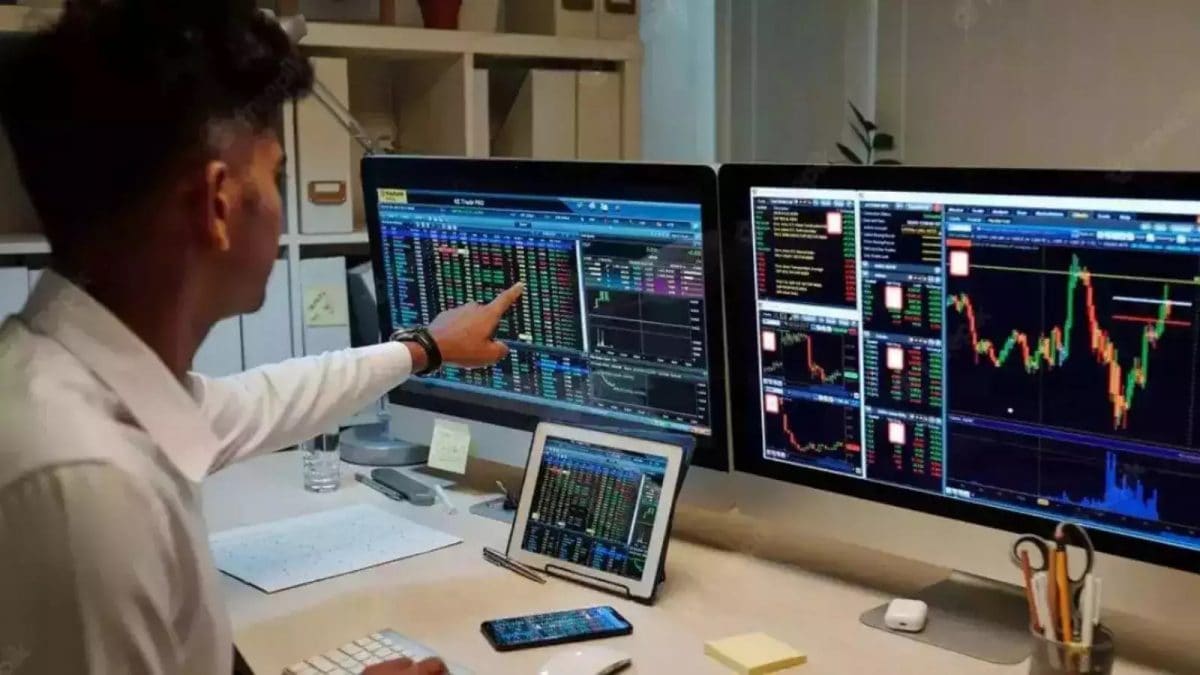
Sensex Today: Indian benchmark indices erased gains shortly after opening as realty and bank stocks weighed. As of 9:17 AM, the Nifty50 was trading 0.14 per cent or 27.90 points down at 23,380.90, and the Sensex was trading 0.11 per cent or 4.68 points down at 75,498.17.
Global cues
Markets across the Asia-Pacific region advanced, mirroring overnight gains on Wall Street, even as crude oil prices showed volatility after easing from earlier highs. Japan’s Nikkei 225 and South Korea’s Kospi were up 0.30% and 2.53%, respectively.
On Wall Street, US equities closed higher, with the S&P 500 rising 1.01%, the Dow Jones gaining 0.83%, and the Nasdaq Composite advancing 1.22%.
In the commodities market, Brent crude settled 2.84% lower at $100.21 per barrel in the previous session after US President Donald Trump urged allies to ensure stable energy supplies from the Strait of Hormuz. Sentiment was also supported by expectations that more countries may release oil from strategic reserves, according to Bloomberg.
However, in the Asian session, Brent crude rebounded nearly 2.9% to $103.06 per barrel, as renewed concerns over potential supply disruptions in the Strait of Hormuz resurfaced.
Meanwhile, gold and silver futures edged higher, gaining 0.41% and 0.53%, respectively.
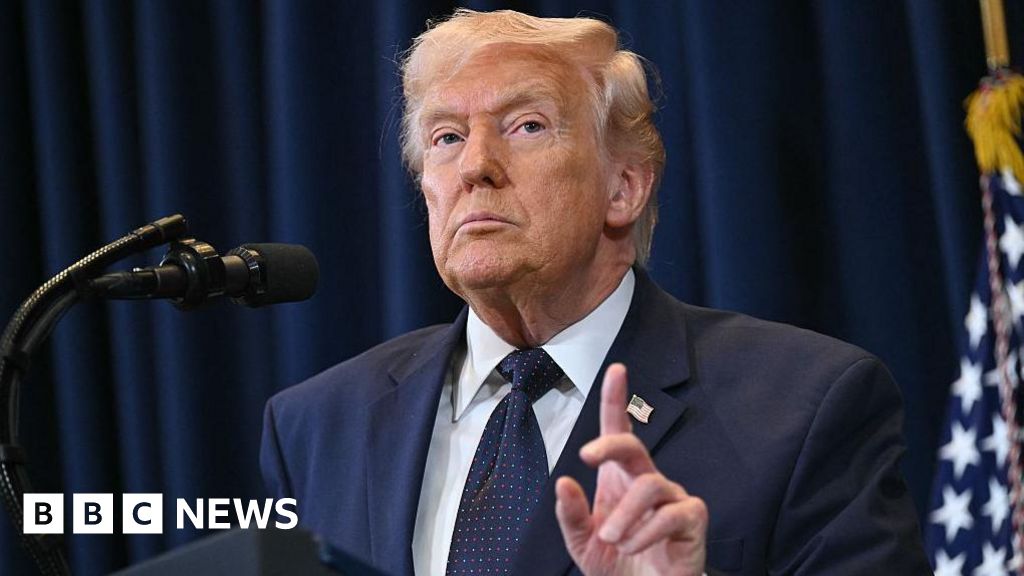
The escalating war in Iran has overshadowed much of the US’ foreign policy objectives
Source link

Nvidia CEO Jensen Hwang gives the keynote address at the company’s annual GTC developers conference at the SAP Center in San Jose, California, on March 16, 2026.
Josh Edelson | Afp | Getty Images
Nvidia is expanding deals for its autonomous vehicle development business to Hyundai Motor, Nissan Motor and Isuzu, as well as Chinese automakers BYD and Geely, the software and chip giant announced Monday.
The new tie-ups are for Nvidia’s Drive Hyperion platform for AVs. The system helps companies develop and deploy driver-assist and autonomous driving capabilities for Level 4 AVs, which are capable of driving without human intervention under predefined areas or circumstances.
“We’ve been working on self-driving cars for a long time. The ChatGPT moment of self-driving cars has arrived,” Nvidia CEO Jensen Huang said Monday during the company’s GTC conference. “We now know we could successfully autonomously drive cars, and today, we are announcing four new partners for Nvidia’s robotaxi-ready platform. … The number of robotaxi-ready cars in the future are going to be incredible.”
No vehicles on sale to consumers today are capable of driving themselves without human monitoring or intervention, but some companies, such as Alphabet’s Waymo, offer ride-hailing fleets with Level 4 self-driving vehicles, also known as robotaxis. Most vehicles on sale today are considered Level 2, with drivers needing to continually monitor the systems.
Drive Hyperion is part of what Nvidia calls its “end-to-end” AV platform that includes data center training, large-scale simulations and in-vehicle computing. The company does not produce or sell AVs or many of the components needed to operate such vehicles.
Current Nvidia customers for Drive Hyperion include many self-driving companies such as Aurora and Nuro, as well as other more consumer-facing businesses such as Sony Group, Uber Technologies, Jeep parent Stellantis and electric vehicle maker Lucid Group.
AVs are important to Nvidia, as self-driving cars remain one of the primary areas where the chipmaker can show growth outside of artificial intelligence.
Many believe AI could be key to the proliferation of AVs, which Wall Street analysts and automotive executives have targeted as a multitrillion-dollar growth industry.
The new companies add to a growing list of such tie-ups for Nvidia, as the chipmaker and the automotive and technology industries try to capitalize on and proliferate AVs after years of failed ventures for robotaxis.
Waymo has led the AV industry for years, while others such as Tesla, Uber and Amazon’s Zoox attempt to catch up.
General Motors-backed Cruise, which was previously viewed as a leader alongside Waymo, disbanded amid controversies after a pedestrian was dragged by one of its vehicles in San Francisco. GM spent more than $10 billion on Cruise before ending the robotaxi operations in 2024.
— CNBC’s Katie Tarasov contributed to this report.


Jay Bilas predicts every game of the 2026 NCAA tournament

Turkiye’s RMG exports down 2% YoY in Feb 2026

Some countries ‘not enthusiastic’ on Hormuz aid: says Trump

Stock market crash today (March 12, 2026): Nifty50 opens below 23,600; BSE Sensex down over 900 points on continuing US-Iran war – The Times of India

Intertextile Shanghai 2026: Fringe events spotlight market trends

2026 NCAA Tournament Berth Tracker: Automatic Bids, Championship Game Times, and Defending Champs

-
Business5 days ago
Stock market crash today (March 12, 2026): Nifty50 opens below 23,600; BSE Sensex down over 900 points on continuing US-Iran war – The Times of India
-
 Fashion1 week ago
Intertextile Shanghai 2026: Fringe events spotlight market trends
-
 Sports1 week ago
2026 NCAA Tournament Berth Tracker: Automatic Bids, Championship Game Times, and Defending Champs
-

 Entertainment7 days ago
What time will NASA’s 600 kg satellite crash to Earth today— 14 years after launch?
-

 Entertainment1 week ago
Christian Bale makes shocking confession about Jacob Elordi’s ‘Frankenstein’
-

 Fashion1 week ago
German brand Adidas posts 13% revenue growth in 2025
-

 Fashion6 days ago
UK’s Topshop unveils Tolu Coker capsule collection
-
 Business6 days ago
8th Pay Commission: How Much Will Central Govt Employees’ Salaries Rise? What We Know So Far