

Business
AU Small Finance Bank net up 26% to Rs 667 crore – The Times of India


MUMBAI: AU Small Finance Bank, which has received RBI nod to convert into a commercial bank, reported a net profit of Rs 667.66 crore for the December 2025 quarter, up 26.3% from Rs 528.45 crore in the corresponding quarter last year. The improvement was driven by strong growth in core earnings and a sharp reduction in credit costs, which offset higher operating expenses.Net interest income (NII) rose 15.8% year-on-year to Rs 2,341.27 crore, compared with Rs 2,022.71 crore in the December 2024 quarter. Interest earned increased to Rs 4,727.47 crore from Rs 4,113.48 crore, while interest expended rose to Rs 2,386.20 crore from Rs 2,090.77 crore. On a sequential basis, NII increased 9.2% from Rs 2,144.42 crore in the September 2025 quarter, reflecting improved yields on advances and relatively stable funding costs.During the quarter, the bank also announced a series of board and senior management changes as part of a broader leadership realignment. The board approved the appointment of Phani Shankar as non-executive independent director for a three-year term. It also cleared the appointment of Vivek Tripathi, chief credit officer, as whole-time director, subject to regulatory and shareholder approvals. Uttam Tibrewal, who will complete his current term as whole-time director in April 2026, will continue as deputy CEO, while Divya Sehgal, non-executive non-independent director, resigned after completion of the integration of Fincare Small Finance Bank. V G Kannan is set to complete his second term as independent director in January 2026.Other income increased 17.0% year-on-year to Rs 723.80 crore from Rs 618.41 crore a year earlier, supporting overall revenue growth. Total income for the quarter rose to Rs 5,451.26 crore, compared with Rs 4,731.89 crore in the corresponding period last year.Operating expenses climbed 28.8% year-on-year to Rs 1,849.75 crore from Rs 1,436.21 crore, driven by higher employee costs and expansion-related spending, including regulatory-linked adjustments. Despite this, operating profit before provisions remained broadly stable at Rs 1,215.31 crore, compared with Rs 1,204.91 crore in the year-ago quarter.Provisions (other than tax) declined 34.0% year-on-year to Rs 331.14 crore from Rs 501.68 crore, reflecting lower credit costs. Tax expense increased to Rs 216.51 crore from Rs 174.78 crore, in line with higher profitability.Asset quality remained stable, with gross NPAs at Rs 2,880.54 crore, compared with Rs 2,335.51 crore a year earlier, while the gross NPA ratio was largely unchanged at 2.30% against 2.31% in the corresponding quarter last year. The bank’s capital position strengthened, with the capital adequacy ratio improving to 19.01% from 18.01%, providing headroom for future growth.

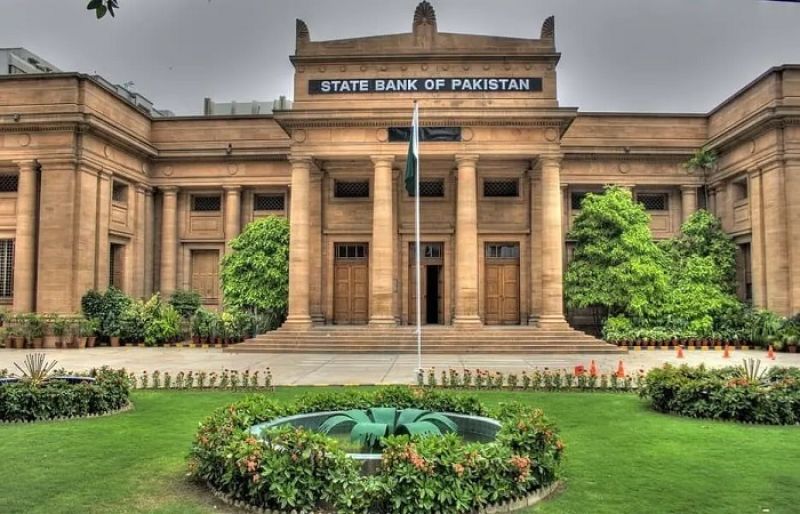
The State Bank of Pakistan’s (SBP) Monetary Policy Committee (MPC) on Monday maintained its key interest rate at 10.5%, pausing its easing cycle as rising global energy prices and regional tensions pose new inflation risks for the import-dependent economy.
“The Monetary Policy Committee has decided to keep the policy rate unchanged at 10.5%,” the State Bank of Pakistan (SBP) said on its website, adding that a detailed statement would be released soon.
The SBP has cut the key rate by a cumulative 1,150 basis points since mid-2024, from a record 22% in 2023, as inflation cooled sharply from multi-decade highs.
In its policy statement, the SBP said that the MPC decided to keep the policy rate unchanged as it observed that the macroeconomic outlook has “become quite uncertain following [the] outbreak of the war in the Middle East”.
During the meeting, the MPC noted that “the conflict in the Middle East has led to a sharp increase in global fuel prices as well as freight and insurance costs, while also affecting cross-border trade and travel.”
“The MPC observed that the intensity and duration of the conflict will both be important determinants of the impact on the domestic economy.”
However, the committee noted that macroeconomic fundamentals, especially in terms of inflation, foreign exchange reserves, and fiscal buffers, were better compared to the time of the start of the Russia-Ukraine war in early 2022.
The MPC’s initial assessment of the evolving geopolitical situation indicated that the outlook for key macroeconomic variables for fiscal year 2026 was within the earlier projected ranges. However, risks for the macroeconomic outlook have increased significantly.
Meanwhile, on the domestic front, inflation rose to 5.8% in January and further to 7% in February 2026.
The current account recorded a surplus in January, which, amidst weak official inflows, led to continued interbank FX purchases by the SBP and the buildup in FX reserves to $16.3 billion as of February 27.
Large-scale manufacturing (LSM) grew by 0.4% year-on-year in December 2025, with cumulative growth reaching 4.8% in July-December FY26.
Additionally, consumers’ inflation expectations and confidence improved, while those of businesses remained broadly stable in February.
The Federal Board of Revenue (FBR) tax collection remained below target in both January and February, further widening the cumulative shortfall during July-February FY26.
“The Committee noted the high degree of uncertainty in the outlook for international commodity prices and supply-chain disruptions in the backdrop of the war in the Middle East. In this context, the MPC deemed today’s decision as appropriate, and reaffirmed its commitment to ensure the hard-earned price stability,” read the statement.
However, the MPC stressed the need for expediting structural reforms to ensure sustainable economic growth.
The committee noted that the headline inflation rose to 7% year-on-year in February, attributed to the phasing out of the low base effect from food and energy prices, along with the rationalisation of fixed charges on households’ electricity bills.
The MPC assessed that the impact of higher expected domestic energy prices is likely to be partially offset by recent favourable movement in food prices amidst improved supply of key items and better prospects of agriculture produce.
It is expected that inflation may remain above 7% in the remaining months of FY26 and into FY27.

Mumbai: Warburg Pincus-backed housing finance company Truhome Finance ( formerly Shriram Housing) has filed draft papers with capital markets regulator SEBI to raise Rs 3,000 crore through an initial public offering.The IPO will comprise a fresh issue of equity shares of face value Rs 10 aggregating up to Rs 1,500 crore and an offer for sale of equity shares of face value Rs 10 aggregating up to Rs 1,500 crore, according to the draft red herring prospectus filed with SEBI. The offer for sale will be undertaken by promoter selling shareholder Mango Crest Investment, which plans to offload shares worth up to Rs 1,500 crore.Truhome Finance plans to use the net proceeds from the fresh issue to augment its capital base to support future capital requirements, including onward lending and general corporate purposes. The funds will also help the company comply with RBI’s capital adequacy norms as its business expands.The company said the proceeds are expected to be deployed over the financial years ending March 31, 2027 and March 31, 2028.JM Financial, IIFL Capital Services, Jefferies India and Kotak Mahindra Capital Company are the book running lead managers to the issue.Warburg Pincus completed its acquisition of Shriram Housing Finance (SHFL) from Shriram Finance and other sellers in December 2024 for approximately Rs 4,630 crore, marking a strategic shift in India’s housing finance sector.
Business
Ticketmaster parent Live Nation reaches settlement with Department of Justice over antitrust concerns

Signs are seen at the Live Nation NYC headquarters on May 23, 2024 in New York City.
Michael M. Santiago | Getty Images
Live Nation Entertainment has reached a settlement with the Department of Justice over antitrust concerns surrounding its Ticketmaster platform, a senior DOJ official said Monday.
The settlement would see Ticketmaster unwind some of its exclusivity agreements with musical artists and open up the ticketing industry to greater competition. It still needs approval by more than 20 states that had filed suit and by the court.
As part of the settlement, Ticketmaster will offer a standalone third-party ticketing system for other companies like SeatGeek to use its technology. Live Nation has also agreed to divest at least 13 of its amphitheaters and will no longer be able to require artists to use other Live Nation products tied to its venues. It has also agreed to pay roughly $280 million in civil penalties.
Shares of Live Nation rose 5% in morning trading. Live Nation and Ticketmaster did not immediately respond to requests for comment.
Ticketmaster has long faced criticism that its dominance in the live events and ticketing space pushes up prices for consumers. The company has come under heightened scrutiny in recent years from fans who argue that it’s become harder and pricier to snag coveted event tickets.
In 2022, the backlash boiled over when the rollout of tickets for Taylor Swift’s Eras Tour was mishandled, leading to a probe of the company. And in 2024, the DOJ — along with more than two dozen states — sued to break up Live Nation and Ticketmaster, which merged in 2010.
In September, Live Nation was separately sued by the Federal Trade Commission over what the agency called “illegal” ticket resale tactics. The FTC said Ticketmaster controls roughly 80% of major concert venues’ ticketing.
In a Monday statement, New York Attorney General Letitia James said her office would continue to fight against Live Nation’s alleged monopoly even after its agreement with the DOJ.
“The settlement recently announced with the U.S. Department of Justice fails to address the monopoly at the center of this case, and would benefit Live Nation at the expense of consumers. We cannot agree to it,” said James, who is joined by the attorneys general of more than 20 other states.


Sources: Linebacker Jaelan Phillips leaves Eagles for Panthers

FA Cup quarter-final draw sets up blockbuster Manchester City vs Liverpool clash

Pair charged with terrorist offences over NY explosives

-

 Politics2 days ago
India let Iran warship dock the day US sank another off Sri Lanka, say officials
-

 Sports3 days ago
Pakistan set for FIH Pro League debut | The Express Tribune
-

 Sports1 week ago
College basketball star suspended by team for spitting toward opposing fan
-

 Entertainment2 days ago
Harry Styles kicks off new era with ‘One Night Only’ comeback show
-
 Business1 week ago
Labour parliamentarians urge UK Government to oppose Rosebank oil field
-

 Sports1 week ago
Michigan loses L.J. Cason for rest of season with torn ACL
-
 Business3 days ago
Home heating oil: ‘Most of my pension has gone on home heating oil’
-
 Business2 days ago
Restaurant group changes name after bid to buys pubs across the UK