

Business
Aurangzeb admits some companies quitting Pakistan due to high taxes – SUCH TV


Federal Minister for Finance and Revenue Senator Mohammad Aurangzeb has said that the government is fully aware of the challenges facing the economy, admitting that some companies are leaving the country due to high taxes and expensive energy.
Addressing the Pakistan Policy Dialogue in Islamabad on Wednesday, Senator Aurangzeb, however, said there were 20 new foreign investors who have entered the Pakistan market during the last 18 months.
These new foreign investors included Google, Aramco, Wafi Energy, Turkishm Petroleum and others, he added.
The finance minister also revealed that the government will hand over 24 more state units to the Privatization Commission for offloading after the successful sale of the Pakistan International Airlines (PIA).
Aurangzeb said that foreign remittances would cross $41 billion during the current fiscal year as compared to previous year’s $38 billion.
He said handling of tax policy has been delegated to the Finance Division as the Federal Board of Revenue (FBR) is focused on collection of taxes.
Aurangzeb said the circular debt is gradually decreasing due to reforms in the energy sector.
The minister said “There are firms which are also leaving that is true .. if the taxation is high or the energy cost is high or its financing cost is always moving in the right direction those have been real issues.”
Aurangzeb said high taxes and high energy cost remain “real problem for businesses,” adding the government has begun reforms to reduce the burden on the national exchequer and bring economic stability.
“But those firms which have been able to look at business models because it takes two to tango, what the government has to do, and what the private sector has to do, and if you have wedged into their business models for the last 50 years it’s not going to work in the New World Order,” he maintained.
The minister said some of the multinational firms switched to local sourcing “because of their margins are fine and they are now able to export, therefore they stay.” And If another firm has not been able to do that, then that’s something we know they need to think through, he added.
Aurangzeb said structural reforms were underway across the country and that the transformation process of the Federal Board of Revenue (FBR) is continuing. “Compliance and enforcement are essential to ensure implementation of tax laws,” he added.
The finance minister said over Rs1,000 billion are wasted by state units every year. “Utility Stores, PWD and PASSCO were shut down due to losses,” he added.
“Increasing duties is harmful for the country. We have introduced major reforms in tariff and drop in tariffs will automatically spur exports and industrial production,” he remarked.
Aurangzeb remained optimistic about the broader economic landscape, pointing to the government’s ongoing reform efforts aimed at addressing critical issues.
“We are in the process of introducing structural reforms across various sectors, and a transformation of the Federal Board of Revenue (FBR) is already underway,” he said.
These reforms, he explained, are designed to ease the burden on businesses and strengthen the country’s financial systems.
In addition to fiscal reforms, the minister underscored the importance of improving tax compliance and enforcement.
“For tax laws to be effective, proper implementation is crucial. We are focusing on compliance and enforcement to ensure that the reforms are successful,” he said.
Despite the current economic pressures, the Finance Minister expressed confidence that these measures would pave the way for more sustainable growth and attract additional foreign investments in the long run.







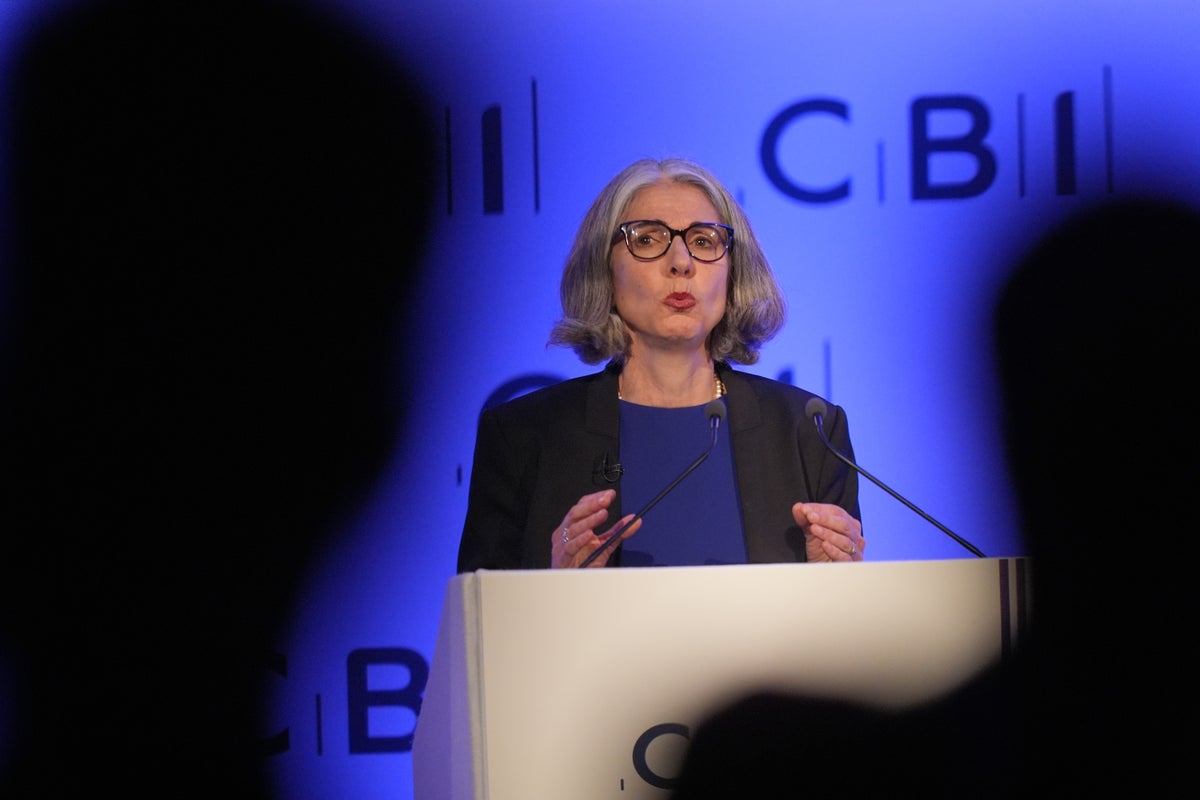
The UK must not “cut ourselves off” from trade opportunities in China despite security and business risks, the head of the Confederation for British Industry has warned.
CBI chief Rain Newton-Smith highlighted that British businesses see increased trade with Chinese firms as an opportunity to drive growth.
Her remarks came as business leaders were questioned by MPs on Parliament’s Business and Trade Select Committee regarding the UK’s economic relationship with China.
Last December, Prime Minister Sir Keir Starmer admitted China poses security threats to the UK but urged for greater business ties.
Ms Newton-Smith, chief executive of one of the UK’s largest business groups, was positive about the Government’s engagement with China.
“You can’t have a growth strategy without a strategy for China,” she said.
“China has the biggest contribution to global growth, is the third largest trading partner, and the world’s largest consumer market.
“The UK is second largest exporter of trade and services.
“We are mindful as all businesses are of security risks but it is really important that we have a strategy towards China.
“This Government has increased the economic engagement with China and including business within this does help us as a country.”
She added: “If we think about the future economy, there is a huge market in China and I think we mustn’t cut ourselves off from some of the opportunities there, even if in some areas there are difficult conversations and negotiations that need to be had.”
Peter Burnett, chief executive of the China-Britain Business Council, told the committee: “There are risks associated with technology advancement, AI, industrial development that they need to assess.
“Increasingly you will find them saying that they need to engage more in China to understand those risks and to develop some of the technologies along some of those risks themselves.”
The consultancy Teneo says airspace restrictions caused by the conflict have forced airlines to reroute many flights.
Source link
Business
Us-India Trade Talks: US–India trade deal: Where do talks stand & what to expect – explained – The Times of India
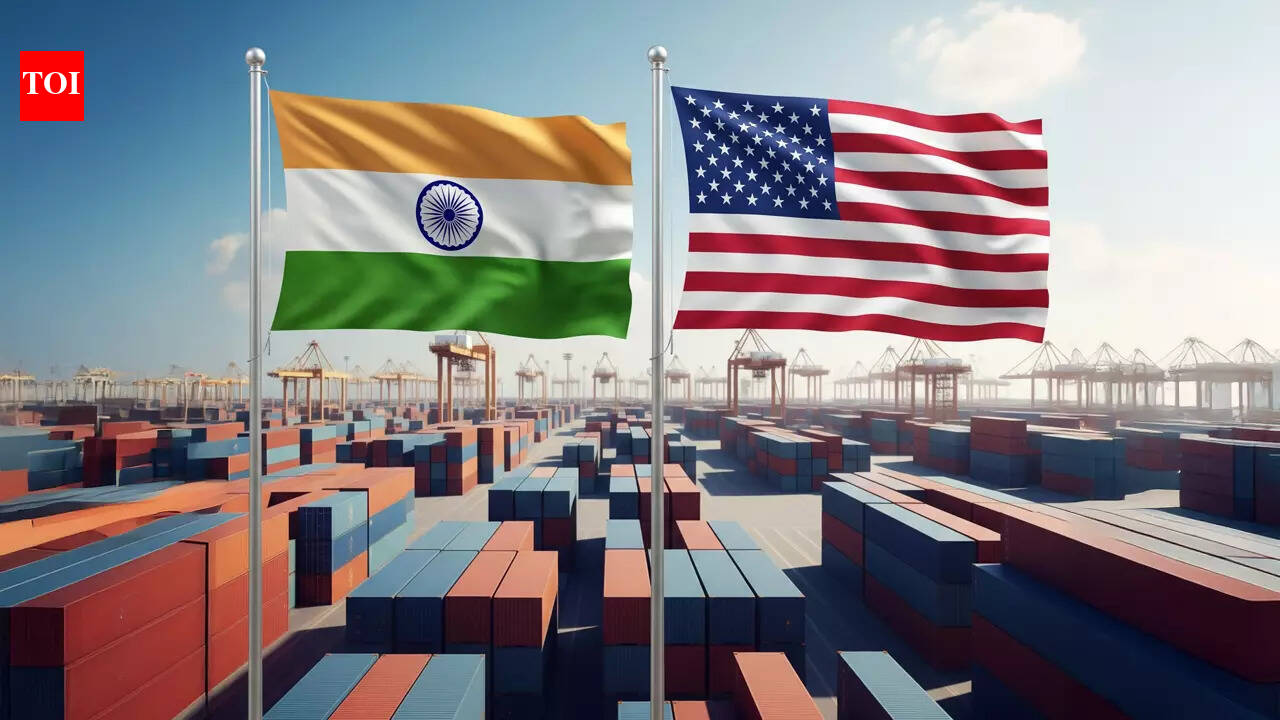
Fresh negotiations between India and the United States are underway in Washington, DC this week, with officials indicating that a long-running effort to seal a bilateral trade agreement is nearing completion.A senior US official, responding to queries on the progress of the talks, said, “The Trump administration and India continue to have positive and productive discussions towards a finalised trade deal.” The negotiations come as Indian representatives visit the American capital for discussions scheduled from April 20 to 22, marking a renewed push to conclude the first phase of the agreement.People familiar with the matter suggested that only a handful of issues remain unresolved. “Most of it is almost done,” one official said on condition of anonymity, adding, “There aren’t many loose ends left.” The current round is expected to concentrate on closing these remaining gaps, with much of the agreement already worked out.The Indian side is being led by Darpan Jain, Additional Secretary in the Department of Commerce, accompanied by officials from the customs department and the ministry of external affairs. On the US side, Brendan Lynch, Assistant US Trade Representative for South and Central Asia, is heading the negotiations under the Office of the US Trade Representative.The timing of the talks follows recent developments in the US tariff structure. After the US Supreme Court struck down reciprocal tariffs imposed under the 1977 International Emergency Economic Powers Act, the US administration introduced a temporary flat 10% tariff on all countries for 150 days starting February 24. These changes had earlier delayed a planned February meeting between the chief negotiators, with discussions now resuming under the revised framework.In addition to tariff-related matters, negotiators are also expected to address two Section 301 investigations initiated by the US Trade Representative. India has contested these probes, seeking their withdrawal and arguing that the notices lack adequate justification.The ongoing discussions build on a framework for an interim agreement announced on February 7, which outlined reciprocal and mutually beneficial trade measures. The framework reaffirmed a commitment to broader bilateral trade agreement (BTA) negotiations launched by US President Donald Trump and Prime Minister Narendra Modi on February 13, 2025, aimed at enhancing market access.US Ambassador to India Sergio Gor described the visit of the Indian delegation as a significant step towards finalising the deal. In a post on X, he said, “The Indian trade delegation will be arriving in Washington this week. A great step to finalise our bilateral trade deal. A win-win for both nations!”Commerce and Industry Minister Piyush Goyal also indicated that the first tranche of the agreement is close to completion. “We have almost finalised our free trade agreement, the first tranche of the bilateral trade agreement with them. We are trying to close the Ts and dots on that and work out what would be the mechanism by which India can get a preferential access, market access in the US market compared to our competitors,” he said at the India-Korea Business Forum in New Delhi.He added, “We have almost finalised the first tranche of bilateral trade agreement with them… We are trying to work out what would be the mechanism on which India would get a preferential access in the US market compared to our competitors. The team will be discussing this while they are in Washington.”With senior officials from both sides now engaged in discussions and most substantive issues already settled, expectations are building that an announcement on the proposed agreement could follow soon.


FIFA to put more World Cup tickets on sale for all games

OpenAI Beefs Up ChatGPT’s Image Generation Model
Britain ‘mustn’t cut ourselves off from China trade opportunities’, CBI chief warns

-

 Fashion5 days ago
France’s LVMH Q1 revenue falls 6%, shows resilience amid Iran war
-

 Sports1 week ago
The case for Man United’s Fernandes as Premier League’s best
-

 Entertainment1 week ago
Palace left in shock as Prince William cancels grand ceremony
-
 Business1 week ago
UK could adopt EU single market rules under new legislation
-

 Entertainment6 days ago
Is Claude down? Here’s why users are seeing errors
-

 Fashion1 week ago
Energy emerges as biggest cost driver in textile margins
-
 Business1 week ago
Delta Air Lines unveils first new Delta One suite in premium cabin arms race
-

 Fashion1 week ago
Asia claims largest share of markets on Kearney FDI Confidence Index