

Tech
Austria finds Microsoft ‘illegally’ tracked students: Privacy campaign group

Austria’s data protection authority has determined that Microsoft “illegally” tracked students using its education software and must grant them access to their data, a privacy campaign group said Friday.
Austria-based privacy campaign group Noyb (None of Your Business) in 2024 lodged a complaint against the company, accusing its Microsoft 365 education software of violating EU data protection rights for children.
Noyb said that Microsoft 365 Education installed cookies that collect browser data and are used for advertising purposes, a practice likely affecting millions of students and teachers across Europe.
In a statement on Friday, Noyb announced that the regulator had issued a decision this week, which “finds that Microsoft 365 Education illegally tracks students and uses student data for Microsoft’s own purposes”.
Microsoft was ordered to provide users, including the complainant—a minor represented by her father—access to their personal data.
The Austrian data protection authority confirmed that it issued a decision on Wednesday but did not give any further details.
While not responding to requests by users for access to data related to its education software, Microsoft “tried to shift all responsibility to local schools” or other national institutions, Noyb said.
“The decision… highlights the lack of transparency with Microsoft 365 Education,” Noyb data protection lawyer Felix Mikolasch said in the statement.
“It is almost impossible for schools to inform students, parents and teachers about what is happening with their data,” he added.
Microsoft said in a statement sent to AFP that the company would review the decision and decide “on next steps in due course”.
“Microsoft 365 for Education meets all required data protection standards, and institutions in the education sector can continue to use it in compliance with GDPR,” it added, referring to the EU’s landmark General Data Protection Regulation.
Noyb, founded by the online privacy activist Max Schrems, has launched several legal cases against technology giants, often prompting action from regulatory authorities over violations of the GDPR.
It has filed more than 800 complaints in various jurisdictions on behalf of internet users.
© 2025 AFP
Citation:
Austria finds Microsoft ‘illegally’ tracked students: Privacy campaign group (2025, October 10)
retrieved 10 October 2025
from https://techxplore.com/news/2025-10-austria-microsoft-illegally-tracked-students.html
This document is subject to copyright. Apart from any fair dealing for the purpose of private study or research, no
part may be reproduced without the written permission. The content is provided for information purposes only.








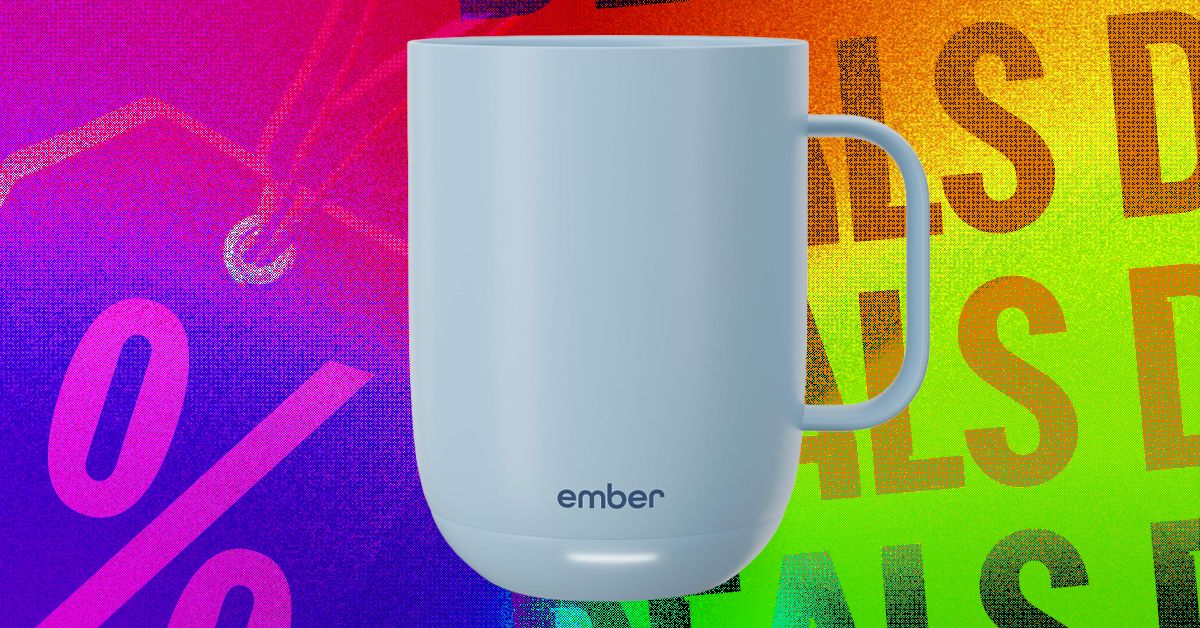
The Ember Smart Mug 2 is niche, but it has a loyal following. Even though we think there are better mug warmers on the market, Ember is like Apple AirPods or Kleenex. People want what they want. Right now, for Mother’s Day, the Ember Smart Mug 2 is on sale for just under $100, a 30 percent discount and a match of the very best price we’ve tracked. You can save at Amazon, Best Buy, and the manufacturer’s website.
This smart mug is probably overkill. It has a smartphone app that notifies you when your coffee reaches the ideal temperature, and its onboard light also provides a visual indicator that your brew is ready. It intelligently adjusts power usage to keep your drink warm when you’re nearby, and turns off when you’re not around. The self-heating mug is on sale in a few variations—10 or 14 ounces, in blue, white, black, and purple.
The mug offers up to 80 minutes of powered heating time, or you can pop it on the included charging coaster to keep the battery going all day. And you don’t need the smartphone app unless you want to precisely dictate your coffee temperature—the mug defaults to 135 degrees Fahrenheit without your specific input.
Our main gripe is that this proprietary warming system is not dishwasher safe. You need to hand-wash each component, and ensure you do so carefully, because the items are not cheap to replace. But if Mom has been putzing around the house drinking perpetually microwaved coffee, perhaps an upgrade is in order. We have additional recommendations in our guide to the Best Coffee Warmers. You may also want to check our related stories on the Best Espresso Machines, Best Coffee Machines, and Best Pod Coffee Makers.
Google DeepMind’s AlphaFold has already revolutionized scientists’ understanding of proteins. Now, the ability of the platform to design safe and effective drugs is about to be put to the test.
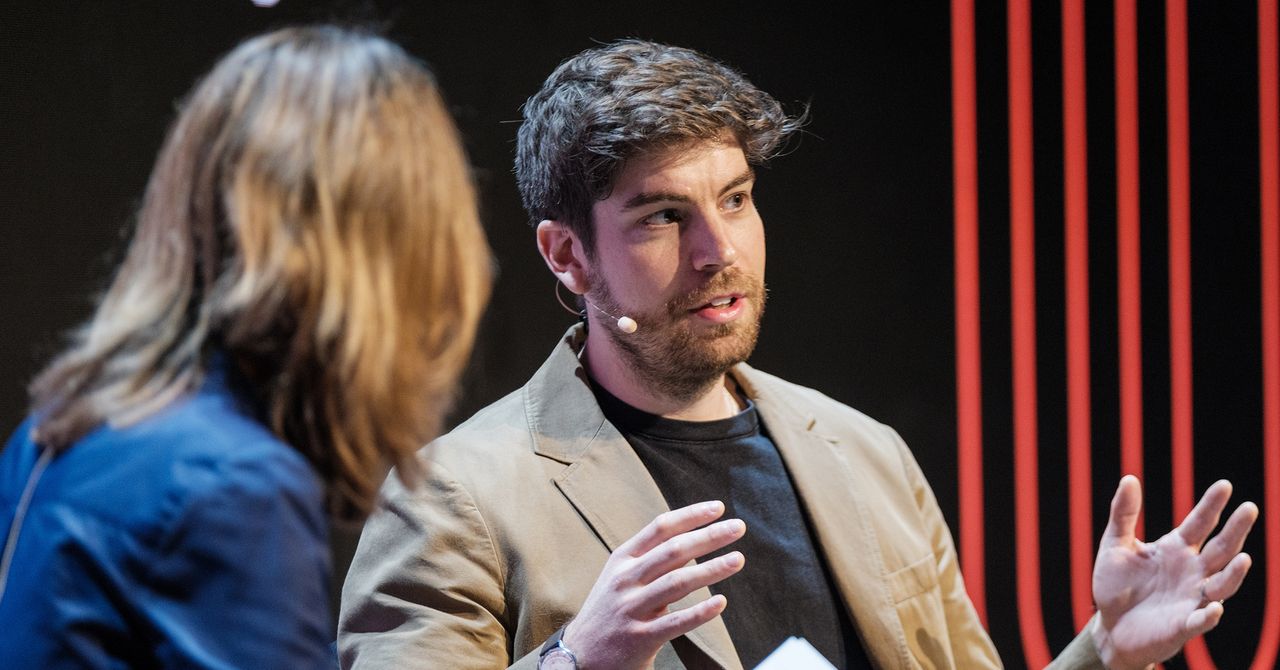
Isomorphic Labs, the UK-based biotech spinoff of Google DeepMind, will soon begin human trials of drugs designed by its Nobel Prize–winning AI technology. “We’re gearing up to go into the clinic,” Isomorphic Labs president Max Jaderberg said on April 16 at WIRED Health in London. “It’s going to be a very exciting moment as we go into clinical trials and start seeing the efficacy of these molecules.”
Jaderberg did not elaborate on the timeline, but it’s later than the company had planned to initiate human studies. Last year, CEO Demis Hassabis said it would have AI-designed drugs in clinical trials by the end of 2025.
Isomorphic Labs was founded in 2021 as a spinoff from Alphabet’s AI research subsidiary, Google DeepMind. The company uses DeepMind’s AlphaFold, a groundbreaking AI platform that predicts protein structures, for drug discovery.
Built from 20 different amino acids, proteins are essential for all living organisms. Long strings of amino acids link together and fold up to make a protein’s three-dimensional structure, which dictates the protein’s function. Researchers had tried to predict protein structures since the 1970s, but this was a painstaking process given the astronomically high number of possible shapes a protein chain can take.
That changed in 2020, when DeepMind’s Hassabis and John Jumper presented stunning results from AlphaFold 2, which uses deep-learning techniques. A year later, the company released an open-source version of AlphaFold available to anyone.
In 2024, DeepMind and Isomorphic Labs released AlphaFold 3, which advanced scientists’ understanding of proteins even further. It moved beyond modeling proteins in isolation to predicting other important molecules, such as DNA and RNA, and their interactions with proteins.
“This is exactly what you need for drug discovery: You need to see how a small molecule is going to bind to a drug, how strongly, and also what else it might bind to,” Hassabis told WIRED at the time.
Since its release, the AlphaFold platform has been able to predict the structure of virtually all the 200 million proteins known to researchers and has been used by more than 2 million people from 190 countries. The breakthrough earned Hassabis and Jumper the Nobel Prize for chemistry in 2024, with the Nobel committee noting that AlphaFold has enabled a number of scientific applications, including a better understanding of antibiotic resistance and the creation of images of enzymes that can decompose plastic.
Earlier this year, Isomorphic Labs announced an even more powerful tool, what it calls IsoDDE, its proprietary drug-design engine. In a technical paper, the company touts that the platform more than doubles the accuracy of AlphaFold 3.
The startup has formed partnerships with Eli Lilly and Novartis to work together on AI drug discovery and is also advancing its own “broad and exciting pipeline of new medicines” in oncology and immunology, Jaderberg said.
“The exciting thing about the molecules that we’re designing is because we have so much more of an understanding about how these molecules work, we’ve engineered them to be very, very potent,” Jaderberg told the audience at WIRED Health. “You can take them at a much lower dose, and they’ll have lower side effects, off target effects.”
Last year, Isomorphic appointed a chief medical officer and announced it had raised $600 million in its first funding round to gear up for clinical trials. Meanwhile, the company has been building a clinical development team. Its mission is to “solve all disease.”
“It’s a crazy mission,” Jaderberg said. “But we really mean it. We say it with a straight face, because we believe this should be possible.”

With huge crowds set to descend on London for the city’s iconic marathon this weekend, IT services provider Tata Consultancy Services (TCS), in partnership with Neurun, has launched a map-based tool powered by artificial intelligence (AI) to help participants and spectators navigate the event.
TCS RunConcierge is said to act as a “digital brain” for the London Marathon, bringing together official guidance, route support and course information in real time – a useful tool for this mass participation event, which saw more than 56,000 runners cross the finish line in 2025 and hundreds of thousands of spectators lining the 26.2-mile route.
Powered by Google Gemini, the platform is designed to deliver instant and reliable guidance for users, whether that be runners seeking information about start line logistics or the location of drinks stops – which will be very much needed with wall-to-wall sunshine forecast on the day – or supporters wishing to locate the best spot from which to cheer on participants or travel as quickly as possible between viewing points.
Users can see their current location on the map, ask for directions to key event destinations and access pre-loaded routes with direct links to Google Maps navigation. The tool also suggests personalised follow-up questions and features voice activation to enable hands-free use on the move. And with 60 languages supported, visitors from all over the world will be able to benefit from the event guidance.
For runners specifically, the immersive 3D map includes an elevation tracker, which could help them plan their strategy.
The partnership between TCS and Neurun is said to be built on a foundation of continuous innovation. New back-end capabilities include a self-serve admin portal that allows event organisers to manage RunConcierge independently, as well as a unique internal AI agent that tests the platform to help maintain content quality and identify improvements
Vinay Singhvi, head of UK and Ireland at Tata Consultancy Services, described the London Marathon as a monumental event, for which its goal is to use technology to make the experience as seamless and enjoyable as possible.
“Our partnership with Neurun allows us to innovate at pace, and the enhanced TCS RunConcierge is a prime example of how we are using AI to solve complex logistical challenges, providing runners and spectators with a trusted companion for the moments that matter most,” he said.
Neurun founder Cade Netscher said its partnership with TCS had been instrumental in developing the RunConcierge tool for the world’s most prestigious marathons, with previous successful deployments at the Sydney and New York City events.
“For London, we’ve integrated the latest AI advancements to create our most powerful and user-friendly version yet. We are excited to see how it helps thousands of people enjoy a more connected and stress-free marathon weekend,” he said.
Separately, in a demonstration of digital healthcare technology in action, TCS has created a digital twin of a para-athlete’s heart, which uses sensors and AI to monitor her heart during training sessions.
The para-athlete, Milly Pickles, is aiming to complete the London Marathon in under four-and-a-half hours next year, and is harnessing digital healthtech to reach her goal.


Iranian FM Abbas Araghchi lands in Pakistan ahead of renewed US talks

Mom’s Microwaved Coffee Won’t Stand a Chance With This Ember Smart Mug Deal

Giants legend Lawrence Taylor, 67, hospitalized after medical emergency: report

-

 Fashion1 week ago
France’s LVMH Q1 revenue falls 6%, shows resilience amid Iran war
-
 Tech1 week ago
CYBERUK ’26: UK lagging on legal protections for cyber pros | Computer Weekly
-

 Sports5 days ago
WWE WrestleMania 42 Night 2: Live match results and analysis
-

 Sports1 week ago
Faheem Ashraf backs Islamabad United’s push, calls league a ‘career-changing platform’
-

 Sports5 days ago
NCAA men’s gymnastics championship: All-time winners list
-
 Business1 week ago
PepsiCo earnings beat estimates as North American food business improves
-

 Tech1 week ago
Anthropic Plots Major London Expansion
-
 Business1 week ago
Oil prices fall again amid Middle East ceasefire hopes