

Business
Badenoch in pledge to ‘get all our oil and gas out of the North Sea’

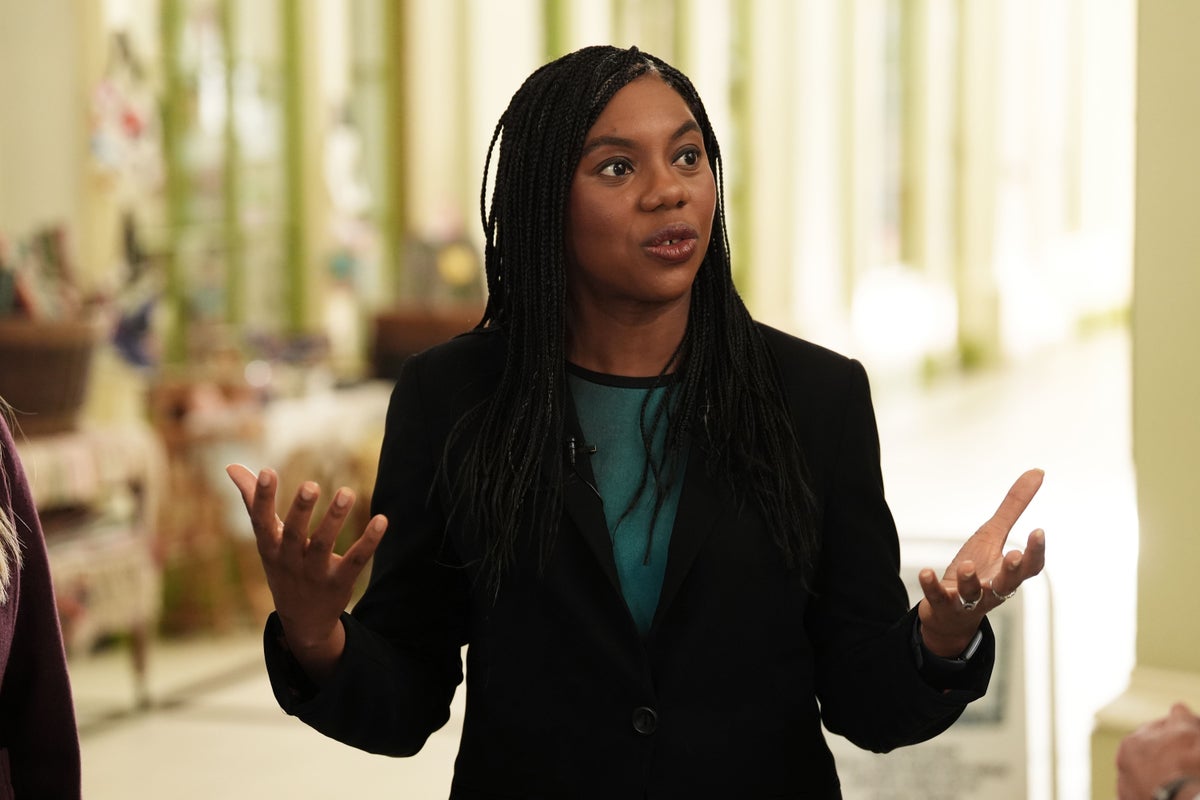
Kemi Badenoch has committed the Tories to extract as much oil and gas as possible from the North Sea.
The Conservative Party leader said it was “absurd” to leave the fossil fuel resources untapped.
But the Government said issuing new licences for oil and gas exploration would “not take a penny off bills” and would accelerate the “worsening climate crisis”.
A Conservative government would make “maximising extraction” its goal if it wins power, rather than measures aimed at shifting the North Sea industry away from fossil fuels.
Mrs Badenoch will use a speech in Aberdeen on Tuesday to set out her plans.
She will announce that the Tories plan to completely overhaul the North Sea Transition Authority (NSTA), which oversees the issuing of licences, dropping the word transition and giving it a simple order to extract the maximum possible amount of fossil fuels.
Ahead of her speech, Mrs Badenoch pledged that “we are going to get all our oil and gas out of the North Sea”.
She said: “We are in the absurd situation where our country is leaving vital resources untapped while neighbours such as Norway extract them from the same seabed.
“With the ONS (Office for National Statistics) confirming that economic growth is down partly because of falling oil and gas extraction, we cannot afford not to be doing everything to get hydrocarbons out the ground.
“Britain has already decarbonised more than every other major economy since 1990, yet we face some of the highest energy prices in the developed world.
“This is not sustainable and it cannot continue. That is why I am calling time on this unilateral act of economic disarmament and Labour’s impossible ideology of net zero by 2050.
“Russia’s war in Ukraine has only underscored that our energy supplies are a matter of national security.”
A Department for Energy Security and Net Zero spokesman said: “We are already delivering a fair and orderly transition in the North Sea to drive growth and secure skilled jobs for future generations, with the biggest ever investment in offshore wind and three first of a kind carbon capture and storage clusters.
“We are committed to delivering the manifesto commitment to not issue new licences to explore new fields because they will not take a penny off bills, cannot make us energy secure, and will only accelerate the worsening climate crisis.”
A Labour Party spokeswoman said: “We’ll take no lectures from Kemi Badenoch. Every family and business paid the price of the Conservatives’ failure to secure the UK’s energy.
“The Conservatives oversaw thousands of lost jobs in the North Sea. In contrast, this Labour Government is investing in the North Sea’s clean energy future, creating good jobs in offshore wind, hydrogen and carbon capture and storage, as we take back control of our energy for good.”
Offshore Energies UK chief executive David Whitehouse said: “As long as the UK continues to use oil and gas, it makes sense to produce as much of it as we can here at home.
“Every barrel of oil and gas we leave in the North Sea is a barrel we’ll need to import.
“Even in a net zero future, the UK will use 10-15 billion barrels of oil and gas between now and 2050. Current plans show the UK will produce less than four billion barrels, leaving us increasingly reliant on imports.
“Producing it here supports jobs, strengthens our economy, and improves our energy security.”
Brent crude sinks by a tenth after Iran says the key waterway is open for commercial ships for the rest of the ceasefire.
Source link
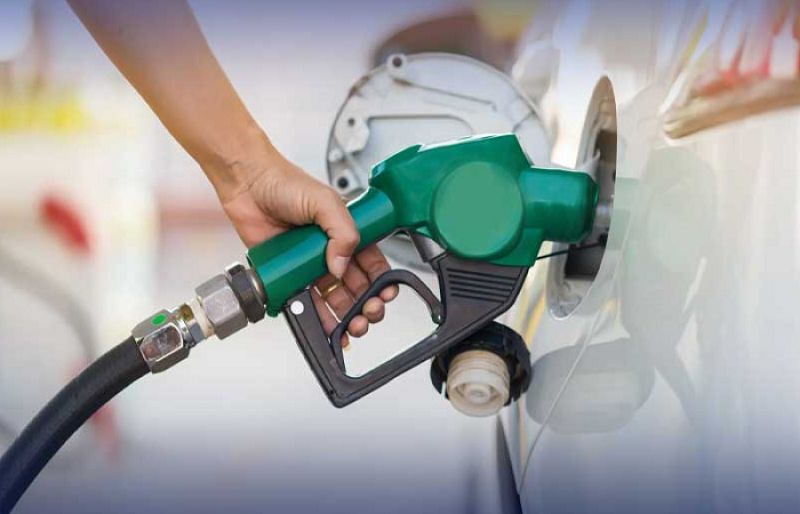
Oil prices tumbled on Friday after Iranian officials said they would allow commercial traffic to resume in the Strait of Hormuz. This lifted equity markets in Europe and New York, where major indices hit new records.
Citing the ceasefire between Israel and Lebanon, Iran’s Foreign Minister Abbas Araghchi said Tehran would lift its blockade on shipping through the key Gulf energy trade route.
“In line with the ceasefire in Lebanon, the passage for all commercial vessels through Strait of Hormuz is declared completely open for the remaining period of ceasefire,” Araghchi said.
Traffic in the strategic waterway, through which one-fifth of the world’s crude oil normally flows, has been disrupted by Iran since the US-Israeli offensive began on Feb. 28. At one point, this sent oil prices to a peak of nearly $120 a barrel and roiled the global economy.
Both Brent, the benchmark international contract, and its US equivalent WTI fell below $90 per barrel following Tehran’s announcement. Brent later cut its losses and finished at $90.38 a barrel, down 9.1%.
‘Immediate impact’
“This news is having an immediate impact on markets,” said Kathleen Brooks, research director at XTB.
The move also sent a jolt through equity markets, extending a rally in New York. There, equities have pushed ever higher since late March in anticipation of a breakthrough in the Middle East crisis.
“We had seen a big move the last two weeks, and now it’s just really pricing completely out the worst-case scenario, said Angelo Kourkafas, from Edward Jones.
Kourkafas also pointed to underlying strength in the US economy that should get more attention in the coming period as geopolitical concerns ebb.
“Geopolitical developments are moving in the right direction, and at the same time, the earning strength is hard to ignore,” Kourkafas said.
The broad-based S&P 500 finished at 7,126.06, up 1.2% for the day and 4.5% for the week.
‘Good news’
Earlier, European stocks closed higher, with both Frankfurt and Paris gaining 2%.
US President Donald Trump cheered the reopening of the Strait of Hormuz in an interview with AFP.
“We’re very close to having a deal,” Trump said in a brief telephone call with AFP from Las Vegas. He added there were “no sticking points at all” left with Tehran.
But Iran quickly pushed back on one key point.
Iran’s foreign ministry said Friday that its stockpile of enriched uranium would not be transferred “anywhere.” It rejected an earlier claim by Trump that the Islamic Republic had agreed to hand it over.
Shipping industry figures, meanwhile, gave a cautious welcome to Iran’s announcement.
A spokesman for German transportation giant Hapag-Lloyd, which has ships stuck in the Gulf, told AFP by phone that the reopening was “in general… good news.”
But he cautioned that shippers still needed details of what route vessels could take and in what order, citing fears of mines.
“One thousand ships cannot just go now to the entrance of the strait, that will be chaos. They (the Iranians) need to give clear orders,” said the spokesman, Nils Haupt.
“We would be ready to go very soon if some of these open questions can be solved within the weekend.”
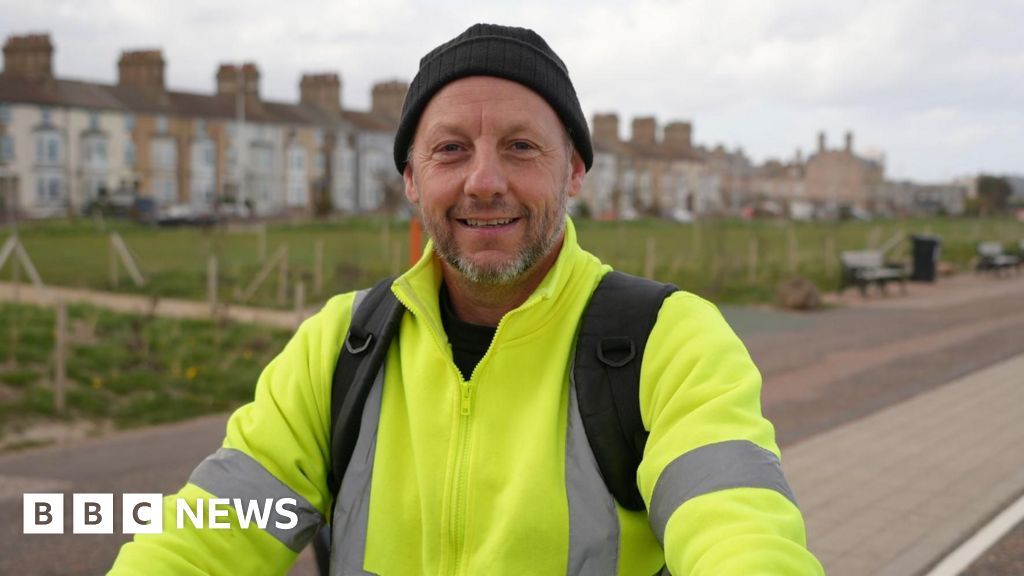
One man says he cancelled his holiday to Spain due to the rising costs and uncertainty.
Source link


Nathalie Baye, low-key legend of French cinema, dies aged 77

Transfer rumors, news: Liverpool eye Wharton amid Man United, Real Madrid interest

The Best Movies to Stream This Month

-

 Politics1 week ago
Indian airlines hit hardest after Dubai limits foreign flights until May 31
-

 Entertainment5 days ago
Palace left in shock as Prince William cancels grand ceremony
-

 Sports5 days ago
The case for Man United’s Fernandes as Premier League’s best
-
 Politics1 week ago
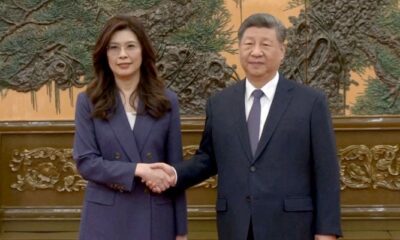
Chinese, Taiwanese will unite, Xi tells Taiwan opposition leader
-

 Sports1 week ago
Documents: NC State trainer initiated ‘unwelcome,’ ‘sexual’ contact
-

 Entertainment1 week ago
Dua Lipa hits major career high ahead of wedding with Callum Turner
-
 Business5 days ago
UK could adopt EU single market rules under new legislation
-
 Business1 week ago
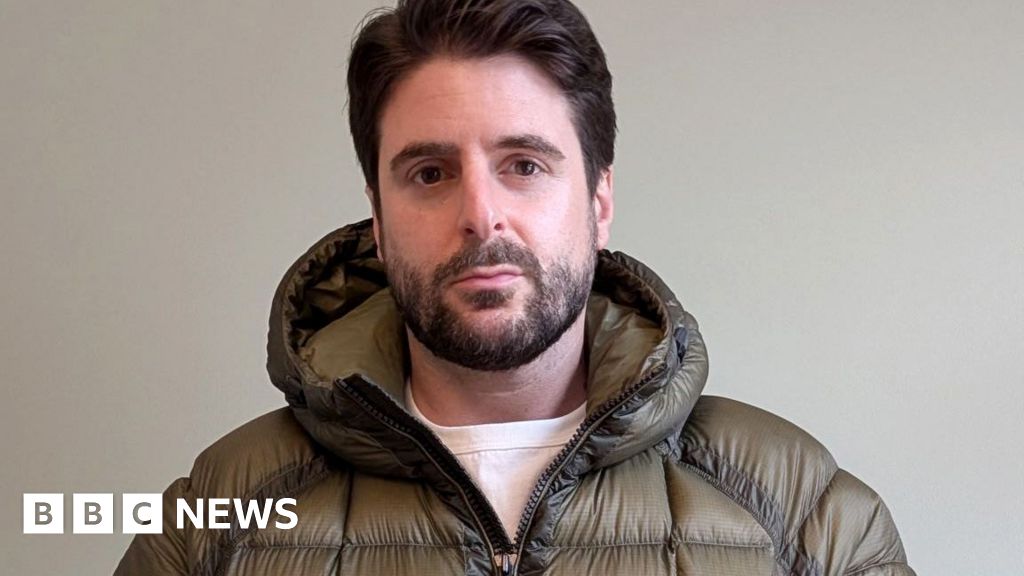
He paid $248 in illegal tariffs for this coat. Will he ever get it back?