

Business
Rhode Island’s ‘Taylor Swift Tax’ on vacation homes of the wealthy is spreading to other states


Taylor Swift attends the 67th GRAMMY Awards on February 02, 2025 in Los Angeles, California.
Frazer Harrison | Getty Images Entertainment | Getty Images
A version of this article appeared in CNBC’s Inside Wealth newsletter with Robert Frank, a weekly guide to the high-net-worth investor and consumer. Sign up to receive future editions, straight to your inbox.
A new push by states to tax the real estate of the wealthy has sparked a backlash among brokers and potential buyers, who say the taxes punish the most important local spenders.
From tax hikes on pricey second homes in Rhode Island and Montana to Cape Cod’s proposed transfer tax on homes over $2 million and the L.A. mansion tax, state and local governments see a revenue gold mine in the pricey properties of the wealthy.
“It’s a smack in the face to people who just spend money here,” said Donna Krueger-Simmons, sales agent with Mott & Chace Sotheby’s International in Watch Hill, Rhode Island.
The tax hikes are being driven by tighter state budgets and populist anger over housing costs. States are looking to offset budget cuts expected from the new tax and spending bill in Washington. At the same time, the housing market has become a tale of two buyers, with the middle class and younger families struggling to afford homes while the luxury housing market thrives from wealthy all-cash buyers.
The solution for many states: tax the homes of the rich.
Rhode Island’s new levy, nicknamed “The Taylor Swift Tax,” is among the most extreme. The popstar bought a beach house in the state’s elite Watch Hill community in 2013.
The measure imposes a new surcharge on second homes valued at more than $1 million. For non-primary residences, or those not occupied for more than 182 days a year, the state will charge $2.50 for every $500 in assessed value above the first $1 million. That charge is on top of existing property taxes and will add up to big increases for luxury homes in Newport, Watch Hill and other well-heeled, summer communities in the state.
Swift’s house, for instance, is assessed at around $28 million, according to local real estate records. Her current property taxes are estimated at around $201,000 a year. The new charges will add another $136,442 to her annual taxes, bringing her yearly total to $337,442 – even though locals say she rarely visits.
Real estate brokers say the increase targets the very taxpayers who already contribute the most. Wealthy second-homeowners pay hefty property taxes but don’t use many local services, since their primary residences are in New York; Boston; Palm Beach, Florida; or other locales. Their kids typically don’t attend the local schools, and they’re infrequent users of the police, fire, water and other municipal services since most stay for only 10 to 12 weeks out of the year.
“These are people who just come here for the summer, spend their money and pay their fair share of taxes,” said Krueger-Simmons. “They’re getting penalized just because they also live somewhere else.”
Brokers and longtime residents say the summer residents of Newport, Watch Hill and other seasonal beach towns are the economic engines for local businesses, restaurants and hotels.
“You’re just hurting the people who support small business,” said Lori Joyal, of the Lila Delman Compass office in Watch Hill. “You’re chasing away the people who spend most of the money in these towns.”
Rhode Island is also hiking its conveyance tax on luxury real estate starting in October. The tax on real estate sales will be an additional $3.75 for each $500 paid above $800,000 for a real estate purchase. At the same time, the state’s steep estate tax deters many of the ultra-wealthy from living there full-time.
Brokers say some second-home owners are considering selling and many would-be buyers are pausing their purchases. While the tax hike alone isn’t expected to lead to any significant wealth flight, Joyal said potential buyers in Rhode Island are already looking at coastal towns in Connecticut as alternatives.
“It’s always about choices,” she said. “At the end of the day it’s about how they can choose to spend their discretionary dollars. Connecticut has some beautiful coastal towns without some of these other high taxes.”
FILE – In this May 27, 2013, file photo, people walk past a house owned by Taylor Swift in the village of Watch Hill in Westerly, R.I.
Dave Collins | AP
Montana has passed a similar tax. The influx of Californians and other affluent newcomers who poured into the state during Covid has led to soaring home prices and growing resentment over gentrification. Meanwhile, the state’s low income tax rate and lack of a sales tax has left it little room for revenue increases to handle the necessary increase in services.
In May, the state passed a two-tier property tax plan, lowering rates for full-time residents and raising taxes on second homes and short-term rentals. For primary residences and long-term rentals valued at or below the state’s median home price, the tax rate will be 0.76%. Homes worth more than that will face a tiered-rate system of up to 1.9% on any value over four times the median price.
The Montana Department of Revenue expects the changes, which will start next year, will hike second-home taxes by an average of 68%. Brokers say some buyers are waiting to see the tax bills next year before making any decisions about whether to buy or sell.
“I’ve heard about some buyers who have put on the brakes to wait for the dust to settle and see what happens,” said Valerie Johnson, with PureWest Christie’s International Real Estate in Bozeman, Montana.
Johnson said that while the tax was touted by legislators as hitting wealthy second-home owners, it will also hit longtime locals who own investment homes and rent them out for income.
“These are small businesses for many people,” she said.
Manish Bhatt, a senior policy analyst at the Tax Foundation, said tax hikes aimed at wealthy second-home owners may be popular politically, but they rarely make for successful or efficient tax policy. Real property tax reform should be broad based, rather than focused on taxpayers who are singled out just because they don’t live in a community full-time, he said.
“There is a grab to find revenue right now,” he said. “But taxing second-home owners could have the opposite impact – dissuading people from owning a second home or continue to own in those communities.”
While the new taxes alone might not drive out the wealthy, “we do know that taxes are important to businesses and individuals and could cause people to make a decision to buy in another nearby state,” Bhatt said.
The projected revenue from the new taxes may also disappoint. When Los Angeles passed its so-called “mansion tax” in 2022, proponents touted revenue projections of between $600 million to $1.1 billion a year. The tax, imposed on real estate sales over $5 million, has only raised $785 million after more than two years, according to the Los Angeles Housing Department.
Higher interest rates that hurt the housing market have played a role, experts say. Yet Michael Manville, professor of urban planning at the UCLA Luskin School of Public Affairs, said wealthy buyers and sellers also reduced transactions in response to the tax.
“The lower revenue is a reason to be concerned because it suggests that the tax might actually be reducing transactions, which in turn can reduce housing production and property tax revenue,” he said.



Business
Pakistan considering buying LNG on spot market to offset supply disruptions caused by Iran war: petroleum minister – SUCH TV
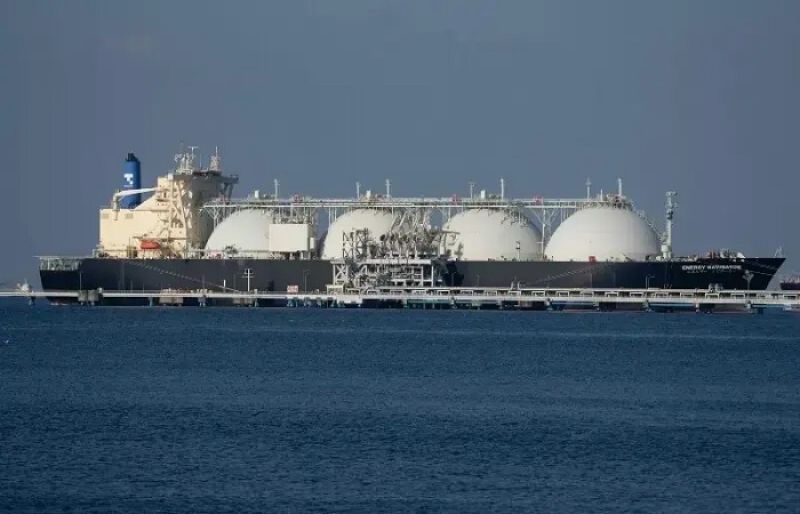
Pakistan is considering buying liquefied natural gas (LNG) on the spot market to offset supply disruptions caused by the Iran war, but would favour government-to-government deals to avoid having to pay steep premiums, Petroleum Minister Ali Pervaiz Malik has told Reuters.
Qatar’s force majeure forced Pakistan to make costly spot purchases or find alternative fuels ahead of summer demand.
Spot LNG cargoes have surged to $20 to $30 per mmBtu amid the Middle East conflict, Malik says, adding that purchases would depend on whether prices are acceptable to the power sector, including under existing government-to-government arrangements with Azerbaijan’s Socar.
Pakistan has also been routing some crude supplies via Saudi Arabia’s Red Sea port of Yanbu to bypass the Strait of Hormuz, with Malik saying insurance costs on that route were lower than routes crossing or near Hormuz.
Pakistan imports nearly all of its oil, much of it via the Strait of Hormuz, and remains exposed to supply shocks despite cutting its LNG reliance in recent years, as gas is still needed to meet the country’s peak summer power demand.
It has begun commercial output from its highest-ever producing oil and gas well, as it shores up domestic supply.
“We have arrangements in place to meet domestic and industrial requirements,” Malik said, adding that gas disruptions have not led to major curbs, with eight of 10 fertiliser plants operating.
Officials are also considering the use of costlier fuels such as furnace oil to limit load shedding, although at the expense of higher tariffs. Malik warned that prolonged shortages could threaten food security.
The Baragzai X-01 well in Khyber Pakhtunkhwa is producing about 15,000 barrels of oil per day and 45 million cubic feet of gas, with output expected to rise further, the state-run operator Oil and Gas Development Company Ltd (OGDC) said.
The well could reach up to 25,000 barrels per day and 60 million cubic feet per day of gas, making it Pakistan’s highest-producing well, and may contribute around 10 per cent of crude output while cutting the country’s import bill by about $329 million annually, OGDC said.

The Carnival Miracle cruise ship is anchored in the Pacific Ocean near Kailua Bay during a 15-day cruise, in Kailua-Kona, Hawaii, on Jan. 14, 2024.
Kevin Carter | Getty Images
The global cruise industry is reporting record demand and renewed consumer enthusiasm, but the leaders helming the world’s largest cruise companies say the sector is also facing some of the most complex challenges it has seen in decades.
“We are not an alternative vacation anymore. We are a vacation,” Carnival Corporation CEO Josh Weinstein said during a keynote panel Tuesday at Seatrade Global, a cruise industry conference.
As demand rises, passengers are getting younger; one-third of cruise travelers are now under 40, according to the 2026 State of the Cruise Industry report released by Cruise Lines International Association (CLIA). One-third of trips are multi-generational, often families traveling together. And nearly a third of cruisers take vacations by ship multiple times a year, according to the report.
The cruise industry hosted 37 million passengers worldwide last year and anticipates reaching 42 million annually by 2029, CLIA found.
“That mainstream demand sets us up very well for volatility,” Weinstein said.
A resilient business in an uncertain world
At least six cruise ships remain stranded in the Persian Gulf by the impasse at the Strait of Hormuz. One of them is the MSC Euribia.
Though roughly 1,500 passengers were safely evacuated amid Dubai airport shutdowns and missile warnings after the U.S. and Israel launched an attack on Iran in late February, there are still some crew on board to maintain the vessel.
“Obviously, we live day by day. The situation is very fluid,” said MSC Cruises Executive Chairman Pierfrancesco Vago during the Seatrade Global keynote.
Already the shutdown of marine traffic in the Strait has disrupted itineraries in the Middle East and southern Europe. Threats of blockades, mines on the sea floor and on-and-off-again negotiations are keeping cruise executives guessing about when they can move their ships.
“Morning is one thing, lunchtime is another, dinner is another again,” Vago said of the numerous and often conflicting announcements from government leaders. “We need to stay cool and actually be ready to move out as soon as the possibility and opportunity comes back.”
Despite these challenges, cruise executives argue the industry has never been better positioned to absorb shocks.
“Every crisis we’ve faced — financial, geopolitical or health-related — we adapted,” Carnival’s Weinstein said. “There’s no reason to believe it will be different this time.”
Fuel costs, sustainability and the push to use less
Fuel price volatility has once again put energy strategy front and center for the cruise industry, particularly for Carnival, which does not hedge fuel prices.
“Nobody asks us about hedging when prices are low,” Weinstein said. “But our strategy has been consistent: use less fuel.”
The cruise industry aims to have net zero emissions by 2050, but CEOs agree that they can’t achieve that goal solely by conserving fuel.
Industry leaders see biofuels, green methanol and synthetic liquid natural gas (produced by combining captured carbon with hydrogen) as the most promising solutions to meet their fuel needs.
Royal Caribbean Group CEO Jason Liberty said cruise lines are already investing hundreds of millions of dollars annually in technology and energy innovation, but availability of alternative fuels remains the bottleneck.
“It’s not about what we want to use,” Liberty said. “It’s about what’s scalable and available.”
“We’re going to have heavy competition with other sectors for those fuels as well. There’s no guarantee we get them,” added Bud Darr, president and CEO of Cruise Lines International Association.
Tailwinds for growth
Even as the industry navigates choppy seas, cruise companies are looking for their next avenues for growth.
Technological advances in artificial intelligence are being used to reduce food waste, plot routes and itineraries and increase efficiency. Cruise line executives say the most important application is to reduce friction in the guest experience.
“A more flexible work environment has been a big demand driver for us,” Liberty said. Most Royal Caribbean ships now host a Starlink connection for fast internet aboard.
Private destinations, the exclusive ports or islands owned or controlled by a cruise line, continue to be a priority for investment. Royal Caribbean, for instance, currently has three private destinations on its itineraries but will have eight by 2028.
It’s developing a major land-based hub in Puerto Williams, Chile, to reduce or eliminate the amount of time passengers to Antarctica have to spend transiting the punishing seas of the Drake Passage.
And the luxury segment, though a small percentage of the overall industry, is growing rapidly. Customers are increasingly interested in exploring health, wellness and longevity — and those trends are showing up in their vacation habits, too.
Smaller ships and river cruising accommodate specialized interests in eco-tourism, off-the-beaten path (not yet discovered by social media influencers) locales and culinary or artistic aficionados.
Social-media driven demand in tourism has also sparked backlash from some destinations, overwhelmed by the crowds. The cruise industry is working with destinations on what it calls managed, predictable tourism.
Vago said MSC worked with Dubrovnik, Croatia, for example, to coordinate the flow of visitors to the medieval town, which wants the tourism spending but without destruction of quality of life for residents.
“Many of these coastal communities actually appreciate that. We plan in advance. We create itineraries three years in advance,” Vago said.
“The strength of this industry is its ability to evolve without losing its soul,” Liberty said. “That soul is hospitality.”
Leadership change and fresh perspective
At Norwegian Cruise Line Holdings, the challenge for new CEO John Chidsey is righting the ship.
In his first earnings call, just days after taking the helm, Chidsey acknowledged the company had committed numerous missteps.
Margins are under pressure. Shares have been volatile. Critics have questioned a push to expand cruise itineraries in the Caribbean before Norwegian’s private island was fully completed.
Earlier this year, Elliott Investment Management took an activist stake in Norwegian, which may have provided impetus for the board to make a leadership change.
Chidsey told CNBC Elliott’s goals align with his own and that he intends to create a culture of accountability and urgency where teams are working together rather than separated into silos.

The Seatrade conference was a cruise industry debut for Chidsey, formerly the CEO of Subway, Burger King and Avis.
When asked what a “sandwich guy knows about cruising,” Chidsey didn’t miss a beat, insisting he’s a “turnaround guy not a sandwich guy.”
“I knew nothing about fast food when I went there. I think having a fresh set of eyes is really what Norwegian needs. And it’s all about execution,” he said.
Business
India rejects US Section 301 allegations, seeks termination; calls for resolution via talks – The Times of India

India has strongly pushed back against the United States’ Section 301 investigations, rejecting allegations of unfair trade practices and seeking immediate termination of the probes.In its submission to the US Trade Representative (USTR), India “firmly denies all allegations made in the initiation notice” related to claims of excess structural capacity and production in manufacturing sectors, PTI reported. “The initiation Notice is premised on aggregate macroeconomic indicators, without identifying any specific act, policy or practice of the Government of India that could be considered ‘unreasonable or discriminatory’ and that ‘burdens or restricts United States commerce’ as required by Section 301(b) of the Act,” the submission said. India said the notice provides no “cogent rationale” or prima facie evidence to support allegations that the country has structural excess capacity leading to a trade surplus with the US. “India submits that the present investigation does not satisfy the requirements for the initiation of this investigation pursuant to Sections 301 and 302 of the Trade Act of 1974. India calls upon the USTR to make a negative determination and terminate the investigation forthwith,” it said. The government also urged that trade concerns be addressed through ongoing bilateral negotiations rather than unilateral measures, noting that both countries are engaged in discussions for a Bilateral Trade Agreement. “India remains willing to constructively engage with the United States in the underlying investigation, including any consultation,” it added. Separately, responding to another Section 301 probe launched on March 12 on alleged failure to act against forced labour, India said the investigation does not meet legal requirements for initiation. “India requests the USTR to make a negative determination and terminate the investigation against India. Additionally, India remains willing to constructively engage with the United States in the underlying investigation, including any consultation,” the submission said. The responses have been filed by the commerce and industry ministry on behalf of the government. On March 11, the USTR initiated investigations into policies and industrial practices of 16 economies, including India, China, Japan and the European Union, to examine “unfair foreign practices” affecting American manufacturing. A day later, on March 12, the USTR launched a broader probe covering 60 economies, including India and China, to assess whether their practices related to forced labour imports are unreasonable or discriminatory and restrict US commerce. India said its submissions represent the public, non-confidential summary of its response, while the full version has been filed separately as confidential.


A culinary thriller with explosive star power
Pakistan considering buying LNG on spot market to offset supply disruptions caused by Iran war: petroleum minister – SUCH TV

Pakistan steps in as US enforces naval blockade on Iran

-

 Fashion1 week ago
India’s exports face reset as EU links trade to carbon metrics: EY
-

 Entertainment1 week ago
Queen Elizabeth II emotional message for Archie, Lilibet sparks speculation
-

 Entertainment1 week ago
Lamar Odom shocking response to Khloé Kardashian account of his overdose
-

 Tech1 week ago
As the Strait of Hormuz Reopens, Global Shipping Will Take Months to Recover
-

 Tech1 week ago
Azure customers up in arms over ‘full’ UK South region | Computer Weekly
-

 Fashion1 week ago
CII submits 20-pt agenda to Indian govt to back firms hit by Iran war
-

 Tech7 days ago
This AI Button Wearable From Ex-Apple Engineers Looks Like an iPod Shuffle
-

 Politics6 days ago
Indian airlines hit hardest after Dubai limits foreign flights until May 31