

Politics
Bahraini Intelligence Arrests Indian Telecom Engineer Over Alleged Espionage Links



MANAMA: Bahraini intelligence authorities have arrested an Indian telecommunications engineer on allegations of passing sensitive information to Israel’s intelligence agency.
According to preliminary reports, the suspect — identified as Nitin Mohan — was detained for allegedly transmitting geospatial data, photographs and video reconnaissance of strategic locations to Mossad.
Officials say the information reportedly included site imagery and operationally sensitive details that could assist foreign intelligence services in conducting analysis or targeting assessments.
Investigation Underway
The Ministry of Interior Bahrain confirmed the arrest but has not released detailed information about the technical aspects of the investigation.
Authorities have also not disclosed:
the specific locations involved
the nature of the sensitive infrastructure allegedly monitored
whether additional individuals are under investigation
Security Concerns
Analysts say such cases typically involve the transmission of strategic infrastructure data, which may include communication networks, military sites or critical facilities.
Officials indicated that further details may be released once the investigation progresses.
The case has drawn attention amid heightened regional security concerns and ongoing geopolitical tensions in the Middle East.
- Power cuts, diesel shortages hitting garment factories.
- Bangladesh receives diesel cargoes amid fuel crunch.
- Country relies on imports for 95% of energy needs.
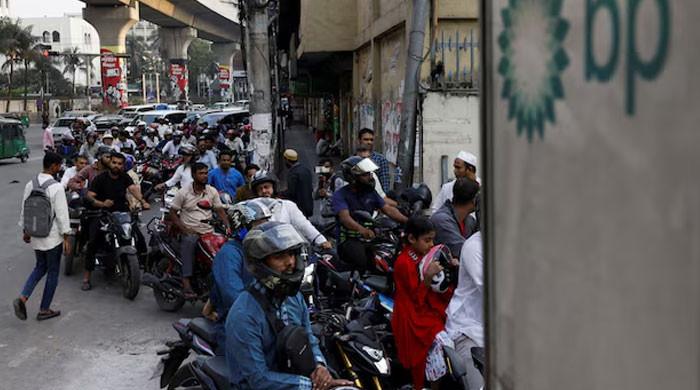
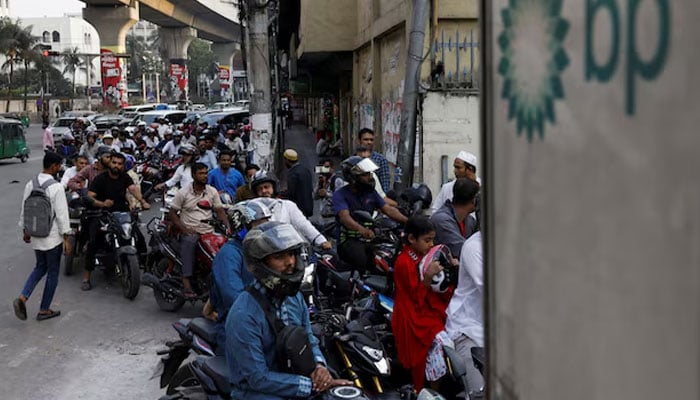
Bangladesh has begun receiving diesel from suppliers including China and India, with officials saying the country now has enough fuel to cover about one month of demand, with arrangements under way for another month, after the US-Israeli war on Iran disrupted shipments, including to the massive garments industry.
The South Asian nation of 175 million people, which relies on imports for roughly 95% of its energy needs, has imposed fuel rationing for vehicles, restrictions on diesel sales and closed universities as the war on Iran causes severe disruption to Middle East oil exports.
Some garment makers in Bangladesh, the world’s second‑largest clothing exporter after China, have already complained they do not have enough diesel to run their back-up generators when public utilities cut power supplies.
Mahmud Hasan Khan, president of the Bangladesh Garment Manufacturers and Exporters Association, said power cuts had doubled to up to five hours a day since the war began on February 28.
“When power goes out, we have to run our standby generators on diesel, but we can’t buy enough diesel anymore, and it’s causing problems for us,” he said.
State-run Bangladesh Petroleum Corporation (BPC) is receiving around 60,000 metric tons of diesel from three traders, with a further 90,000 metric tons scheduled to arrive later this month, two energy officials said, requesting anonymity because they were not authorised to speak to the media.
A 27,000-metric-ton diesel cargo from PetroChina arrived at Chittagong port on Monday, while a cargo of 28,000 metric tons from Vitol is waiting at the port’s outer anchorage, a BPC official said.
In addition, around 5,000 metric tons of diesel is being supplied through a cross-border pipeline from India’s Numaligarh Refinery. Officials said talks are ongoing to secure some 30,000 metric tons from Indian Oil.
“We have supplies for one month, and another month is being arranged,” a BPC official said.
The BPC did not immediately respond to requests for comment.
Bangladesh normally needs about 380,000 metric tons of diesel each month, but officials said that since rationing began, one estimate put current monthly requirements at roughly 270,000 metric tons.
Officials said securing refined fuel cargoes had been relatively easy because most of the traders did not rely on the disrupted Gulf shipping routes used for crude oil shipments.
However, prices have increased as a result of the intense market volatility triggered by the Middle East crisis, they added.
Bangladesh also imports around 1.4 million metric tons of crude oil a year for its refineries under long-term contracts with Saudi Aramco and Abu Dhabi National Oil Company (ADNOC).
However, supplies from Saudi Aramco and ADNOC could be affected because their crude shipments to Bangladesh must pass through the Strait of Hormuz. One Aramco cargo of about 100,000 tons has already been delayed in the Gulf due to the ongoing crisis, officials said.
Severe gas shortages have already forced Bangladesh to halt operations at four of its five state‑run fertiliser factories, redirecting available gas to power plants.
- War sends stock markets slumping and oil prices soaring.
- If war starts up again, Iran will be hit even harder, says Trump.
- Trump tells lawmakers campaign would be “short-term excursion.”
President Donald Trump on Monday said that US military operations in Iran would be ending soon, reassuring markets that have been thrust into chaos by a war still reverberating across the Middle East.
The war had sent stock markets slumping and oil prices soaring on Monday as Tehran, under new leader Mojtaba Khamenei, fired a fresh barrage of missiles at its Gulf neighbours and signalled that the strategic Strait of Hormuz would likely remain closed.
But Wall Street climbed into positive territory on Trump’s signals of a short war, with Tokyo and Seoul also opening Tuesday strongly, despite the president’s continued threats to expand the campaign if Iran did not fall in line.
Oil prices also reversed course, falling as much as 5% a day after benchmark crude rocketed past $100 a barrel — its highest level since Russia’s invasion of Ukraine in 2022.
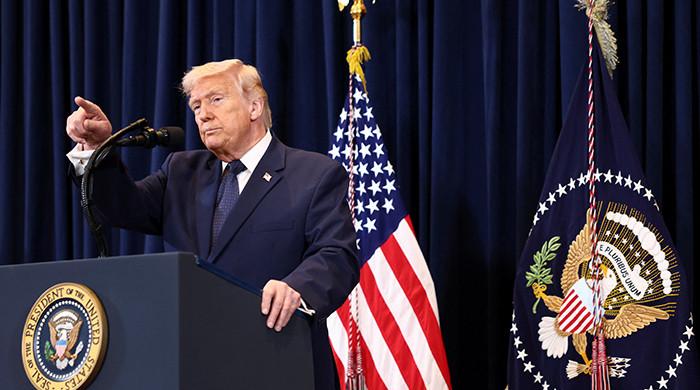
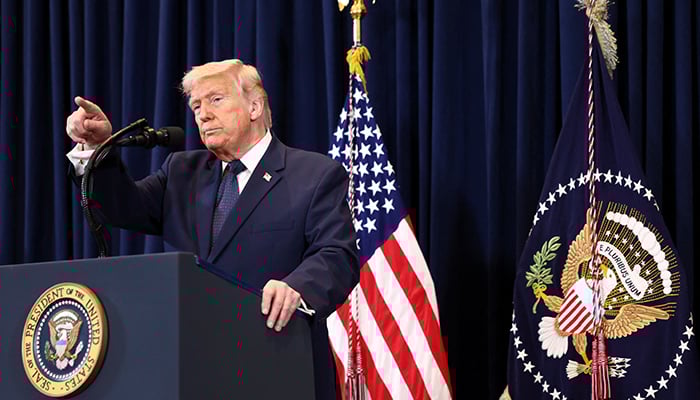
“It’s going to be ended soon, and if it starts up again they’ll be hit even harder,” Trump told a news conference in Florida, after telling lawmakers that the campaign would be a “short-term excursion.”
Iran’s Revolutionary Guards replied Tuesday that they, not the Americans, would “determine the end of the war”.
Trump’s remarks came on the first day in power for the 56-year-old son of late leader Ali Khamenei, with Iranian forces launching a fresh wave of missile and drone attacks on Saudi Arabia, Bahrain, Qatar, the UAE and Israel.
Another missile was also fired at Nato member Turkiye, the second such incident in five days, with the alliance’s air defences intercepting it before it could reach its target.
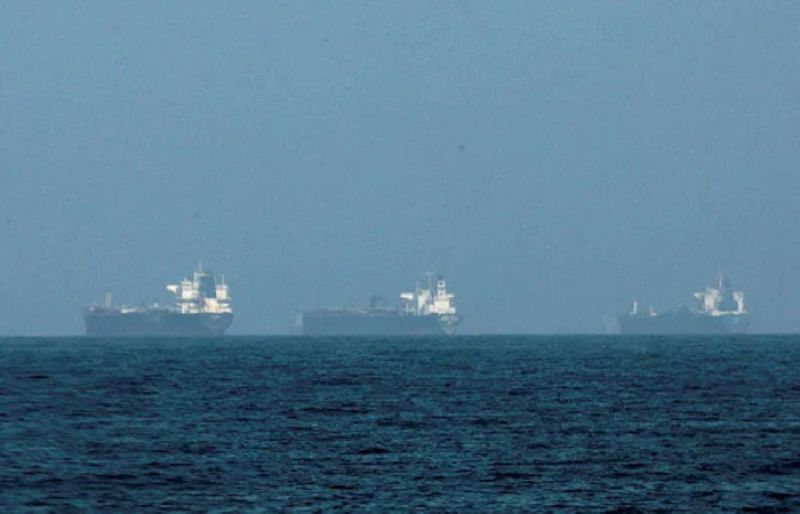
Diplomatic efforts focused Monday on the highly strategic Strait of Hormuz, which has been blocked to nearly all oil tankers — sending shockwaves across the global economy.
French President Emmanuel Macron said his country and its allies were working on a “purely defensive” mission to reopen the strait, through which nearly 20% of the world’s crude oil usually transits.
The mission would aim to escort ships “after the end of the hottest phase of the conflict,” but experts say it would mean putting naval vessels at risk of fire from the nearby Iranian coast.
Kamal Kharazi, a foreign policy adviser to Iran’s supreme leader, told CNN that Tehran was calculating that economic pressure would eventually prompt other countries to intervene and end the war.
Rallies
Iran faced a fresh blitz of US and Israeli strikes after its Assembly of Experts, the top clerical body, appointed its first new supreme leader in 37 years.
Iranian state media carried images of tens of thousands of people celebrating Mojtaba Khamenei’s selection in central Tehran, many carrying his picture.
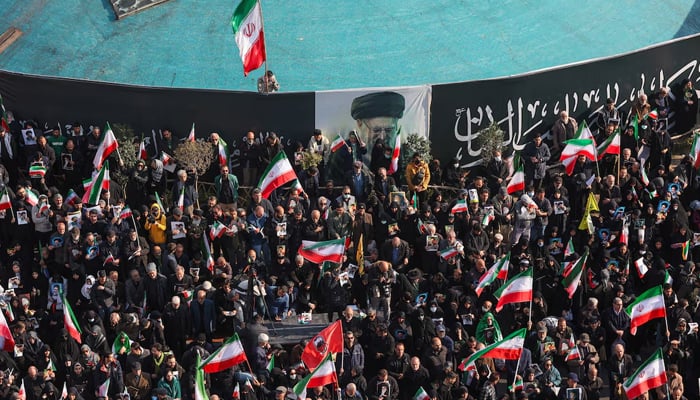
Iran’s Houthi allies in Yemen and Hezbollah in Lebanon pledged allegiance, while Russian President Vladimir Putin on Monday promised “unwavering support”.
Trump told reporters he was “disappointed” about Khamenei’s appointment, but remained open to a replacement from inside the Islamic republic, citing the recent transition of power in Venezuela as “a formula that has been very good so far.”
Oil risks
Oil traders, policymakers and central bankers are all watching the Middle East for news about Gulf energy infrastructure, which is crucial for the world economy.
About 10 vessels in or near the Strait of Hormuz have come under attack since Iran blocked the waterway in retaliation for the US-Israeli strikes, shipping experts say.
Global shipping giant MSC announced it was formally halting some export shipments from the Gulf, meaning goods sitting on ships would be unloaded.
Following strikes on Bahrain’s Al Ma’ameer oil facility that ignited a fire, the country’s state-owned energy company Bapco joined its counterparts in Qatar and Kuwait in declaring “force majeure” — a warning that events beyond its control may lead it to miss export targets.
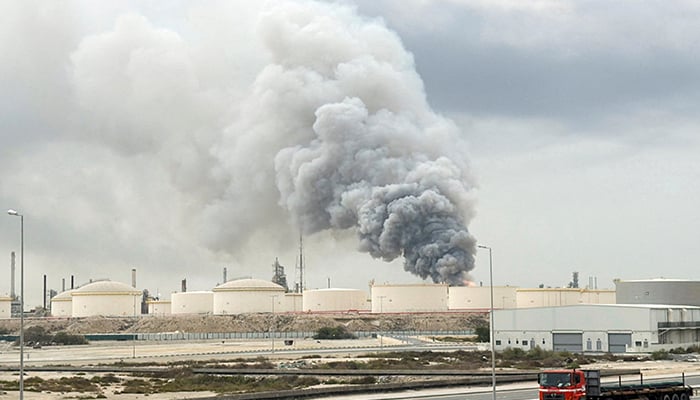
The Saudi defence ministry said Monday it had thwarted a drone attack targeting an oil field in the kingdom’s east, near the Emirati border.
‘Resistance’
In Bahrain, the interior ministry said early Tuesday an Iranian attack on a residential area in the capital Manama killed one person and injured others.
In Israel earlier, around 10 explosions were audible in Tel Aviv after the military announced it had detected missiles inbound from Iran.
At least one Israeli was killed when he was hit by shrapnel, emergency services said.
Israel said on Tuesday that it had struck an Iranian missile launcher shortly after a barrage fired from the Islamic republic triggered air raid warnings in several Israeli areas.
The multi-front war also intensified in Lebanon, where Israeli and Hezbollah exchanges of fire since March 2 have killed at least 486 people and wounded more than 1,300.
Lebanese President Joseph Aoun accused Hezbollah of working to “collapse” the state, while the head of the group’s parliamentary bloc said it had “no other option…than the option of resistance.”

TEHRAN: Iran has declared that it, not the United States — will determine when the ongoing conflict comes to an end, as tensions continue to escalate in the region.
According to Iranian state media, a spokesperson for the Islamic Revolutionary Guard Corps warned that Iran could block oil exports from the region if attacks by the United States and Israel continue.
The statement came after Donald Trump warned that American strikes could intensify if Iran attempted to disrupt tanker traffic through the Strait of Hormuz, a key waterway that carries nearly 20 percent of the world’s oil supply.
Trump said the United States would respond forcefully if shipping routes were threatened.
“We will hit them so hard that it will not be possible for them or anybody else helping them to ever recover that section of the world,” Trump said during a news conference.
Iran Issues Warning on Oil Tankers
Despite the warning, Iranian officials insisted that Tehran would not allow oil tankers to pass through the Strait of Hormuz if military attacks against the country continue.
“We are the ones who will determine the end of the war,” an Iranian spokesperson said, according to reports.
Markets React to Escalating Tensions
The sharp exchange of warnings contributed to extreme volatility in global financial markets.
Oil prices surged sharply while stock markets initially fell before stabilizing later in the day.
Markets reacted after Trump suggested the conflict could end quickly and reports emerged about a possible easing of sanctions on Russian energy supplies.
Analysts say uncertainty remains high as Iran’s security establishment rallies behind the country’s new Supreme Leader Mojtaba Khamenei, signaling that Tehran is unlikely to back down soon.


College football teams, players poised to improve in 2026

Bahraini Intelligence Arrests Indian Telecom Engineer Over Alleged Espionage Links

UK’s Capri Holdings Limited appoints Tyler Reddien as CFO & COO

-
 Politics3 days ago
India let Iran warship dock the day US sank another off Sri Lanka, say officials
-

 Sports3 days ago
Pakistan set for FIH Pro League debut | The Express Tribune
-

 Entertainment3 days ago
Harry Styles kicks off new era with ‘One Night Only’ comeback show
-
 Business3 days ago
Restaurant group changes name after bid to buys pubs across the UK
-
 Tech1 week ago
The 5 Big ‘Known Unknowns’ of Donald Trump’s New War With Iran
-
 Business1 week ago
Labour parliamentarians urge UK Government to oppose Rosebank oil field
-
 Business4 days ago
Home heating oil: ‘Most of my pension has gone on home heating oil’
-

 Sports1 week ago
USA vs. Argentina (Mar 1, 2026) Live Score – ESPN