

Business
Bajaj General Insurance rolls out riders to lock premiums, expand health cover scope


Mumbai: Bajaj General Insurance has launched health insurance riders that enable buyers to widen the scope of their basic health plan. The `Age shield’ rider enables buyers of health insurance to ensure that the premium escalation with age will not happen unless there is a claim. The policy is aimed at addressing the complaint of policyholders who see their premium being revised as they move into higher age brackets even without any claim. Besides the `Age shield’ rider the Smart Tenure feature combines the sum insured across the policy tenure and provides access to a larger overall cover even in the early years. Additional options include Global Cover for international treatment, the Health Limitless rider that offers one claim without any annual sum insured limit during the policy lifetime, and the Health Prime rider that includes teleconsultations, diagnostic support, preventive health check-ups, and wellness services. The insurer said it has introduced ‘My Health Care Plan Edge+’, a health indemnity product based on its existing offering. The policy offers sum insured options ranging from Rs 5 lakh to Rs 5 crore and includes unlimited reinstatement of the sum insured within a policy year to cover multiple claims. Tapan Singhel, managing director and chief executive officer, Bajaj General Insurance, said, “Health insurance is steadily moving from a product mindset to a solution mindset, where the focus is not just on covering hospitalisation, but on how effectively we support customers across their entire healthcare journey. With MHCP EDGE+, we have built a plan that responds to some of the most relevant gaps customers experience today, be it rising medical costs, non-payable expenses, or the need for higher and more adaptable coverage. What is equally important is giving customers the flexibility to shape their protection as their needs evolve, without making the product complex.” The policy is available for individual and family floater options with lifetime renewability. It offers policy tenures of up to five years and coverage starting from the age of three months. The product also includes flexible waiting period options, discount structures, and wellness-linked benefits, positioning it as a health insurance solution designed to adapt to changing customer needs.

The UK has become the first G7 country to agree a trade deal with a bloc of Gulf states, in an agreement the Government said would boost the economy by an estimated £3.7 billion every year.
The deal with the Gulf Cooperation Council (GCC) – an alliance including Bahrain, Kuwait, Oman, Qatar, Saudi Arabia and United Arab Emirates – would also increase domestic wages by £1.9 billion annually in the long run, the Government said.
Under the free trade agreement, tariffs will be removed on exports such as food, medical equipment and advanced manufacturing, while the deal includes “first-of-its-kind” GCC commitments on the free flow of data.
An estimated £580 million in duties a year will be removed, based on current UK exports to GCC countries, once the agreement is fully implemented.
Negotiations on the deal began four years ago, when the expectation was that the deal could boost UK gross domestic product by £1.6 billion.
GCC states combined are equivalent to the UK’s 10th largest trade partner, with demand for imports to the bloc forecast to double by 2050.
Current bilateral trade amounts to about £53 billion. The deal is projected to increase this by 20%, with UK exports making up two-thirds of that trade.
Duties totalling £360 million will be removed as soon as the agreement comes into force, with “renewed certainty” for services firms paving the way for UK companies to expand in the Gulf, supporting “high-quality jobs for years to come”, the Government said.
The Press Association understands negotiators were able to achieve more than originally expected on the liberalisation of tariffs.
The GCC currently imports about 85% of its food, with goods including cereals, cheddar cheese, chocolate and butter among those expected to become tariff-free.
For the first time, the GCC has made commitments on the free flow of data requirements, enabling UK businesses to work in the Gulf without having to store data in the region.
In another first, the GCC has made commitments on anti-corruption, in a chapter which includes animal welfare, environment, innovation, labour and women’s economic empowerment.
The Government did not seek a specific human rights clause in the deal.
The agreement also preserves the UK’s right to regulate, with no requirements to alter UK standards.
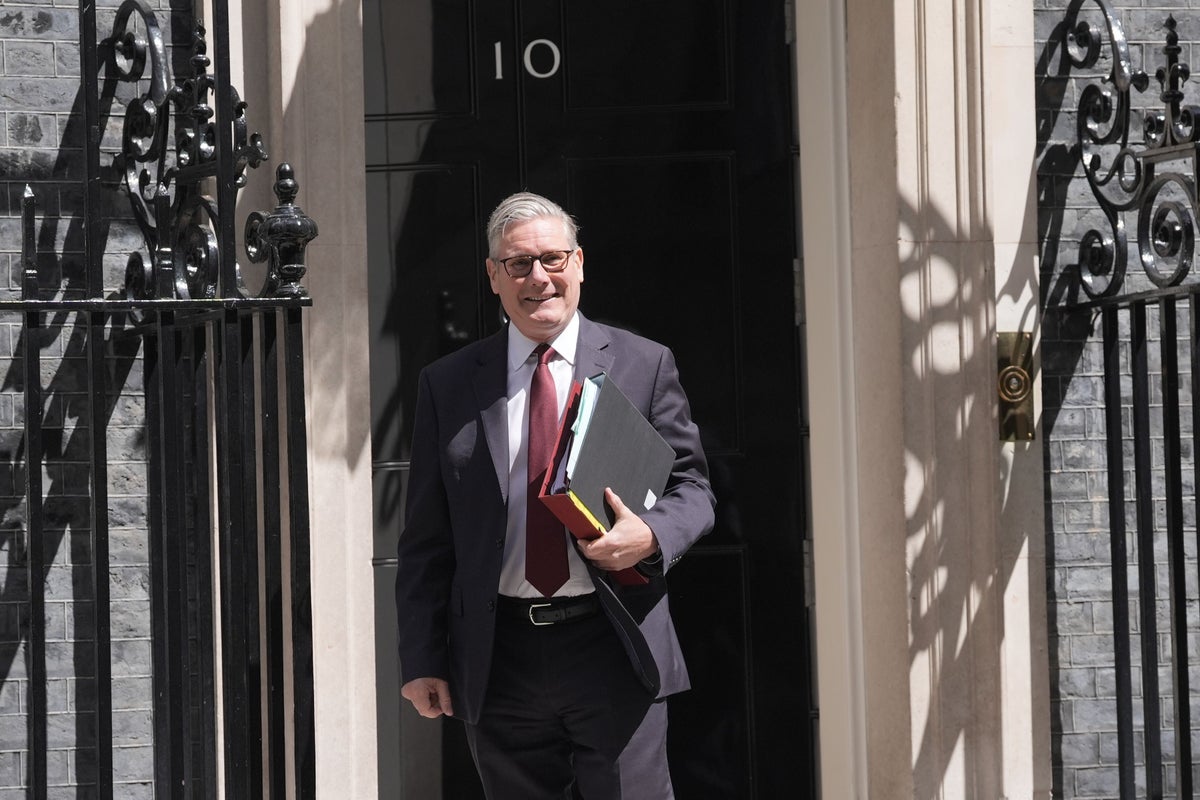
The Prime Minister Sir Keir Starmer said: “Today’s agreement is a huge win for British business, and for working people who will feel the benefits in the years ahead through higher wages and more opportunities.
“This government has now secured five major trade deals with international partners, delivering on our commitment to drive growth, support jobs and strengthen the UK economy.
“The Gulf states are valued economic partners and this agreement deepens that relationship, building trust and unlocking new possibilities for trade and investment.”
The Government has previously struck trade deals with India, the US, the European Union and South Korea.
Trade Secretary Peter Kyle described the GCC as “an important and growing set of markets” and said he was “proud” that the UK was the first G7 country to secure a trade deal with the bloc.
He said: “For this government to meet the challenges that our country faces, incremental change won’t cut it.
“That’s why major trade deals like this one, and that we secured with India, the US, South Korea and the EU, are vital for moving the dial towards long-term, sustainable economic growth with benefits people and businesses can see and feel.
“At a time of increased instability, today’s announcement sends a clear signal of confidence – giving UK exporters the certainty they need to plan ahead and reinforcing the strength and stability of the UK’s trading relationship with the Gulf at a critical moment.”
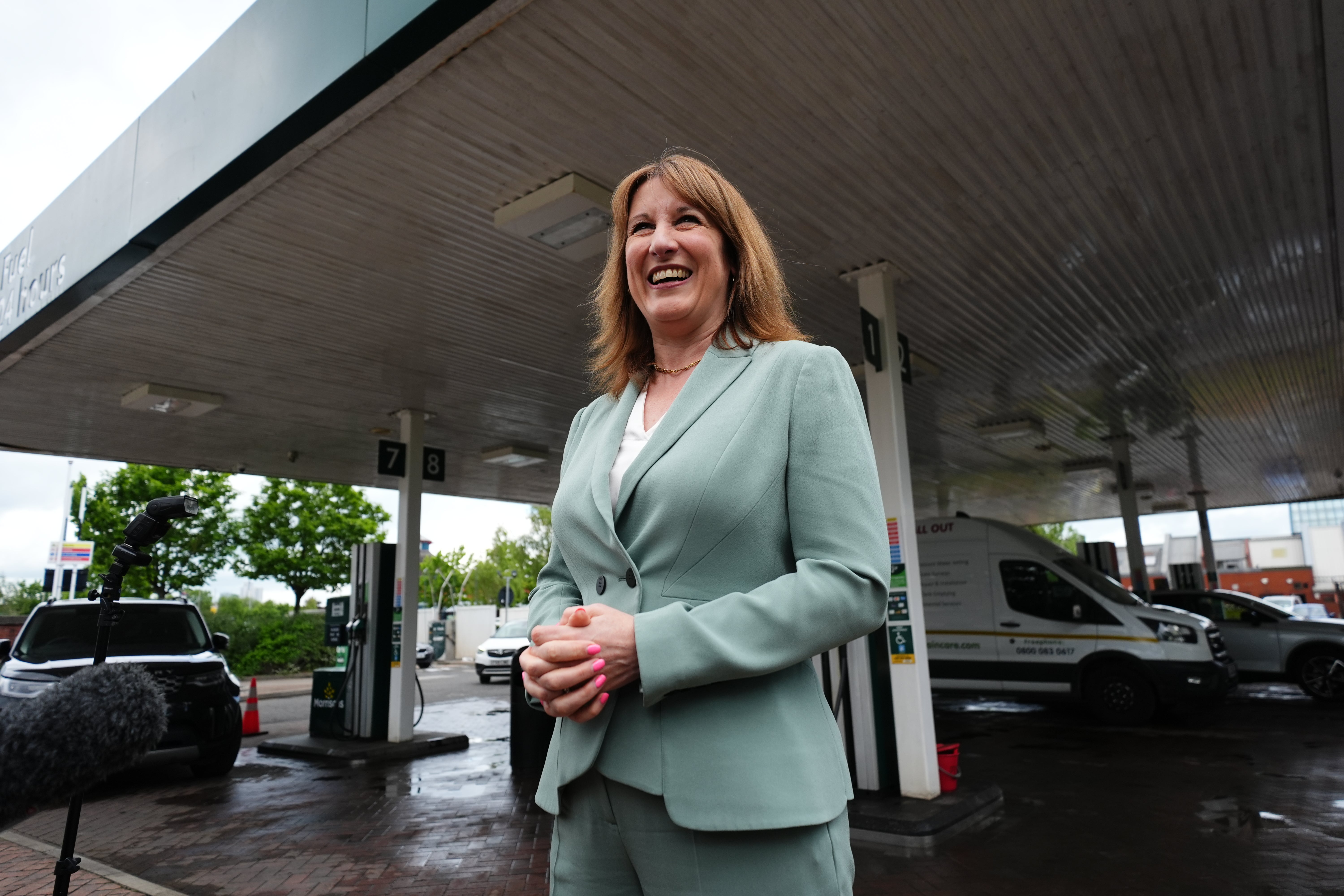
Chancellor Rachel Reeves said the deal would “open up a world of economic opportunity”.
She said: “Our fifth trade deal since taking office, it’s proof we are backing British firms to compete and win globally, delivering growth, security and jobs, and that we have the right economic plan.”
The services sector accounts for about 80% of the British economy and more than half of the UK exports to GCC.
Anna Anthony, EY UK regional managing partner, said: “The UK exported more than £20 billion in services to GCC countries last year, and this agreement should create even greater opportunities for UK professional services businesses in these high-growth markets.
“The agreement’s visa transparency and digital trade provisions will make it easier for UK professionals to deliver in-person and cross-border services, providing businesses with the clarity and confidence to compete in these markets.”

Immad Akhund, CEO and co-founder of the startup Mercury.
Courtesy: Mercury Technologies
Mercury, a fintech firm that provides banking services to startups, has raised $200 million in funding at a $5.2 billion valuation, CNBC has learned exclusively.
That valuation is 49% higher than the San Francisco-based company’s previous funding round just 14 months ago, bucking the downturn facing much of the fintech sector.
The Series D round was led by venture firm TCV — backer of other well-known fintech firms, including Revolut and Nubank — and included existing investors Sequoia Capital, Andreessen Horowitz and Coatue, Mercury CEO Immad Akhund told CNBC.
Mercury has emerged in recent years as one of a select group of fintech firms, like the larger payments startups Ramp and Stripe, that have continued to thrive after the collapse of the inflated valuations of the pandemic era.
Mercury, with more than 300,000 customers, including a third of early-stage U.S. startups, has been profitable for the past four years and recently hit $650 million in annualized revenue, Akhund said.
While generative AI has hurt many startups created before the arrival of OpenAI’s ChatGPT in late 2022, it has also fueled the formation of new companies — a trend that Mercury, which opens accounts for businesses at their earliest stage, has directly benefited from, according to Akhund.
“We’ve seen a lot of growth, especially recently, and a lot of that comes down to AI being a big enabler for entrepreneurship,” he said. “We’re seeing a lot of people doing AI startups, but also non-AI companies where they’re using AI to build an app really easily or build products and websites really quickly.”
The fundraising comes weeks after Mercury disclosed it received conditional approval from the Office of the Comptroller of the Currency to become a federally regulated bank, part of a wave of fintech and crypto firms seeking entry to the traditional banking system dominated by established lenders.
Building Mercury Bank
The charter, which Akhund says may be ready for final approval in 2027 as Mercury builds its products and internal controls, will enable the firm to keep more revenue for itself.
Once it is a regulated bank, Mercury will also be able to expand its loan offerings, join the Zelle network for instant payments and reduce its reliance on partner banks Column and Choice Financial.
“At the scale Mercury is at, it just makes sense to be directly regulated,” Akhund said. “We tend to be much bigger than our sponsor banks. When a bank regulator goes in there, they really want to be regulating us directly.”
The move also reflects a broader shift underway in fintech after the collapse of fintech middleman Synapse exposed weaknesses in the partnership model that powered much of the industry’s growth over the past decade.
Still, Akhund said Mercury plans to continue working with its partner banks even after obtaining its own charter because some banking services will remain shared across institutions.
Mercury originally gained traction among startups as a more tech-friendly alternative to traditional banks. It later benefited from the fallout of Silicon Valley Bank’s collapse in 2023. Now, it aims to use AI to maintain its lead in digital features for founders of startups and small businesses.
Mercury recently launched tools allowing businesses to interact with accounts through AI coding assistants. It also plans to unveil a broader AI interface later this year that will let customers approve payments, send invoices and manage finances with conversational language.
Akhund said he has no plans to sell the company to a bank, as Brex did in January. He said he eventually wants Mercury to go public.
“I really want to build a strong independent brand,” he said. “I would like it to be a public company.”

Mumbai: Skydo, a cross-border payments platform for Indian exporters/businesses, is among the first to receive in-principle approval to operate as a cross-border Payment Service Provider at GIFT City IFSC.The GIFT City presence plugs Skydo into a globally-aligned finance hub built for cross-border flows. It unlocks build-for-global infra/products tailored to firms selling, buying, operating abroad. These include Indian MSMEs and startups selling abroad, freelancers and consultants. Indian firms can now receive from global clients and pay overseas vendors/software partners via a compliant, streamlined stack.The approval widens scope of servies as Skydo can provide besides multi-currency collections, e-money accounts, merchant acquisition amd open up new payment corridors.For Indian businesses this allows them to tighten pay-outs without too many intermediaries and widen pay-ins; it cut friction, speed cycles and turns cross-border ops to one-window flow. Skydo also cleared RBI’s PA-CB rails—outward flows approval, plus earlier final nod for export collections. Net-net: both sides covered.Co-founder & CEO Srivatsan Sridhar said GIFT City is a key step in building globally-competitive infra. Co-founder Movin Jain said dual frameworks bring clarity and flexibility which are fuel for compliant innovation.


I Gave My OpenClaw Agent a Physical Body

OpenAI, valued at $850 billion, prepares for confidential IPO filing this week

Gracie Abrams earns high praise for ‘Daughter from Hell’ before release

-

 Entertainment1 week ago
Conan O’Brien hat tricks as Oscar host
-

 Fashion1 week ago
Italy’s Zegna Group’s Q1 growth boosted by strong organic performance
-
 Business1 week ago
Pound wobbles and bonds suffer as Starmer battles on
-

 Fashion1 week ago
US T&A exports decline 10% to $5 bn on softer regional demand
-

 Sports1 week ago
2025-26 NBA Title Odds: Thunder, Spurs Favored; Knicks Rising
-
 Business6 days ago
Jersey Election 2026: Cost of living concern in St Helier Central
-

 Entertainment4 days ago
Where Pete Davidson, Elsie Hewitt stand after breakup: Details revealed
-
 Business1 week ago
India must build its own AI models: Sarvam AI – The Times of India