

Fashion
Bangladesh RMG workers part of trade unions get 10% higher wages: BIDS

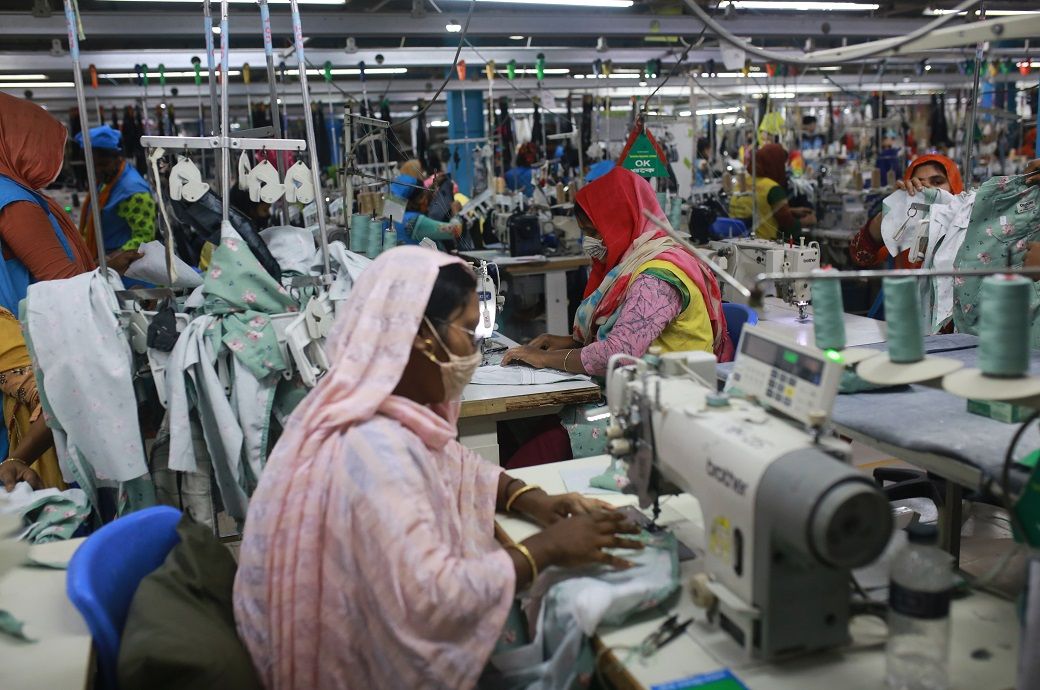
At the sectoral level, RMG industry workers earn 19-22 per cent higher wage, reflecting stronger compliance regimes, formalised structures and higher skill intensity, the study by the Bangladesh Institute of Development Studies (BIDS) showed.
The findings of the study, conducted on 3,005 workers across 20 industries in three districts surrounding Dhaka, were recently shared at the Annual BIDS Conference on Development in Dhaka.
Readymade garment workers in Bangladesh who are part of trade unions earn 10 per cent higher gross wages than non-unionised RMG and non-RMG workers, a study by the Bangladesh Institute of Development Studies (BIDS) has revealed.
Meanwhile, climate change is affecting production in garment factories in Bangladesh as rising temperatures reduce worker productivity, another BIDS study found.
BIDS research director Mahmudul Hasan said empirical results show an overall unionisation rate of 11.35 per cent, according to domestic media reports.
While part of this differential is attributed to greater experience and tenure among union members, the wage premium remains positive and statistically significant even after controlling for these factors, he was cited as saying by domestic media reports.
Meanwhile, climate change is affecting production in garment factories in Bangladesh as rising temperatures reduce worker productivity, another BIDS study found.
BIDS research associate Kazi Zubair Hossain said annual productivity growth in the garment sector reached 4.19 per cent between 2014 and 2023 due to technological improvements.
The study noted that climate refugees are increasingly taking up jobs in the garment sector. As their numbers rise, more may enter the workforce, which “may have negative impacts on wages”.
The study said climate pressures could heighten gender-based violence and harassment as productivity falls and socio-economic vulnerability increases.
Pressures to cut emissions may support environmental improvements in factories, although the shift to green energy in Bangladesh remains slow, it added.
Fibre2Fashion News Desk (DS)









The company posted a net loss of $7 million, compared to a net income of $16.3 million in FY24. Adjusted EBITDA fell to $63.6 million, or 6.4 per cent of sales, from $109.1 million, or 9.9 per cent a year earlier.
Torrid Holdings has reported a weak FY25, with sales falling 9.4 per cent to $1 billion and a net loss of $7 million amid margin pressure.
The company closed 151 stores and saw EBITDA decline.
Q4 performance also weakened.
Despite this, Torrid expects modest recovery in FY26, supported by optimisation efforts, improved marketing and a stronger operational foundation.
The company closed a total of 151 stores during the year as part of its retail optimisation strategy, reducing its footprint from 634 to 483 stores, Torrid Holdings said in a press release.
Torrid ended the year with $20 million in cash and cash equivalents, while total liquidity stood at $84.9 million. Net cash used in operations was $13 million, compared to positive operating cash flow of $77.4 million in the previous year.
For the fourth quarter (Q4), net sales dropped 14.3 per cent year-on-year (YoY) to $236.2 million, while comparable sales fell 10 per cent. Gross margin contracted to 30.0 per cent from 33.6 per cent a year earlier. The company reported a net loss of $8.1 million, widening from a $3.0 million loss in the same period last year. Adjusted EBITDA declined sharply to $5.1 million, or 2.2 per cent of sales, compared to $16.7 million, or 6.1 per cent, previously.
During the quarter, Torrid closed 77 stores under its Store Footprint Optimisation Project, taking the total store count to 483 locations.
Commenting on performance, Lisa Harper, chief executive officer at Torrid Holdings, said, “2025 was a transformational year. We delivered $1 billion in net sales, in line with our guidance, and $63.6 million in Adjusted EBITDA, exceeding the high end of our outlook, while making deliberate strategic decisions required to put this business on a stronger footing. We closed 151 structurally unproductive locations, launched five sub-brands that generated approximately $70 million in sales, and fundamentally restructured our product assortment around core franchises and fabrications our customers value most. Trends in Q4 and early Q1 give us confidence that the foundation we’ve built is beginning to take hold.”
Looking ahead, the company expects first-quarter fiscal 2026 net sales in the range of $236 million to $244 million, with Adjusted EBITDA between $14 million and $18 million. For the full year, Torrid forecasts net sales between $940 million and $960 million and Adjusted EBITDA of $65 million to $75 million, alongside capital expenditure of $8 million to $10 million.
“We enter 2026 with a strong operational foundation—optimised channels, product and pricing. This positions us to accelerate customer file growth through renewed marketing efforts, helping us re-engage past shoppers, attract new customers and deepen loyalty across our existing base. I am confident we are on the right path and encouraged by early signs of progress we are seeing in the business,” added Harper.
Fibre2Fashion News Desk (SG)

The People’s Bank of China (PBoC) is set to conduct a one-year medium-term lending facility (MLF) operation worth 500 billion yuan (~$72.52 billion) on Wednesday. The move is aimed at ensuring sufficient liquidity within the banking system.
The People’s Bank of China will conduct a 500-billion-yuan (~$72.52 billion) one-year MLF operation to support banking liquidity.
Conducted via variable-rate tenders, the move will offset 450 billion yuan in maturing funds, resulting in a net injection of 50 billion yuan (~$6.9 billion).
This marks the 13th consecutive month of net liquidity infusion by the central bank.
The operation will be carried out via variable-rate tenders with a fixed volume, using a multiple-price auction mechanism, said Chinese media reports quoting the central bank.
With 450-billion-yuan worth of MLF funds due to mature this month, the latest operation will result in a net liquidity injection of. This marks the 13th consecutive month in which the PBoC has added net liquidity through the facility.
The operation will result in a net liquidity injection of 50 billion yuan (~$6.9 billion), after accounting for 450 billion yuan in MLF funds maturing this month, extending the PBoC’s streak of net injections to 13 consecutive months.
Fibre2Fashion News Desk (SG)

During the second month of ****, apparel and accessories accounted for *.* per cent of Japan’s total imports, which stood at *,***,*** million yen. Imports of textile yarn and fabric rose **.* per cent to **,*** million yen (~$***.** million), representing * per cent of total imports.
On the export side, textile yarn and fabric shipments decreased *.* per cent to **,*** million yen (~$***.** million). Textile machinery exports rose *.* per cent to **,*** million yen (~$***.** million), contributing *.* per cent to Japan’s total exports of *,***,*** million yen.


US’ Torrid sees FY25 sales fall 9.4%, reports $7 mn loss

Wristband enables wearers to control a robotic hand with their own movements

UK inflation rate steady in February ahead of Iran war

-

 Fashion7 days ago
Sales at US apparel, clothing accessories stores up 4% YoY in Jan 2026
-
 Business1 week ago
Peloton is launching bikes and treadmills for gyms, accelerating commercial strategy
-

 Tech1 week ago
Justice Department Says Anthropic Can’t Be Trusted With Warfighting Systems
-

 Fashion1 week ago
Trump signs order to combat fraudulent ‘Made in America’ labels
-
 Business1 week ago
Stocks and pound rise as US rate call approaches
-
 Fashion1 week ago
Lenzing launches TENCEL Lyocell-HV100 at Intertextile Shanghai
-

 Entertainment7 days ago
Val Kilmer revived 1 year after death through AI
-

 Sports1 week ago
PCB files complaint over allowing Bangladesh to take review on penultimate ball – SUCH TV