

Business
Bank of England expert predicts global stock market fall and warns ‘are we prepared?’

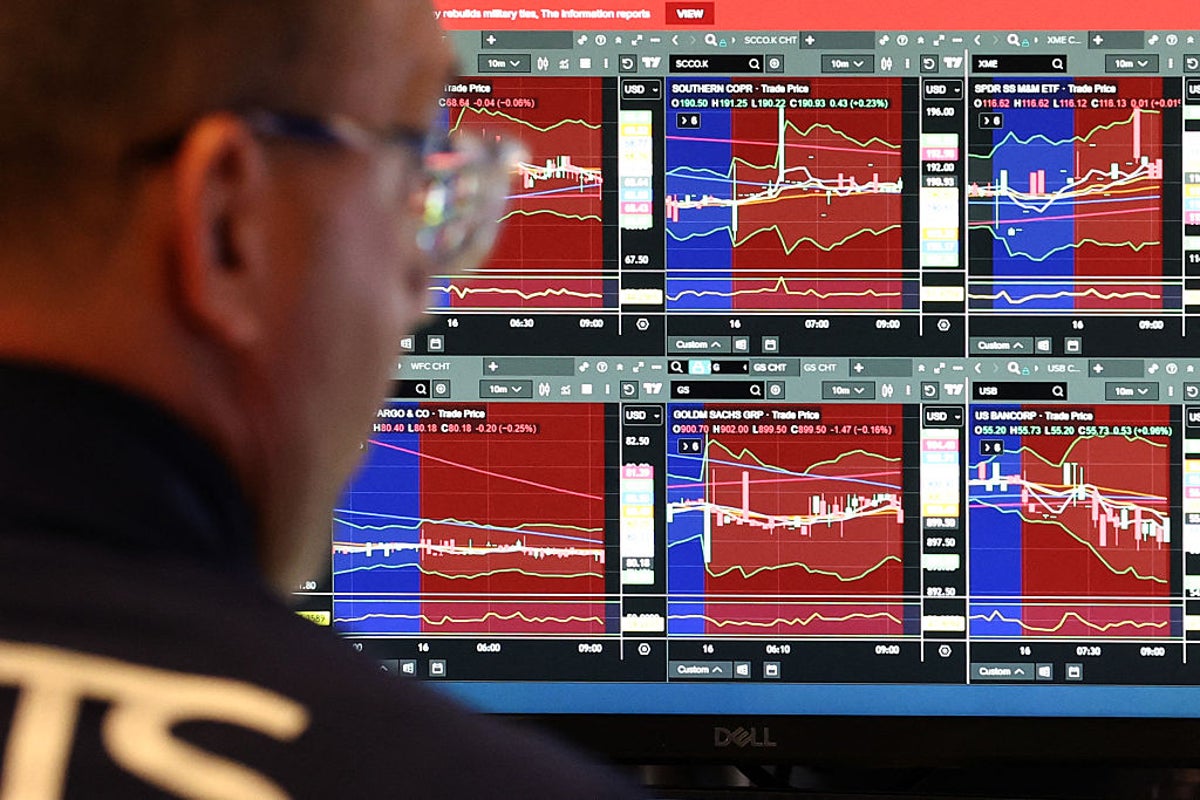
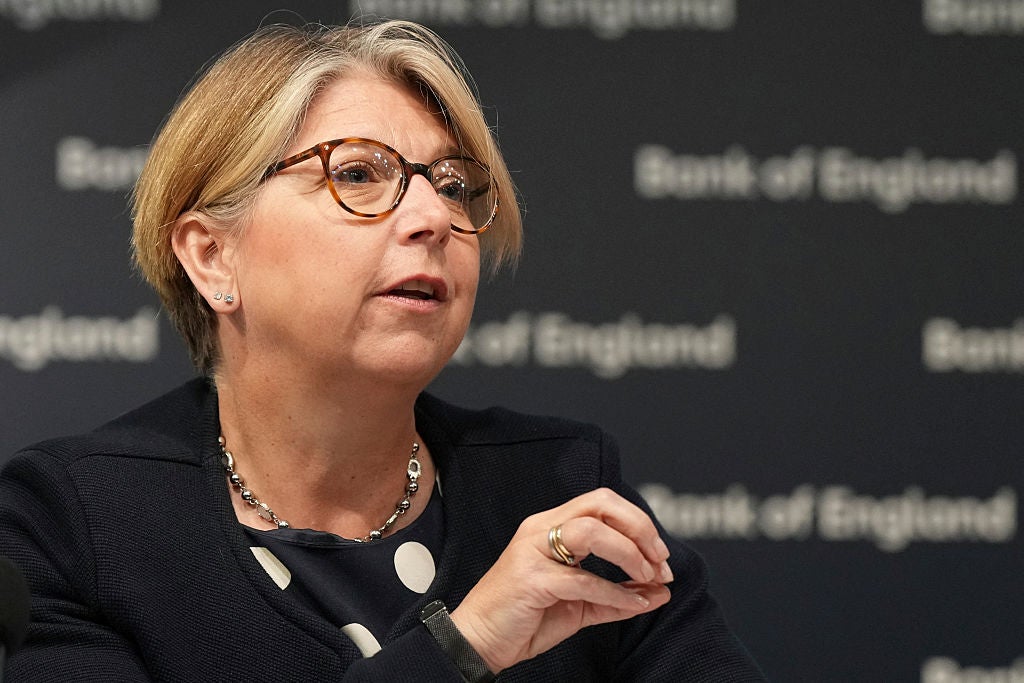
The Bank of England’s (BoE) deputy governor has warned of a fall in global stock markets, saying near-record valuations are unsustainable.
Both the UK and US stock markets are sitting near all-time highs due to investors continuing to bet on big future earnings, but Sarah Breeden said the bank expects an “adjustment at some point”.
The BoE appears concerned about the stability of financial systems if a market drop occurs in conjunction with other issues, including the Iran and Ukraine wars that are driving up inflation globally and private credit, which has grown exponentially and is provided by private firms, not banks. There are some worries that it may become a more widespread problem if the companies that have borrowed that money are unable to pay it back, which in turn could lead to shortfalls for their backers.
Ms Breeden said: “There’s a lot of risk out there and yet asset prices are at all-time highs. We expect there will be an adjustment at some point.
“The thing that really keeps me awake at night is the likelihood of a number of risks crystallising at the same time – a major macroeconomic shock, confidence in private credit goes, AI and other risky valuations readjust – what happens in that environment and are we prepared for it?”
The most recent significant market crash was in 2020 as a result of the Covid pandemic, which saw steep drops in most markets but also very swift rebounds. Since then, the US market in particular suffered drops in 2022 and 2025, the latter after Donald Trump first announced his plan to slap tariffs on trading partners around the world.
Stock market falls happen when share prices of multiple companies drop in tandem after being sold off in large amounts. There’s no specific amount a market has to drop to be termed a “crash”, though 20 per cent or more in a short period of time is usually considered one.
While a falling or even crashing stock market will not always lead to an economic decline or recession, there is a knock-on effect on both the businesses on the market and those who invest in them.
London’s major index, the FTSE 100, is up 5.2 per cent this year so far despite the impending economic hit to the UK and the rest of the world over oil prices, while across the past year it is up 24.4 per cent. Adding to the lack of absolute correlation is the globalisation of many businesses within the FTSE indices and the fact that they operate in markets outside the UK economy.
Get a free fractional share worth up to £100.
Capital at risk.
Terms and conditions apply.
ADVERTISEMENT

Get a free fractional share worth up to £100.
Capital at risk.
Terms and conditions apply.
ADVERTISEMENT
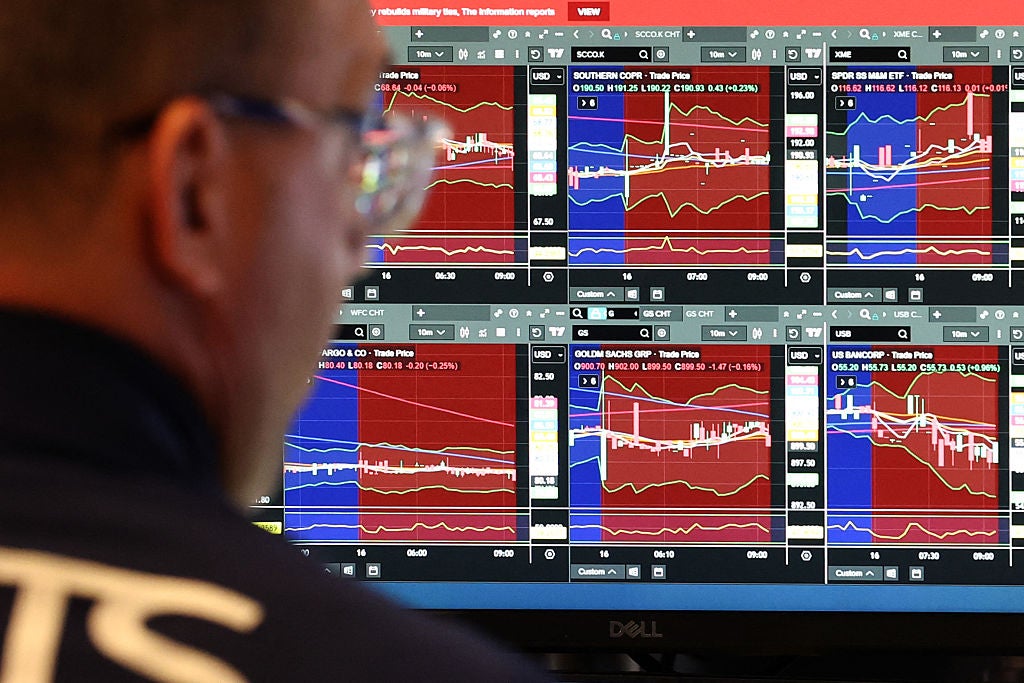
In the US, the S&P 500 is up 3.8 per cent for the year and 32.2 per cent over a year, having hit a new all-time high earlier this week despite the Iran war. The six biggest public companies in the world – led by Nvidia, Alphabet and Apple – and 10 of the top 12, are listed in the US.
That said, impacts arise from such huge companies taking a dive in share price.
What does it mean for your money?
For those invested in the market, either through stocks and shares ISAs or pensions, their portfolios would drop in value.
In theory, that is not a problem unless assets were sold at that lower valuation point. Most experts recommend riding out market downturns or else continuing to cost-average purchase, regardless of price, instead of panic selling. When markets return to upward, those downturns are actually when the greatest returns tend to be made, when assessed over the long term. There is no definitive timeframe for when markets recover from even the deepest downturns, but historically, they always have done so. The UK government is encouraging more British people to take up retail investing to boost their long-term wealth.
The other issue is if pensions drop in value at a moment when someone is close to retirement, which would mean their pot is worth less right when they need it most. This makes it important for people to be aware of their overall financial picture, the closer they get to that point in their lives.
For those who receive dividend income from investments – firms that pay out a portion of their profits to shareholders – this could be reduced or cut off entirely if businesses decide they need to reallocate money, which could in turn see households reduce their spending.
When large numbers of people do that, it naturally has an economic knock-on impact, with lower spending meaning less income for businesses. That could then mean they decide not to hire as many people or invest in projects, meaning potentially fewer jobs on the market.
For firms on the stock markets, a falling share price could mean less cash available for reinvestment into the business and a lowered ability to borrow. If there are stock-price-linked obligations, that can create wider problems for the business and naturally, consumer confidence can double down on such issues.
Rather than stock market worries around what that directly means for people, the BoE appears to harbour concerns about wider resilience to such shocks.
“What we are watching for is: how might those prices fall? Will there be a sharp adjustment downwards? And if there is such an adjustment, how will that affect the economy? I’m not saying it will happen today, tomorrow, in 12 months’ time. It’s ensuring that if it happens the system is resilient,” Ms Breeden, the BoE’s head of financial stability, added.
“Private credit has gone from nothing to two and a half trillion dollars in the last 15 to 20 years. It hasn’t been tested at this scale with the degree of complexity and interconnections it has with the rest of the financial system so far. It’s a private credit crunch, rather than a banking-driven credit crunch, that we’re worried about.”

Now one of the biggest sportswear firms, Anta’s rise follows a playbook adopted by many Chinese giants.
Source link
Business
Gold price prediction today: Will gold prices continue to be volatile? Key levels to watch out for April 27, 2026 week – The Times of India

Gold price prediction today: Gold prices will closely track movements on the rate decisions by several central banks, including the US Federal Reserve, this week, says Manav Modi, Senior Analyst, Commodity Research at Motilal Oswal Financial Services Ltd.Gold is currently consolidating after sharp swings in a broad range, indicating a pause rather than a reversal. Price action shows a higher-high structure intact, but the recent sideways movement suggests indecision near the upper supply zone around 158,000–160,000. The formation resembles a short-term flag/triangle continuation pattern, where a breakout on either side will define the next directional move. Volume has tapered slightly, reinforcing the consolidation narrative.Gold prices recently moved from the upper band toward the mid-band (20 DMA), and are now attempting to stabilize. The bands have started to contract, signaling a potential volatility expansion ahead. Sustaining above the mid-band (~150,500–151,000 zone) keeps bullish bias intact, while a breakdown below this could trigger a deeper mean reversion toward the lower band.For the week, immediate support for gold prices is placed at around Rs 150,500, which is followed by stronger support near Rs 148,500. On the upside, the resistance stands at around Rs 155,500, and after that the key supply zone is at Rs 158,000. A decisive close for gold above Rs 158,000 levels can then resume the broader uptrend. However, a break in gold prices below levels of Rs 148,500 may shift the momentum to bearish in the near term.The economic docket is filled with data points and events this week as the focus will be on FED, BOJ, ECB and ECB policy meetings. US consumer confidence, GDP, inflation and durable goods orders data will also be in radar.(Disclaimer: Recommendations and views on the stock market, other asset classes or personal finance management tips given by experts are their own. These opinions do not represent the views of The Times of India)

British families tell BBC Panorama how the Iran war is affecting their monthly budgets.
Source link


Finalise Bangladesh’s textile-RMG circular economy strategy: Experts

Prince Harry faces unseen threat to Archie, Lilibet: Can’t escape

Trump calls suspect in press dinner attack ‘pretty sick guy’ whose views alarmed relatives

-

 Sports1 week ago
WWE WrestleMania 42 Night 2: Live match results and analysis
-

 Sports1 week ago
NCAA men’s gymnastics championship: All-time winners list
-

 Fashion1 week ago
UK’s Sosandar returns to profitability amid robust FY26 performance
-

 Politics6 days ago
UK’s Starmer seeks to deflect blame over Mandelson appointment
-
 Entertainment7 days ago
Lee Anderson, Zarah Sultana kicked out of UK Parliament for calling PM ‘liar’
-
 Business1 week ago
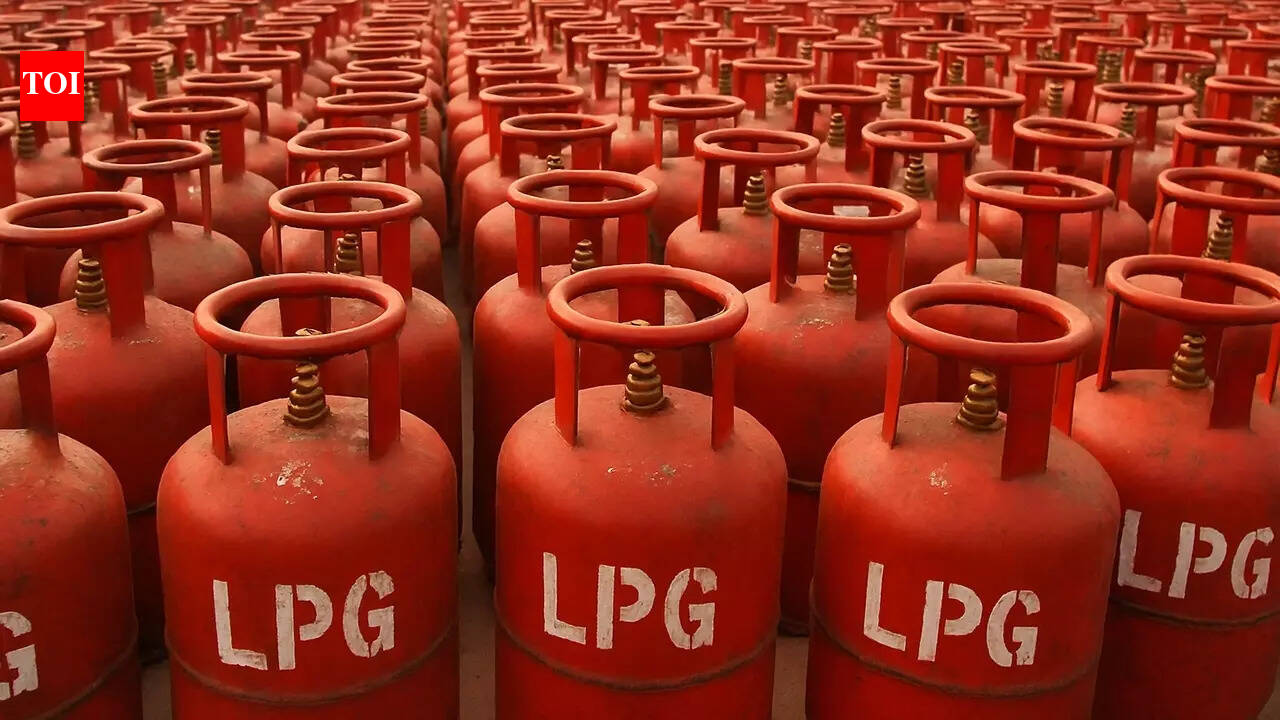
No fuel shortage: Govt assures 100% domestic LPG, PNG, CNG supply amid Hormuz energy crunch – The Times of India
-
 Business7 days ago
How Trump’s psychedelics executive order could unlock stalled cannabis reform
-
 Business6 days ago
Us-India Trade Talks: US–India trade deal: Where do talks stand & what to expect – explained – The Times of India