

Business
Bank of England expert predicts global stock market fall and warns ‘are we prepared?’

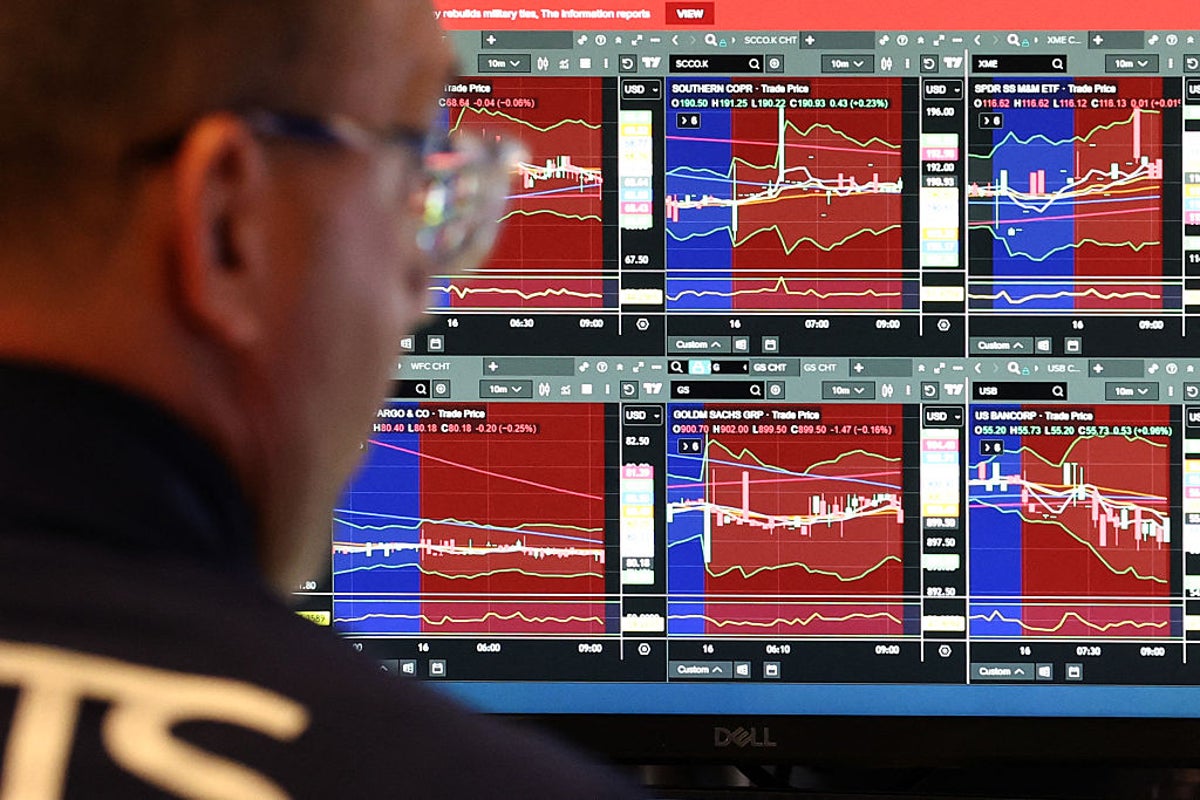
The Bank of England’s (BoE) deputy governor has warned of a fall in global stock markets, saying near-record valuations are unsustainable.
Both the UK and US stock markets are sitting near all-time highs due to investors continuing to bet on big future earnings, but Sarah Breeden said the bank expects an “adjustment at some point”.
The BoE appears concerned about the stability of financial systems if a market drop occurs in conjunction with other issues, including the Iran and Ukraine wars that are driving up inflation globally and private credit, which has grown exponentially and is provided by private firms, not banks. There are some worries that it may become a more widespread problem if the companies that have borrowed that money are unable to pay it back, which in turn could lead to shortfalls for their backers.
Ms Breeden said: “There’s a lot of risk out there and yet asset prices are at all-time highs. We expect there will be an adjustment at some point.
“The thing that really keeps me awake at night is the likelihood of a number of risks crystallising at the same time – a major macroeconomic shock, confidence in private credit goes, AI and other risky valuations readjust – what happens in that environment and are we prepared for it?”
The most recent significant market crash was in 2020 as a result of the Covid pandemic, which saw steep drops in most markets but also very swift rebounds. Since then, the US market in particular suffered drops in 2022 and 2025, the latter after Donald Trump first announced his plan to slap tariffs on trading partners around the world.
Stock market falls happen when share prices of multiple companies drop in tandem after being sold off in large amounts. There’s no specific amount a market has to drop to be termed a “crash”, though 20 per cent or more in a short period of time is usually considered one.
While a falling or even crashing stock market will not always lead to an economic decline or recession, there is a knock-on effect on both the businesses on the market and those who invest in them.
London’s major index, the FTSE 100, is up 5.2 per cent this year so far despite the impending economic hit to the UK and the rest of the world over oil prices, while across the past year it is up 24.4 per cent. Adding to the lack of absolute correlation is the globalisation of many businesses within the FTSE indices and the fact that they operate in markets outside the UK economy.
Get a free fractional share worth up to £100.
Capital at risk.
Terms and conditions apply.
ADVERTISEMENT

Get a free fractional share worth up to £100.
Capital at risk.
Terms and conditions apply.
ADVERTISEMENT
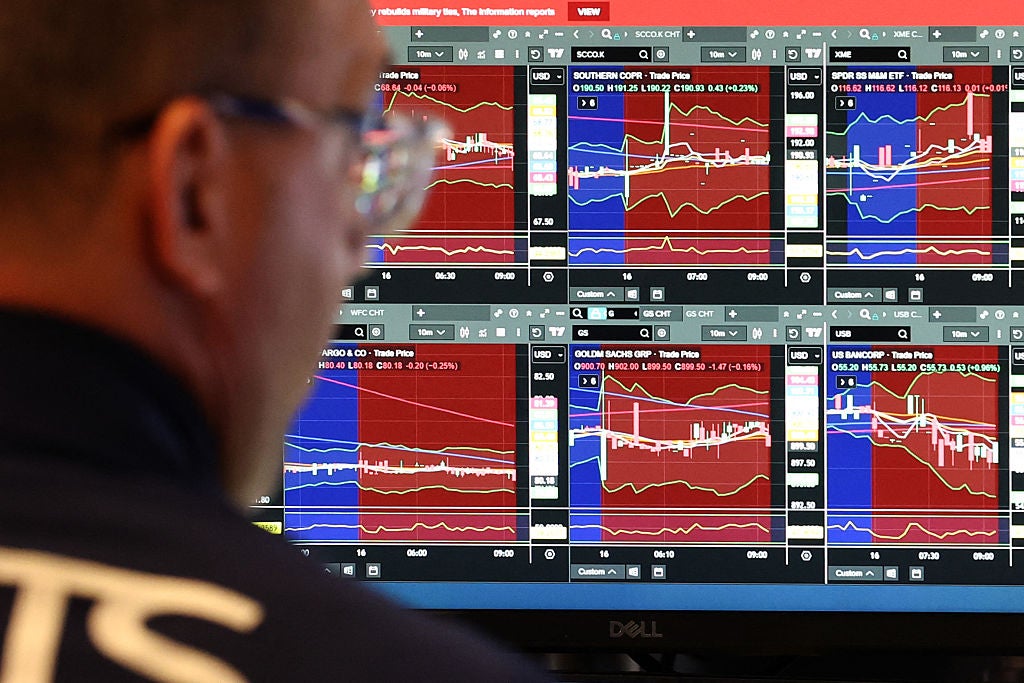
In the US, the S&P 500 is up 3.8 per cent for the year and 32.2 per cent over a year, having hit a new all-time high earlier this week despite the Iran war. The six biggest public companies in the world – led by Nvidia, Alphabet and Apple – and 10 of the top 12, are listed in the US.
That said, impacts arise from such huge companies taking a dive in share price.
What does it mean for your money?
For those invested in the market, either through stocks and shares ISAs or pensions, their portfolios would drop in value.
In theory, that is not a problem unless assets were sold at that lower valuation point. Most experts recommend riding out market downturns or else continuing to cost-average purchase, regardless of price, instead of panic selling. When markets return to upward, those downturns are actually when the greatest returns tend to be made, when assessed over the long term. There is no definitive timeframe for when markets recover from even the deepest downturns, but historically, they always have done so. The UK government is encouraging more British people to take up retail investing to boost their long-term wealth.
The other issue is if pensions drop in value at a moment when someone is close to retirement, which would mean their pot is worth less right when they need it most. This makes it important for people to be aware of their overall financial picture, the closer they get to that point in their lives.
For those who receive dividend income from investments – firms that pay out a portion of their profits to shareholders – this could be reduced or cut off entirely if businesses decide they need to reallocate money, which could in turn see households reduce their spending.
When large numbers of people do that, it naturally has an economic knock-on impact, with lower spending meaning less income for businesses. That could then mean they decide not to hire as many people or invest in projects, meaning potentially fewer jobs on the market.
For firms on the stock markets, a falling share price could mean less cash available for reinvestment into the business and a lowered ability to borrow. If there are stock-price-linked obligations, that can create wider problems for the business and naturally, consumer confidence can double down on such issues.
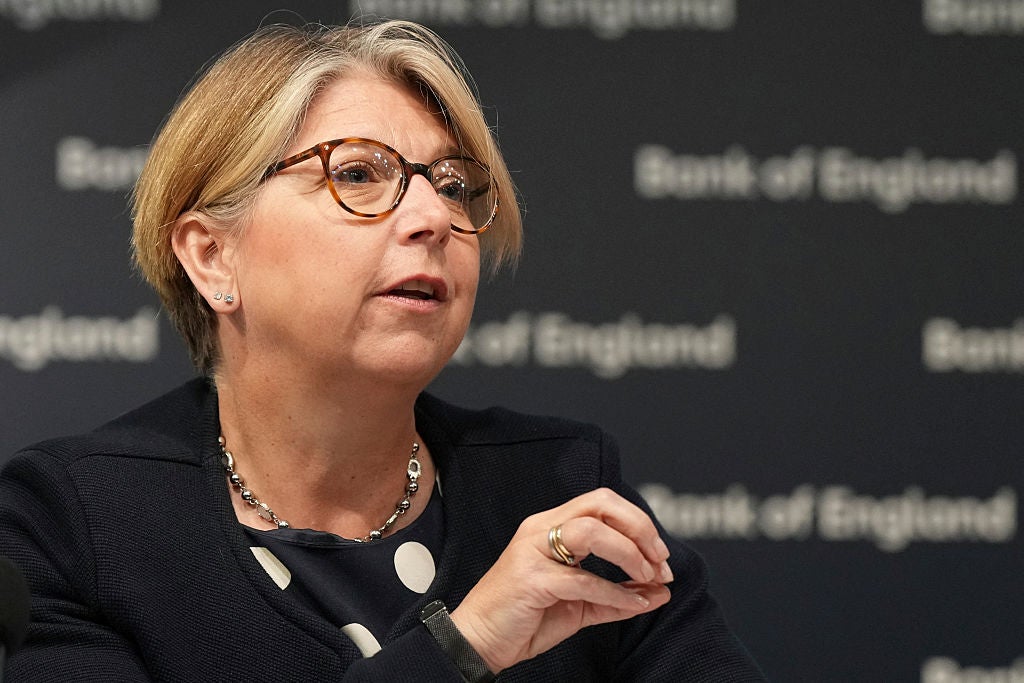
Rather than stock market worries around what that directly means for people, the BoE appears to harbour concerns about wider resilience to such shocks.
“What we are watching for is: how might those prices fall? Will there be a sharp adjustment downwards? And if there is such an adjustment, how will that affect the economy? I’m not saying it will happen today, tomorrow, in 12 months’ time. It’s ensuring that if it happens the system is resilient,” Ms Breeden, the BoE’s head of financial stability, added.
“Private credit has gone from nothing to two and a half trillion dollars in the last 15 to 20 years. It hasn’t been tested at this scale with the degree of complexity and interconnections it has with the rest of the financial system so far. It’s a private credit crunch, rather than a banking-driven credit crunch, that we’re worried about.”
Business
Gross GST collections hit record high of Rs 2.43 lakh crore in April 2026 despite US-Iran war concerns – The Times of India
GST collections: The gross Goods and Services Tax (GST) collections touched a new high in April, reflecting continued strength in economic activity even in the midst of the ongoing Middle East conflict.According to government data released on Friday, gross GST revenue for the month reached a record Rs 2.43 lakh crore, registering an 8.7% increase over Rs 2.23 lakh crore collected in April last year.After accounting for refunds, net GST collections stood at Rs 2.11 lakh crore, up 7.3% from the corresponding period a year earlier.Refund disbursements during the month rose sharply, climbing 19.3% year-on-year to Rs 31,793 crore.As a result, net GST revenue for April 2026 came in at Rs 2,10,909 crore.Robust revenues from imports played a major role in driving GST collections during the month. Gross receipts from imports climbed sharply by 25.8% to Rs 57,580 crore, while gross domestic GST collections recorded a comparatively moderate increase of 4.3%, reaching Rs 1.85 lakh crore.The net GST revenue from imports surged 42.9%, significantly outpacing the marginal 0.3% rise in net domestic collections.The April performance follows a strong showing in March, when net GST collections stood at Rs 1.78 lakh crore, up 8.2% from a year earlier. Gross collections in that month had also crossed the Rs 2 lakh crore mark.For the full financial year 2025-26, gross GST revenue increased 8.3% year-on-year to Rs 22.27 lakh crore. Net GST collections for the year rose 7.1% to Rs 19.34 lakh crore.Major contributors such as Maharashtra, Karnataka and Gujarat continued to account for a substantial share of total collections.

NEW DELHI: Government on Friday increased the price Aviation Turbine Fuel for international airlines by 5 per cent.This is the second straight monthly rise amid the global energy crisis.However, there is no change in the ATF price for domestic airlines.ATF prices have been increased by USD 76.55 per kilolitre, or 5.33 per cent, to USD 1511.86 per kl in Delhi, home, according to state-owned oil firms.Under this mechanism, foreign airlines and other carriers will pay market-linked rates, while prices for domestic airlines have been moderated, new agency PTI reported, citing sources.Earlier on April 1, rates for domestic airlines were hiked by 25 per cent to Rs 104,927.18 per kl.Jet fuel prices were deregulated more than two decades ago and have since been linked to international benchmark rates under a written understanding with airlines.However, a surge in global energy prices triggered by the West Asia crisis led to what sources described as the steepest-ever hike in ATF rates, prompting the government and state-run oil companies to take a calibrated approach.Jet fuel prices were deregulated more than two decades ago and have since been linked to international benchmark rates under a written understanding with airlines.
Business
Windfall gains tax cut: Excise duty on diesel exports down to Rs 23/litre, ATF exports to Rs 33/litre – The Times of India
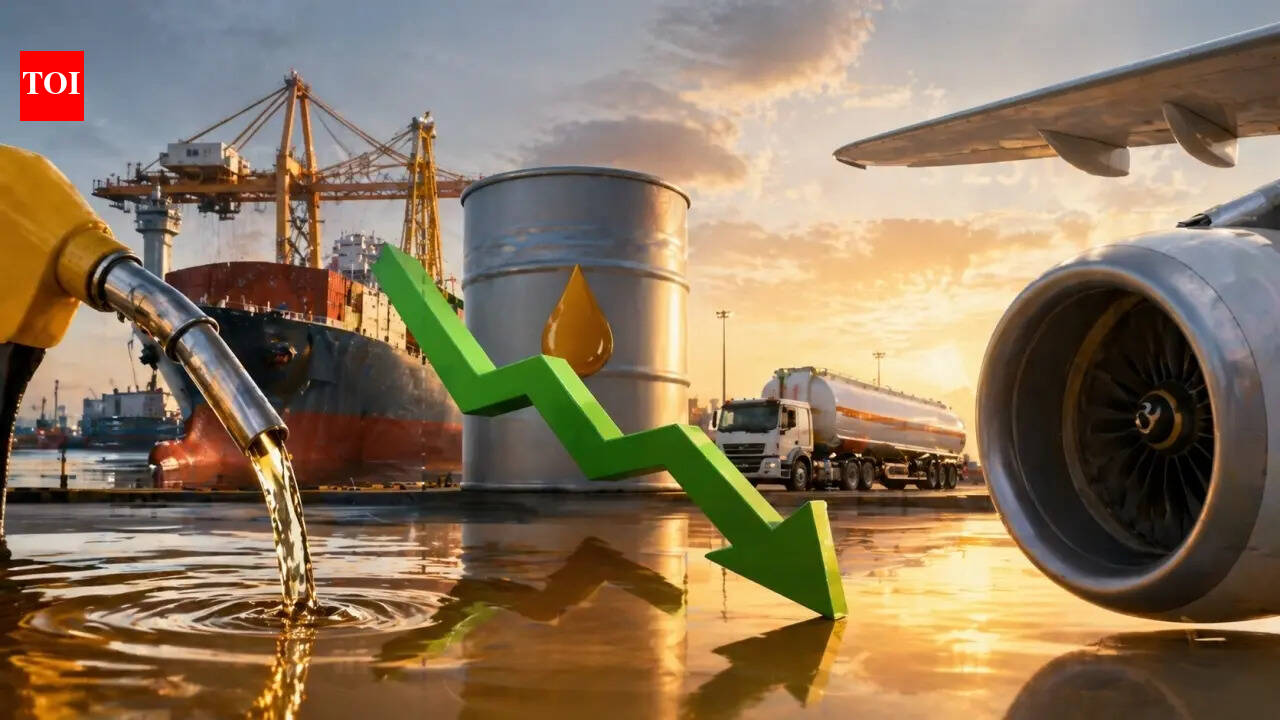
The windfall tax on exports of diesel and aviation turbine fuel (ATF) has been lowered effective May 1, 2026. The excise duty on petrol and diesel sold in the domestic market will remain unchanged. The levy on diesel exports has been reduced to Rs 23 per litre from Rs 55.5 per litre, while the duty on ATF exports has been cut to Rs 33 per litre from the earlier Rs 42 per litre.In a statement, the Finance Ministry also announced that the road and infrastructure cess on diesel exports will be waived for the next fortnight starting May 1. Meanwhile, the export duty on petrol will continue to remain at zero.Earlier, on March 26, the government had imposed export duties of Rs 21.50 per litre on diesel and Rs 29.5 per litre on ATF. These rates were subsequently increased during a review on April 11 to Rs 55.5 per litre for diesel and Rs 42 per litre for ATF.The windfall tax was introduced to ensure that adequate domestic supplies of petroleum products remain available amid supply disruptions arising from the conflict involving the United States, Israel and Iran. It was also intended to prevent exporters from profiting excessively from the widening gap between domestic and international fuel prices as global crude markets rallied sharply.According to the ministry, the export duty framework is aimed at discouraging excessive overseas shipments during the ongoing West Asia crisis, thereby safeguarding domestic fuel availability.Following military strikes by the United States and Israel on Iran on February 28, Tehran responded with extensive retaliation, escalating tensions across the Middle East. India’s oil supply through the Strait of Hormuz remains affected, but its diversified procurement basket and the availability of millions of barrels of Russian crude on water have helped ease the supply bottlenecks for now.Since the outbreak of the conflict, crude oil prices have climbed steeply, rising from around $73 a barrel to a four-year high of $126 a barrel.


Iran war redraws sea routes with Africa as the pivot

This Indigenous Language Survived Russian Occupation. Can It Survive YouTube?

Germany’s Adidas posts strong Q1 on DTC momentum, broad demand

-

 Sports1 week ago
PSL 11: Hyderabad Kingsmen opt to field after winning toss against Multan Sultans
-
 Business1 week ago
Trump administration in advanced talks for a rescue package for Spirit Airlines, source says
-

 Entertainment1 week ago
Anne Hathaway shares major news about ‘Princess Diaries 3’
-
 Business1 week ago
Gold prices in Pakistan Today – April 23, 2026 | The Express Tribune
-

 Entertainment1 week ago
Mike Vrabel to miss Patriots’ final NFL draft day —here’s why
-

 Fashion1 week ago
Canada forms new advisory committee to strengthen US trade relations
-

 Fashion1 week ago
US CBP to soon launch electronic system for importers to claim refunds
-
 Business1 week ago
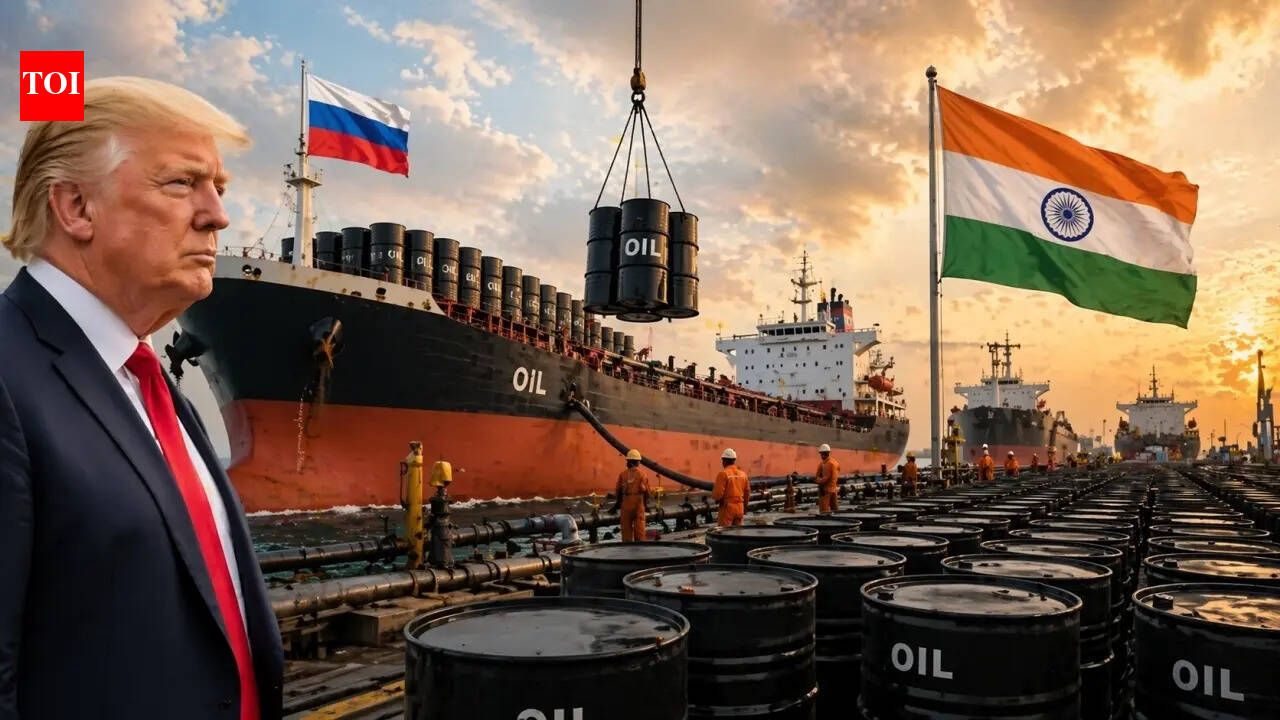
Iran war: Trump sanctions waiver or not – why India continues to buy Russian oil – The Times of India