

Sports
Barça in Miami: Why FIFA, UEFA let leagues play overseas

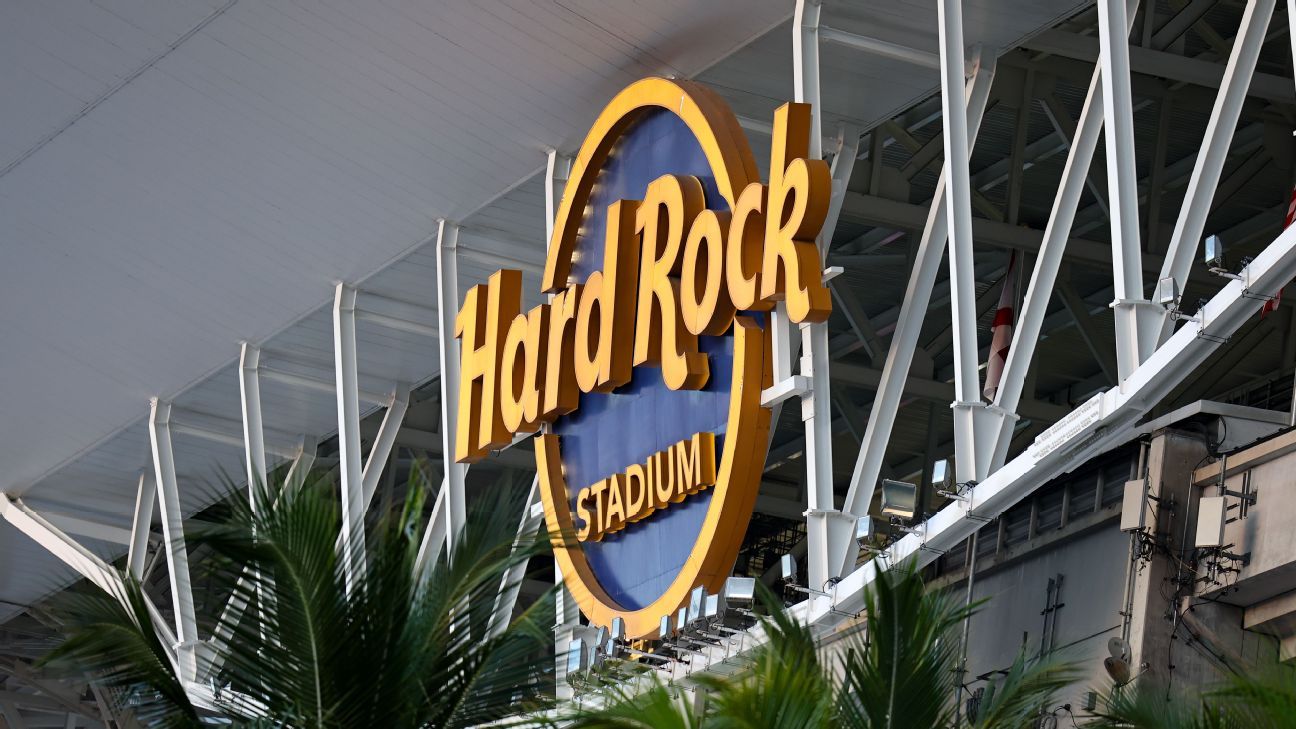
Villarreal‘s LaLiga game against Barcelona on Dec. 20 in Miami, and AC Milan‘s Serie A clash with Como in Perth, Australia, in February will make history. For the first time, regular-season games will be played on foreign soil, and it marks the culmination of a long political and legal struggle.
It’s a path that major U.S. sports have trod in the opposite direction for years now — the NFL, NBA and MLB have all played regular-season games overseas — and some see it as a shortcut to globalizing their league and marketing their product around the world. It’s also a contentious issue, one that was vehemently opposed by governing bodies from national associations to confederations right up to FIFA.
That began to change a after a long-running antitrust lawsuit brought by Relevent, a marketing and event promotion company founded by Miami Dolphins owner Stephen Ross, was settled with FIFA and, later, the U.S. Soccer Federation (USSF). The settlement effectively opens the door to sports leagues wishing to play abroad. One of the last hurdles to fall was UEFA, the governing body of football in Europe, where opposition is most strident.
So what’s the big deal? Other sports, such as the NFL, play regular-season games abroad …
This is different. When the NFL goes to São Paulo or Dublin or London, it’s not pushing its product on somebody else’s turf, for starters. Whatever organized football exists in those territories is light years away from what the NFL offers.
That’s not the case here. MLS and Australia’s A-League might not be on par with LaLiga or Serie A, but they are fully fledged, professional competitions. And unlike the NFL, there’s a single, pyramid-based ecosystem, governed by FIFA at the top. That’s why there were so many entities that have to sign off on this.
Like who?
The national associations (Spain‘s RFEF and the USSF, in one case, Football Australia and Italy‘s FIGC in the other), the regional confederations (UEFA, Concacaf and the Asian Football Confederation) and, of course, FIFA. Though, really, it was UEFA who, potentially, posed the biggest hurdle.
Why is that?
Well, the FAs of Spain and Italy were unlikely to object given it was their own national leagues that were wanting to play abroad. FIFA and the USSF — both of whom had strongly opposed anything other than exhibition matches being played in the U.S. — settled long-running antitrust lawsuits in 2024 and 2025 brought by event promoter Relevent Sports, who had tried to stage regular-season matches in the U.S. for years. That settlement effectively made it very difficult for them to object.
That left UEFA, who “reluctantly” greenlit the games on Monday, specifying that it was on an “exceptional basis”: A one-off that, in no way, should be seen as a precedent.
‘Reluctantly’? ‘Exceptional basis’? The UEFA makes it sound as if its arm was being twisted …
I don’t think the UEFA could have been any clearer. Its news release was titled “UEFA confirms its opposition to domestic league matches played abroad.” UEFA president Aleksander Čeferin said that “league matches should be played on home soil; anything else would disenfranchise loyal match-going fans and potentially introduce distortive elements in competitions.”
So why did the UEFA approve it?
Because it said the current “regulatory framework” — which FIFA was supposed to put together — isn’t “clear and detailed enough,” and so the UEFA had no choice. Essentially, there was the risk of more legal action.
Some might say the UEFA is passing the buck. FIFA isn’t giving it clear rules, so it has to approve this, however reluctantly, and as Čeferin underscored, the UEFA approved it on a one-off basis, without it representing any kind of precedent. That said, some folks are cynical about this.
How so?
Well, LaLiga boss Javier Tebas and Barcelona were the ones driving the Miami game and both are influential, especially in the context of the European game. UEFA are a governing body, but it’s also business partners with the European Football Clubs (EFC, the body that represents more than 800 of the continent’s clubs) in marketing and selling their tournaments, including their crown jewel, the men’s Champions League. And it just so happened that on Wednesday they jointly announced a new tender for broadcasting rights to their club competitions, with the goal of raising nearly half a billion dollars more per season.
Guess who’s going to sell those rights. Relevent, the folks who brought the original lawsuit.
They became UEFA’s commercial and marketing partners last March. They are responsible for monetizing the Champions League on behalf of UEFA and the EFC form 2027. So if you’re really cynical, you might connect all those dots. UEFA know there’s a ton of opposition to this, but a number of their business partners are either in favor of it or don’t really care. Throw in the fact that they could face a legal challenge and, in any case, FIFA haven’t yet provided them with a set of rules to follow and I guess they figured it wasn’t a hill worth dying on.
Why was there so much opposition to this? Real Madrid were among the first to complain …
… and they have a legitimate case. They’re Barcelona’s direct competitor in LaLiga year after year, and moving the game to Miami means one of Barça’s toughest away trips — against Villarreal — will instead be played in Lionel Messi‘s backyard. I think it’s a safe bet that the crowd will be overwhelmingly pro-Barça, so you can see why Madrid aren’t thrilled: A tricky away game becomes a de facto home match.
Moving Milan vs. Como to Australia is less contentious from a competitive perspective. Milan can’t play at San Siro due to the opening ceremony of the 2026 Winter Olympics, and they can’t move the fixture either because they share the ground with Inter Milan, who have a packed schedule.
Milan draw more than 70,000 fans per game and have more than 40,000 season ticket holders. The only other stadium in Italy that could accommodate that would be the Olympic Stadium in Rome, but they can’t play there either because AS Roma and Lazio share it, and there are no free dates. So really, they would have to go abroad anyway. Why not Australia?
That said, many fans and players are unhappy. Barcelona’s Frenkie de Jong said he “totally” understood why other clubs are unhappy that their away game becomes a match played on neutral ground, and he said the travel was going to be tough on the players. Milan’s Adrien Rabiot was even more direct, calling it “absurd” and how the decision was made over the player’s heads.
Politicians got involved, too. Glenn Micallef, the European Commissioner whose portfolio includes sports and culture, called it a “betrayal” of “local communities and fans.” He said “to our citizens, it is more than just a competition, it’s about community, friendship, family.”
He’s laying it on a bit thick, isn’t he?
Yes and no. When the Premier League floated the idea of a “39th game” — with each club playing an extra match abroad — back in 2008, there was widespread opposition. So much so that in August, Premier League chief executive Richard Masters said there were no plans to even consider it and that, in any case, his league didn’t need more publicity.
Throw in the legitimate complaints about distortion of the competition and player workload — players’ union FIFAPro weighed in on this recently, too — and folks are wondering whether it’s worth it.
So what’s in it for Barcelona and LaLiga?
Barcelona and Villarreal are reportedly splitting around $12 million, with Milan and Como clocking in at around $10 million. When you consider Barça estimate their revenue will comfortably pass the billion-dollar mark this season, we’re talking, what, just over half a percent? It’s more about raising the profile, gaining fans and possibly sponsors, though even that feels a bit dubious.
1:50
How will fans react to LaLiga’s first ever fixture abroad?
Craig Burley and Shaka Hislop discuss the announcement of Villarreal vs. Barcelona being played in Miami.
I mean, Barcelona and Milan are two legitimate heavyweight brands with supporters all over the world; I’m skeptical about how many non-fans they’re actually going to convert. People with even just a passing interest in the sport know who they are. And are Villarreal going to suddenly gain fans in Miami (or Como in Perth)? Even if they do, how are they going to monetize them?
It feels as if they’re trying to ape what the NFL did, with some success, when they started taking regular-season games abroad two decades ago. But again, that was different.
When the NFL started taking games to Europe, there was a whole promotional apparatus, with clinics and events to promote the league. And crucially, NFL fans from all over the continent would show up at stadiums such as Wembley, often wearing their team’s jersey even if their favorite team wasn’t playing. I somehow don’t think we’ll see too many Miami-based Real Madrid fans showing up.
Times have changed. Barça fans in the U.S. can already watch every minute of every game, and they can usually catch them in person in preseason. Casual fans will get their fill of Lamine Yamal & Co. next summer at the FIFA World Cup.
I’m not sure how much this moves the needle, or how much the sport actually needs this.

The NWSL’s board of governors is expected to vote later this month on whether to flip the league’s calendar to a fall-to-spring season, multiple sources told ESPN.
The NWSL season currently kicks off in March and ends in November, but a change — one that has been debated for years and previously voted down — would see the season start in late summer and end in late spring. That would align the NWSL with many of Europe’s top leagues and soon, with MLS, which will make the transition to fall-to-spring next year.
The NWSL’s board has debated changing the season footprint for at least three years, and a flip of the calendar was narrowly voted down in late 2024, ESPN previously reported. Intense debate over the topic has continued within league circles.
Another vote on the calendar could happen at the upcoming board meeting, sources said, although the agendas to such meetings change frequently, and the terms of potential proposals can be altered right up until voting begins, as they did in December with the implementation of the new High Impact Player rule.
Even if there is a vote that successfully passes a calendar change — which is not guaranteed, since support of the idea is not unanimous — it could take years to implement.
An NWSL spokesperson declined to comment on this story.
NWSL commissioner Jessica Berman said in November that “our ecosystem is on notice” about the league potentially changing its calendar.
“There are certainly opportunities that can be created with us not overlapping Major League Soccer, in that the schedule congestion for our summer calendar will be mitigated,” Berman said before the 2025 NWSL Championship. “On the other hand, there will of course be other challenges that it creates in terms of understanding and knowing stadium availability.”
Proponents of the change believe that aligning the NWSL’s calendar with Europe will improve transfer business and allow the NWSL to better operate around FIFA international windows.
Sources told ESPN that there is also a belief among some board members that there is less competition for prime TV time in late spring and that the NWSL playoffs could have a larger audience in that window. Maximizing revenue from the next media rights deal is the NWSL board’s current top priority, multiple sources have told ESPN over the past year, and Berman has spoken about the topic frequently.
Critics of a calendar change point to the NWSL’s many cold-weather markets and potential player safety issues around holding games in frigid conditions, although extreme heat is already an issue during the NWSL’s summer months. They are also concerned about how cold temperatures and potential weather delays would impact attendance, which dipped on average last year.
The NWSL’s board of governors will meet later this month. Any potential league vote is likely to result in a narrow decision in either direction, as was the case in 2024.
MLS owners voted in November to flip the calendar and mirror Europe. MLS will make the transition by playing an abbreviated “sprint season” next spring before switching to a full season for 2027-28. MLS will begin its new seasons in July, take a winter break from mid-December through early February and finish the playoffs in late May.
The NWSL could follow a similar path but on a delayed timeline.
The NWSL’s new collective bargaining agreement, which was ratified in 2024, accounted for a potential change by eliminating restrictions to preseason start dates and by adding an entire section (27.9) accounting for a schedule format change. That section requires the league to provide no less than one year’s notice to the NWSL Players Association if it intends to switch to a fall-to-spring format.
After that, the CBA calls for the league and the union to form a scheduling committee and allow for NWSLPA input, as well as bargain over necessary changes that conflict with the current CBA, “but the NWSL retains the discretion to make the format change.”
There are natural breaks in the calendar for the NWSL to attempt a transition. The 2028 Summer Olympics will be in Los Angeles (and the Olympics soccer event spread across the U.S.), and the 2031 Women’s World Cup is expected to be primarily hosted in the United States, although the formal approval of that uncontested bid has been delayed by FIFA.
Changing the calendar has the support of many sporting executives across the league because it will put NWSL contracts at the same cadence as those in Europe, where deals typically expire in the summer. That, executives have said for years, will make player transfers easier.
In ESPN’s first anonymous general manager survey in 2024, one GM said that the intense debate over the calendar was “actually the biggest question facing the league.”
Turning the summer into the offseason would also allow the NWSL to avoid one of its largest headaches: international tournaments. The league tried to play through the 2015 and 2019 Women’s World Cups despite missing swaths of star players before finally taking a five-week break for the 2023 edition.
Between the World Cup, the Olympics and continental tournaments such as the Euros, there are major international calendar conflicts three out of every four summers. (And this year, in the one down summer in that cycle, the NWSL instilled a monthlong break because of the men’s World Cup taking over many of its venues and markets.)
MLS and the NWSL currently mirror each other in operating seasons that start at the beginning of the calendar year (usually February or March) and end with playoffs that run until the end of the year. MLS and the NWSL have both kicked off their seasons early in the calendar year since their inceptions in 1996 and 2013, respectively.
The USL Super League, which is also sanctioned as a U.S. women’s first division alongside the NWSL, launched in 2024 and already plays roughly a fall-to-spring schedule, kicking off in August and concluding in May.

Azzi Fudd, the No. 1 pick in the WNBA draft, answered numerous basketball-related questions at her Dallas Wings introductory news conference Thursday, but one unrelated to the game overshadowed all the others.
Fudd and teammate Paige Bueckers, who will team in Dallas’ backcourt this season, went public about their relationship in 2025, and it was an often-discussed subject before this week’s draft.
But when Fudd was asked Thursday about both her relationship with Bueckers — the two overlapped at UConn and won a national championship together — and whether she would seek advice from other couples in the WNBA about navigating the relationship as pro players, the subject was quickly shut down.
“Understand why you have to ask that question,” a Wings public relations staffer interrupted. “We’re going to respectfully decline from commenting on our players’ personal lives.”
Fudd averaged 17.3 points on 47% shooting in her final season at UConn, which ended with the Huskies losing to South Carolina at the Final Four — their only loss of the season.
Bueckers, who was last year’s No. 1 overall pick by the Wings, averaged 19.2 points, 5.4 assists and 3.9 rebounds while winning the league’s Rookie of the Year award.
Wings general manager Curt Miller said the team never hesitated in its choice to draft Fudd as the team looks to take steps forward after tying for the league’s worst record last season at 10-34 and winning only nine games in 2024.
“Since the moment we secured the No. 1 pick, we set out on a plan to be deliberate, thorough, with intention on evaluating where we got to ultimately in picking Azzi Fudd,” Miller said. “We traveled all over the world watching this incredible draft class, but it all came back always to Azzi.
“Words that we heard over and over again in the investigation of her was, a winner, competitor, a hard worker, obviously the skill set speaks for itself, an incredible shooter — probably one of the quickest releases in the game today, a defender with a lot of competitiveness and toughness, and, ultimately, all the intangibles that goes along with Azzi in the locker room — being unselfish, being an incredible teammate, being a high-basketball-IQ player. [It] all pointed us through a very deliberate and thorough process back to Azzi Fudd.”
Sports
Former SMU cornerback Teddy Knox faces $2.88M judgment for crash linked to Rashee Rice’s Lamborghini race
NEWYou can now listen to Fox News articles!
Kansas City Chiefs star receiver Rashee Rice isn’t the only one facing discipline for a March 2024 car crash in Dallas.
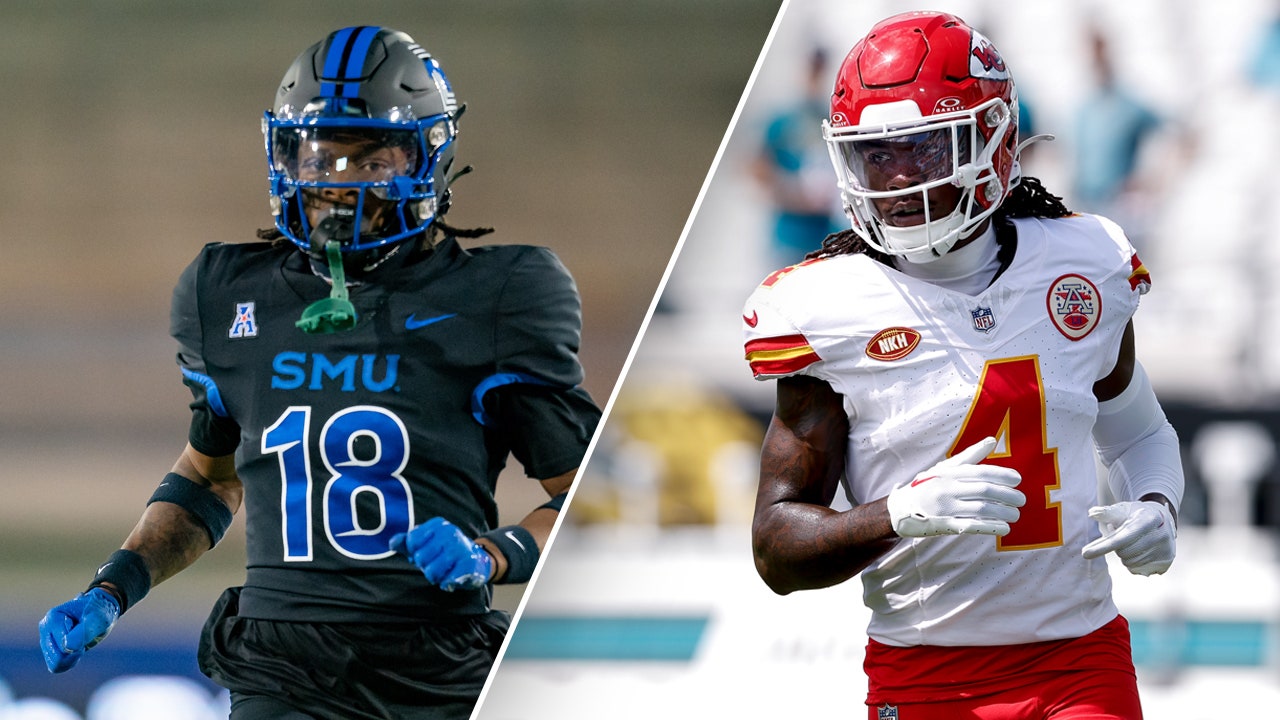
Theodore “Teddy” Knox, a former SMU cornerback and teammate of Rice’s in college, was driving a Corvette while racing Rice’s Lamborghini on a Dallas highway before it caused a multi-car crash.
Knox has been hit with a $2.88 million default judgment in a lawsuit from one of those crash victims, Kathryn Kuykendall, according to ESPN.
CLICK HERE FOR MORE SPORTS COVERAGE ON FOXNEWS.COM
Teddy Knox and Rashee Rice (Getty Images)
Knox was ruled “grossly negligent” by Judge Kim Bailey Phipps, and a default judgment comes when a lawsuit has no response or a party does not appear in court. In this case, it was reportedly the latter.
“We’ve asked the court to grant the default judgment because we’re ethically required to as a matter of diligence,” Kuykendall’s attorney, Marc Lenahan, said in a statement to ESPN when the motion was filed.
“Personally, it pleases us that Teddy hasn’t made further mistakes that we’re aware of. If a team gives him a chance to prove that he’s walking the right path now, we’ll be rooting for him.”
PATRIOTS STAR STEFON DIGGS PLEADS NOT GUILTY TO FELONY STRANGULATION CHARGES DAYS AFTER SUPER BOWL
This marks the third default judgment issued against Knox from the March 2024 crash. He was also ordered to pay $1.99 million to Irina Gromova and $1.63 million to Edvard Petrovskiy in combined damages.
Knox and Rice pleaded guilty to charges from the crash, and Knox was sentenced to 30 days in jail and five years of probation. Knox was charged with causing a collision involving serious bodily injury and racing on a highway causing bodily injury.
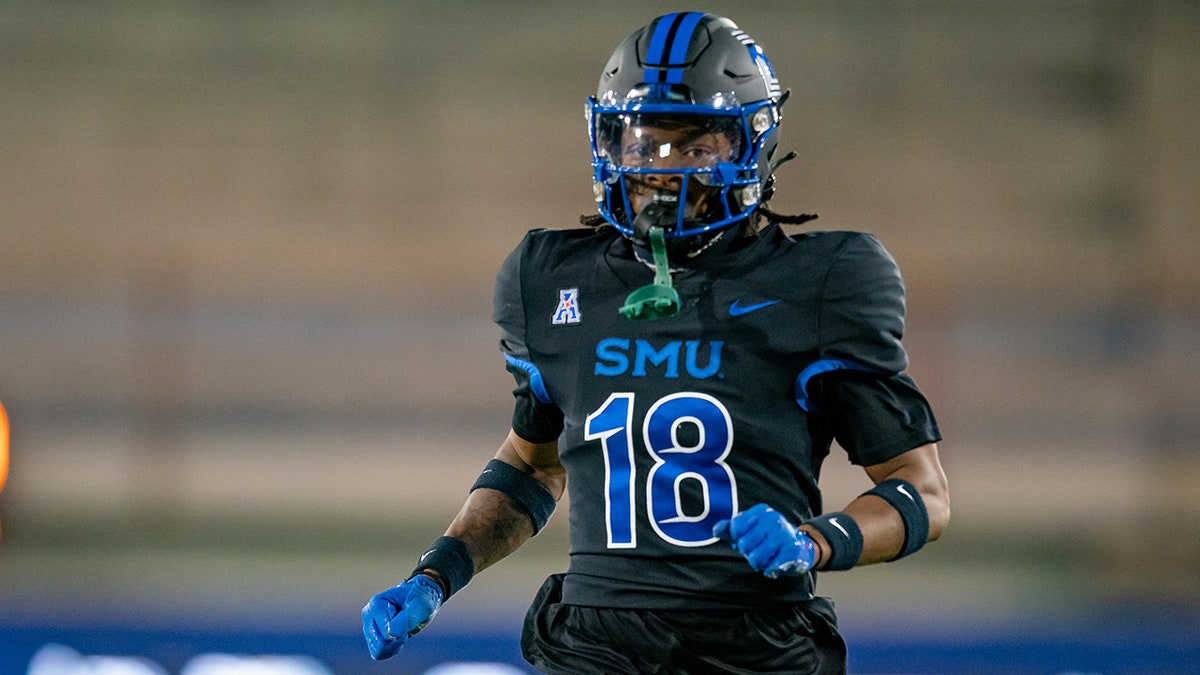
SMU wide receiver Teddy Knox on special teams during a game against the North Texas Mean Green Nov. 10, 2023, at Gerald Ford Stadium in Dallas, Texas. (Chris Leduc/Icon Sportswire)
Rice had similar charges, receiving five-year deferred probation and 30 days in jail as a condition of the probation. His jail time was said to be flexible, according to the Dallas County District Attorney’s Office.
Rice was also required to pay the victims for their out-of-pocket medical expenses, which totaled around $115,000, as part of his plea agreement.
Rice was also suspended six games for violating the NFL’s personal conduct policy, which he served last season.
The 25-year-old receiver said in a statement issued by his attorney at the time of the league’s decision that he’s had “a lot of sleepless nights thinking about the damages my actions caused, and I will continue working within my means to make sure that everyone impacted will be made whole.”
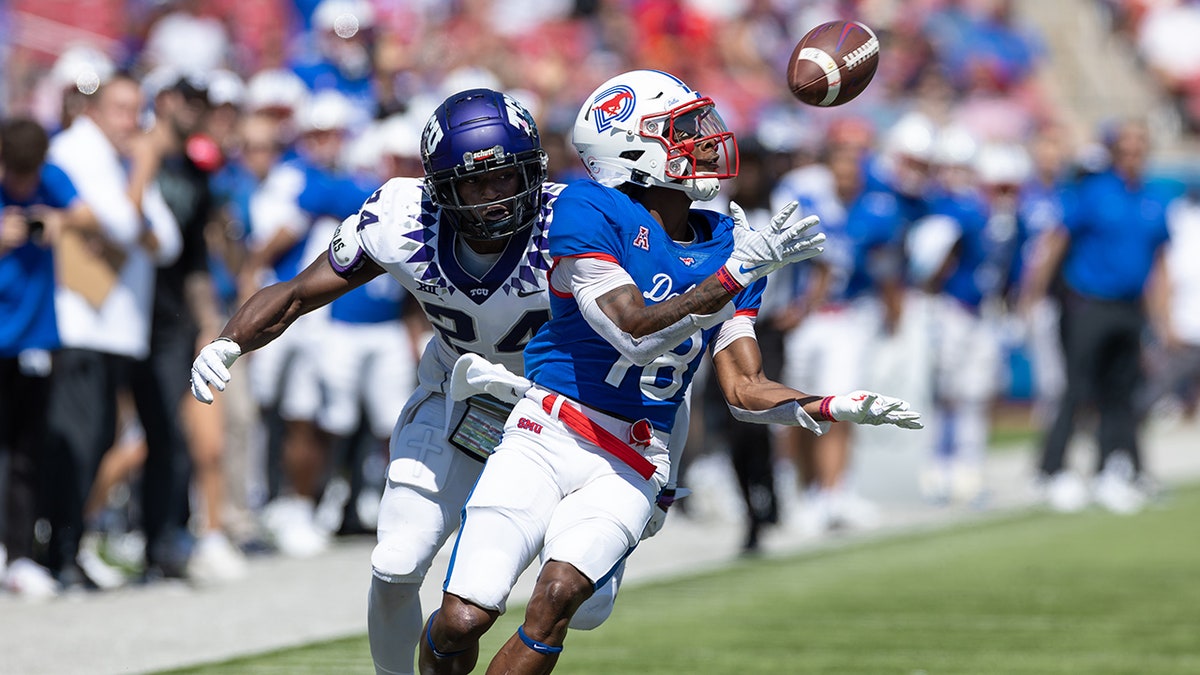
SMU Mustangs wide receiver Teddy Knox (18) prepares to make a catch during a game between against the TCU Horned Frogs Sept. 24, 2022, at Gerald J. Ford Stadium in Dallas, Texas. (Matthew Visinsky/Icon Sportswire)
CLICK HERE TO DOWNLOAD THE FOX NEWS APP
Knox was suspended by SMU, and he hasn’t been in college football ever since. He began his career at Mississippi State before transferring to SMU.
Follow Fox News Digital’s sports coverage on X and subscribe to the Fox News Sports Huddle newsletter.


Sources: NWSL expected to vote on calendar shift this month

Christina Applegate admitted to hospital amid MS battle: Report
Oil prices fall again amid Middle East ceasefire hopes

-

 Tech1 week ago
Azure customers up in arms over ‘full’ UK South region | Computer Weekly
-

 Tech1 week ago
As the Strait of Hormuz Reopens, Global Shipping Will Take Months to Recover
-

 Tech1 week ago
This AI Button Wearable From Ex-Apple Engineers Looks Like an iPod Shuffle
-
Uncategorized1 week ago
[CinePlex360] Please moderate: “Trump considers
-

 Politics7 days ago
Indian airlines hit hardest after Dubai limits foreign flights until May 31
-

 Entertainment4 days ago
Palace left in shock as Prince William cancels grand ceremony
-

 Politics7 days ago
Chinese, Taiwanese will unite, Xi tells Taiwan opposition leader
-

 Entertainment6 days ago
Dua Lipa hits major career high ahead of wedding with Callum Turner