

Politics
BBC apologises to Trump over speech edit, rejects defamation claim

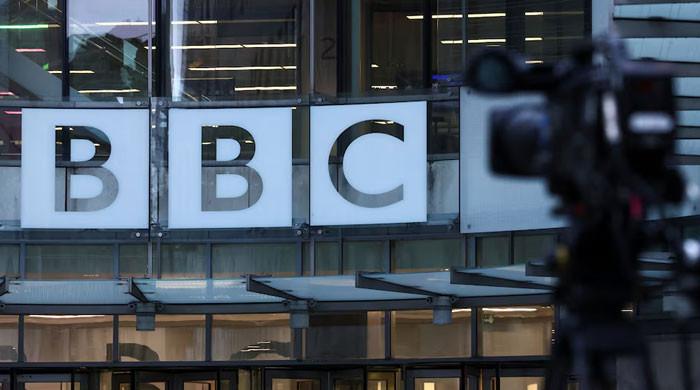
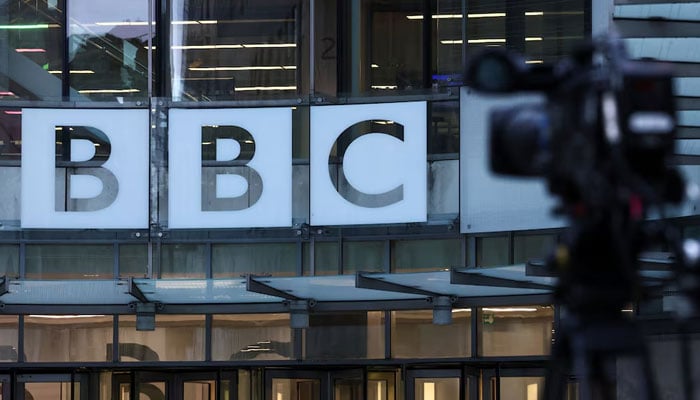
LONDON: Britain’s BBC apologised to Donald Trump on Thursday for editing a speech to make it look like he had advocated violence, seeking to ward off the US president’s threat of legal action, but the broadcaster rejected the basis for a defamation claim.
In a statement, the BBC said its chair Samir Shah sent a personal letter to the White House making clear to Trump that he and the corporation were “sorry” for the edit, adding that the broadcaster has no plans to rebroadcast the Panorama documentary on any of its platforms.
“While the BBC sincerely regrets the manner in which the video clip was edited, we strongly disagree there is a basis for a defamation claim,” the BBC said.
The leaking of internal accusations of bias at the BBC, including in the way it edited a 2021 speech by Trump on the day his supporters overran the Capitol, has forced its top two leaders to quit and for Trump to threaten a $1 billion lawsuit.
That puts the BBC at risk of having to use money paid by its viewers to compensate the US president for an error of its own making, handing more ammunition to critics at a time when growing numbers are cancelling their annual licence fee payment.
Trump’s lawyers had told the BBC to withdraw the Panorama programme, apologise to the president and appropriately compensate him for the harm caused, or face a lawsuit seeking damages of at least $1 billion.
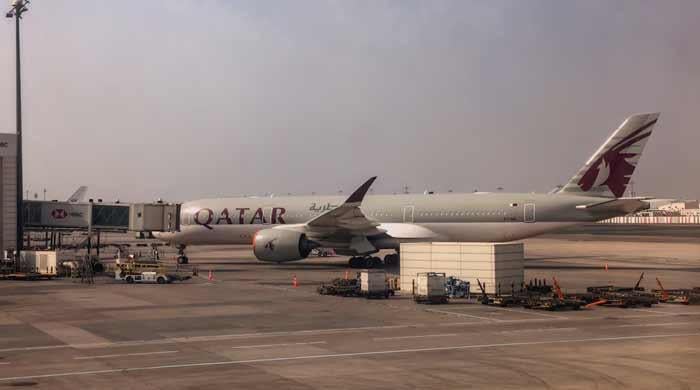
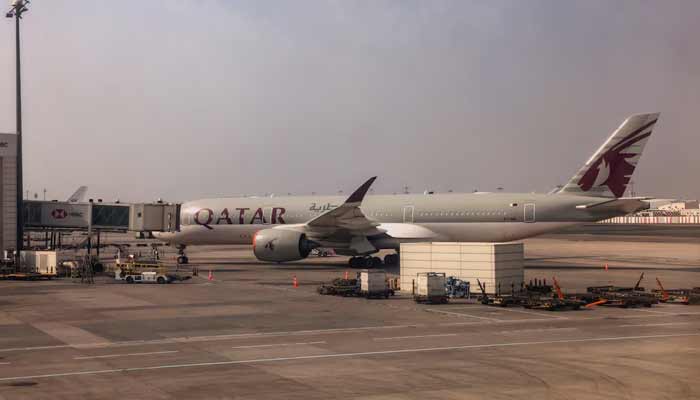
Australia’s Qantas Airways, Scandinavia’s SAS and Air New Zealand announced airfare hikes on Tuesday, blaming an abrupt spike in the cost of fuel caused by the Middle East conflict.
Jet fuel prices, which were around $85 to $90 per barrel before US-Israeli strikes on Iran, have soared to between $150 and $200 per barrel in recent days, New Zealand’s flag carrier said as it suspended its financial outlook for 2026 due to uncertainty over the conflict.
The war, which disrupted shipping via the world’s most vital oil export route, has sent oil prices surging, upending global travel, pushing airline tickets on some routes sky-high, and sparking fears of a deep travel slump that could lead to widespread grounding of planes.
“Increases of this magnitude make it necessary to react in order to maintain stable and reliable operations,” an SAS spokesperson said in a statement to Reuters, adding it had implemented a “temporary price adjustment”.
The largest Scandinavian airline said last year it had temporarily adjusted its fuel hedging policy due to uncertain market conditions and that it had no fuel consumption hedged for the following 12 months.
While several Asian and European airlines, including Lufthansa and Ryanair, have oil hedging in place, securing a part of their fuel supplies at fixed prices, Finnair warned that even the availability of fuel could be at risk if the conflict dragged on. Kuwait, a major jet fuel exporter to north-west Europe, has faced output cuts.
“A prolonged crisis could affect not only the price of fuel but also its availability, at least temporarily,” a Finnair spokesperson said, adding that it had not seen this happening yet. It had hedged over 80% of its first-quarter fuel purchases.
Airspace chaos in the Middle East
Highlighting the airspace chaos in the Middle East, planes arriving in Dubai were briefly placed in a holding pattern on Tuesday due to a potential missile attack, flight tracking service Flightradar24 said on X. The planes eventually landed.
Qantas said in addition to increasing international fares, it was exploring options to redeploy capacity to Europe as airlines and passengers seek to evade disruptions in the Middle East, where drone and missile fire have curtailed flights.
Airfares have soared on Asia-Europe routes due to airspace closures and capacity constraints, and Hong Kong’s Cathay Pacific Airways said on Tuesday it was adding extra flights to London and Zurich in March.
Air New Zealand said it had raised one-way economy fares by NZ$10 ($6) on domestic routes, NZ$20 on short-haul international services and NZ$90 on long-haul, with more adjustments to prices and schedules possible if jet fuel costs remain elevated.
Hong Kong Airlines said on its website it would raise its fuel surcharges by up to 35.2% from Thursday, with the sharpest increase on flights between Hong Kong and the Maldives, Bangladesh and Nepal.
Airline shares stabilise after sell off
Some airline stocks rose and oil prices fell to around $90 a barrel on Tuesday from a high of $119 on Monday after US President Donald Trump said on Monday the war could be over soon.
When markets opened in Europe, airline shares were up between 4% and 7%. In Asia, airline shares showed signs of stabilising, with Qantas closing up 0.5%, Korean Air Lines rising 3% and Cathay Pacific up 3.6%. All had recorded sharp declines on Monday.
Fuel is the second-largest expense for air carriers after labour, typically accounting for a fifth to a quarter of operating expenses.
Conflicts shrinking available airspace
In addition to high fuel costs, tightening airspace also threatens to derail the global travel industry, as pilots reroute to avoid the Middle East conflict and capacity on popular routes fills up.
Emirates, Qatar Airways and Etihad typically jointly account for about one-third of the passenger traffic between Europe and Asia and fly more than half of all passengers from Europe to Australia, New Zealand and nearby Pacific Islands, according to Cirium.
European airlines have already struggled with the shortage of available airspace created by the war in Ukraine, with many avoiding Russian airspace and flying longer international routes. Now, with even less available airspace, they say their business has become even more challenging.


MANAMA: Bahraini intelligence authorities have arrested an Indian telecommunications engineer on allegations of passing sensitive information to Israel’s intelligence agency.
According to preliminary reports, the suspect — identified as Nitin Mohan — was detained for allegedly transmitting geospatial data, photographs and video reconnaissance of strategic locations to Mossad.
Officials say the information reportedly included site imagery and operationally sensitive details that could assist foreign intelligence services in conducting analysis or targeting assessments.
Investigation Underway
The Ministry of Interior Bahrain confirmed the arrest but has not released detailed information about the technical aspects of the investigation.
Authorities have also not disclosed:
the specific locations involved
the nature of the sensitive infrastructure allegedly monitored
whether additional individuals are under investigation
Security Concerns
Analysts say such cases typically involve the transmission of strategic infrastructure data, which may include communication networks, military sites or critical facilities.
Officials indicated that further details may be released once the investigation progresses.
The case has drawn attention amid heightened regional security concerns and ongoing geopolitical tensions in the Middle East.
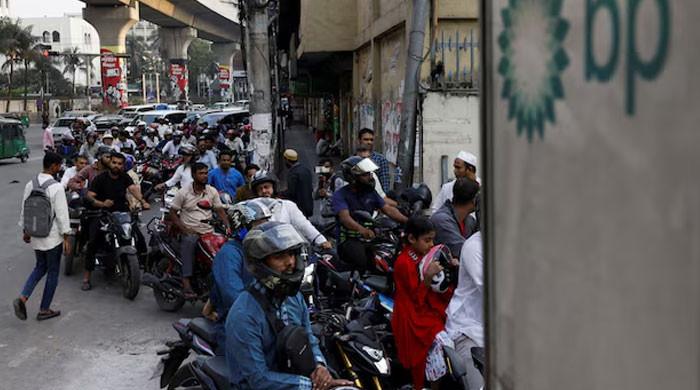
- Power cuts, diesel shortages hitting garment factories.
- Bangladesh receives diesel cargoes amid fuel crunch.
- Country relies on imports for 95% of energy needs.
Bangladesh has begun receiving diesel from suppliers including China and India, with officials saying the country now has enough fuel to cover about one month of demand, with arrangements under way for another month, after the US-Israeli war on Iran disrupted shipments, including to the massive garments industry.
The South Asian nation of 175 million people, which relies on imports for roughly 95% of its energy needs, has imposed fuel rationing for vehicles, restrictions on diesel sales and closed universities as the war on Iran causes severe disruption to Middle East oil exports.
Some garment makers in Bangladesh, the world’s second‑largest clothing exporter after China, have already complained they do not have enough diesel to run their back-up generators when public utilities cut power supplies.
Mahmud Hasan Khan, president of the Bangladesh Garment Manufacturers and Exporters Association, said power cuts had doubled to up to five hours a day since the war began on February 28.
“When power goes out, we have to run our standby generators on diesel, but we can’t buy enough diesel anymore, and it’s causing problems for us,” he said.
State-run Bangladesh Petroleum Corporation (BPC) is receiving around 60,000 metric tons of diesel from three traders, with a further 90,000 metric tons scheduled to arrive later this month, two energy officials said, requesting anonymity because they were not authorised to speak to the media.
A 27,000-metric-ton diesel cargo from PetroChina arrived at Chittagong port on Monday, while a cargo of 28,000 metric tons from Vitol is waiting at the port’s outer anchorage, a BPC official said.
In addition, around 5,000 metric tons of diesel is being supplied through a cross-border pipeline from India’s Numaligarh Refinery. Officials said talks are ongoing to secure some 30,000 metric tons from Indian Oil.
“We have supplies for one month, and another month is being arranged,” a BPC official said.
The BPC did not immediately respond to requests for comment.
Bangladesh normally needs about 380,000 metric tons of diesel each month, but officials said that since rationing began, one estimate put current monthly requirements at roughly 270,000 metric tons.
Officials said securing refined fuel cargoes had been relatively easy because most of the traders did not rely on the disrupted Gulf shipping routes used for crude oil shipments.
However, prices have increased as a result of the intense market volatility triggered by the Middle East crisis, they added.
Bangladesh also imports around 1.4 million metric tons of crude oil a year for its refineries under long-term contracts with Saudi Aramco and Abu Dhabi National Oil Company (ADNOC).
However, supplies from Saudi Aramco and ADNOC could be affected because their crude shipments to Bangladesh must pass through the Strait of Hormuz. One Aramco cargo of about 100,000 tons has already been delayed in the Gulf due to the ongoing crisis, officials said.
Severe gas shortages have already forced Bangladesh to halt operations at four of its five state‑run fertiliser factories, redirecting available gas to power plants.


Nebraska agrees to 3-year extension with coach Fred Hoiberg

Italy’s Prada explores layered identities for Fall/Winter 2026

Ex-Jets linebacker, charged with first-degree murder, allegedly consulted ChatGPT about cover-up

-
 Politics3 days ago
India let Iran warship dock the day US sank another off Sri Lanka, say officials
-

 Sports4 days ago
Pakistan set for FIH Pro League debut | The Express Tribune
-

 Entertainment3 days ago
Harry Styles kicks off new era with ‘One Night Only’ comeback show
-
 Business3 days ago
Restaurant group changes name after bid to buys pubs across the UK
-
 Tech1 week ago
The 5 Big ‘Known Unknowns’ of Donald Trump’s New War With Iran
-
 Business1 week ago
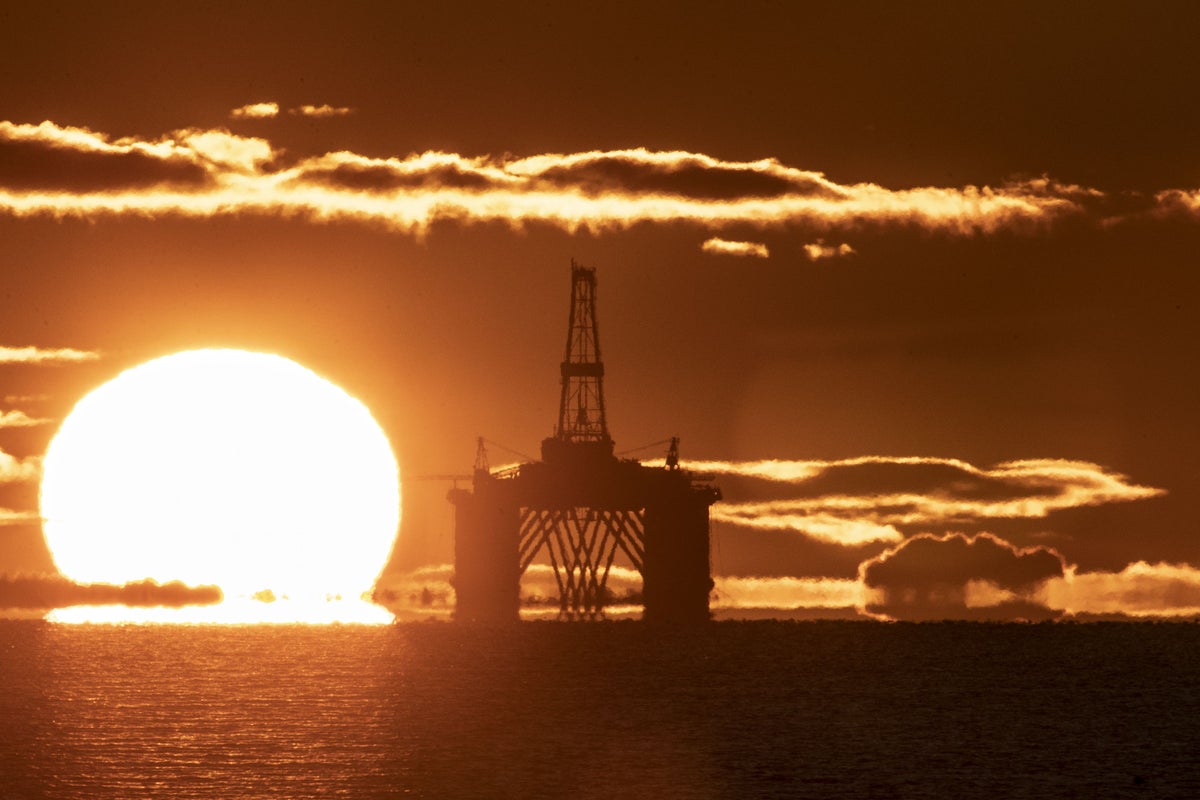
Labour parliamentarians urge UK Government to oppose Rosebank oil field
-
 Business4 days ago
Home heating oil: ‘Most of my pension has gone on home heating oil’
-

 Sports1 week ago
USA vs. Argentina (Mar 1, 2026) Live Score – ESPN