

Fashion
Bernard Arnault bets on LA’s Rodeo Drive with new Tiffany, Louis Vuitton flagship

By
Bloomberg
Published
August 31, 2025
Bernard Arnault is pressing ahead with two major developments on Rodeo Drive in Beverly Hills, tightening his grip on one of the world’s most exclusive retail corridors.
Arnault’s luxury conglomerate, LVMH Moët Hennessy Louis Vuitton SE, is planning a new Tiffany & Co. flagship store on the site of the old Luxe Hotel, which will be demolished, according to city filings reviewed by Bloomberg.
Just a block away, LVMH has submitted plans for a big new Louis Vuitton store and cultural campus designed by architect Frank Gehry – a pivot from the company’s original plan to build a hotel, which was rejected by voters in 2023. The new proposal would be the company’s largest project yet in the tony Los Angeles-area enclave.
LVMH is deepening its bet on Rodeo Drive as it contends with headwinds including higher US tariffs on European goods and what it described in July as softening demand in key markets such as China and Japan. Despite that weakness, Rodeo Drive still draws a steady flow of wealthy visitors from Asia, the Middle East and the Americas, offering a palm-tree-lined stage and selfie backdrop that few other shopping venues can match.
Rodeo Drive is in a league with shopping high streets such as Madison Avenue and Fifth Avenue in Manhattan and the Miami Design District, said Milton Pedraza, chief executive officer of Luxury Institute, a consulting firm. “There are some places and spaces that are iconic, and they are some of the most pleasant and desirable places to be.”
LVMH declined to comment for this article. Executives have previously named Rodeo Drive on a select list of places where it makes more sense to own than rent.
“You can mention Paris, London, New York and Fifth Avenue and probably Rodeo Drive in Los Angeles and that’s about it,” Jean-Jacques Guiony, LVMH’s chief financial officer at the time, said on a 2023 earnings call.
The Paris-based company already has spent more than $900 million on 12 leased or owned boutiques on Rodeo Drive over the years. That includes a new three-floor Bvlgari boutique opening in October.
Its plans to invest more underscore the strength of high-end luxury in the Los Angeles area even as the regional economy struggles in the aftermath of the deadly wildfires in January, a downturn in Hollywood and US immigration raids backed up by a temporary military deployment.
LVMH bought the Luxe Hotel site for $200 million in 2021. Plans for the Tiffany project, the most recent version of which was filed Aug. 4 with the Beverly Hills planning commission, haven’t been publicly announced.
Designs filed with the city call for a three-story building on Rodeo Drive spanning 30,466 square feet (2,830 square meters), featuring a rooftop indoor-outdoor space for very important clients and a restaurant. The plans by architect Peter Marino are wending their way through the planning department. The plan is occurring as LVMH renovates its Tiffany stores, a process that’s about 30% complete, CFO Cecile Cabanis said in July.
The campus proposed for Louis Vuitton calls for about 100,000 square feet in two buildings connected by pedestrian bridges and an underground tunnel, according to an application with the planning commission. The development, which LVMH disclosed earlier this year, would include luxury retail, a cafe, restaurant, open-air terrace, exhibition space and a garden rooftop. If approved by the city, construction could start in 2026 and finish by 2029.
Pedraza likened the concept to a theme park, with LVMH “becoming more like Disney or Universal Studios than they are just purveyors of luxury goods.”
LVMH originally planned a Cheval Blanc hotel for the same corner of Rodeo Drive and South Santa Monica Boulevard, a proposal rejected by Beverly Hills voters after a contentious fight over zoning and public benefit.
This time, the company’s proposal doesn’t require changes in zoning rules. Darian Bojeaux, an attorney who led opposition to the hotel, said she doesn’t personally like what’s being proposed — but she isn’t campaigning against it either, saying it’s her understanding that the project complies with local codes.
For Beverly Hills City Councilmember John Mirisch, who also opposed the hotel plan, the earlier fight wasn’t over luxury itself but whether the development gave enough back to the community. While he hasn’t taken a position on the Louis Vuitton campus, Mirisch said the project could offer a civic benefit if it draws from LVMH’s art holdings.
“If they use that to feature the amazing LVMH world-class art collection and bring that to Beverly Hills, that would be a tremendous community benefit,” he said.
LVMH’s latest plans cap a buying spree on the street that began more than a decade ago, mirroring its approach in other global hot spots such as New York and Paris, where it paid $1 billion in 2023 for a retail property on the Champs-Elysees.
In 2012, LVMH paid $85 million for a site on Rodeo Drive now being developed into a Dior flagship opening later this year. Between 2018 and 2020, the company spent another $465 million to piece together four parcels for the planned Cheval Blanc hotel.
“There’s these hubs where people go and they have expectations of what stores are there — and if you’re not there, then the money flows to competitors,” said Justin Mateen, a tech and real estate investor who co-founded Tinder.
Mateen and his brother Tyler paid $211 million in 2024 for a building on the corner of Rodeo and Wilshire Boulevard they plan to rebrand as One Rodeo, a new deluxe retail venue.
Prime real estate on Rodeo Drive typically commands annual rents of between $960 and $1,200 a square foot, while store sales often top $10,000 per square foot, said Houman Mahboubi, a broker with CBRE Group Inc.
“That limited supply creates urgency for groups like LVMH to buy rather than lease,” said Mahboubi, who was involved in the sale of the Luxe Hotel site.
Beverly Hills trailed only New York in new luxury openings from July 2023 to July 2024, with Rodeo Drive accounting for more than 40% of all new luxury space in the Los Angeles market, according to a report from Jones Lang LaSalle Inc.
Strong demand illustrates the willingness of high-end brands to splurge on one of the areas that make up the “absolute core” of global glamor, said Jay Luchs, vice chairman at Newmark Group Inc. and a longtime broker on Rodeo Drive. It’s not just about securing space on the street, he said. It’s about appearing on the feeds of influencers who flock to Rodeo Drive.
“People that have hundreds of millions of followers on Instagram — those are very important in fashion and in influence in the world,” he said.










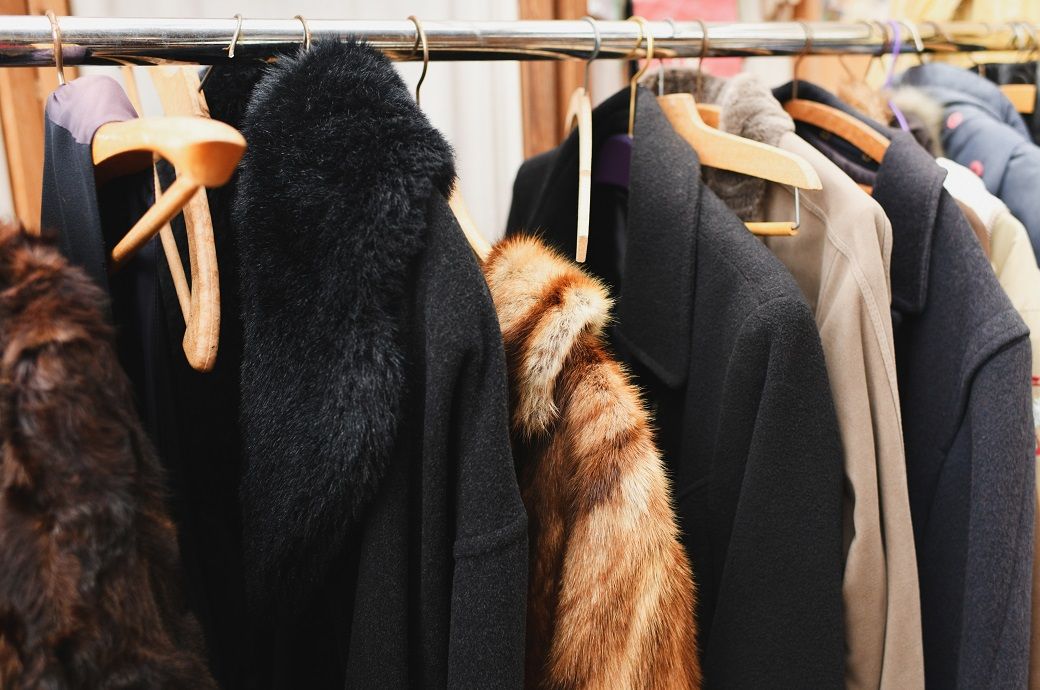
Italy’s apparel exports declined **.** per cent year on year to $*,***.** million in January ****, down from $*,***.** million in January ****. Imports also fell **.** per cent to $***.** million, compared to $*,***.** million a year earlier, indicating a broad-based slowdown in trade flows at the start of the year, according to *fashion.com/market-intelligence/texpro-textile-and-apparel/” target=”_blank”>sourcing intelligence tool TexPro.
The January contraction comes amid a broader environment of cautious retail demand and tighter inventory management across Europe. Nevertheless, the strong full-year **** figures indicate that Italy’s apparel sector continues to maintain stable trade fundamentals, supported by diversified export markets and a balanced sourcing network.
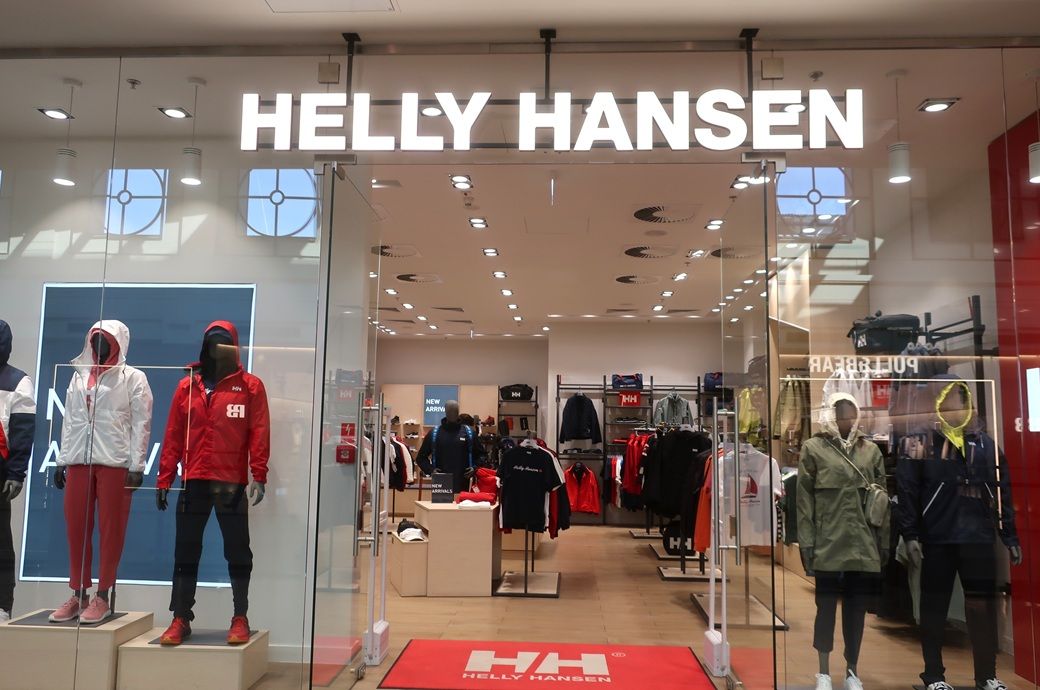
“We are thrilled to welcome Erinn Murphy to Kontoor Brands,” said executive vice president, chief financial officer & global head of operations, Joe Alkire. “Having led investor relations and corporate strategy from within a high-growth consumer brand and nearly twenty years of experience covering global lifestyle brands as a respected senior equity analyst, she understands what drives long-term value creation from every angle. Her perspective will expand the operational and strategic depth of the Helly Hansen leadership team as we focus on accelerating growth and expanding the brand’s global reach, while also strengthening how Kontoor engages with the investment community.”
Kontoor Brands has named Erinn Murphy VP, global head of finance & operations for Helly Hansen and Corporate Investor Relations, starting May in Oslo.
She joins from Crocs, Inc., bringing nearly two decades of experience across investor relations, strategy and equity research.
Michael Karapetian will expand his role and return in Q3 2026 to support transition and investor engagement.
Murphy joins Kontoor from Crocs, Inc., a global leader in innovative casual footwear, where she served as Senior Vice President, Investor Relations and Corporate Strategy. Prior to that, she served as Managing Director of Consumer Equity Capital Markets for leading investment bank, Piper Sandler. She was recently appointed as a member of the board of directors for Revolve Group, Inc. (NYSE: RVLV).
Murphy’s appointment coincides with an expanded role for Michael Karapetian, who will serve as Vice President, Global Brand & Operations Finance and Corporate Investor Relations, with responsibility for all aspects of global brand and supply chain finance and corporate investor relations. Karapetian will return from his international assignment at Helly Hansen in the third quarter of 2026 to allow for a transition period.
Note: The headline, insights, and image of this press release may have been refined by the Fibre2Fashion staff; the rest of the content remains unchanged.
Fibre2Fashion News Desk (RM)
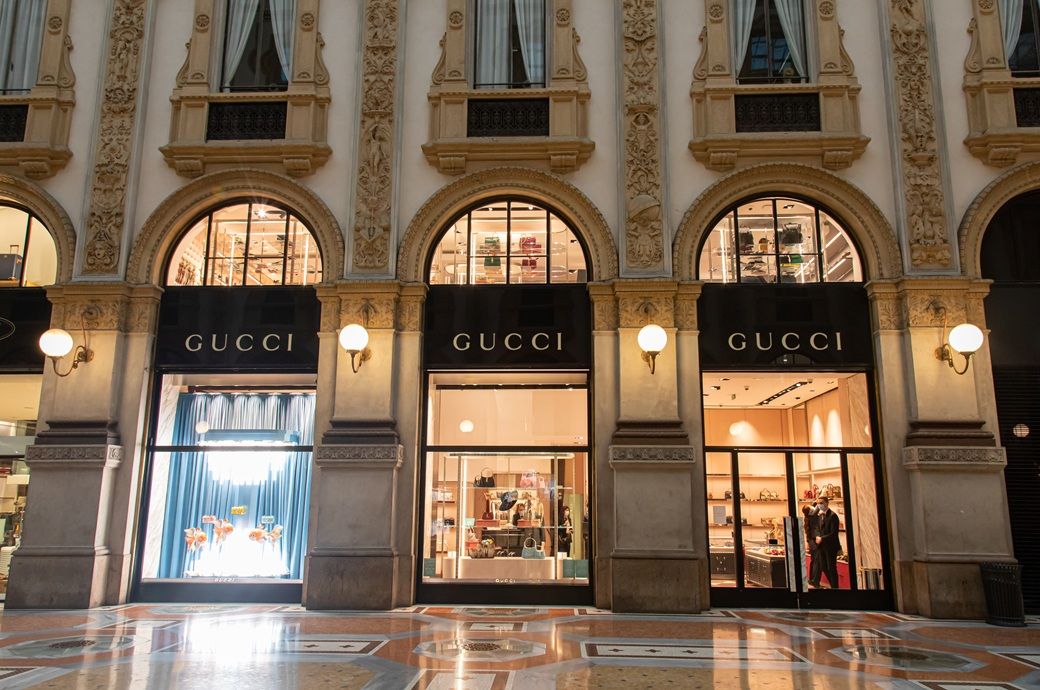
The group reported first-quarter (Q1) 2026 revenue of €3,568 million (~$4,210.24 million), down 6 per cent year-over-year (YoY) on a reported basis but stable on a comparable basis, signalling early signs of recovery despite geopolitical pressures.
Kering’s Q1 2026 revenue reached €3,568 million (~$4,210.24 million), down 6 per cent YoY but stable comparably, signalling early recovery.
Retail fell 2 per cent, while wholesale rose 6 per cent.
Fashion & Leather Goods sales went down 9 per cent.
Gucci declined 14 per cent to €1,347 million (~$1,589.46 million).
Middle East retail dropped 11 per cent, contributing 5 per cent of sales.
“In the first quarter of 2026, group revenue stabilised, marking an important first step in our recovery and a further sequential improvement. This performance reflects the first tangible effects of our actions, despite a challenging geopolitical environment,” said Luca de Meo, CEO of Kering.
Retail sales, including e-commerce, declined 2 per cent on a comparable basis, reflecting uneven regional demand. Wholesale revenue rose 6 per cent, Kering said in a press release.
Kering’s Fashion & Leather Goods posted a revenue of €2,852 million, down 9 per cent reported and 3 per cent comparable. Direct retail sales fell 4 per cent. Growth was driven by Saint Laurent, Bottega Veneta, Balenciaga and Brioni, particularly in North America.
Saint Laurent saw strong traction in shoes and ready-to-wear, while Bottega Veneta performed well in Asia-Pacific. Balenciaga continued to benefit from leather goods demand, and Brioni maintained positive momentum. Wholesale revenue for the segment increased 2 per cent.
Gucci posted €1,347 million (~$1,589.46 million) in revenue, down 14 per cent reported and 8 per cent comparable. Retail sales declined 9 per cent. North America grew 8 per cent, but this was offset by declines in Asia-Pacific and Western Europe.
“Gucci remains our top priority. A comprehensive turnaround is underway, with decisive actions across client, distribution and, above all, the offer,” added de Meo. “We have reset the product architecture and strengthened category focus, with new collections rolling out progressively in stores throughout the year.”
Regionally, the Middle East remains a key area of focus, contributing around 5 per cent of retail revenue. The Group operates 79 stores and employs approximately 1,100 people in the region. Retail revenue there declined 11 per cent in Q1 following earlier growth, amid geopolitical tensions. However, all stores are currently operational.
Kering continued to strengthen its operational structure and growth platforms during the quarter.
“The first quarter of 2026 marked continued progress, as we executed with pace and focus. We have launched a Group platform designed to support the growth of our Houses and enhance efficiency,” said de Meo.
Kering remains focused on restoring growth and improving margins in 2026 through disciplined execution and strategic repositioning.
Fibre2Fashion News Desk (SG)


Italy’s apparel export-import plunge after positive trend in 2025

Finance ministers and top bankers raise serious concerns about Mythos AI model

Anthropic’s new AI model exposes fresh risks, flaws for cybersecurity, IT services – The Times of India

-

 Entertainment1 week ago
Queen Elizabeth II emotional message for Archie, Lilibet sparks speculation
-

 Tech1 week ago
Azure customers up in arms over ‘full’ UK South region | Computer Weekly
-

 Tech1 week ago
As the Strait of Hormuz Reopens, Global Shipping Will Take Months to Recover
-

 Fashion1 week ago
CII submits 20-pt agenda to Indian govt to back firms hit by Iran war
-

 Tech1 week ago
This AI Button Wearable From Ex-Apple Engineers Looks Like an iPod Shuffle
-

 Politics7 days ago
Indian airlines hit hardest after Dubai limits foreign flights until May 31
-

 Entertainment4 days ago
Palace left in shock as Prince William cancels grand ceremony
-
Uncategorized1 week ago
[CinePlex360] Please moderate: “Trump considers