

Business
Beyonce, Sydney Sweeney and a fight for relevance: How American Eagle, Gap and Levi sparked a new ‘denim war’


Levi Strauss CEO Michelle Gass was out for a run in San Francisco last March when she first heard the song “Levii’s Jeans” from Beyonce’s latest album, “Cowboy Carter.”
“Literally, I got chills,” Gass recounted to CNBC, adding the name-check represented a “once in a lifetime” marketing opportunity she couldn’t afford to squander. “She is one of the most celebrated and influential artists of our time. … We asked the question, ‘Could there be something more?'”
Six months later, Levi announced Beyonce would star in a new global marketing campaign. Then, a pattern that’s repeated itself since Levi invented blue jeans more than 150 years ago happened again: competitors raced to catch up.
Gap and American Eagle launched their own star-studded campaigns the following summer in a bid to sell more jeans. Gap partnered with girl group Katseye in its viral made-for-TikTok “Milkshake” ad, while American Eagle chose actress Sydney Sweeney for its controversial “good jeans” campaign. Just before Thanksgiving, American Eagle launched another celebrity campaign with a different type of star: Martha Stewart.
Some smaller brands that can’t pay for a name like Beyonce have gotten free marketing just from celebrities wearing their denim. In late August, Kylie Jenner posted a picture of herself in True Religion jeans, leading to a spike in sales, CEO Michael Buckley told CNBC. He called it the “ultimate compliment.”
Industrywide, brands aired nearly 70% more denim TV spots this year compared with last, as the global jeans market swelled to $101 billion, up 28% since 2020, according to data from TV outcomes company EDO and market research company Euromonitor International.
Behind the big campaigns were hints about each retailer’s strategies and challenges. American Eagle is trying to win over more men. Levi’s wants to court more women. Gap is working to find relevance among a new generation of shoppers.
But taken together, the marketing shows the lengths companies are going to dominate a growing denim category that is still up for grabs — even if Levi may have created it. In an economy where many shoppers are thinking twice before shelling out for a new pair of jeans, retailers are scrapping harder than ever to win every dollar they can.
“There definitely is a denim war. There’s a war for people’s attention. There’s a war for people’s spend,” said Neil Saunders, retail analyst and GlobalData managing director. “Who has the most comfortable denim? Who has the softest feel? Who has the best cuts? What fits me well? There’s much more consideration in the customer buying process than for some other products, so it does make it much more of a battle between the retailers.”
Why retailers are betting on denim now
Like all things in fashion, denim goes through cycles. It’s a stalwart garment in any closet, but sometimes it’s in fashion, and sometimes it’s not.
The last time denim was this big was during the 2000s when brands like True Religion and Joe’s Jeans were a favorite among A-listers before athleisure became more popular and transformed casual dressing.
“When we came out of Covid, I think to me this is really when it started, when we started to see consumers basically say, ‘Look, I want to feel like I am not sitting in my house anymore, I want to feel like I am getting dressed up to go out,'” said Janine Stichter, a retail analyst and managing director at financial services firm BTIG. “That kind of started to bring about the denim cycle that we’re in right now.”
In past denim booms, certain cuts dominated, like skinny jeans in the 2000s and bell bottoms and flares in the 1970s. This time around, any cut goes, and consumers are moving beyond jeans to a wider variety of denim garments, creating a bigger market opportunity.
“Now we’re seeing everything from wide leg to barrel leg to bootcut. It all kind of has a place,” said Stichter. “That’s a reason why companies might want to invest behind it, because there’s just so many styles that consumers are accepting right now.”
Denim has been a bright spot for retailers in a sluggish apparel market, but they’ve had to fight harder for consumer attention as more rivals invest in the space. Younger shoppers are prioritizing value over brand loyalty, cash-strapped consumers are pulling back on new clothes and the category has grown increasingly competitive, analysts said.
A woman walks next to a poster of Beyonce’s Levi Jeans campaign on Wednesday, Oct. 23, 2024 in Los Angeles, CA.
Michael Blackshire | Los Angeles Times | Getty Images
Major apparel players like Levi, Gap and American Eagle aren’t just competing with one another. They’re also vying against emerging brands, fast-fashion retailers and thrift stores, where many Gen Z consumers might opt for a vintage pair of jeans instead of buying new.
To cut through all of the noise, companies needed to go big with their marketing campaigns, said Saunders.
“The whole world and his wife are on denim at the moment. Everyone’s pushing and talking about it, so they just needed to do something that was a little bit more edgy,” Saunders said. “They didn’t want to play it safe, because that’s not really going to make noise in the market.”
For Gap and American Eagle, both legacy mall players with fading relevance, the denim play goes deeper than just driving revenue. In a way, they’re reintroducing themselves to a new generation of customers as they work to reclaim their standing in fashion and culture.
“Leaning into denim and having these big campaigns around denim is part of a wider push to reinvigorate the brands, and I think that’s why they’ve gone all out on it, because they see denim almost as a halo that can shine light on the rest of the brand and the things that they’re doing,” said Saunders. “It’s the relevance play because … American Eagle had become a little bit stale and was struggling with the results, Gap is in the midst of a reinvention to really try to make the brand much more relevant, especially to younger consumers.”
In an interview with CNBC, Gap CEO Richard Dickson said the Katseye campaign allowed the company to reach a wide set of consumers in a strategic way.
“It has absolutely resonated with Gen Z, who is still in the discovery phase of the Gap brand,” he said. “But what it also did is, it reinforced loyalty with our core consumer. So again, we’re bridging the generation gap by appealing to multiple audiences.”
Gap Inc. Katseye
Source: Gap Inc.
While the market has been flooded with denim advertisements, the content of the ads is having a big impact on engagement, EDO said. The effectiveness of jeans ads, measured by consumer engagement like searches and site visits, improved 9% year over year from January through August, suggesting the creative messaging behind the spots matters more than frequency, EDO said.
Levi’s denim ads were 304% more effective than the average clothing ad, even after it cut back on airings by nearly a third, said EDO.
How did big denim ads perform?
Retailers don’t disclose how much they spend on individual advertising campaigns, but those investments are part of a company’s selling, general and administrative costs, which they disclose in filings.
In Levi’s fiscal year ended Dec. 1, 2024, which covers the debut of its Beyonce campaign, the company’s SG&A expenses were nearly $200 million higher than the previous year, more than half of which was spent in the quarter the campaign debuted. The company previously acknowledged the Beyonce ads contributed to the higher costs, and Gass told CNBC it was a bet worth taking.
“The Beyonce campaign had a great return for us,” said Gass. “When we look at our business results, our sales are growing, but our profits are growing as well overall, so we feel good about the investment.”
Since Gass took over, winning over more female shoppers has been at the core of her strategy, and the company’s Beyonce campaign is helping it achieve that goal. Last October, days after the campaign launched, Levi said its women’s business represented about 35% of overall revenue. A year later, it’s about 38%.
“It’s driving a lot of our growth. That should be half of our business,” said Gass. “Based on the momentum we’re seeing, there’s no reason why we can’t achieve that.”
True Religion, which is privately held and doesn’t disclose its financials, told CNBC denim sales rose 38% between Aug. 20 and Aug. 22, the time period in which social media influencer Alix Earle and Jenner made organic posts about the company’s jeans.
“When Kylie posted, not only did she put us in a story, but she put us in a carousel as a hard post on her wall. She probably charges $500,000 to a million dollars for that,” said Kristen D’Arcy, True Religions’ chief marketing officer and head of digital growth. “The results of those posts, especially on women’s denim sales, was pretty incredible.”
Since American Eagle’s and Gap’s campaigns are newer, it’s too early to say how they have affected long-term sales. But they’ve already made their mark in culture and on Wall Street.
An American Eagle advertisement featuring actress Sydney Sweeney on a billboard in Times Square in New York, US, on Thursday, Aug. 7, 2025.
Michael Nagle | Bloomberg | Getty Images
When American Eagle announced its campaign with Sweeney, the company became a meme stock sensation, only to see those gains erased after it faced criticism over the ad’s tone and messaging. Later, President Donald Trump weighed in and called it the “hottest ad out there,” leading the stock to soar once again.
“It was billions of impressions. I mean, it was amazing what happened. It struck a new conversation,” Jennifer Foyle, president and executive creative director for AE & Aerie, told CNBC in an interview. “When we launched that campaign, we knew it was going to be exciting but it really took off.”
Some news reports suggested foot traffic at the company’s stores fell in the aftermath of the ad. However, the company later said traffic across channels had been “consistently positive throughout August,” the month after the campaign launched.
Following the Sweeney ad and another campaign with Kansas City Chiefs tight end Travis Kelce, the company said in early September it had seen “meaningful improvement in the business,” with growth in comparable sales and the acquisition of 700,000 new customers.
“It definitely helped our traffic. We definitely gained new customers,” said Foyle. “Keep in mind, those new customers don’t always come right back and shop, right? So, definitely there’ll be a halo effect for sure as we head into Q4 and future seasons.”
Following the controversy over the campaign, American Eagle apparently removed one of the ads from most of its social pages – the one where Sweeney discusses genes being passed down from parent to offspring that incited the most blowback and comparisons to eugenics. The spot is now only visible on American Eagle’s Facebook page. A company spokesperson denied the retailer took the ad down, saying “once content is released, it’s out for the world to see.”
American Eagle declined further comment on the Sweeney controversy. About a week after the ads came out, it posted a statement on its Instagram page saying the campaign “is and always was about the jeans.”
When American Eagle issued fiscal third-quarter results on Tuesday, it was the first time investors got to see a full quarter of impact from the Sweeney and Kelce campaigns. While the company said that the campaigns are “attracting more customers” and creating more attention around the brand, the results showed they’re not yet a major revenue driver.
At American Eagle’s namesake banner, where the campaigns were focused, comparable sales grew just 1% in the three months ended Nov. 1, worse than the 2.1% analysts had expected, according to StreetAccount.
Meanwhile, SG&A expenses were up by about $35 million year over year, due in large part to its campaigns with Sweeney and Kelce. The increase in costs didn’t have a major impact on American Eagle’s operating margin, which came in higher than expected.
Last month, Gap said comparable sales at its namesake banner surged 7% in the quarter after the Katseye ad came out — more than double what analysts had expected, according to StreetAccount.
“The brand saw growth in [average unit retail], consideration, organic impressions, new customers, so generating significant traffic,” Dickson told CNBC. “Double-digit growth in denim, 8 billion impressions, so we’re very pleased and excited about the long-term proposition and the continued progress the brand is making.”
Meanwhile, the campaign has been a viral sensation, racking up 50 million views on YouTube alone in the last three months. That’s five times the 10 million views American Eagle’s Sweeney ad saw on the platform in four months. Still, both of the ads combined don’t come close to the engagement Levi’s Beyonce campaign has seen on YouTube. The four “chapters” of the campaign, which were released between last September and August, have garnered a staggering 85 million views combined.
“Levi’s is definitely winning the war overall. I mean, this is Levi’s home turf, you’re playing in the home stadium, so they have an inbuilt advantage,” said Saunders. “They have been very savvy about creating the culture around denim. They’ve got arguably the biggest celebrity on their team, and they’ve widened the lifestyle aesthetic, so they’ve really led this.”






Business
Asian stocks today: Markets inch higher mirroring Wall Street gains; Kospi jumps 10%, Nikkei up 1,400 points – The Times of India
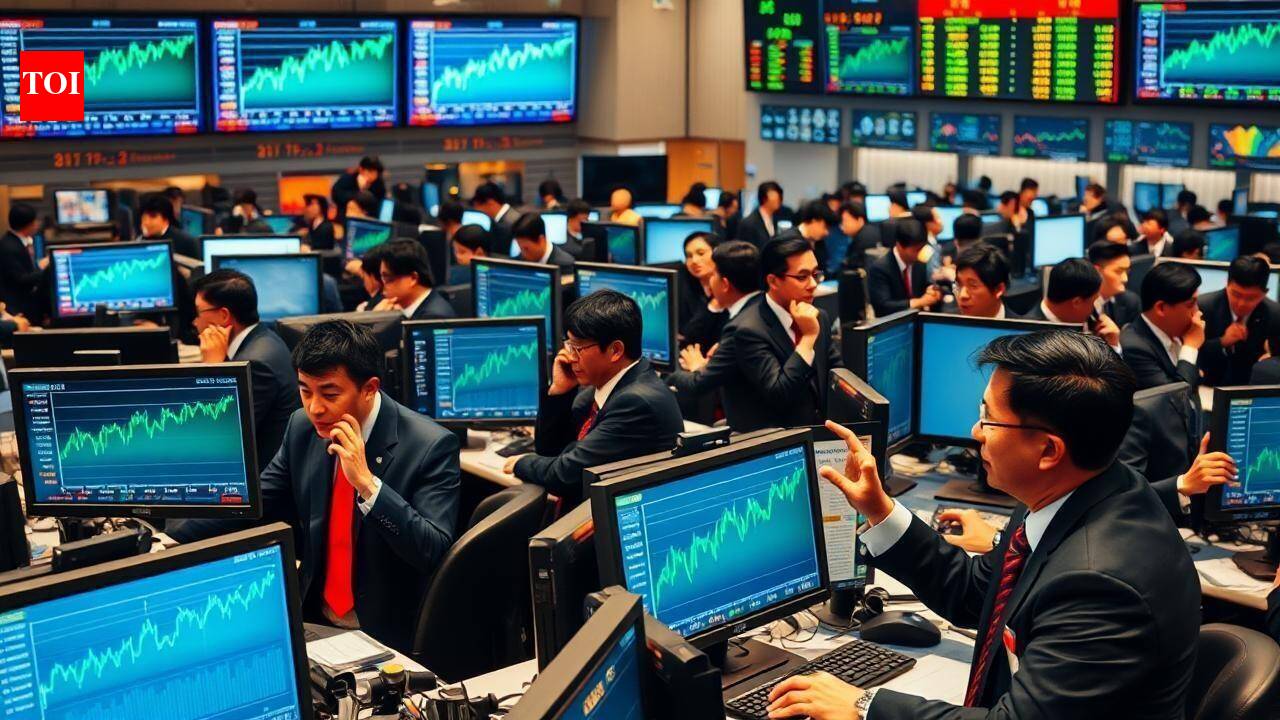
Asian stocks inched higher on Thursday, after days of trading in red amid ongoing Middle East tensions. This comes as equities were lifted by a rebound on Wall Street as oil prices paused their recent spike and economic updates painted a more positive picture of the American economy. In South Korea, Kospi hit a pause on its downward rally to add a whopping 10% or 513 points, to reach 5,606. Japan’s Nikkei 225 also climbed 2.7% to 55,713. Hong Kong’s HSI also traded in green, rising 353 points to 25,603 as of 9:10 am. Shanghai and Shenzhen added 0.9% and 1.7% respectively. Gains elsewhere in the region were more modest. Australia’s S&P/ASX 200 added 0.3% to 8,927.20, while New Zealand’s benchmark index moved 0.9% higher. In contrast, US futures indicated a subdued start ahead. Futures linked to the Dow Jones Industrial Average were almost unchanged, while S&P 500 futures ticked up 0.2%. The S&P 500 advanced 0.8% on Wednesday, clawing back much of the decline seen since the onset of the Iran conflict. The Dow Jones Industrial Average rose 0.5%, and the Nasdaq Composite outperformed with a 1.3% gain. Globally, market sentiment has remained sensitive to developments in the Middle East, with oil price swings continuing to steer trading direction. Crude prices eased during Wednesday’s session. Brent crude briefly moved above $84 a barrel before settling at $81.40, roughly matching the previous day’s level. US benchmark crude edged up 0.1% to finish at $74.66 per barrel. By early Thursday, however, oil was on the rise again. Brent crude climbed 2.4% to $83.32 per barrel, while U.S. benchmark crude jumped 2.5% to $76.53 per barrel.
It is also the first time the target has been lowered since it was cut to “around 5%” in 2023.
Source link
Business
China takes ‘high stakes’ tech race up a notch with US as economic imbalances worsen | The Express Tribune

Premier Li Qiang said ‘multilateralism, free trade are under severe threat’, 7% increases in the defence budget, R&D
Chinese Prime Minister Li Qiang. PHOTO: ANADOLU
China on Thursday vowed to deepen investment in high-tech industries and scientific innovation, framing them as essential to bolstering national security and self-reliance amid rising geopolitical tensions and an intensifying rivalry with the US.
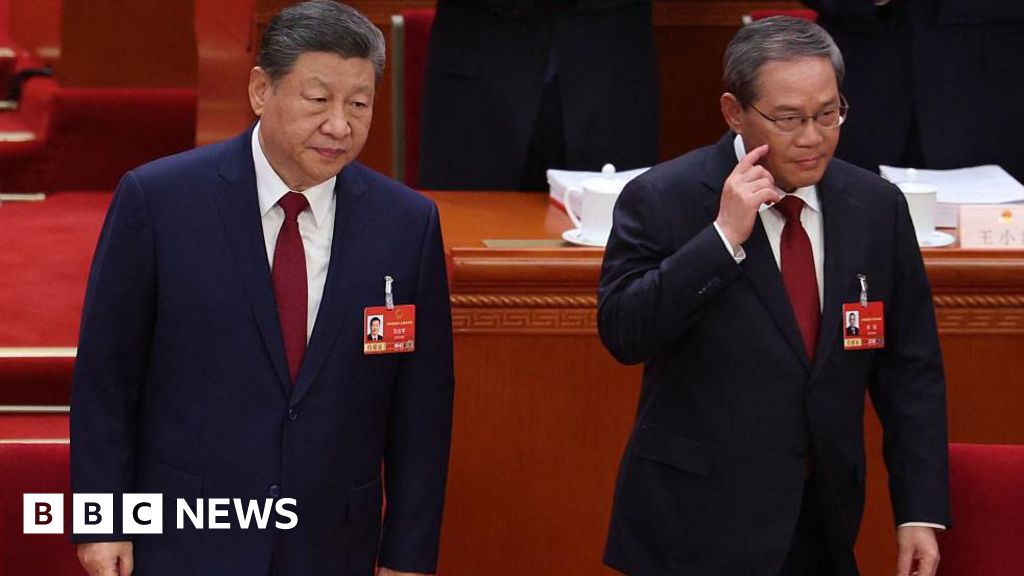
At the opening of the annual parliament meeting, Premier Li Qiang praised China’s ability to withstand US President Donald Trump’s tariff hikes, but said “multilateralism and free trade are under severe threat” and announced 7% increases in the defence budget and in research and development.
Li acknowledged an “acute” imbalance between strong supply and weak demand, subdued market expectations, and ongoing risks from a persistent property-sector downturn and high local government debt.
These challenges have pushed Beijing to set a slightly lower growth target of 4.5%–5% for this year, down from last year’s 5%, which was met largely through a one‑fifth surge in its trade surplus to a record $1.2 trillion.
China’s 15th five-year plan, as widely expected, pledged investments in innovation and industrial upgrading, as well as a “notable” – but unspecified – increase in household consumption as a share of economic output.
The combination of a lower growth target and higher outlays on research and strategic industries underscores Beijing’s bet that technological upgrading- not consumption – will drive its next phase of development despite growing structural pressures.
Last year’s trade punches with the Trump administration, which briefly escalated to embargo-like conditions of triple-digit tariffs, also showed the importance of its supply chain dominance as leverage.
“China’s government remains laser-focused on spurring technological breakthroughs and high-tech investment,” said Fred Neumann, chief Asia economist at HSBC. “In part, this is motivated by competition with the United States for control over the technologies of the future.”
“Many international observers may be left disappointed, therefore, by slower progress in rebalancing the economy away from investment towards consumption.”
China invests 20 percentage points of GDP more than the global average, while its households spend roughly 20 points less – a state-controlled, debt-driven development model that creates industrial overcapacity and fuels trade tensions abroad and deflationary pressures at home.
“The rebalancing challenge that China faces, and that will take years to achieve, is implicitly acknowledged by a weaker growth target for the coming year,” Neumann added.
The five-year plan aims to raise the value-added of “core digital economy industries” to 12.5% of GDP and roll out new policies for an integrated national data market and establish a system for AI security risk prevention.
These goals reflect President Xi Jinping’s vision of developing “new productive forces” to escape the middle-income trap, counter the demographic downturn, and enhance national security by insulating China from US export controls.
China pledged support for “breakthrough” developments across a range of industries, from farm seeds and biomedicine to areas at the cutting-edge of science, such as machine-brain interfaces. State-owned enterprises were urged to create demand for made-in-China technology like semiconductors and drones.
But the five-year plan also lists new ambitions in areas China already dominates. While accounting for 85% of the electric vehicle charging stations in the world, China aims to double their number within three years.
In AI, Beijing promised to build out “hyper-scale” computing clusters supported by cheap and abundant electricity.
“Beijing is trying to manage a ‘controlled glide’ in growth while building a new economy based on technology rather than property,” said Andy Ji, Asian FX & rates analyst at ITC Markets.
“It is a high-stakes rebalancing where the government is betting the house on AI and advanced manufacturing.”
Steady stimulus plans
Economists say a lower growth target allows Beijing to experiment with adjustments to industrial overcapacity, which could lead to some factory closures and job losses, but cautioned that this did not mean a departure from its production-focused growth model.
The US Supreme Court’s decision to strike down some of Trump’s tariffs and expectations that a meeting between the two countries’ presidents later in March could stabilise relations in the short term, bode well for such adjustments.
“The bigger context here is the China-US competition, but this year is the trade truce,” said Dan Wang, China director at Eurasia Group.
“It seems that China is taking advantage of this year to do some structural reform, which is the right direction for the economy in the long term, but it also means in the short term, the job market pressure is way higher.”
In terms of stimulus, China plans a budget deficit of 4.0% of GDP and has set special debt issuance quotas at 1.3 trillion yuan ($188.5 billion) for the central government and 4.4 trillion yuan for local authorities – all unchanged from last year.
China pledged to raise minimum monthly pensions by 20 yuan per person and basic medical insurance subsidies for rural, non-working people by 24 yuan – marginal, rather than structural, moves. It said it wants to increase education spending, subsidise childcare and reform public hospitals, acknowledging the demographic downturn.
Yuan Yuwei, fund manager at Trinity Synergy Investment, warned that China’s growth and policy aims for this year, prepared at the end of 2025, do not take into account the US-Israeli attacks in Iran.
“That’s very negative to China, which counts the Strait of Hormuz as a crucial trade route,” said Yuan.
($1 = 6.8969 Chinese yuan renminbi)


Canada’s Gildan posts $3.6 bn 2025 sales, growth supported by Hanes

Harry Styles shares marriage plans amid rumoured romance with Zoe Kravitz

China to build ‘birth-friendly society’, refine social security system

India Us Trade Deal: Fresh look at India-US trade deal? May be ‘rebalanced’ if circumstances change, says Piyush Goyal – The Times of India

Attock Cement’s acquisition approved | The Express Tribune

What are Iran’s ballistic missile capabilities?

-
Business6 days ago
India Us Trade Deal: Fresh look at India-US trade deal? May be ‘rebalanced’ if circumstances change, says Piyush Goyal – The Times of India
-
 Politics7 days ago
What are Iran’s ballistic missile capabilities?
-
Business7 days ago
Attock Cement’s acquisition approved | The Express Tribune
-

 Politics1 week ago
US arrests ex-Air Force pilot for ‘training’ Chinese military
-
 Business1 week ago
Households set for lower energy bills amid price cap shake-up
-
 Fashion1 week ago
OECD GDP growth slows to 0.3% in Q4 amid mixed trends
-

 Fashion6 days ago
Policy easing drives Argentina’s garment import surge in 2025
-

 Fashion6 days ago
Texwin Spinning showcasing premium cotton yarn range at VIATT 2026