

Fashion
BGMEA seeks clarity from US on trade deal’s duty-free access mechanism

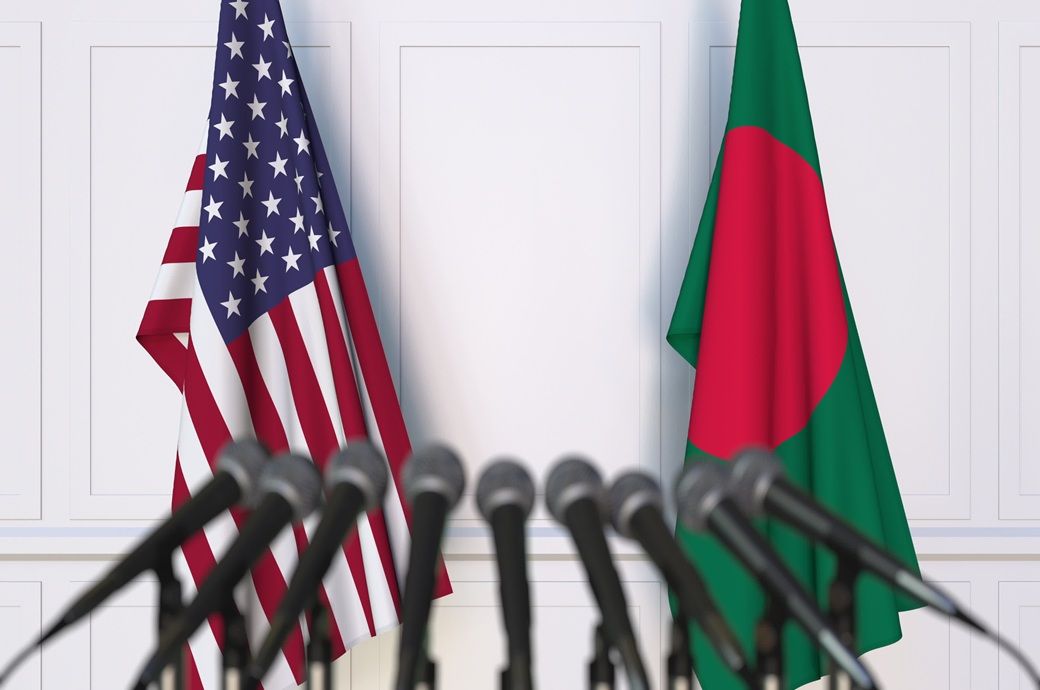
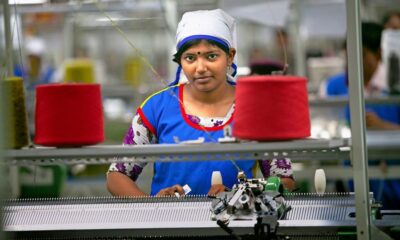
BGMEA president Mahmud Hasan Khan raised the issue with US ambassador to Bangladesh, Brent T Christensen during a meeting at the association’s office in Dhaka.
Following the US-Bangladesh trade agreement signed recently, trade body BGMEA sought a clarification on how duty-free access for garments produced using American cotton will work in practice.
The Office of the USTR is working on the mechanism, US envoy to Bangladesh Brent T Christensen responded.
BGMEA also called for US investment in his country’s energy sector to support the expanding industrial base.
The Office of the US Trade Representative (USTR) is working on the mechanism now, Christensen responded.
The agreement, he hoped, would boost American cotton exports to Bangladesh, according to domestic media reports.
The meeting also discussed business uncertainties arising out of recent tariff volatility. Christensen expressed confidence that stability would return soon.
Khan also called for US investment in his country’s energy sector to support the expanding industrial base. As a short-term solution, he suggested US investment in LNG infrastructures, while in the long term, he deemed US technology and investment necessary to enhance domestic gas exploration and extraction.
Christensen said US investors would be interested if Bangladesh adopts a stable, long-term energy policy.
The meeting also included detailed discussions on labour law and the proposed new labour ordinance.
Fibre2Fashion News Desk (DS)







Hydrocarbon exporters could see positive effects. Under Fitch’s baseline scenario, in which the effective closure of the Strait of Hormuz lasts less than a month and major damage to the region’s oil production infrastructure is avoided, risks to emerging market ratings should be contained, but a longer closure or more sustained effects could lead to a more substantial impact.
Iran war could raise additional challenges for some emerging market sovereigns, through such channels as energy imports, remittances, fiscal subsidies, exchange rates and access to international finance, Fitch Ratings has said.
Hydrocarbon exporters could see positive effects.
Prolonged higher energy prices would also raise fiscal strains for governments that have subsidy regimes to shield consumers.
Net fossil fuel imports are large as a share of gross domestic product (GDP) for many small emerging markets. Among the larger economies, Fitch estimates they are equivalent to 3 per cent or more of GDP for Chile, Egypt, India, Morocco, Pakistan, the Philippines, Thailand and Ukraine.
Vulnerabilities to higher import costs will be most acute in markets with already stretched financing capacity, such as Pakistan, or with significant current account deficits.
In December 2025, Fitch had anticipated a significant current account deficit this year in Ukraine (15.4 per cent), with moderate deficits for the Philippines (3.4 per cent) and Egypt (3.0 per cent).
More protracted high energy prices could add to external strains facing these sovereigns, especially if other stresses emerge, for example, disruption to remittances. External finance risks will be limited where sovereigns are running current account surpluses, as in Thailand.
Prolonged higher energy prices would also increase fiscal strains for governments that have subsidy regimes designed to shield consumers, or that launch similar measures in response to higher energy prices, Fitch Ratings said in its release.
A more sustained disruption to global energy supplies from the Gulf than envisaged under Fitch’s baseline scenario could significantly damage global investor sentiment which would result in a stronger US dollar and weaken the market for debt issuance, particularly for highly speculative-grade issuers. Higher energy prices could put upward pressure on inflation, affecting monetary policy decisions globally.
These factors are likely to increase the effective cost of servicing and refinancing debt for emerging market sovereigns.
However, many frontloaded a significant share of their planned foreign-currency issuance for the year in January-February, enhancing their flexibility against temporary market volatility.
Weaker non-oil activity in Gulf Cooperation Council (GCC) states, reflecting damage to logistics and tourism sectors, will hurt countries where exports to the affected region, or remittance flows from it, are a significant economic driver.
Azerbaijan, Iraq and Turkiye could be affected if instability in Iran leads to a major outflow of refugees.
For emerging market net hydrocarbon exporters outside the Gulf, such as Angola, Argentina, Azerbaijan, Brazil, Colombia, Ecuador, Gabon, Kazakhstan, Nigeria and Republic of Congo, a prolonged period of higher energy prices could lead to an export and fiscal windfall, Fitch Ratings added.
Fibre2Fashion News Desk (DS)

Mr. Reddien is a seasoned global finance and operations executive with extensive experience leading transformation, driving performance improvement, and strengthening finance and operations across complex multinational organizations. He brings a proven track record of guiding businesses through periods of change and transformation to drive efficiency and sustainable profitability.
Capri Holdings has appointed Tyler Reddien as chief financial officer and chief operating officer, effective March 30.
A seasoned global finance and operations executive, Reddien most recently served as CFO of The Body Shop and previously held senior roles at Natura &Co, Hertz and United Airlines.
The move aims to strengthen leadership, enhance operational discipline and support long-term growth.
Most recently, Mr. Reddien served as the Chief Financial Officer of The Body Shop. Previously, he held senior leadership positions at Natura &Co Holding, a global cosmetics and personal care company. In addition, Mr. Reddien held executive roles at Hertz, where he served as Senior Vice President and Chief Financial Officer for North America Rent-a-Car Operations. Earlier in his career, he spent more than a decade at United Airlines in financial planning, investor relations, strategic planning, and operations. Mr. Reddien holds a Bachelor of Science from Duke University and a Master of Business Administration from the University of Michigan.
“Tyler is an exceptional finance and operations leader whose strategic mindset and international experience make him ideally suited to help position Capri’s future growth and long-term value creation,” said John D. Idol, Chairman and Chief Executive Officer of Capri Holdings. “His proven ability to drive performance, enhance operational discipline and lead organizations through complex transformations will bring tremendous strength to our executive leadership team.”
Mr. Reddien shares, “Capri Holdings is a dynamic global business with iconic brands and significant opportunity ahead. I am honored to join Capri at such an important moment. I look forward to partnering with John, the leadership team, and our talented colleagues around the world to advance the Company’s strategic priorities, sharpen operational focus and position the company for sustainable, long-term success.”
Note: The headline, insights, and image of this press release may have been refined by the Fibre2Fashion staff; the rest of the content remains unchanged.
Fibre2Fashion News Desk (RM)
The increase was recorded in both urban and rural areas, which saw rises of 1.12 per cent and 1.17 per cent MoM respectively.
Vietnam’s consumer price index rose by 1.14 per cent month on month (MoM) in February as prices increased in most major groups of goods and services, official statistics show.
On an average, CPI increased by 2.94 per cent YoY in the first two months this year.
The country’s index of industrial production rose by 10.4 per cent YoY in the first two months of the year, driven by manufacturing.
On an average, CPI increased by 2.94 per cent year on year (YoY) in the first two months this year.
The transport sector’s price index fell by 3.48 per cent during the two months, reducing the overall CPI by 0.35 percentage points, largely due to a 9 per cent decline in petrol and oil prices.
Meanwhile, the country’s index of industrial production (IIP) increased by 10.4 per cent YoY in the first two months of the year, driven by manufacturing.
The growth rate was significantly higher than the 7.5-per cent increase recorded in the same period last year. Despite fewer working days in February due to the Lunar New Year holiday, overall industrial performance was resilient.
Industrial production in February alone was estimated to decline by 18.4 per cent MoM, largely reflecting the holiday period, an NSO release said. However, output still edged up by 1 per cent YoY, suggesting that the underlying momentum in the industrial sector was intact.
Manufacturing and processing continued to play the central role in driving the country’s industrial expansion. The strong performance reflects both improving domestic consumption and steady demand from export markets.
Several manufacturing industries recorded particularly robust growth during the period.
Fibre2Fashion News Desk (DS)


Iran war raises new credit risks for emerging market sovereigns: Fitch

BGMEA seeks clarity from US on trade deal’s duty-free access mechanism

PCB announces complete schedule for PSL 11

-
 Politics3 days ago
India let Iran warship dock the day US sank another off Sri Lanka, say officials
-

 Sports4 days ago
Pakistan set for FIH Pro League debut | The Express Tribune
-

 Entertainment3 days ago
Harry Styles kicks off new era with ‘One Night Only’ comeback show
-
 Business3 days ago
Restaurant group changes name after bid to buys pubs across the UK
-
 Tech1 week ago
The 5 Big ‘Known Unknowns’ of Donald Trump’s New War With Iran
-
 Business1 week ago
Labour parliamentarians urge UK Government to oppose Rosebank oil field
-
 Business4 days ago
Home heating oil: ‘Most of my pension has gone on home heating oil’
-

 Sports1 week ago
USA vs. Argentina (Mar 1, 2026) Live Score – ESPN