

Business
Big increase in gold prices, how much per tola? – SUCH TV


The extremely tense situation in the region due to the joint attacks of the US and Israel on Iran has increased investment interest in gold and silver.
According to the All Pakistan Sarafa Gems and Jewelers Association, the price of gold per tola has increased by Rs 10,000 to Rs 550,562.
The price of 10 grams of gold in Pakistan has increased by Rs 8,574 to Rs 447,018.
Along with this, the price of gold in the global market has increased by $ 100 to $ 5,278 per ounce.
With an increase of Rs 388, the price of one tola of silver has reached Rs 9,862.
According to experts, due to the global economic situation and the increasing interest of investors in gold, price fluctuations are likely to continue.


Business
Gold Price Prediction For Monday: Iran-Israel War Boosts Safe-Haven Demand; Will Precious Metal Rise On March 2?

Last Updated:
Amid Iran-Israel war, analysts say gold and silver prices might see support on safe-haven demand as equities may remain volatile in coming week.




Gold Price Prediction For Monday, March 2.
Gold Price Prediction For Monday, March 2: Even as the Iran-Israel war has begun with missile exchanges on February 28, risk-off sentiment is spreading across global financial markets, pushing investors toward traditional safe-haven assets. Cryptocurrencies (which is the only market open during weekends) were the first to react, with Bitcoin falling nearly 5% to slip below the $64,000 mark after news of the conflict broke. Analysts say equities could remain volatile in the coming week as geopolitical uncertainty intensifies, a backdrop that historically supports gold prices.
Gold had already shown strong momentum ahead of the weekend. In the national capital, prices jumped Rs 1,800 to Rs 1,64,700 per 10 grams on Friday, according to the All India Sarafa Association, compared with Rs 1,62,900 per 10 grams in the previous session. The surge was driven by fresh buying from jewellers and stockists as investors positioned for global uncertainty.
Also Read: Nifty Prediction For Monday: Iran-Israel War Hits Market Sentiments; Gap-Down Likely On March 2
Saumil Gandhi, Senior Analyst – Commodities at HDFC Securities, said gold rose amid mixed global signals, “as markets weighed escalating US trade protectionism and persistent tensions in the Middle East against a steady dollar”. He added that geopolitical friction and tariff-related uncertainty continued to support safe-haven demand, although a stable dollar and reduced expectations of US Federal Reserve rate cuts capped sharper gains.
Silver, however, moved in the opposite direction domestically. The metal declined Rs 2,500, or nearly 1%, to Rs 2,68,000 per kilogram from Rs 2,70,500 per kg previously, according to the association. In global markets, spot silver gained 1.6% to USD 89.72 per ounce, while gold traded marginally lower at USD 5,172.17 per ounce.
Gold & Silver Price Prediction: Safe-Haven Demand May Strengthen
Nachiketa Sawrikar, fund manager at Artha Bharat Global Multiplier Fund, believes the geopolitical escalation could intensify flows into defensive assets like gold and silver.
“A USA and Israel attack on Iran would likely trigger broad selling of risky assets across both the developed and emerging markets. We would expect the ongoing rally in USA Treasuries, oil, gold, and silver to extend.”
Typically, this pattern is observed during geopolitical shocks, when investors reduce exposure to equities and rotate capital toward commodities like gold and silver and sovereign debt.
Bullion markets remain closed on weekends in India as well as globally.
Gold & Silver Outlook For March 2
With global markets likely to open the week reacting to war developments, gold and silver’s trajectory on Monday will largely depend on three factors: escalation or de-escalation headlines from the Middle East, movement in the US dollar, and bond-yield trends.
If tensions intensify, safe-haven demand could push bullion prices higher. However, any signs of diplomatic engagement or a sharp rise in the dollar could limit gains.
For now, the broader bias remains supportive for gold and silver, with geopolitical uncertainty reinforcing its traditional role as a hedge during periods of global instability.
Market participants are also turning their attention to key macro triggers. Investors will closely track US Producer Price Index data and commentary from Federal Open Market Committee officials, both of which could shape expectations for interest-rate policy and influence bullion’s near-term trajectory. “Speeches from several Federal Open Market Committee members will also be closely watched for further insights, which may provide fresh momentum for gold,” he said.
Iran-Israel War
The US and Israel launched a major attack on targets across Iran on Saturday, and US President Donald Trump called on the Iranian people to “take over your government” — an extraordinary appeal that suggested the allies could be seeking to end of the country’s theocracy after decades of tensions.
The first strikes of the attack appeared to target the compound home to Iran’s 86-year-old Supreme Leader Ayatollah Ali Khamenei in downtown Tehran. It wasn’t immediately clear if he was there at the time. Smoke could be seen rising from the Iranian capital.
“For 47 years, the Iranian regime has chanted Death to America and waged an unending campaign of bloodshed and mass murder, targeting the United States, our troops and the innocent people in many, many countries,” Trump said in a video posted on social media that sought to justify the attacks. He urged Iranians to take cover during the strikes, but then: “When we are finished, take over your government. It will be yours to take.” The attack quickly expanded beyond Iran. Iran’s paramilitary Revolutionary Guard said it responded by launching a “first wave” of drones and missiles targeting Israel, where a nationwide warning was issued as the military said it bring down Iranian fire.
Meanwhile, Bahrain said that a missile attack targeted the US Navy’s 5th Fleet headquarters in the island kingdom. Witnesses heard sirens and explosions in Kuwait, home to US Army Central. Explosions could be also be heard in Qatar.
Iraq and the United Arab Emirates closed their airspace, and sirens sounded in Jordan.
The Iranian-backed Houthis in Yemen, meanwhile, vowed to resume attacks on Red Sea shipping routes and on Israel, according to two senior Houthi officials. They spoke on condition of anonymity because there was no official announcement from the Houthi leadership.
(With inputs from agencies)
 Click here to add News18 as your preferred news source on Google.
Follow News18 on Google. Join the fun, play games on News18. Stay updated with all the latest business news, including market trends, stock updates, tax, IPO, banking finance, real estate, savings and investments. To Get in-depth analysis, expert opinions, and real-time updates. Also Download the News18 App to stay updated.
February 28, 2026, 16:26 IST
Read More
Business
Indian Brands Ride Manufacturing Push, E-Commerce Boom As New Consumers Drive Demand: Industry Leaders

Last Updated:
At News18 Rising Bharat Summit, industry leaders highlight India’s shift to domestic manufacturing, digital brands and tier-2 growth amid global trade disruptions.
India’s evolving manufacturing ecosystem, rise of digital-first brands and expanding consumer aspirations are reshaping trade and distribution models, industry leaders said at the News18 Rising Bharat Summit.
India’s evolving manufacturing ecosystem, rise of digital-first brands and expanding consumer aspirations are reshaping trade and distribution models, industry leaders said at the News18 Rising Bharat Summit, highlighting how domestic production and new-age logistics networks are powering growth.
Amid global trade disruptions and tariff-related uncertainties, executives said Indian companies are increasingly turning inward, focusing on domestic manufacturing, flexible production and digital distribution to build scalable brands.
Domestic Manufacturing Gains Momentum
Abhishek Chakraborty, CEO of DTDC Express, said the global trade environment over the past few years has been volatile, forcing both manufacturers and logistics players to adapt.
“Two or three years ago, there was a lot of uncertainty for both logistics and manufacturers. The past one year has seen some of the biggest shake-down in the global world of trade, whether it’s because of tariffs or other shocks,” he said.
Against that backdrop, Chakraborty said Indian brands and sellers have used the disruption as an opportunity to strengthen domestic production.
“But, one story that stood out is that Indian brands, Indian sellers, Indian manufacturers, have taken as a big cue to take it upon themselves and honestly start focusing on actual domestic production and manufacturing,” he said.
He noted that the shift is no longer limited to multinational companies producing in India. “Now, not only the big brands or MNCs that used to come and produce, we got Indian homegrown D2C brands, omnichannel brands, brands using completely different distribution models that are now coming in and using the supply chain and logistics capabilities that we have build,” Chakraborty added.
He said quick commerce has changed consumer expectations around delivery speed. “Quick commerce probably led the way in terms of opening up our minds that you can get things in minutes. But it’s not that everything can be delivered in minutes. But certainly, the new generation of Indian consumers and manufacturers are leveraging the new networks that we are creating.”
Low-Cost Brand Creation Fuels Entrepreneurship
Gautam Kapoor, co-founder and CEO of PEP Brands (mCaffeine and Hyphen), said India’s entrepreneurial culture is increasingly finding expression through e-commerce.
“India is a land of entrepreneurs. Large part of young Bharat is becoming entrepreneurs than looking for a job,” he said.
According to Kapoor, e-commerce has lowered entry barriers for new brands by enabling smaller investments and flexible manufacturing options.
“I think e-commerce is one of that places where people find a lot of connect and able to create brands and products by investing less amount of money,” he said.
He added that India’s manufacturing ecosystem now allows brands to experiment and start small. “What has Indian ecosystem manufacturing done is that the capability to any brand to go back and go to a manufacturer, create a fashion brand or personal care brand, create a healthcare brand if they have a good idea, and then get able to get small batch of manufacturing and branding, everything, so, you can really really start now,” Kapoor said.
“That’s fuelling a flurry of new brands coming up with interesting products and branding,” he added.
Tier-2 and Tier-3 India Emerging as Growth Engine
Angad Kikla, CEO and founder of Citymall, said while much attention has been on 10-minute deliveries and urban D2C brands, the largest untapped opportunity lies in smaller towns and lower middle-income households.
“In this entire euphoria about 10-minute deliveries, fashion, D2C brands, etc, the largest market in India is low-middle-income people living in tier-2, tier-3, and tier-4 towns,” he said.
Kikla noted that grocery, which accounts for roughly 40% of household spending, remains under-penetrated in organised e-commerce models. “Also, the largest category, which is grocery comprising around 40% spending of a household, has been completely ignored. Maybe because infrastructure required to deliver a grocery order at the doorstep profitably has not been made. We (Citymall) have been trying to do that,” he said.
He also pointed to changing consumption patterns driven by digital content exposure. “In the low-middle-class consumer group, there is a lot of aspiration driven by the content proliferation. For example, on our platform, we see a lot of new categories like Korean Noodles, which is one of the largest growing categories being sold on our platform more than normal noodles,” Kikla said.
“So, a lot of aspiration is being driven by content. Our job is to make these aspirations affordable for these consumers,” he added.
Click here to add News18 as your preferred news source on Google.
Follow News18 on Google. Join the fun, play games on News18. Stay updated with all the latest business news, including market trends, stock updates, tax, IPO, banking finance, real estate, savings and investments. To Get in-depth analysis, expert opinions, and real-time updates. Also Download the News18 App to stay updated.
February 28, 2026, 13:41 IST
Read More
Business
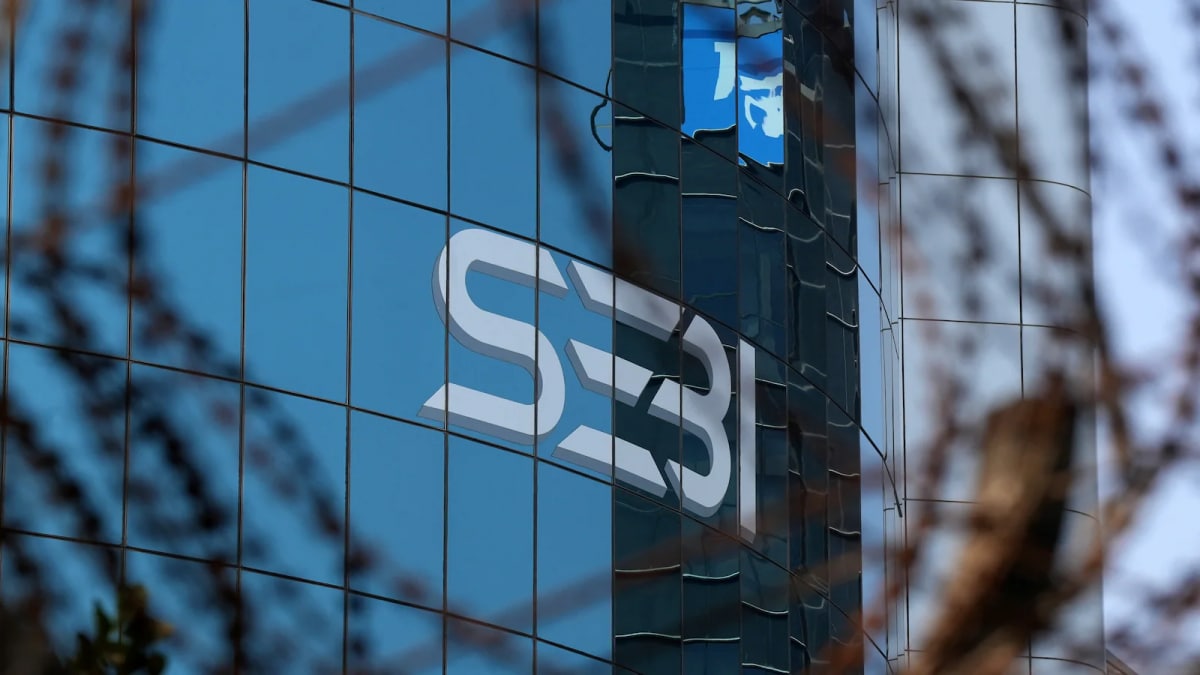
From Fraud Checks To Faster Settlements, SEBI Whole-Time Member Lists Recent Market Reforms In India
Last Updated:
‘There are some initiatives that we have taken to protect investor interest, to develop market, to deepen market integrity, that no other country has done’: Sebi Whole-Time Member.
SEBI Check Tools to Fight Fake Apps and Payment Frauds.
India’s capital market systems are emerging as global benchmarks in settlement speed, investor protection and technology-led regulation, SEBI Whole-Time Member Kamlesh Chandra Varshney said, outlining a series of structural and digital initiatives aimed at strengthening market integrity and transparency.
Speaking at the News18 Rising Bharat Summit, Varshney said several of India’s reforms were implemented ahead of other major economies and are now drawing international attention. “We can proudly say that there are some initiatives which we have taken to protect investor interest, to develop market, to deepen market integrity, which no other country has done. After we have done that, other countries are taking steps,” he said.
India Ahead on Settlement Speed
Varshney highlighted India’s early adoption of T+1 settlement — where trades are settled within one day — noting that the country introduced it before the United States. He added that regulators are already experimenting with T+0 settlement, which would further shorten the time between trade execution and final settlement.
“We were the first country to have T+1 settlement. Only after us did the US move to T+1 settlement. By the time they did that, we were experimenting with T+0 settlement,” he said, adding that faster settlements improve efficiency and reduce opportunities for manipulation.
Client-Level Safeguards After Past Broker Failures
Referring to a past case in which a broker pledged client securities with banks and later went bankrupt, Varshney said such incidents showed the need for stronger safeguards to ensure investors do not suffer losses due to intermediaries’ actions.
SEBI responded by introducing a technology-driven pledging and re-pledging framework that keeps securities in the investor’s account even when used as collateral. It also implemented systems for upstreaming of funds and direct payout of securities, ensuring transactions move directly between clearing corporations and client accounts instead of passing through brokers.
“This kind of system is nowhere in the world,” he said, adding that India’s clearing corporations have full client-level visibility, unlike the broker-level visibility common in many markets. This structure prevents brokers from using one client’s funds to meet another client’s obligations.
New Transparency Rules for Advisers and Algo Providers
The regulator is also tightening oversight of investment advisers, research analysts and algorithm providers. While mutual funds can publish performance because their net asset values are transparently disclosed, advisers could previously showcase selective results, potentially misleading investors.
To address this, SEBI has piloted a platform developed jointly by PARWA, NSE and CARE that tracks advice and performance in real time from the start of registration. After a fixed period — such as three or six months — standardised results are published showing whether recommendations or algorithms performed well.
“This is a transparent way of publishing results,” Varshney said, adding that more than 25 participants have already registered in the trial system. The pilot is expected to conclude by March or April, with a full rollout likely from May or June. He said such a monitored disclosure framework does not exist elsewhere.
SEBI Check Tool to Fight Fake Apps and Payment Frauds
Warning about rising cyber fraud in the securities market, Varshney said investors — including professionals such as doctors, engineers and chartered accountants — have lost large sums after transferring money through fake apps or unverified payment links posing as legitimate intermediaries.
To counter this, SEBI has launched “SEBI Check,” a verification facility available through its Sarthi 2.0 app and website. Investors can scan QR codes or enter bank account details and IFSC codes to confirm whether a payment destination belongs to a registered market intermediary.
“If this bank account is of a market intermediary, then it will say yes, you can make the payment. It is verified,” he said, adding that the tool is especially useful before making large transfers.
Regulator Pushes Tech Tie-Ups With Platforms
SEBI has also collaborated with Google so that Android users see a verified mark beside apps of registered capital market intermediaries on the Play Store. The regulator is in discussions with Apple to implement a similar system for iOS users.
“In this digital world, there is a good use of technology and bad use of technology. It is important that all these people who are using technology for good should come together and pool their resources,” Varshney said.
‘All Lenders Have Become Very Cautious’: Equifax India MD
Aditya B Chatterjee, MD of Equifax India, said, “All the lenders have become very cautious. They have become very cautious on the ticket size. We are seeing that there is a direct effect of the ticket size and delinquency. Again, zero to 15,000 is a very high delinquency, but if we go to a loan above one lakh or two lakh, it becomes very secure.”
‘We Are Ensuring Credit Access Down To Village Level’: PhonePe Lending CEO
Hemant Gala, CEO, PhonePe Lending said, “At PhonePe, in a very sustainable way, we are ensuring that customers in tier three four five cities towns, villages get access. Likewise merchants who were not being able to access credit, have a sustainable flow of credit.”
He also said formalisation phase coming, which leads to data understanding of structure data formats to be able to figure out what is the credit spending , how to lend and how to give money to people.
Click here to add News18 as your preferred news source on Google.
Follow News18 on Google. Join the fun, play games on News18. Stay updated with all the latest business news, including market trends, stock updates, tax, IPO, banking finance, real estate, savings and investments. To Get in-depth analysis, expert opinions, and real-time updates. Also Download the News18 App to stay updated.
February 28, 2026, 12:10 IST
Read More


This Laptop Cooling Pad Knocked 20 Degrees Off My Laptop’s CPU Temperature
Big increase in gold prices, how much per tola? – SUCH TV
Gold Price Prediction For Monday: Iran-Israel War Boosts Safe-Haven Demand; Will Precious Metal Rise On March 2?

-

 Tech1 week ago
A $10K Bounty Awaits Anyone Who Can Hack Ring Cameras to Stop Sharing Data With Amazon
-
 Business1 week ago
US Top Court Blocks Trump’s Tariff Orders: Does It Mean Zero Duties For Indian Goods?
-

 Fashion1 week ago
ICE cotton ticks higher on crude oil rally
-

 Tech1 week ago
Donald Trump Jr.’s Private DC Club Has Mysterious Ties to an Ex-Cop With a Controversial Past
-

 Entertainment1 week ago
The White Lotus” creator Mike White reflects on his time on “Survivor
-

 Politics7 days ago
Pakistan carries out precision strikes on seven militant hideouts in Afghanistan
-
 Business1 week ago
Eye-popping rise in one year: Betting on just gold and silver for long-term wealth creation? Think again! – The Times of India
-

 Sports1 week ago
Brett Favre blasts NFL for no longer appealing to ‘true’ fans: ‘There’s been a slight shift’