

Business
Boxing Day sales fall flat once again


Faarea MasudBusiness reporter
 Getty Images
Boxing Day sales have seen a muted start as shoppers continued to shun bricks-and-mortar stores in favour of online.
By 3pm, visits to UK high streets were down 1.5% on 2024, while shopping centres saw a 0.6% fall, according to data from MRI Software.
MRI’s footfall data showed retail parks saw 6.7% more people visiting compared with last year, but the rise has so far not been big enough to see an overall or significant bump in visitors.
Barclays expects shoppers to spend £3.6bn in the sales, down from the £4.6bn they forecast for the sales in 2024, with fewer people planning to bargain hunt than last year. The amount spent online is also predicted to fall.
Although people are still going out shopping, the figures indicate the Boxing Day sales are not the big event they once were.
The Barclays consumer spend report suggests those who plan to shop have upped their budgets by £17 compared with last year, but overall people are forecast to spend less this year than last year on Boxing Day sales.
Karen Johnson, head of retail at Barclays, said shoppers have been cost-conscious through the year and that behaviour is likely to extend into the Boxing Day sales.
‘Subdued atmosphere’


But one shopper from Glasgow said she preferred the more subdued Boxing Day atmosphere.
“Everybody’s taking it at their own pace, it’s a more enjoyable experience shopping on Boxing Day, I think,” she told the BBC.
Although the festive period is an opportunity for many retailers to make up for quiet periods of the year, several major brands closed their stores on Boxing Day, including Next, John Lewis, Poundland, Wickes and Iceland.
Another shopper in Glasgow said that he comes out every year only because it was his family’s tradition.

“It’s definitely a lot quieter than usual,” he noticed, “though Lush did have a big, massive queue this year.”
Diane Wehrle, chief executive of Rendle Intelligence and Insights, said 2025 had been a challenging year for many people.
“In the run up to Christmas, consumers have really pulled back on spending because they were very nervous, particularly pre-Budget in November,” she told the BBC.
Chancellor Rachel Reeves announced in her last budget up to £26bn in tax rises in 2029-30, which will bring the UK’s tax take to an all-time high of 38% of national income in 2030-31, according to the OBR.
It means a further squeeze on household budgets as inflation – the rate at which prices rise – remains stubbornly high, though it has fallen from peaks seen in recent years.
For employers, higher minimum wage costs and National Insurance contributions announced last year mean they’re footing higher costs in an economy with sluggish growth.
Separate festive spending data from Visa showed that in the run-up to Christmas, spending was only marginally up overall, with spending on electronics up 8.4% compared with the same period last year.
Official retail spending data from the Office for National Statistics for November also indicated many shoppers resisted the lure of Black Friday discounts and the start of Christmas sales campaigns.
But Ms Wehrle said the extension of pre-Christmas discounting and boom in online shopping meant Boxing Day sales “have really become less important” over the last few years.

Gold prices in Pakistan have risen again at the start of the business week after several days of decline, according to the All Pakistan Bullion Market.
The price of gold per tola increased by Rs 800, reaching Rs 493,962.
Similarly, the price of 10 grams of gold rose by Rs 686 to Rs 423,492.
In the global market, gold also recorded an increase of $8 per ounce, reaching $4,716.
Experts say global economic uncertainty, currency fluctuations, and investor preference for safe-haven assets are driving the upward trend in gold prices.
They add that changes in international markets directly impact Pakistan’s local bullion rates, leading to continued fluctuations in domestic prices.

Now one of the biggest sportswear firms, Anta’s rise follows a playbook adopted by many Chinese giants.
Source link
Business
Gold price prediction today: Will gold prices continue to be volatile? Key levels to watch out for April 27, 2026 week – The Times of India

Gold price prediction today: Gold prices will closely track movements on the rate decisions by several central banks, including the US Federal Reserve, this week, says Manav Modi, Senior Analyst, Commodity Research at Motilal Oswal Financial Services Ltd.Gold is currently consolidating after sharp swings in a broad range, indicating a pause rather than a reversal. Price action shows a higher-high structure intact, but the recent sideways movement suggests indecision near the upper supply zone around 158,000–160,000. The formation resembles a short-term flag/triangle continuation pattern, where a breakout on either side will define the next directional move. Volume has tapered slightly, reinforcing the consolidation narrative.Gold prices recently moved from the upper band toward the mid-band (20 DMA), and are now attempting to stabilize. The bands have started to contract, signaling a potential volatility expansion ahead. Sustaining above the mid-band (~150,500–151,000 zone) keeps bullish bias intact, while a breakdown below this could trigger a deeper mean reversion toward the lower band.For the week, immediate support for gold prices is placed at around Rs 150,500, which is followed by stronger support near Rs 148,500. On the upside, the resistance stands at around Rs 155,500, and after that the key supply zone is at Rs 158,000. A decisive close for gold above Rs 158,000 levels can then resume the broader uptrend. However, a break in gold prices below levels of Rs 148,500 may shift the momentum to bearish in the near term.The economic docket is filled with data points and events this week as the focus will be on FED, BOJ, ECB and ECB policy meetings. US consumer confidence, GDP, inflation and durable goods orders data will also be in radar.(Disclaimer: Recommendations and views on the stock market, other asset classes or personal finance management tips given by experts are their own. These opinions do not represent the views of The Times of India)


SBP raises policy rate by 100bps to 11.5% as inflation risks mount

Finalise Bangladesh’s textile-RMG circular economy strategy: Experts
Gold prices rise rebound in Pakistan after recent decline – SUCH TV

-

 Sports1 week ago
WWE WrestleMania 42 Night 2: Live match results and analysis
-

 Sports1 week ago
NCAA men’s gymnastics championship: All-time winners list
-

 Fashion1 week ago
UK’s Sosandar returns to profitability amid robust FY26 performance
-

 Politics6 days ago
UK’s Starmer seeks to deflect blame over Mandelson appointment
-

 Entertainment7 days ago
Lee Anderson, Zarah Sultana kicked out of UK Parliament for calling PM ‘liar’
-
 Business1 week ago
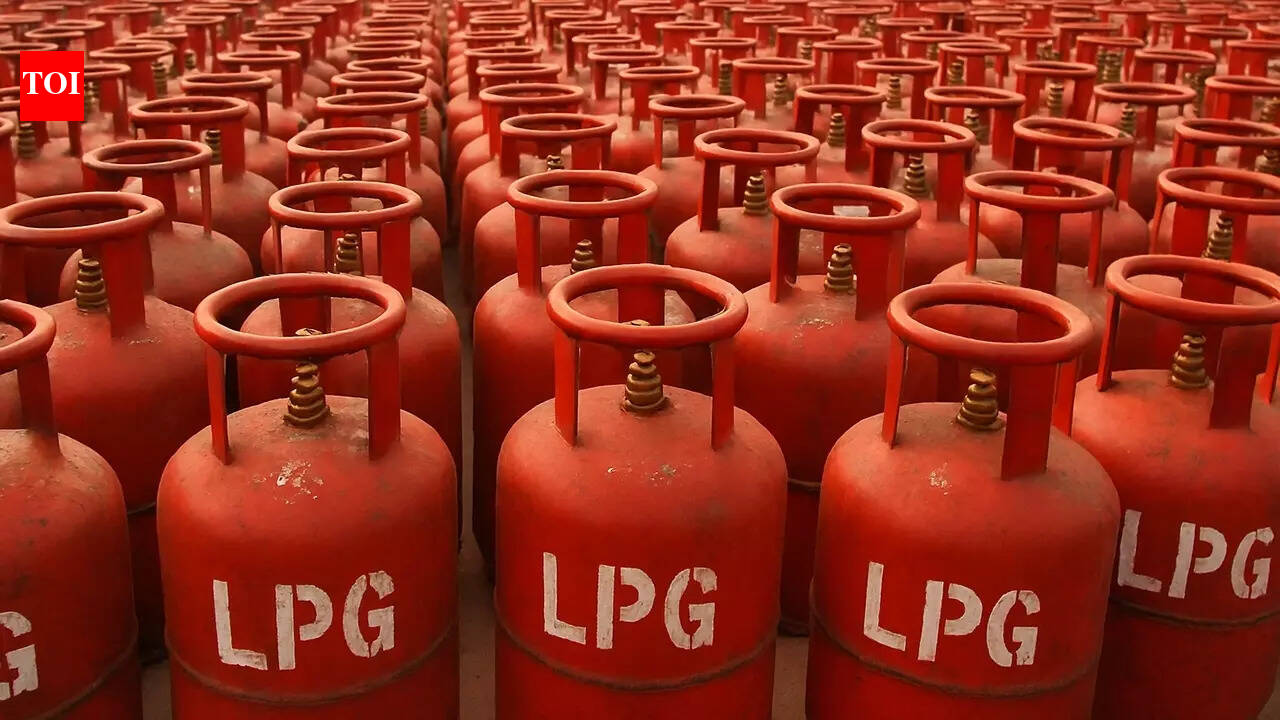
No fuel shortage: Govt assures 100% domestic LPG, PNG, CNG supply amid Hormuz energy crunch – The Times of India
-
 Business7 days ago
How Trump’s psychedelics executive order could unlock stalled cannabis reform
-
 Business1 week ago
Exercise to test response to offshore energy threat involving vessels and drones