

Business
Budget 2026: CREDAI seeks major policy push to boost housing affordability

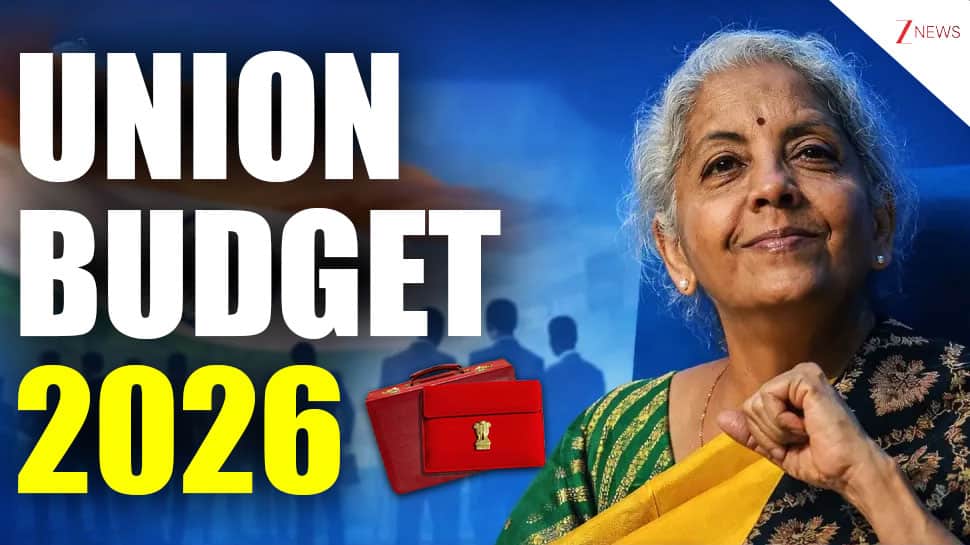
New Delhi: As the government gears up to present the Union Budget 2026–27, the real estate sector has placed its expectations on the table. The Confederation of Real Estate Developers’ Associations of India (CREDAI) has urged the Centre to take immediate steps to make housing more affordable and ensure a steady supply of homes across the country.
Highlighting the sector’s key role in job creation and urban growth, the industry body said its recommendations are aligned with national goals such as ‘Housing for All’ and urban development, while also addressing long-standing issues in finance, taxation and regulations. According to CREDAI, timely and targeted policy support will be crucial to revive demand and move closer to the vision of a ‘Viksit Bharat’.
Call to Redefine Affordable Housing Limits After Eight Years
A key demand in CREDAI’s submission is the urgent revision of the affordable housing definition, which has not been updated since 2017. At present, affordable homes are capped at a value of Rs 45 lakh and must meet specific size limits. However, CREDAI says these thresholds no longer match ground realities, as land prices and construction costs have risen sharply over the years. The body believes that without revising these limits, the goal of making homes truly affordable for buyers will remain difficult to achieve.
Proposal to Revise Size Norms and Remove Price Cap
To address the issue, CREDAI has suggested increasing the carpet area limit for affordable housing to 90 square metres in metro cities and 120 square metres in non-metros. At the same time, it has recommended doing away with the existing price cap altogether. The industry body believes shifting to a purely area-based definition will help boost the supply of practical and viable housing in urban centres. It also argues that this move would reduce confusion and simplify processes, as different government schemes currently follow varying definitions of affordable housing.
To directly benefit homebuyers, CREDAI is advocating for a significant overhaul of housing loan interest deduction limits. The current Rs 2 lakh cap has been static for over a decade, even as property prices and interest rates have climbed.
In most major cities, middle-income earners now face annual interest payments between Rs 4 and Rs 6 lakh, making the existing tax benefit negligible. The association recommends removing this cap for first-time, self-occupied homes and extending these deductions to the new tax regime to ensure all taxpayers are treated fairly. This reform is expected to improve disposable income and encourage more citizens to transition from renting to home ownership.
The recommendations also address the difficulties low-income and informal-sector households face when trying to secure formal bank loans due to a lack of documentation. CREDAI has proposed the creation of a dedicated Credit Guarantee Scheme for affordable housing, which would de-risk lenders and expand credit to underserved segments. This self-sustaining model would be funded through nominal fees from borrowers, meaning it would place no upfront fiscal burden on the national budget while helping to bring more people into the formal financial system. Additionally, the body is pushing for a rationalisation of GST rates on construction and residential units to lower effective costs for both developers and buyers.
Finally, looking toward the future of urban migration, CREDAI has called for the launch of a National Rental Housing Mission to develop organised rental stock in major cities through fiscal incentives and tax relief.
Shekhar Patel, President of CREDAI, highlighted the importance of these combined efforts, stating, “Housing remains a critical engine of economic growth, employment generation, and urban transformation. To keep pace with India’s rapid urbanisation, it is vital to strengthen affordability, expand access to formal finance, and develop a robust rental housing ecosystem.” He further noted that these reforms would “unlock investment, reinforce homebuyer confidence, improve financial inclusion, and enable sustained housing supply, while supporting affordable rental options in urban centres for lower-income groups and contributing to improved living conditions and the gradual reduction of slums.” (With ANI Inputs)



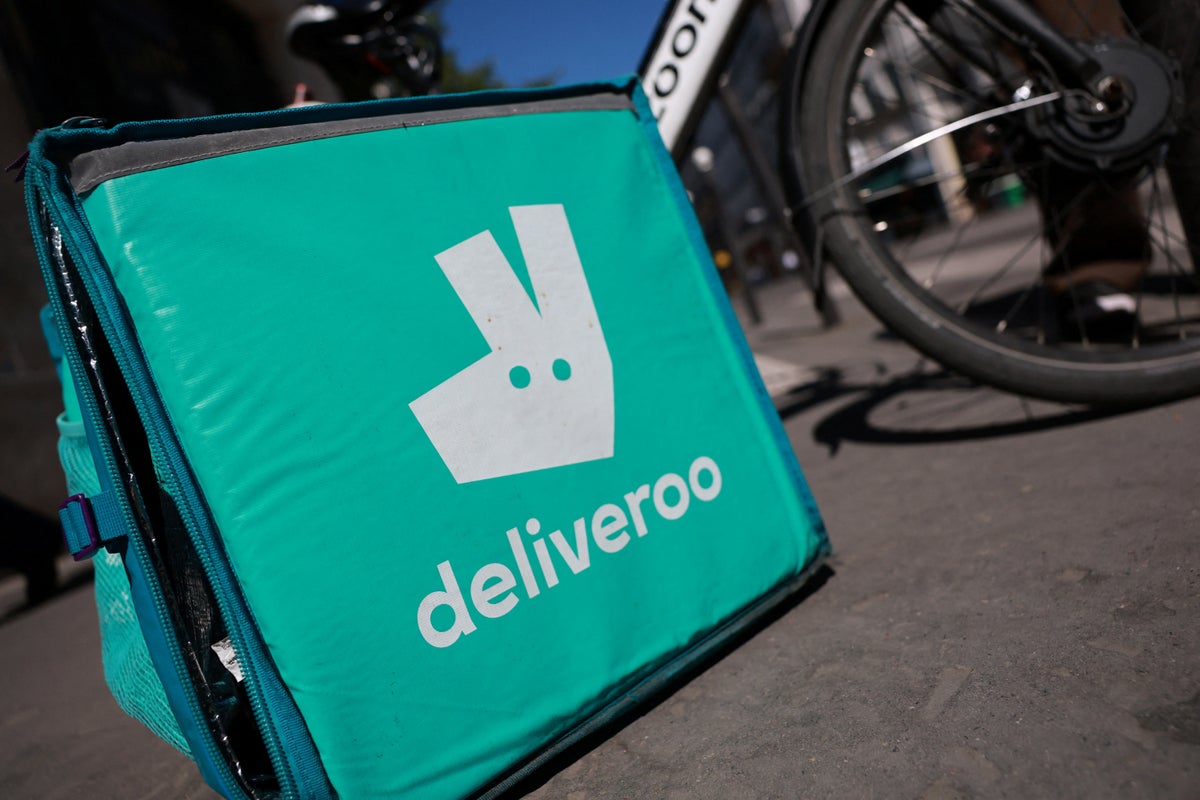
Deliveroo is set to significantly broaden its offerings beyond its core takeaway service, introducing a new feature that will allow customers to book restaurant reservations directly through its platform.
The initiative, named Deliveroo Reservations, is scheduled to launch initially in London this Thursday.
Customers will gain the ability to secure tables at a range of prominent London eateries, including Dishoom, Dove, Hide, Kricket, Barrafina, and Kolae. This expansion marks a strategic move for the company, which was acquired by US-based DoorDash for £2.9 billion last year.
The new reservation system integrates technology from SevenRooms, a restaurant booking platform business that DoorDash also purchased for approximately £900 million.
This integration follows DoorDash’s own expansion into restaurant bookings on its platform in the United States late last year, setting a precedent for Deliveroo’s latest venture.
This move is central to Deliveroo’s ambitions to grow beyond its established takeaway delivery model in the UK. While the feature will first be rolled out to restaurants in London, Deliveroo has indicated plans to extend the service across the wider UK later in the year.
Suzy McClintock, vice president for consumer and new verticals at Deliveroo, commented on the development: “This launch is about supporting restaurants to grow in new ways. Whether it’s a Deliveroo order or a reservation in store, we want to drive discovery, demand and revenue across every channel.”
She added: “By fully integrating SevenRooms into the Deliveroo app, we’re giving restaurants access to new customers and giving diners an easier way to discover and book some of London’s best tables – all in one place.”
Joel Montaniel, vice president and co-founder of SevenRooms, echoed this sentiment, stating: “Bringing reservations into the Deliveroo app gives London restaurants a new way to connect with diners and grow, while making it easy for consumers to discover and book great restaurants.”
Business
Warner Bros. Discovery books $2.9 billion net loss tied to Paramount deal, restructuring costs

An American flag flies at Warner Bros. Studio in Burbank, California, on Sept. 12, 2025.
Mario Tama | Getty Images
Warner Bros. Discovery on Wednesday reported a staggering net loss for the first quarter, but it has an explanation.
The company booked a net loss of $2.9 billion, far larger than the net loss of $453 million it reported in the year-earlier quarter.
The figure included $1.3 billion of “pre-tax acquisition-related amortization of intangibles, content fair value step-up and restructuring expenses” as well as the $2.8 billion termination fee that Warner Bros. Discovery owed Netflix after their pending transaction fell through in February.
Netflix walked away from its proposed deal to buy WBD’s assets after Paramount Skydance came in with a higher offer. Paramount agreed to pay the termination fee as part of its agreement to buy the entirety of WBD, but the cost lives on WBD’s books until the close of that deal.
Since the amount is refundable to Paramount under certain circumstances, such as if it were to terminate the deal with Paramount for a higher offer, the obligation would be shifted to WBD.
Paramount’s proposed acquisition received approval from WBD shareholders in April and is currently in the midst of a regulatory review process. On Monday, Paramount said in its earnings release that it has “made significant progress” toward closing the deal, which it expects to be completed in the third quarter.
WBD on Wednesday also reported first-quarter revenue that was down 1% year over year to $8.89 billion. The company’s adjusted earnings before interest taxes, depreciation and amortization was up 5% to $2.2 billion. WBD had $33.4 billion in gross debt at the end of the quarter.
Streaming continued to be a highlight for the company.
Total streaming revenue was up 9% to about $2.89 billion as subscriber revenue increased due to the expansion of HBO Max — WBD’s flagship streaming platform — in international markets. Advertising revenue for the unit was up 20% due to an increase in customers subscribing to the ad-supported tier.
The company said in a shareholder letter it exceeded its guidance of more than 140 million global streaming customers at the end of the first quarter, and it remains on track to surpass 150 million global subscribers by the end of the year.
WBD’s portfolio of pay TV networks, which includes CNN, TBS and the Discovery Channel, continued to weigh on the company. The linear TV networks reported $4.38 billion in revenue, down 8% from the prior year. The company said linear advertising revenue was down 11%, which was primarily driven by the absence of NBA media rights from its portfolio.
Revenue for the film studio division, meanwhile, increased 35% to $3.13 billion year over year.

Virgin Media O2 recorded its highest-ever broadband traffic spike as millions across the UK tuned in to watch Arsenal‘s Uefa Champions League semi-final victory over Atletico Madrid.
Peak downstream traffic on the network surged by 17 per cent compared to an average Tuesday evening, marking an unprecedented event in Virgin Media’s broadband history.
This figure was 4.2 per cent higher than the previous record, established during Liverpool’s Champions League match against Real Madrid last November.
Jeanie York, chief technology officer at Virgin Media O2, commented on the phenomenon: “Live sport is one of the biggest drivers of broadband traffic in the UK and last night’s Champions League semi-final set a record on our network.
“As more people stream the biggest sporting moments from home, reliable, high-capacity connectivity has never been more important.”
Bukayo Saka delivered the decisive goal at the Emirates Stadium on Tuesday night as Arsenal secured a 2-1 aggregate triumph over Atletico Madrid to reach the Champions League final in Budapest on May 30 – their first on Europe’s grandest stage for 20 years.
And although Arsenal have received an official allocation of just 16,824 tickets from UEFA for the final at the 67,000-capacity Puskas Arena, Declan Rice wants the Hungarian capital to be a sea of red for the fixture against either Bayern Munich or Paris St Germain.
He said: “Bring it on, bring it on, I’ll be ready. I want every Arsenal fan out there, 200,000 of you, come out. Let’s try and do it because we’re going to need all the support, all the energy and let’s make it special.”
Mikel Arteta, meanwhile, hailed his “incredible” players for “making history” after securing the win.
Arteta said: “It was an incredible night. We made history again together and I cannot be happier and prouder for everybody that’s involved in this football club.
“The supporters were with us for every ball. They made it special and unique, and I have never felt it like that in this stadium.
“We knew how much it meant to everybody, we put everything on the line, the boys did an incredible job and after 20 years, and the second time in our history, we are back in the Champions League final.”


India updates rules to clear FDI proposals within 12 weeks

Justin Baldoni on settlement with Blake Lively: ‘Very pleased’

Looking back on nearly a century of World Cup balls.

-

 Sports1 week ago
Pro wrestling star Steph De Lander reveals how colleague’s advice helped lead her to title triumph at ACW
-
 Business1 week ago
PSX plunges over 4,800 points | The Express Tribune
-

 Tech1 week ago
This Ambitious Laptop Doesn’t Leave Much Room for Your Hands
-
Uncategorized1 week ago
[CinePlex360] Some plugins have failed to updat
-
 Fashion6 days ago
Canada’s Lululemon appoints Esi Eggleston Bracey to board of directors
-

 Tech7 days ago
Almost half of UK businesses hit by cyber attacks | Computer Weekly
-

 Fashion1 week ago
Egypt’s SCZONE signs $8-mn Turkish textile project in Qantara West
-
 Business1 week ago
BP profits more than double as oil trading booms amid Iran war