

Tech
Business leaders see AI risks and fraud outpacing ransomware, says WEF | Computer Weekly


Midway through a decade that is coming to be defined by the runaway acceleration of technological change, the threat of ransomware attacks seems to be dropping down the agenda in boardrooms around the world, with C-suite executives more concerned about growing risks arising from artificial intelligence (AI) vulnerabilities, cyber-enabled fraud and phishing attacks, disruption to supply chains, and exploitation of software vulnerabilities.
This is according to the fifth annual World Economic Forum (WEF) Global cybersecurity outlook report, based on a survey of 804 participants from 92 countries, including 316 chief information security officers (CISOs), 105 CEOs and 123 other C-suite executives such as chief risk or technology officers, conducted between August and September 2025, as well as workshop discussions and short polls conducted around the forum’s Global Future Councils and Cybersecurity meeting.
A total of 87% of these respondents believed risks from AI increased in the past year, compared with 13% who were neutral on the subject. Approximately 77% saw risks from fraud and phishing on the rise; 66% talked about supply chain disruption; and 58% identified vulnerability exploitation as a growing threat.
However, when it came to ransomware, just 54% saw rising risk levels, compared with 39% who expressed a neutral opinion, while the remainder of the respondents, approximately 7%, said the risk from ransomware actually decreased in 2025.
“Cyber security risk in 2026 is accelerating, fuelled by advances in AI, deepening geopolitical fragmentation and the complexity of supply chains,” wrote WEF managing director Jeremy Jurgens in the report’s preamble.
“These shifts are compounded by the enduring sovereignty dilemma and widespread cyber inequity, two factors that expose systemic vulnerabilities. The result is a threat environment where the speed and scale of attacks are testing the limits of traditional defences.”
AI risk factors
Digging deeper into some of the risk factors arising from AI, the C-suite said that data leaks, followed by advancing adversarial capabilities, were the most pressing concerns, followed by the technical security of AI systems, increasingly complex governance, legal risks around intellectual property and liability, and software supply chain and code development concerns.
Notably, the top two concerns swapped places in the 2026 report compared with last year – with 34% most concerned about data exposure this year compared with 22% in 2025, while the percentage of those most concerned about adversarial capabilities fell from 47% last year to 29% this year.
This likely reflects a changing, potentially maturing, attitude to AI risk, and the WEF said it was looking to a “turning point” in the AI risk landscape this year.
It said that even though the AI arms race between defenders and attackers shows no signs of slowing, attention is pivoting from “offensive innovation” towards less noisy – but arguably more dangerous – factors.
Some of the other data points in the report also appear to bear this out, with C-suite executives doubling down on structured processes and governance models to better manage AI.
Quoted in the report, Josephine Teo, Singapore’s minister for digital development and information and minister-in-charge of the country’s Cyber Security Agency and Smart Nation Group, said: “Developments in AI are reshaping multiple domains, including cyber security. Implemented well, these technologies can assist and support human operators in detecting, defending and responding to cyber threats.
“However, they can also pose serious risks such as data leaks, cyber attacks and online harms if they malfunction, or are misused.”
Teo urged a more forward-looking, practical and collaborative approach to the safe development and use of rapidly evolving tech such as AI.
“The risks transcend borders, and the challenge is to maximise AI’s benefits, including to strengthen our cyber resilience, while minimising its risks,” she said.
Ransomware still a live threat
However, despite the headline risks detailed in the WEF’s report, the ransomware threat has not gone away – as demonstrated by many of the most well-documented cyber attacks to have taken place in 2025, most of which were still ultimately driven by extortion.
Indeed, among those who identified as CISOs, ransomware remained the leading risk concern. While CEOs concern themselves more with broader business impacts of cyber crime, CISOs are understandably consumed by the operational disruption a successful ransomware attack can cause.
This may go some way to explaining the elevated concerns over cyber fraud revealed by the WEF’s data.
A total of 77% of respondents said they had seen an increase in cyber-enabled fraud and phishing, and 72% revealed that either they themselves or someone in their professional or personal networks had been affected by it – the most common forms of attack reported were phishing, payment fraud and identity theft.
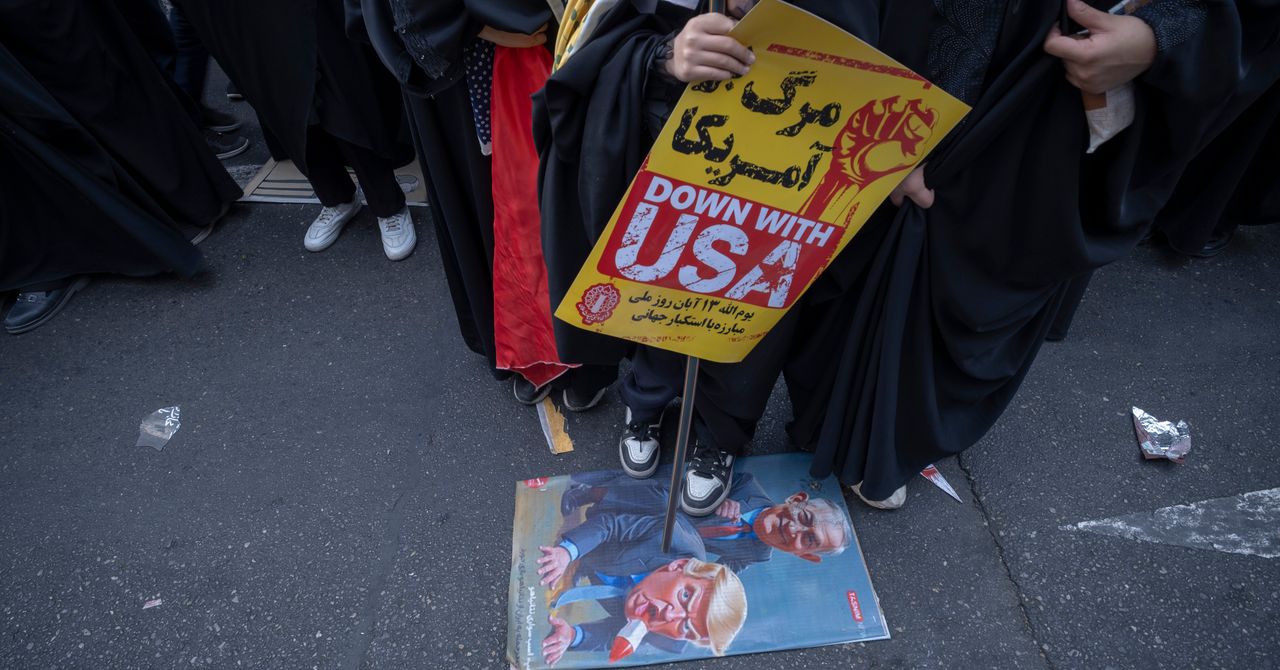
More recently, Iran has been a regular adversary in cyberspace—and while it hasn’t demonstrated quite the acuity of Russia or China, Iran is “good at finding ways to maximize the impact of their capabilities,” says Jeff Greene, the former executive assistant director of cybersecurity at CISA. Iran, in particular, famously was responsible for a series of distributed-denial-of-service attacks on Wall Street institutions that worried financial markets, and its 2012 attack on Saudi Aramco and Qatar’s Rasgas marked some of the earliest destructive infrastructure cyberattacks.
Today, surely, Iran is weighing which of these tools, networks, and operatives it might press into a response—and where, exactly, that response might come. Given its history of terror campaigns and cyberattacks, there’s no reason to think that Iran’s retaliatory options are limited to missiles alone—or even to the Middle East at all.
Which leads to the biggest known unknown of all:
5. How does this end? There’s an apocryphal story about a 1970s conversation between Henry Kissinger and a Chinese leader—it’s told variously as either Mao-Tse Tung or Zhou Enlai. Asked about the legacy of the French revolution, the Chinese leader quipped, “Too soon to tell.” The story almost surely didn’t happen, but it’s useful in speaking to a larger truth particularly in societies as old as the 2,500-year-old Persian empire: History has a long tail.
As much as Trump (and the world) might hope that democracy breaks out in Iran this spring, the CIA’s official assessment in February was that if Khamenei was killed, he would be likely replaced with hardline figures from the Islamic Revolutionary Guard Corps. And indeed, the fact that Iran’s retaliatory strikes against other targets in the Middle East continued throughout Saturday, even after the death of many senior regime officials—including, purportedly, the defense minister—belied the hope that the government was close to collapse.
The post-World War II history of Iran has surely hinged on three moments and its intersections with American foreign policy—the 1953 CIA coup, the 1979 revolution that removed the shah, and now the 2026 US attacks that have killed its supreme leader. In his recent bestselling book King of Kings, on the fall of the shah, longtime foreign correspondent Scott Anderson writes of 1979, “If one were to make a list of that small handful of revolutions that spurred change on a truly global scale in the modern era, that caused a paradigm shift in the way the world works, to the American, French, and Russian Revolutions might be added the Iranian.”
It is hard not to think today that we are living through a moment equally important in ways that we cannot yet fathom or imagine—and that we should be especially wary of any premature celebration or declarations of success given just how far-reaching Iran’s past turmoils have been.
Defense Secretary Pete Hegseth has repeatedly bragged about how he sees the military and Trump administration’s foreign policy as sending a message to America’s adversaries: “F-A-F-O,” playing off the vulgar colloquialism. Now, though, it’s the US doing the “F-A” portion in the skies over Iran—and the long arc of Iran’s history tells us that we’re a long, long way from the “F-O” part where we understand the consequences.
Let us know what you think about this article. Submit a letter to the editor at mail@wired.com.
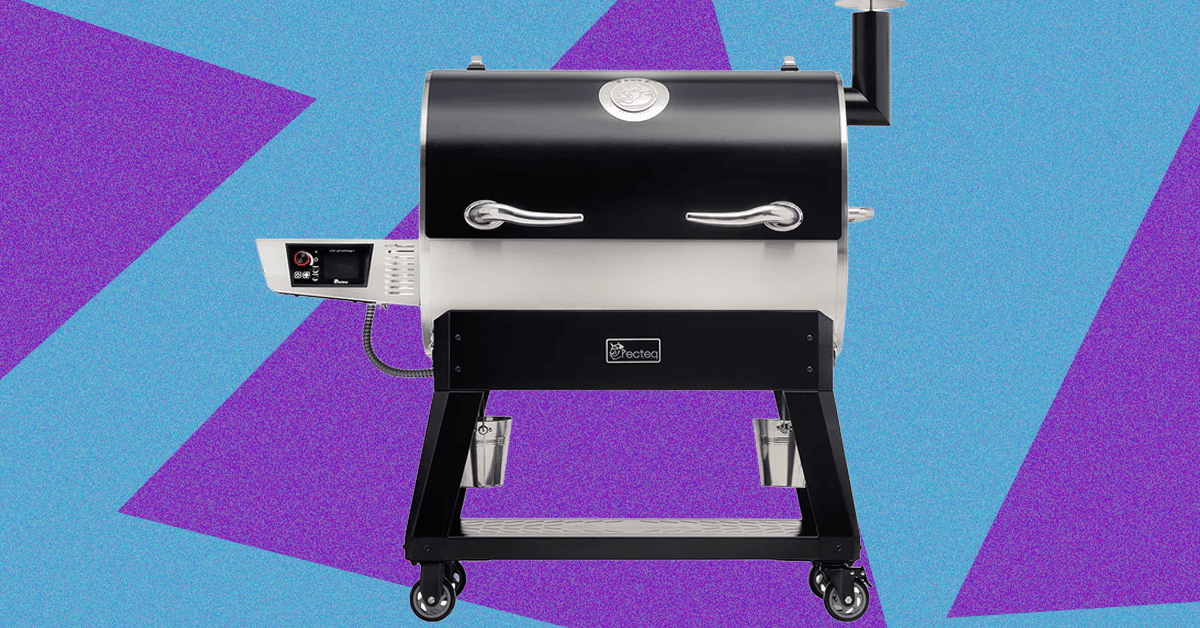
While my love of smoked meats is well-documented, my own journey into actually tending the fire started just last spring when I jumped at the opportunity to review the Traeger Woodridge Pro. When Recteq came calling with a similar offer to check out the Flagship 1600, I figured it would be a good way to stay warm all winter.
While the two smokers have a lot in common, the Recteq definitely feels like an upgrade from the Traeger I’ve been using. Not only does it have nearly twice the cooking space, but the huge pellet hopper, rounded barrel, and proper smokestack help me feel like a real pitmaster.
The trade-off is losing some of the usability features that make the Woodridge Pro a great first smoker. The setup isn’t as quite as simple, and the larger footprint and less ergonomic conditions require a little more experience or patience. With both options, excellent smoked meat is just a few button presses away, but speaking as someone with both in their backyard, I’ve been firing up the Recteq more often.
Getting Settled
Photograph: Brad Bourque
Setting up the Recteq wasn’t as time-consuming as the Woodridge, but it was more difficult to manage on my own. Some of the steps, like attaching the bull horns to the lid, or flipping the barrel onto its stand, would really benefit from a patient friend or loved one. Like most smokers, you’ll need to run a burn-in cycle at 400 degrees Fahrenheit to make sure there’s nothing left over from manufacturing or shipping. Given the amount of setup time and need to cool down the smoker after, I would recommend setting this up Friday afternoon if you want to smoke on a Saturday.
The main job of Google Chrome is to give you a window to the web. With so much engaging content out there on the internet, you may not have given much thought to the browser framework that serves as the container for the sites you visit.
You’d be forgiven for still using the default toolbar configuration that was in place when you first installed Chrome. But if you take a few minutes to customize it, it can make a significant difference to your browsing. You can get quicker access to the key features you need, and you may even discover features you didn’t know about.
If you’re reading this in Chrome on the desktop, you can experiment with a few customizations right now—all it takes is a few clicks. Here’s how the toolbar in Chrome is put together, and all the different changes you can make.
The Default Layout
Take a look up at the top right corner of your Chrome browser tab and you’ll see two key buttons: One reveals your browser extensions (the jigsaw piece), and the other opens up your bookmarks (the double-star icon). There should also be a button showing a downward arrow, which gives you access to recently downloaded files.
Right away, you can start customizing. If you click the jigsaw piece icon to show your browser extensions, you can also click the pin button next to any one of these extensions to make it permanently visible on the toolbar. While you don’t want your toolbar to become too cluttered, it means you can put your most-used add-ons within easy reach.
For the extension icons you choose to have on the toolbar, you can choose the way they’re arranged, too: Click and drag on any of the icons to change its position (though the extensions panel itself has to stay in the same place). To remove an extension icon (without uninstalling the extension), right-click on it and choose Unpin.
Making Changes

Click the three dots up in the top right corner of any browser window and then Settings > Appearance > Customize your toolbar to get to the main toolbar customization panel, which has recently been revamped. Straight away you’ll see toggle switches that let you show or hide certain buttons on the toolbar.


Man United up to third as Sesko’s hot streak of crucial goals continues

When We Were Young Festival announces 2026 hiatus: ‘See you in 2027’

The 5 Big ‘Known Unknowns’ of Donald Trump’s New War With Iran

Eye-popping rise in one year: Betting on just gold and silver for long-term wealth creation? Think again! – The Times of India

Pakistan carries out precision strikes on seven militant hideouts in Afghanistan

Kansas’ Darryn Peterson misses most of 2nd half with cramping

-
 Politics1 week ago
Pakistan carries out precision strikes on seven militant hideouts in Afghanistan
-
Business1 week ago
Eye-popping rise in one year: Betting on just gold and silver for long-term wealth creation? Think again! – The Times of India
-
 Sports1 week ago
Kansas’ Darryn Peterson misses most of 2nd half with cramping
-

 Tech1 week ago
These Cheap Noise-Cancelling Sony Headphones Are Even Cheaper Right Now
-

 Entertainment1 week ago
Saturday Sessions: Say She She performs "Under the Sun"
-
 Business1 week ago
Equinox chairman says ‘health is the new luxury’ as wellness spending soars
-

 Sports1 week ago
How James Milner broke Premier League’s appearances record
-

 Tech1 week ago
The Supreme Court’s Tariff Ruling Won’t Bring Car Prices Back to Earth