

Business
Cadillac unveils ‘Elevated Velocity’ electric crossover concept car


The Cadillac Elevated Velocity concept car.
Courtesy: Cadillac
General Motors on Thursday unveiled the Cadillac Elevated Velocity, a new concept car aimed at building up the brand’s all-electric luxury crossover segment.
The electric concept car has a “lifted yet elegant design,” according to Cadillac, riding on 24-inch wheels. It includes multiple driving modes to enhance the electric vehicle’s performance, the company said.
“The word ‘elevate’ serves a dual meaning – it is a reference to the lifted chassis that enables high-speed off-road capabilities, but it also refers to an elevated luxury experience,” said Alexandra Dymowska, Cadillac senior brand designer, in a media release.
The vehicle, which is a running showcar but does not have full performance capabilities, builds on Cadillac’s luxury EV portfolio, which already includes the Lyriq and the Optiq.
Automakers regularly use concept vehicles to gauge customer interest or show the future direction of a vehicle or brand, but they’re not meant to be sold to consumers.
The car continues the design principles of Cadillac’s “Opulent Velocity” concept car, which the company revealed in 2024, said Bryan Nesbitt, vice president of GM global design, in a media statement.
The Cadillac Elevated Velocity concept car.
Courtesy: Cadillac
GM initially set a goal to exclusively offer EVs by 2035, but has since said that consumer demand, which has been slower than expected, will dictate its EV plans. Its luxury Cadillac brand set a separate goal to be all-electric by 2030, but more recently said it will offer a full lineup of EVs as well as gas-powered cars.
Cadillac has been going through a revival effort in recent years, considering that luxury cars offer higher profit margins and attract a more affluent consumer than traditional vehicles.
During a call with reporters last month, Cadillac Vice President John Roth said the brand saw its best first half in nearly 20 years. He touted that Cadillac was the bestselling luxury EV brand in the second quarter of 2025, No. 2 in calendar year-to-date terms and fifth for overall EV sales.
‘Lifted yet elegant design’
The concept car offers multiple user experience modes. When entering the car, “welcome mode” involves the gull-wing doors lifting skyward and parts of the interior lighting up.
The Cadillac Elevated Velocity concept car.
Courtesy: Cadillac
When the driver engages “elevate mode,” the car becomes autonomous and the interior transforms into a “recovery space,” where the pedals and steering wheel retract, ambient lighting changes and a light above the steering column aids the driver in breathwork to help occupants get in the “headspace for performance,” according to Cadillac.
The elevate mode also triggers interior cabin filtration, fragrance, red light therapy and climatization to account for changes in air temperature and quality.
“Velocity mode,” meanwhile, features cool white lighting to “evoke a sense of exhilaration” and floor lighting dims to help the driver focus on the road.
The concept car also includes different drive modes for on-road and off-road performance and improved visibility when driving in dusty or sandy conditions.
The Cadillac Elevated Velocity concept car.
Courtesy: Cadillac
Cadillac said its exterior color is inspired by glacier ice, contrasted against the car’s red interior.
The cabin includes red leather on the seat cushions and the cabin and cargo floor, while a red fabric covers the seat uppers, armrests and instrument panel.






Goldman Sachs CEO David Solomon speaks during an interview at the Economic Club of Washington in Washington, D.C., U.S., Oct. 30, 2025.
Kevin Lamarque | Reuters
Goldman Sachs is scheduled to report fourth-quarter earnings before the opening bell Thursday.
Here’s what Wall Street expects:
- Earnings: $11.67 per share, according to LSEG
- Revenue: $13.79 billion, according to LSEG
- Trading revenue: Fixed income of $2.93 billion, equities of $3.70 billion, per StreetAccount
- Investing banking fees: $2.58 billion, per StreetAccount
Goldman Sachs is set up to be a beneficiary of several trends in the fourth quarter.
Trading desks across Wall Street have benefited in the last year as President Donald Trump’s policies have roiled markets for bonds, currencies, commodities and stocks.
For instance, rival JPMorgan Chase topped expectations for fourth-quarter results on equities and fixed income trading revenue that exceeded the StreetAccount estimate by a combined $460 million.
Global investment banking revenue in the quarter was 12% higher than a year ago, according to Dealogic, which should provide a boost to Goldman’s advisory business.
The firm’s asset and wealth management division should also see gains as stock market levels remained buoyant in the quarter.
Finally, the bank said last week that its deal to offload its Apple Card business to JPMorgan would result in a 46-cents-per-share boost to quarterly results.
This story is developing. Please check back for updates.

Last Updated:
X decision came after facing outrage over the misuse of Grok, where the AI Chatbot was found to be complying with user requests to digitally undress images of real people.



Elon Musk’s Grok can no longer undress images of real people on X. (Representative Image)
Amid the rising concerns over the sexualised AI deepfakes in countries including the UK and US, Elon Musk’s Grok artificial intelligence chatbot will no longer edit “images of real people in revealing clothing” on X, the company confirmed Wednesday evening.
The company’s decision came after facing global outrage over the misuse of Grok, where the AI Chatbot was found to be complying with user requests to digitally undress images of adults and, in some cases, children.
“We have implemented technological measures to prevent the Grok account from allowing the editing of images of real people in revealing clothing such as bikinis. This restriction applies to all users, including paid subscribers,” X wrote via its Safety team account.
Within the last week xAi, which owns both Grok and X, restricted image generation for Grok on X to paying X premium subscribers
CNN reported that it has been observed that in the last few days, Grok’s X account had modified how it responded in general to users’ image generation requests, even for those subscribed to X premium.
 Click here to add News18 as your preferred news source on Google.
United States of America (USA)
January 15, 2026, 08:34 IST
Read More
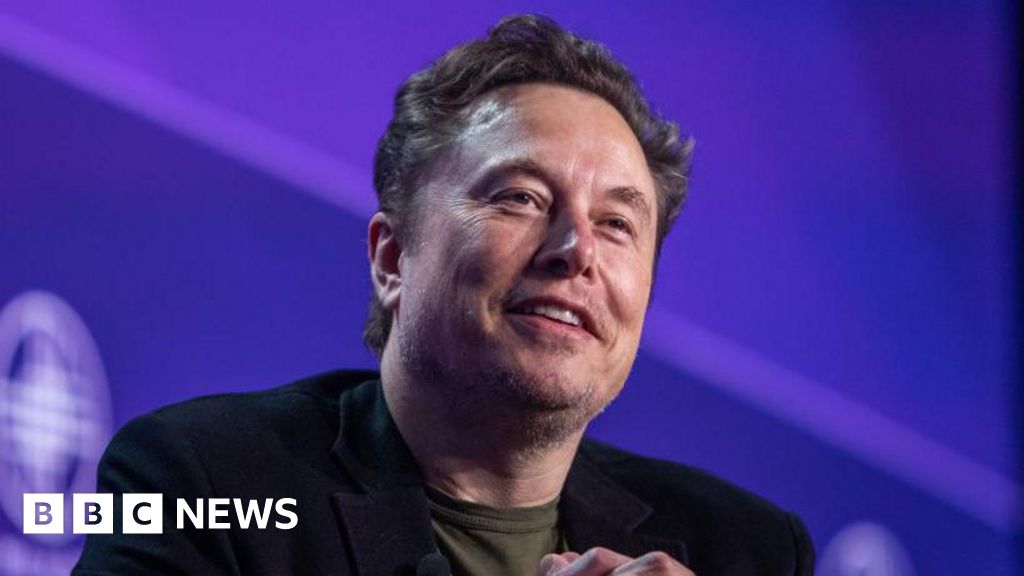
Elon Musk’s AI model Grok will no longer be able to edit photos of real people to show them in revealing clothing, after widespread concern over sexualised AI deepfakes in countries including the UK and US.
“We have implemented technological measures to prevent the Grok account from allowing the editing of images of real people in revealing clothing such as bikinis.
“This restriction applies to all users, including paid subscribers,” reads an announcement on X, which operates the Grok AI tool.
The change was announced hours after California’s top prosecutor said the state was probing the spread of sexualised AI deepfakes, including of children, generated by the AI model.
The update expands measures that stop all users, including paid subscribers, editing images of real people in revealing outfits.
X, formerly known as Twitter, also reiterated in a statement on Wednesday that only paid users will be able to edit images using Grok on its platform.
This will add an extra layer of protection by helping to ensure that those who try and abuse Grok to violate the law or X’s policies are held accountable, it said.
Users who try to generate images of real people in bikinis, underwear and similar clothing using Grok will be stopped from doing so according to the laws of their jurisdiction, X’s statement said.
In a statement on Wednesday, California Attorney General Rob Bonta said: “This material, which depicts women and children in nude and sexually explicit situations, has been used to harass people across the internet.”
Malaysia and Indonesia have blocked access to the chatbot over the images and UK Prime Minister Sir Keir Starmer warned X could lose the “right to self regulate” amid outrage over the AI images.
Britain’s media regulator, Ofcom, said on Monday that it would investigate whether X had failed to comply with UK law over the sexual images.


More than 500 million request of World Cup tickets, says FIFA – SUCH TV
Goldman Sachs is about to report fourth-quarter earnings — here’s what the Street expects

Chase Infiniti exudes star power receiving Breakthrough Performance award

-

 Entertainment1 week ago
Does new US food pyramid put too much steak on your plate?
-

 Politics1 week ago
UK says provided assistance in US-led tanker seizure
-

 Entertainment1 week ago
Why did Nick Reiner’s lawyer Alan Jackson withdraw from case?
-
 Business1 week ago
Trump moves to ban home purchases by institutional investors
-
 Sports4 days ago
Clock is ticking for Frank at Spurs, with dwindling evidence he deserves extra time
-

 Sports1 week ago
PGA of America CEO steps down after one year to take care of mother and mother-in-law
-
 Business1 week ago
Bulls dominate as KSE-100 breaks past 186,000 mark – SUCH TV
-
 Business1 week ago
Gold prices declined in the local market – SUCH TV