

Business
Cash grip persists despite digital surge: SBP | The Express Tribune

Mobile banking users hit 126 million but ATM withdrawals still dominate transaction values
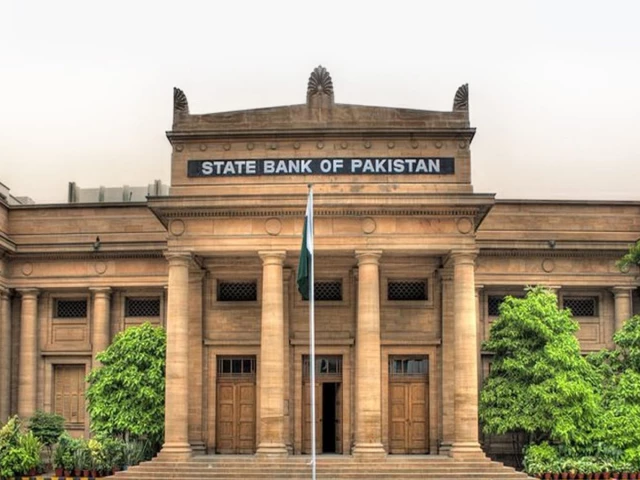
State Bank of Pakistan. Photo: File
KARACHI:
Pakistan’s payments landscape continues to undergo rapid digitisation, but cash remains deeply entrenched in the economy, with ATM withdrawals still dominating transaction values, according to the State Bank of Pakistan’s (SBP) Payment Systems Quarterly Review for Q2 FY26.
The report highlights a striking contrast: while digital channels now account for 92% of total retail payment volume, a large share of these transactions ultimately converts into cash. During the quarter, cards were used for 279.4 million transactions at ATMs, primarily for cash withdrawals, underscoring the continued dependence on physical currency. This divergence reflects a structural dynamic in which digital adoption is rising in frequency, but cash continues to hold “gravity” in terms of value. For millions of users, digital wallets and mobile banking platforms act as transitional tools rather than endpoints, with funds often withdrawn in cash to meet every day transactional needs in an economy where informal markets still dominate.
The reliance on cash is also evident in the strain it places on physical infrastructure. With 279.4 million ATM transactions processed through a network of 20,976 machines nationwide, each ATM handled an average of approximately 144 transactions per day. This high utilisation rate points to capacity constraints, frequently resulting in outages and long queues, particularly during salary cycles and festive periods.
Despite these challenges, the report points to a significant structural shift underway within the digital ecosystem, especially in e-commerce payments. Account-based transactions have emerged as the dominant mode, accounting for 95% of total e-commerce activity, or 305 million transactions during the quarter. This marks a decisive move away from card-based payments. The growing preference for direct bank transfers is largely driven by cost considerations. Merchants and consumers are increasingly bypassing card schemes to avoid the Interchange Reimbursement Fee (IRF), which can erode profit margins. By adopting account-to-account payment methods, merchants retain a greater share of revenues, while consumers benefit from lower service charges, creating a mutually beneficial dynamic within the domestic payments’ ecosystem.
The shift toward account-based payments is also reflected in the stagnation of credit card usage. Out of 66.7 million cards in circulation, 58.2 million are debit cards, while credit cards account for just 3.1 million, representing less than 5% of the total. This limited penetration highlights deeper structural and cultural dynamics, including high borrowing costs, low levels of documented income, and a general reluctance to engage in consumer credit.
In contrast, Pakistan’s instant payment system, Raast, is emerging as a key enabler of digital financial inclusion. Initially designed for person-to-person transfers, Raast has expanded rapidly into the Person-to-Merchant (P2M) segment. The number of merchants onboarded has crossed 2.1 million, while QR code-based payments reached Rs288 billion during the quarter, registering a threefold increase compared to earlier periods. The expansion of Raast into everyday commerce, ranging from small kiryana stores to street vendors, signals a broader shift toward low-cost, accessible digital payments. Importantly, this transition is also creating a digital trail of transactions within the informal sector, offering policymakers an opportunity to improve documentation and potentially widen the tax net.
At the macro level, the SBP’s real-time gross settlement system, PRISM+, continued to handle high-value transactions, settling Rs370 trillion during the quarter, largely driven by government securities and interbank transfers. This highlights the dual nature of Pakistan’s financial system, where large-value transactions are fully digitised, while retail payments remain fragmented between digital and cash.
Overall, the data suggests that Pakistan is not transitioning from cash to digital in a linear manner but is instead evolving toward a hybrid model of “integrated liquidity,” where both forms coexist. While digital platforms are increasingly used for convenience and speed, cash remains essential for value storage and settlement in large segments of the economy.
With mobile banking users reaching 126 million, the foundation for a digital economy is strengthening. However, bridging the gap between digital access and actual usage remains a key challenge.


Business
Stock market today (March 20, 2026): Nifty50 opens above 23,200; BSE Sensex up over 700 points – The Times of India

Stock market today: Benchmark indices Nifty50 and BSE Sensex opened in green on Friday after a big selloff on Thursday that saw markets tank over 3%. While Nifty50 opened above 23,200, BSE Sensex rose over 700 points, just shy of 75,000. At 9:16 AM, Nifty50 was trading at 23,229.15, up 227 points or 0.99%. BSE Sensex was at 74,945.45, up 738 points or 0.99%.Dr. VK Vijayakumar, Chief Investment Strategist, Geojit Investments Limited says, “Market has been oscillating between some hope and fear during the last four days. The gains which Nifty accumulated in the previous three days have been completely wiped out with the 775 point loss yesterday. This oscillation between hope and fear is likely to continue in the near-term.Today there is potential for the market to move up since hope of de-escalation is back. Israel PM’s remarks yesterday indicate that there won’t be further attacks on Iran’s oil and gas infrastructure. This has cooled the Brent crude to $ 106 from the peak of $118 yesterday. The HDFC issue impacted Nifty Bank significantly yesterday and it also contributed to the crash in Nifty. This is likely to be a storm in a tea cup. Even though the uncertainty continues, the market construct is ripe for a bounce back today. Beaten down financials and autos are set for a bounce back.”Indian equity markets tumbled sharply on Thursday, breaking a three-day gaining streak, as escalating tensions in West Asia sparked a global risk-off sentiment. Analysts said the market is entering a phase of heightened vulnerability, with investor confidence increasingly influenced by fast-moving geopolitical developments and a surge in crude oil prices.Asian markets opened higher on Friday after US equities recovered from their intraday lows and oil prices eased. However, Wall Street had closed lower on Thursday, dragged down by declines in Micron Technology and Tesla, as rising oil prices stoked inflation worries and dampened expectations of future interest rate cuts.Gold prices edged up on Friday but were still set for a third straight weekly decline, pressured by a strong dollar and the US Federal Reserve’s hawkish stance, which has reduced hopes of near-term monetary easing. Oil prices, meanwhile, fell on Friday after major European countries and Japan signalled their willingness to support measures to ensure safe passage for vessels through the Strait of Hormuz, while the US outlined steps to boost supply.Foreign portfolio investors remained net sellers, offloading equities worth Rs 7,558 crore on Thursday, while domestic institutional investors provided some support, purchasing shares worth Rs 3,864 crore.(Disclaimer: Recommendations and views on the stock market, other asset classes or personal finance management tips given by experts are their own. These opinions do not represent the views of The Times of India)
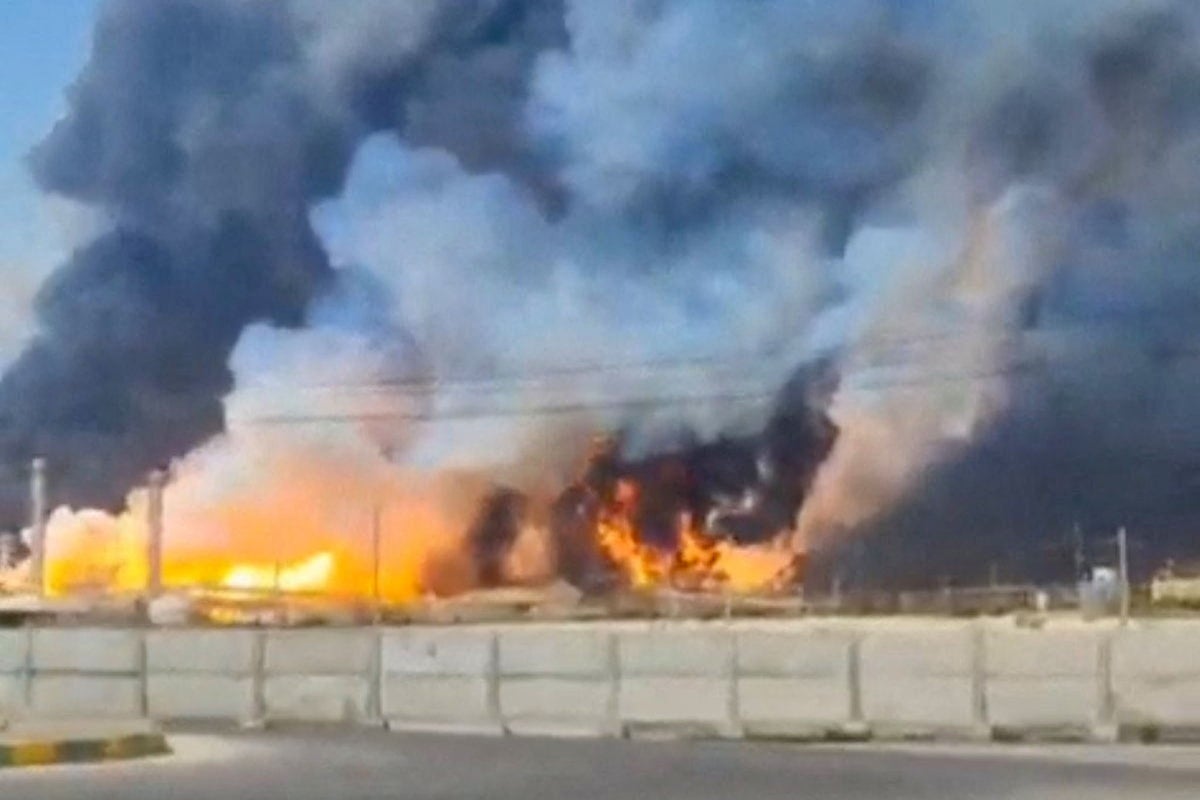
Britain is to “step up” defensive support for Gulf states after Iran attacked energy sites across the region in a “serious escalation” of the war that could push up inflation and interest rates.
The price of Brent crude climbed as high as $119 a barrel and European gas prices briefly surged by 35 per cent after Iran pounded Qatar’s Ras Laffan energy hub and other Middle Eastern oil and gas infrastructure with missiles.
Interest rates were held at 3.75 per cent instead of the previously expected cut, as the Bank of England warned that the war could push inflation as high as 3.5 per cent by July on the back of rising energy bills, and that rates could rise – creating misery for homeowners.
It came as:
- US defence secretary Pete Hegseth said “ungrateful” European allies should be thanking Donald Trump for the war
- Trump claimed he was unaware of Israel’s strike on Iran’s South Pars gas field
- Oman called the US/Israel attacks a “grave miscalculation”
- Europe’s biggest airlines warned of higher fares
Iran’s attacks were in retaliation to an Israeli strike on the vital South Pars gas field, which drew condemnation from the Gulf states as well as Tehran. It was the first attack of the war so far on an energy production facility. Tehran fired missiles at multiple energy sites across the Gulf, including a Saudi oil refinery, Qatari gas facilities and two more oil refineries in Kuwait.
While Sir Keir Starmer and Emmanuel Macron called for de-escalation, President Trump threatened to “massively blow up” the South Pars facility if Iran did not halt its retaliatory attacks, repeating his claim that US forces had “obliterated” Iran’s navy and military, adding that the war was “substantially ahead of schedule”. He denied that plans were being made to send more American troops to the region.
John Healey, the UK defence secretary, said Tehran’s tit-for-tat responses threatened to further destabilise the region and Europe’s economies. He called them a “serious escalation”, adding: “They further destabilise the region and we will step up the defensive support that we can offer to those Gulf states.”
British forces are already deployed to the Middle East, with RAF jets flying defensive sorties against Iranian drones across the Gulf and British air defence systems protecting critical infrastructure in Saudi Arabia. UK military planners have also joined US Central Command to help formulate proposals for opening the Strait of Hormuz, a critical trade route for the world’s oil and gas.But there were signs of growing frustration towards Washington’s war aims in the Gulf states, with Oman’s foreign minister claiming that the conflict was President Trump’s “greatest miscalculation”.
In the most scathing attack on Washington’s foreign policy yet by a Gulf state, Badr Albusaidi said “this is not America’s war” and criticised Mr Trump for supporting Israel. Writing in The Economist, he called on American allies to help extricate it from the conflict, which has continued for a third week despite failing to achieve the US and Israel’s stated aim of instigating regime change in Tehran or stopping its nuclear programme.
Meanwhile, the Bank of England has warned that it may have to put up interest rates if the war continues to drive up inflation and unemployment. Its governor, Andrew Bailey, said the impact was already being felt by consumers as petrol prices surge and that he is “ready to act as necessary to ensure inflation remains on track to meet the 2 per cent target”. That would pave the way for a rate hike as early as the end of April.
Bets on the financial markets suggest a 50/50 chance that Britain will face higher interest rates from next month – and the possibility of two more rises by the end of the year.
Danni Hewson, head of financial analysis at AJ Bell, said: “Markets are now pricing in an almost 50 per cent chance that April’s meeting will see rates rise to 4 per cent with the potential for two additional rate hikes by the end of the year. But no one has a crystal ball. No one knows how long the conflict will last or the amount of damage that could be inflicted on crucial energy infrastructure by the time it ends.”
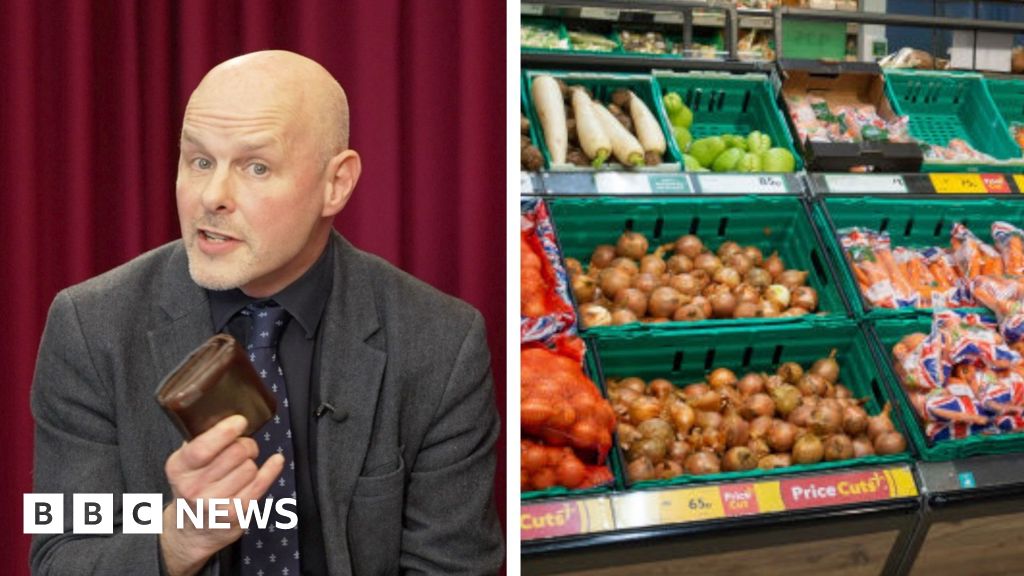
From fuel to mortgages, the BBC looks at how oil and gas prices could push up the cost of living.
Source link


Stäubli to showcase advanced weaving solutions at Techtextil 2026

Israel launches new wave of strikes on Iran as crisis deepens

Top Newegg Promo Codes and Coupons for March 2026

Stock market crash today (March 12, 2026): Nifty50 opens below 23,600; BSE Sensex down over 900 points on continuing US-Iran war – The Times of India

UK’s Topshop unveils Tolu Coker capsule collection
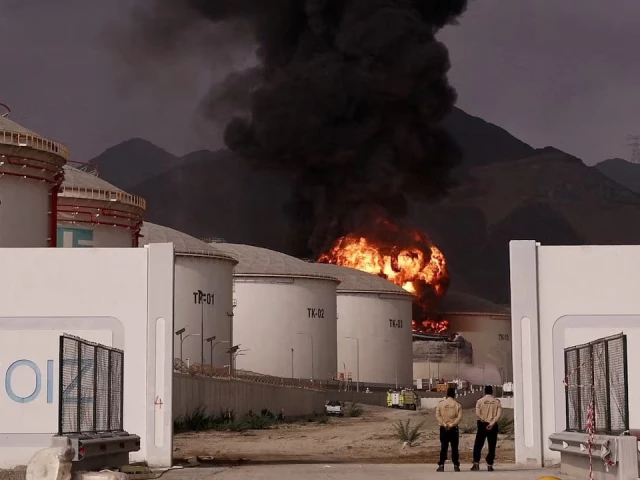
US ignites Iran war, but Gulf Arab states pay the price | The Express Tribune

-
Business1 week ago
Stock market crash today (March 12, 2026): Nifty50 opens below 23,600; BSE Sensex down over 900 points on continuing US-Iran war – The Times of India
-
 Fashion1 week ago
UK’s Topshop unveils Tolu Coker capsule collection
-
Business1 week ago
US ignites Iran war, but Gulf Arab states pay the price | The Express Tribune
-

 Fashion1 week ago
India’s textile recycling market may reach $3.5 bn by 2030: Report
-
 Tech1 week ago
Meta Developed 4 New Chips to Power Its AI and Recommendation Systems
-
 Business1 week ago
8th Pay Commission: How Much Will Central Govt Employees’ Salaries Rise? What We Know So Far
-

 Sports1 week ago
Bangladesh crush Pakistan in ODI series opener | The Express Tribune
-

 Entertainment1 week ago
Ed Sheeran makes surprising Benny Blanco confession after hygiene uproar